AudioFu Chart · October 2026
Best 1/8 Size Classical Guitars 2026
The top pick is Yamaha GL-1 Guitalele 6-String Ukulele-Guitar ($91). Startone CG 851 1/8 gives you the most for the money at $41. Ranked by the AudioFu Index from 5 models across 5 brands, prices checked every night.
Last updated: October 26, 2026
Narrow the chart
All 1/8 Size Classical GuitarsTop 5
Full detail for the 5 highest AudioFu Index scores. Every other model is listed below.
-
Yamaha GL-1 Guitalele 6-String Ukulele-Guitar
GL1 PB · Yamaha
40 for sale on Reverb4 finishes at Thomann
- Nut width48 mm (1.89")
- Scale433 mm (17.05")
- Strings6-string
- BodyMeranti body
- FingerboardRosewood fingerboard
The Yamaha GL1 PB is a fantastic starter instrument, particularly for younger learners or those exploring the ukulele-guitar hybrid concept. It’s surprisingly playable and projects well for its size and price point, making it a great way to introduce kids to stringed instruments. The tuning is unique, but it opens up a fun and accessible approach to playing.
Pros
- Spruce top provides a surprisingly bright and resonant tone for its size.
- Meranti back and sides offer decent projection for a budget instrument.
- Rosewood fingerboard provides a familiar feel for young or transitioning players.
Cons
- Meranti body wood lacks the tonal complexity of more premium hardwoods.
- 433mm scale length limits comfortable reach for adult players with larger hands.
-
- Nut width39 mm (1.54")
- Scale465 mm (18.31")
- BodyBasswood body
- FingerboardJatoba fingerboard
This Startone CG 851 1/8 is a budget-friendly option perfect for introducing very young children to classical guitar. Don't expect a concert-level instrument, but it's surprisingly playable and provides a solid starting point for developing basic technique. The small size makes it comfortable for smaller hands and ideal for travel or practice on the go.
Pros
- Basswood body provides a surprisingly warm and balanced tone for the price.
- Nato neck offers decent stability and a playable, if basic, feel.
- Jatoba fingerboard is harder than many in this class, improving durability.
Cons
- Basswood body, while warm, lacks the projection of more premium woods.
- Nato neck may exhibit some movement with humidity changes.
-
- Nut width48 mm (1.89")
- Scale433 mm (17.05")
- Frets17 frets
- BodySapele body
This Harley Benton GL-2NT is a seriously impressive little instrument. It's perfect for kids starting out on stringed instruments or adults looking for a fun, portable, and easy-to-play option. The build quality is surprisingly good for the price, making it a fantastic value for beginners and casual players.
Pros
- Spruce top offers a surprisingly bright and resonant tone for the price.
- Okoume neck provides a comfortable, lightweight feel, avoiding a bulky feel.
- Sapele body delivers a warm, full foundation to the guitarlele’s sound.
Cons
- Factory strings are serviceable but an immediate upgrade will vastly improve tone and feel.
- 1/8 size limits its appeal to younger learners or those with smaller hands.
-
- Nut width43 mm (1.69")
- Scale410 mm (16.14")
The La Mancha Rubinito 1/8 is a fantastic starter guitar for young or smaller-handed students. The solid cedar top delivers a surprisingly rich tone, and the overall build quality is impressive for its class. It’s a well-regarded choice, especially given its recommendation by the EGTA.
Pros
- Solid cedar top provides a warm, responsive tone ideal for learning.
- Ovangkol fingerboard offers a smooth playing experience and durability.
- NATO neck provides good stability and a comfortable feel for smaller hands.
Cons
- Mahogany back and sides limit overall projection compared to rosewood options.
- Nut width of 43mm may feel tight for players accustomed to wider classical necks.
38AudioFu
IndexStableno change since Aug 17Aug 17$178 now$178€159 at Thomann · in stockCheck price ↗ -
- Nut width47 mm (1.85")
- Scale435 mm (17.13")
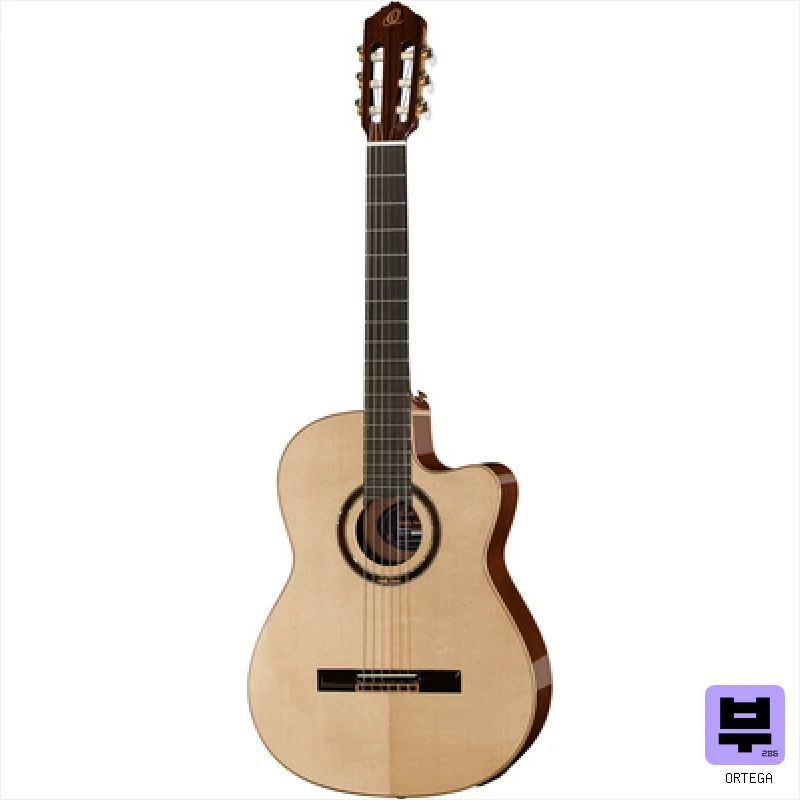
The Ortega RGLE18FMH is a fantastic entry point into the guitarlele world, perfect for students, travelers, or anyone wanting a compact, resonant instrument. The built-in preamp is a real bonus for stage use or recording, and the solid top provides a surprisingly rich voice for its size. It’s a well-made instrument, but be mindful of its limitations due to the smaller scale.
Pros
- Solid flamed mahogany top delivers warm, resonant tone.
- Ortega UKe preamp offers convenient amplification and tuning.
- Walnut fingerboard provides a smooth, comfortable playing experience.
Cons
- Flamed mahogany can be prone to movement with humidity changes.
- Smaller scale length limits low-end response and string tension.
38AudioFu
IndexStableno change since Aug 17Aug 17$375 now$375€335 at Thomann · in stockCheck price ↗
1/8 Size Classical Guitars by the numbers
Measured across all 9 models we track, not a sample.
Median $91 — half of all 1/8 size classical guitars here cost less.
median of 9 models · 39 mm (1.54")–48 mm (1.89")
median of 6 models · 410 mm (16.14")–465 mm (18.31")
most common · 7 models
How to choose the best 1/8 size classical guitars
Scale Length
The shorter scale significantly impacts string tension. It needs to be low enough for comfortable fretting, especially for small hands, but not so low that the intonation is muddy and the tone flabby. Expect a compromise here, and be prepared to adjust the string gauge.
Neck Profile
A comfortable neck is vital. A thick, unwieldy neck will make barre chords feel like a wrestling match. Look for something that feels relatively slim and easy to grip - a 'C' shape is often a safe bet, but feel is subjective.
Top Wood
While solid tops are rare at this price point, a good quality laminate (like spruce or cedar) will vibrate a bit more freely than a super-cheap plywood top. This translates to slightly more projection and a touch more warmth - a subtle but noticeable difference.
Action & Setup
The action (string height) is critical. High action will be painful to play, low action can lead to buzzing. Even a brand new guitar often needs a basic setup - consider having a local tech adjust it if you're not comfortable doing it yourself.
Bracing Pattern
The bracing pattern underneath the top significantly impacts the guitar's tone and responsiveness. A well-designed bracing pattern will allow the top to vibrate efficiently, improving sustain and projection. Cheaper guitars often have simpler, less refined bracing which will impact the overall sound.
Buying guide
So, you're looking for a 1/8 size classical guitar - probably for a young player just starting out. These little instruments are a gateway, and it's crucial to get something that's playable and encourages good habits. A poorly made 1/8 size can be a real tone-killer and discourage a budding musician before they even get a chance to fall in love with the instrument. Let's break down what to look for to avoid that heartbreak and get them something decent.
Don't expect miracles at the lower end of the price spectrum. Corners will be cut - often in the quality of the wood and the precision of the construction. Focus on playability first - a guitar that's easy and comfortable to play will motivate a beginner far more than a marginally 'better' tone.
A slightly higher price point often buys you a better setup and a more comfortable neck profile, which is worth the investment.
How the AudioFu Index works
Five measured signals and nothing else — no stars from strangers, no “tested by experts” we didn’t do. The weights are fixed and public. We don’t play these instruments; we measure the market around them.
This chart covers 9 1/8 size classical guitars from the Thomann catalogue. Before you buy, read hands-on reviews and, where you can, play it. Full methodology.
AudioFu earns a commission when you buy through our Thomann links. It never changes the order — the index does.
- Demand40%
How many of this exact model are for sale on Reverb right now — what musicians actually buy and resell.
- Lineup20%
How many finishes Thomann stocks — makers expand the models that sell.
- Price15%
Where the price has moved since we started tracking in August.
- Specs15%
How completely the maker documents it.
- Maker10%
How deep the brand’s range is in this category.
Questions
Are solid wood 1/8 size guitars available?
Rare, and usually expensive. Laminate tops are the norm for this size. A solid top can sound better, but the overall construction quality needs to be good to justify the cost.
What string gauge should I use?
Lighter gauge strings (like normal or extra light) are generally recommended for 1/8 size guitars to reduce tension. Experiment to find what's most comfortable, but avoid going too heavy or you'll fight the instrument.
Can I adjust the action myself?
You can, but it's best left to a professional unless you're comfortable with basic guitar setup. Improper adjustment can make things worse.
What's the difference between spruce and cedar tops?
Spruce generally offers a brighter, more articulate tone, while cedar tends to be warmer and more mellow. Both are suitable for beginners, it's largely a matter of personal preference.
Will this 1/8 size guitar grow with my child?
Eventually, no. As they develop strength and coordination, they'll need a full-size instrument. Consider this a stepping stone, not a long-term solution.