
Best Gretsch 0/00/000 Acoustic Guitars 2026
Alright, let's talk Gretsch 0, 00, and 000 acoustics. These aren't your typical campfire strummers - they've got a heritage tied to jazz, folk, and a whole lot of serious songwriting. If you're chasing that vintage vibe, a warm, woody tone that cuts through a band without being brittle, and a guitar that feels comfortable in your hands after hours on stage, a Gretsch might be exactly what you've been looking for. They're a little less ubiquitous than Martins or Taylors, which is part of their charm, honestly.
Last updated: April 11, 2026

Gretsch LTD Nick 13 Outlaw Heart BLKT
- • Mahogany top delivers a warm, focused tone with strong fundamental.
- • Rosewood fingerboard provides smooth playability and rich harmonic complexity.
- • Nick 13’s spade inlays offer a unique, personalized aesthetic touch.
- • Solid mahogany construction contributes to a resonant, mature acoustic voice.
- • All-mahogany build can lack brightness, limiting versatility for some players.
- • Open-gear tuners might require slightly more frequent adjustments than sealed gears.
- • The black finish, while striking, can show fingerprints and smudges easily.
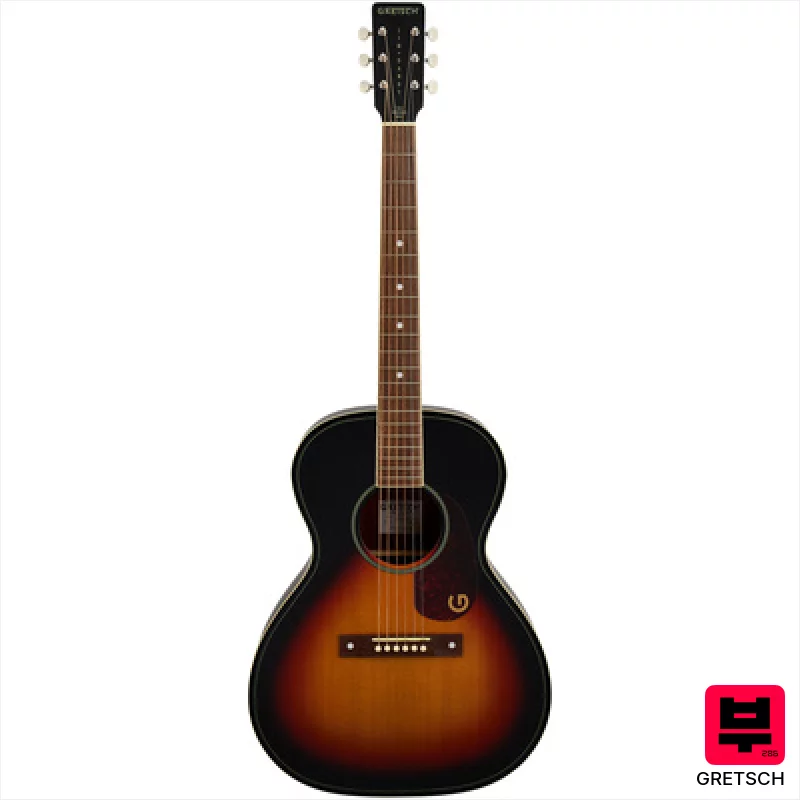
Gretsch JD LTD Concert ST HRTG BRST
- • Solid spruce top delivers a bright, responsive acoustic voice.
- • 24.75in scale offers comfortable playability, especially for smaller hands.
- • Walnut fingerboard provides a smooth, articulate feel under the fingers.
- • Nickel hardware and vintage-style tuners contribute to a classic aesthetic.
- • Sapele back and sides, while attractive, limit high-end resonance compared to all-spruce.
- • Nato neck, while stable, isn't as tonally rich as mahogany or maple.
- • Synthetic bone nut can feel slightly less premium than bone or Tusq.
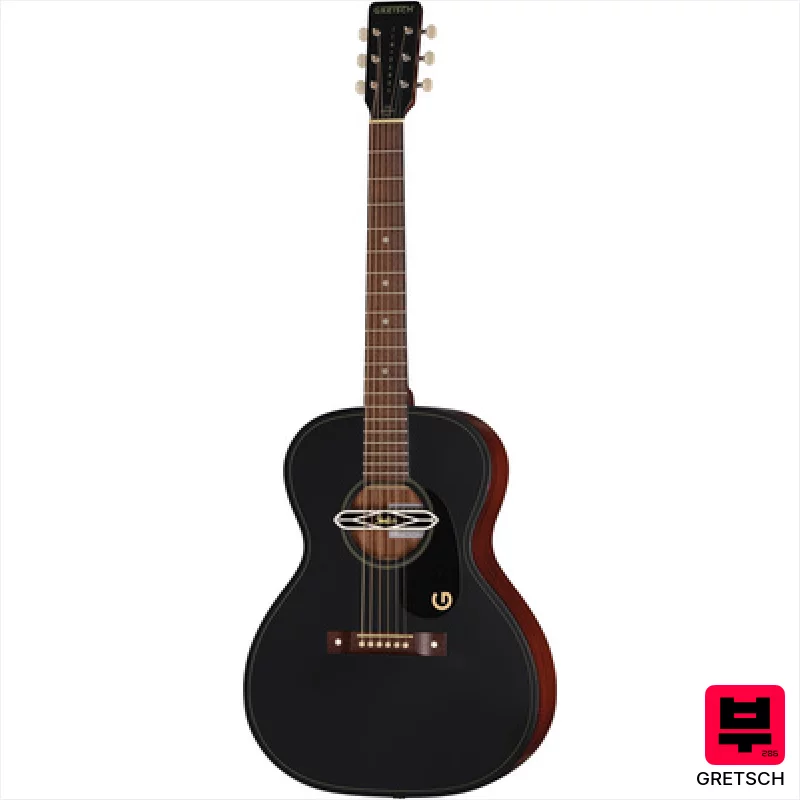
Gretsch JD Concert DELTO TSPG BLKT
- • Sapele laminate top provides a surprisingly warm and balanced acoustic tone.
- • Deltoluxe pickup offers respectable amplified sound for stage or recording.
- • 24.75” scale and comfortable C-neck profile enhance playability for various skill levels.
- • Walnut fingerboard feels smooth and offers a pleasing alternative to rosewood.
- • Laminated construction limits the potential for complex overtones and resonance.
- • Open die-cast tuners might not offer the precision of locking tuners.
- • Satin finish, while aesthetically pleasing, can feel a bit 'grabby' for some players.
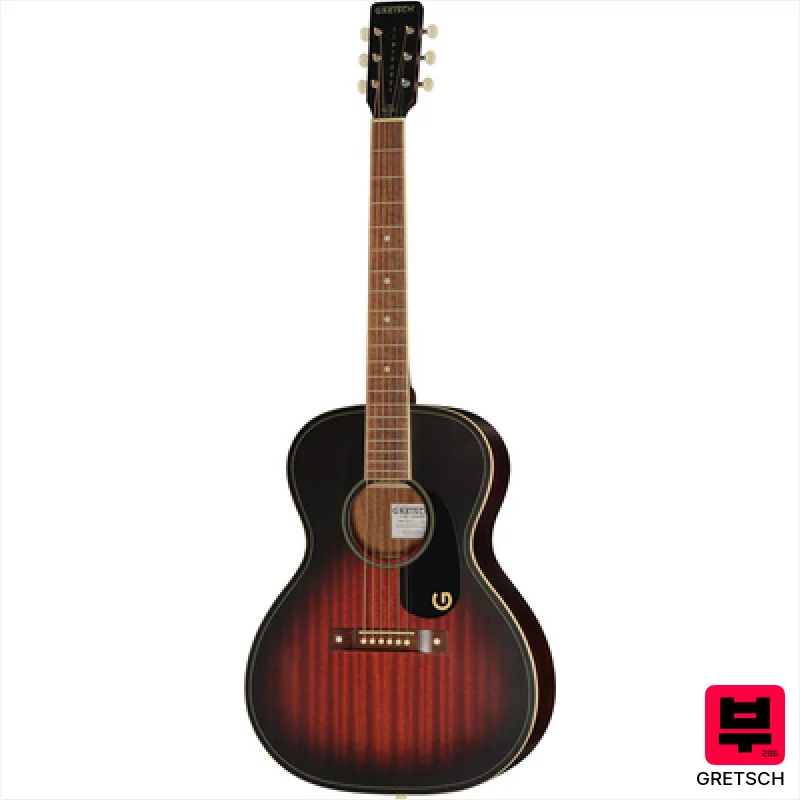
Gretsch JD Concert MAH WPG CHRY BRST
- • Sapele laminate top delivers a surprisingly warm and balanced acoustic tone.
- • Walnut fingerboard offers a smooth playing experience and a slightly darker feel.
- • Vintage-style open die-cast tuners provide reliable tuning stability for stage use.
- • The Deep Cherry Burst finish is attractive and well-executed for its price point.
- • Laminated construction limits the potential for complex overtones and nuanced resonance.
- • Nato neck, while stable, lacks the premium feel of mahogany or maple.
- • Synthetic bone nut can feel slightly less smooth compared to bone or Tusq.
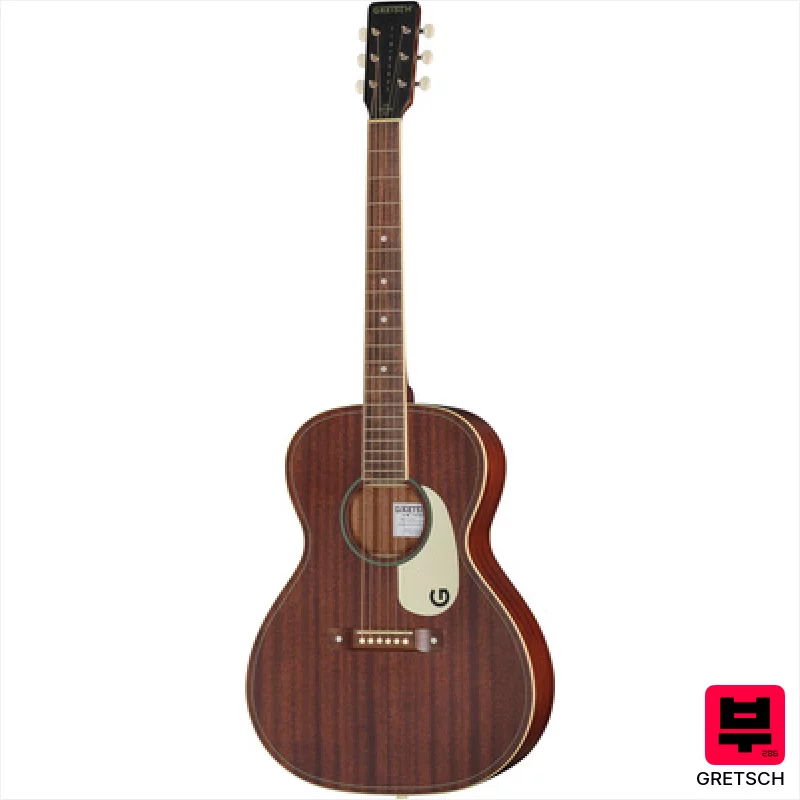
Gretsch JD Concert MAH WPG FRSTN
- • Sapele laminate provides a warm, balanced acoustic tone.
- • Short 24.75in scale enhances playability, especially for smaller hands.
- • Walnut fingerboard offers a smooth, comfortable feel under the fingers.
- • Attractive Frontier Satin finish minimizes stickiness and glare.
- • Laminated construction limits the potential for complex overtones and resonance.
- • Open die-cast tuners aren't the most precise, may require occasional adjustments.
- • Synthetic bone nut isn't quite as responsive as genuine bone.
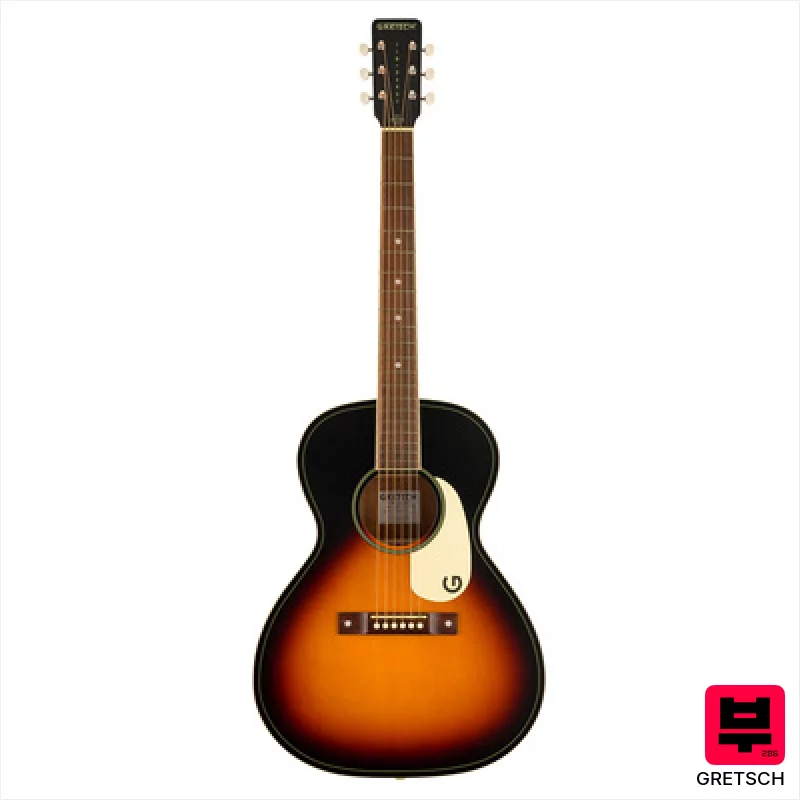
Gretsch JD Concert WPG RXB
- • Basswood top offers a surprisingly warm, mellow tone for the price point.
- • 24.75” scale provides comfortable action and a slightly looser feel, good for beginners.
- • Walnut fingerboard offers a smooth playing experience and attractive aesthetics.
- • Die-cast tuners provide reliable tuning stability – a step above cheaper options.
- • Basswood construction limits high-end shimmer and overall sustain compared to solid woods.
- • Synthetic bone nut isn't ideal; a bone nut would improve string response and tone.
- • Nickel hardware can be prone to tarnishing with regular use and sweat.
How to Choose the Best 0/00/000 Acoustic Guitars
Heritage & Construction
Gretsch's history is steeped in archtop design, and that influence carries over to their acoustics. You'll often find bracing patterns that favor projection and a slightly warmer, more complex tone than some of the more 'modern' bracing approaches. This isn't a 'bright and sparkly' guitar out of the box.
Tone Characteristics
That 'Gretsch sound' is often described as having a 'fat midrange honk' - it's got a real presence that cuts through a mix. The low end has a surprising thump for a smaller-bodied guitar, but the highs aren't overly aggressive. It's a versatile tone, good for fingerpicking, strumming, and even some light flatpicking.
Neck Profile
Gretsch necks, historically, have had a reputation for being a bit chunky - not always the easiest for players used to slimmer profiles. However, newer models are offering more variety in neck shapes, so be sure to try before you buy. A comfortable neck is critical for extended gigging.
Build Quality & Materials
While Gretsch has stepped up their game in recent years, there's still a range in build quality. Entry-level models might have a slightly less refined finish or hardware, but even those play and sound surprisingly good. The woods used - often mahogany, rosewood, and spruce - contribute significantly to the warm, woody tone.
Aesthetics & Resonation
Let's be honest, Gretsch guitars just look cool. The vintage-inspired appointments, binding, and often-present cat's eye soundhole add a ton of visual appeal. The bracing and construction techniques also contribute to a lively resonance, which translates to more volume and sustain.
Buying Guide
Don't expect a Gretsch acoustic to be the brightest, most articulate guitar you've ever played. Their strength lies in their warmth and midrange presence, which is fantastic for certain genres but might not be ideal if you're after a super-clear, glassy tone. Watch out for older models - neck resets can be a costly repair. Pay attention to the neck profile; it's a key factor in playability, and it's best to try before you commit.
How This List Is Built
We don't play these instruments — we're a catalog, not a review desk, and we'd rather say so than pretend otherwise. This page ranks 6 0/00/000 acoustic guitars from the Thomann catalogue, which is the largest single source of specification data in this category.
Position is computed, not curated. Four signals, in order of weight: how completely the manufacturer documents the instrument (number of published specifications), where it sits in the price range, how specific the model designation is — which filters out generic accessories — and whether a product image exists. The same inputs always produce the same order, so nothing here is shuffled to look fresh.
What this list is good for: narrowing a category down to a shortlist by spec and budget. What it isn't: a substitute for hearing an instrument. Before you buy, read hands-on reviews and, where you can, play it. Full methodology.

