
6-String Acoustic Basses
2 instruments available
Shop 6-String Acoustic Basses 2026
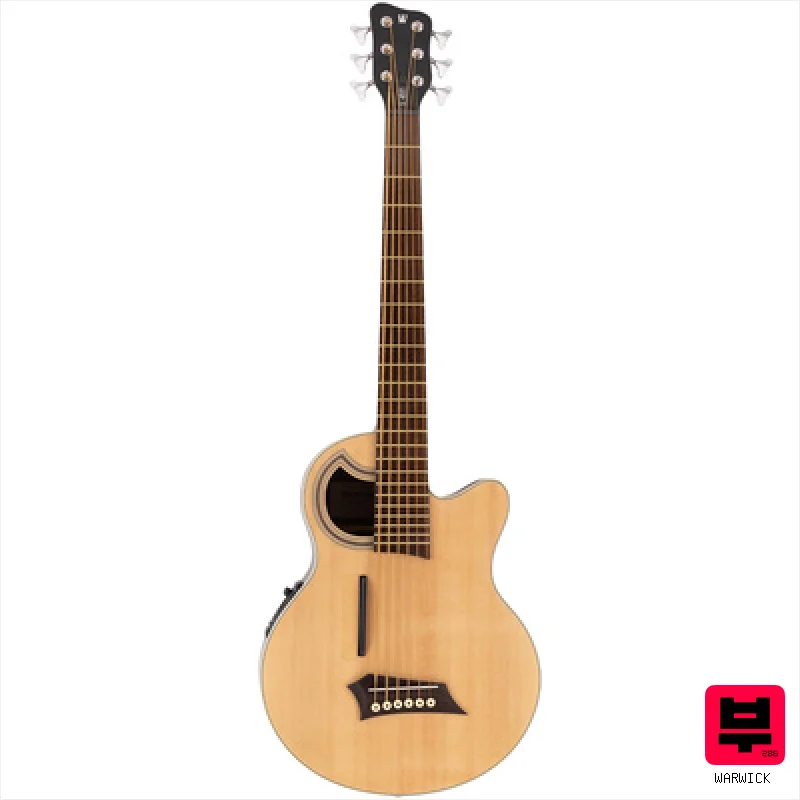
Warwick RockBass Alien Deluxe 6 NT
6-String Acoustic Basses
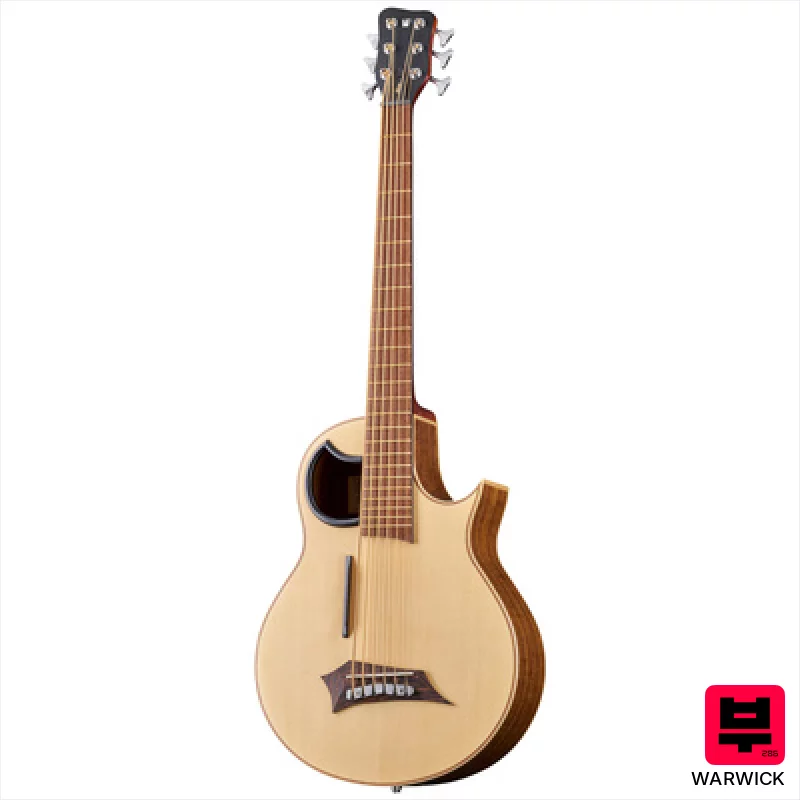
Warwick Alien 6 NT
6-String Acoustic Basses
About 6-String Acoustic Basses
6-string acoustic basses expand the tonal palette of the acoustic bass, offering a wider range and the ability to play guitar-like chordal textures. Typically favored by upright bass players transitioning to acoustic instruments or bassists seeking a unique sonic signature, they bridge the gap between bass and guitar functionality. The extended range necessitates careful consideration of string tension and instrument construction.
6-String Acoustic Basses — Pros & Cons
PROS
- Extended range provides a broader sonic landscape for creative exploration.
- Offers unique chordal possibilities not easily achieved with 4-string basses.
- Can be a more compact and portable alternative to an upright bass.
- Provides a familiar feel for guitarists adapting to bass playing.
CONS
- Increased string tension can be demanding on the fingers and neck.
- Can be more prone to buzzing or intonation issues due to longer scale length.
- Requires more precise amplification and EQ to manage the wider frequency range.
- Generally more expensive than comparable 4-string acoustic basses.
Frequently Asked Questions About 6-String Acoustic Basses
Yes, the longer scale length makes intonation more critical and potentially challenging to achieve perfectly without careful setup.
String gauges are generally heavier than those used on 4-string basses to maintain adequate tension and prevent excessive flopping, often requiring custom sets.
Bracing is crucial; a well-designed pattern balances structural integrity with tonal responsiveness, preventing the instrument from collapsing under the increased string tension and maximizing resonance.

