AudioFu Chart · October 2026
Best Wireless lavalier microphone systems Under $800 2026
The top pick is RODE Wireless GO Gen3 Wireless Microphone System ($173). Sennheiser EW-D ME2 R4-9 leads the high end. Ranked by the AudioFu Index from 42 models across 7 brands, prices checked every night.
Last updated: October 26, 2026
Top 10
Full detail for the 10 highest AudioFu Index scores. Every other model is listed below.
-
RODE Wireless GO Gen3 Wireless Microphone System
Wireless GO (Gen 3) · Rode
48 for sale on Reverb1 finish at Thomann
The Wireless GO (Gen 3) is a seriously impressive little package. It's a fantastic solution for content creators, vloggers, and interviewers needing a compact, wireless lav system with surprisingly good audio quality and internal recording as a backup – the float recording is a game-changer for avoiding clipping.
Pros
- Improved dynamic range provides cleaner audio in challenging environments.
- 32-bit float recording offers incredible headroom and flexibility in post.
- Compact and lightweight TX modules are surprisingly robust for their size.
Cons
- 2.4GHz band can still be susceptible to interference in crowded RF spaces.
- Limited channel options might necessitate frequency scouting in complex productions.
-
RODE Wireless Pro Dual Wireless Microphone System
Wireless ME Dual W · Rode
18 for sale on Reverb1 finish at Thomann
The Rode Wireless ME Dual W is a seriously handy little system. It's a fantastic entry point into wireless audio, especially for vloggers, content creators, or anyone needing reliable dual-mic capture without a ton of fuss. The Apple integration is a nice touch, and the overall package is surprisingly well-built for the price point.
Pros
- Compact and lightweight design for discreet on-body placement.
- Rode's GainAssist feature simplifies level setting for consistent audio.
- MFi certification ensures seamless integration with Apple iOS devices.
Cons
- 100m range is optimistic; expect reduced performance with obstructions.
- Limited channel selection compared to higher-end wireless systems.
52AudioFu
Index↓ 9.7%since Aug 17 · lowest so far$185 · Aug 17$167 now$167€149 at Thomann · in stockCheck price ↗ -
- Size9.5"
The AKG PW45 Presenter Set is a solid, budget-friendly option for presenters, trainers, or anyone needing a simple, reliable lapel mic system. It's surprisingly well-built for the price and the audio clarity is decent for speech, but don't expect pristine studio quality. It’s perfect for classrooms, small meetings, or anywhere you need hands-free audio without a lot of fuss.
Pros
- Compact pocket transmitter offers discreet and easy portability.
- CK 99 L lav mic delivers surprisingly clear speech reproduction.
- ISM band operation avoids licensing hassles in most regions.
Cons
- Limited frequency options restrict use in crowded RF environments.
- AA battery power isn't as convenient as rechargeable packs.
46AudioFu
IndexStableno change since Aug 17Aug 17$252 now$252€225 at Thomann · in stockCheck price ↗ -
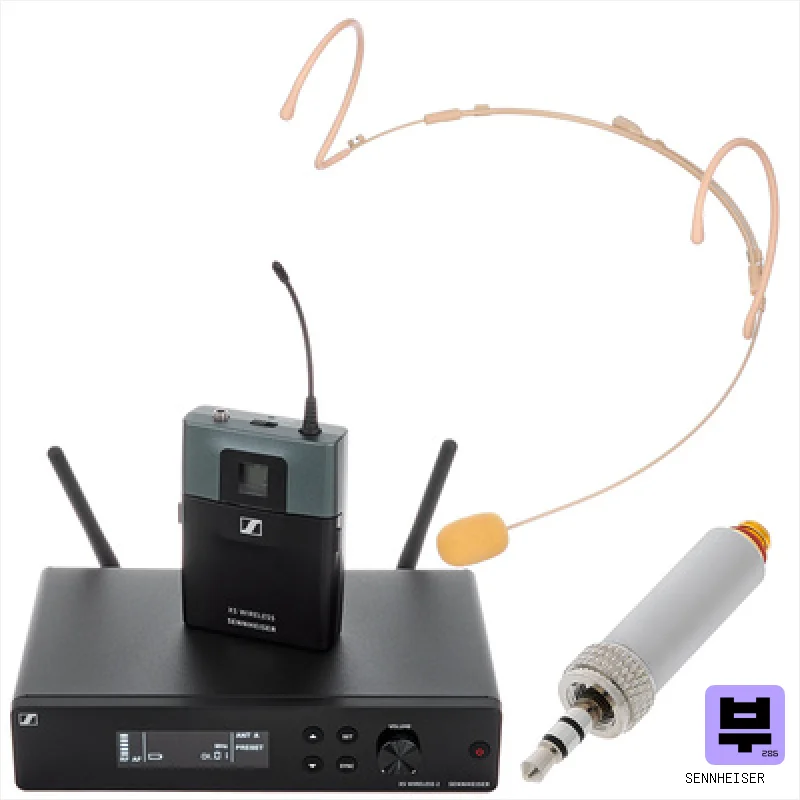
This EW-D ME2 R4-9 is a solid, dependable wireless lav system – a real step up from budget options. The digital clarity and Sennheiser's renowned reliability make it perfect for interviewers, presenters, and anyone needing clean, consistent audio in challenging environments. It's a workhorse for professionals, not a casual toy.
Pros
- Rock-solid Sennheiser build quality; feels incredibly durable.
- ME 2-II lav delivers clear, natural vocal reproduction.
- Digital transmission provides reliable, interference-free audio.
Cons
- R4-9 frequency band may be restricted in some regions.
- AA battery operation can be inconvenient for extended shoots.
45AudioFu
Index↓ 1.5%since Aug 17 · lowest so far$726 · Aug 17$715 now$715€639 at Thomann · in stockCheck price ↗ -
AKG WMS420 Wireless Lavalier Presenter System (Band A)
WMS 420 Presenter Set Band M · AKG
2 for sale on Reverb3 finishes at Thomann
- Size9.5"
This AKG WMS 420 is a great, reliable wireless presenter set. It's a workhorse for public speakers, trainers, or anyone needing clear, interference-free audio in a straightforward package. The lav mic's sound is surprisingly good for the price point, making it a solid choice for frequent use.
Pros
- Solid build quality, typical of AKG’s professional line
- The C417 lavalier offers a surprisingly natural, clear vocal pickup
- Diversity antenna system minimizes dropouts in challenging environments
Cons
- M band operation limits availability in some regions; licensing may be required
- AA battery power is less convenient than a rechargeable pack
44AudioFu
IndexStableno change since Aug 17Aug 17$353 now$353€315 at Thomann · in stockCheck price ↗ -
This Sennheiser EW-DP ME4 is a seriously solid wireless system for video shooters and content creators. The digital transmission and quality lav mic combination makes dialogue capture clean and reliable, and the Smart Assist features are surprisingly helpful. It's a premium-priced solution, but well worth it for professionals needing dependable wireless audio for interviews, film, or live events.
Pros
- Excellent digital clarity minimizes noise, even in challenging environments.
- The ME4 lav mic delivers a natural, detailed sound, great for dialogue.
- Smart Notifications genuinely simplify setup and troubleshooting for less experienced users.
Cons
- The pocket transmitter, while compact, can feel a bit bulky for extended wear.
- Battery life, while decent, requires mindful management during long shoots.
44AudioFu
Index↓ 8.3%since Aug 17 · lowest so far$670 · Aug 17$615 now$615€549 at Thomann · in stockCheck price ↗ -
- Weight0.83 kg
The GLXD14+/93 is a solid, reliable wireless system perfect for presenters, trainers, and anyone needing a simple, dual-band solution. It’s a step up from entry-level systems, offering a good balance of performance and ease-of-use, though it's not a full-blown broadcast solution.
Pros
- Dual-band frequency agility minimizes interference, a huge reliability boost.
- The WL93 lav mic delivers clear, natural vocal reproduction for presenters.
- Metal transmitter feels robust and well-built, inspires confidence.
Cons
- Receiver's plastic construction feels a bit less premium than the transmitter.
- Limited channel count compared to higher-end Shure systems; scalability is capped.
43AudioFu
Index↓ 1.5%since Aug 17 · lowest so far$726 · Aug 17$715 now$715€639 at Thomann · in stockCheck price ↗ -
This Shure BLX14/CVL is a reliable, budget-friendly wireless lavalier system, perfect for presenters, public speakers, or anyone needing clear audio in a live setting. The simplicity of operation and Shure's reputation for durability make it a solid choice. While not the most cutting-edge tech, it delivers dependable performance for the price.
Pros
- Solid Shure build quality inspires confidence on stage.
- The PG Presenter mic delivers clear, intelligible speech.
- QuickScan frequency selection simplifies setup in crowded RF environments.
Cons
- Limited frequency range can be restrictive in dense RF areas.
- The CVL lavalier’s capsule is sensitive to clothing noise.
41AudioFu
Index↓ 2.5%since Aug 17 · lowest so far$445 · Aug 17$434 now$434€388 at Thomann · in stockCheck price ↗ -
- Size9.5"
This t.bone bundle is a solid, affordable option for gigging musicians needing wireless instrument capture. The BodymiKe design is brilliant for guitarists and bassists who need freedom on stage, and the straightforward frequency syncing is a definite plus. It’s a good entry point into wireless, especially for smaller venues and quieter environments.
Pros
- BodymiKe design offers unobtrusive instrument capture for stage performance.
- The infrared sync simplifies frequency matching; a real time-saver.
- LC display on both receiver and transmitter provides clear operational feedback.
Cons
- Plastic transmitter housing feels a bit budget-oriented for frequent use.
- Limited frequency band (606-630 MHz) restricts channel availability in congested areas.
40AudioFu
IndexStableno change since Aug 17Aug 17$207 now$207€185 at Thomann · in stockCheck price ↗ -
- Size9.5"
This t.bone bundle is a solid, budget-friendly option for gigging musicians needing wireless instrument freedom. The pocket transmitter is clever for guitar and bass, and the IR sync is genuinely helpful. It's ideal for solo performers, small bands, or anyone wanting a simple, reliable wireless setup without breaking the bank.
Pros
- Pocket transmitter design allows for discreet instrument monitoring
- LC displays on both units simplify setup and troubleshooting
- Infrared sync streamlines frequency management, a genuine time-saver
Cons
- Limited frequency band may encounter interference in crowded RF environments
- Plastic transmitter housing feels less robust than metal alternatives
40AudioFu
IndexStableno change since Aug 17Aug 17$207 now$207€185 at Thomann · in stockCheck price ↗
All 42 wireless lavalier microphone systems
Same index, same nightly prices — compact. Colour options of one model share a row. Tap a photo to zoom.
- 11
the t.bone freeU PT 823 BodymiKe B Bundlethe t.bone40Stable$207€185$207€185Check ↗
- 12
the t.bone freeU PT 863 BodymiKe B Bundlethe t.bone40Stable$207€185$207€185Check ↗
- 13
the t.bone freeU PT 823 BodymiKe T Bundlethe t.bone40Stable$207€185$207€185Check ↗
- 14
the t.bone freeU PT 863 BodymiKe T Bundlethe t.bone40Stable$207€185$207€185Check ↗
- 15
the t.bone free solo 600 Lapel Bundlethe t.bone40Stable$234€209$234€209Check ↗
- 16
the t.bone free solo 823 Lapel Bundlethe t.bone40Stable$234€209$234€209Check ↗
- 17
the t.bone free solo 863 Lapel Bundlethe t.bone40Stable$234€209$234€209Check ↗
- 18
the t.bone free solo 1.8 Lapel Bundlethe t.bone40Stable$245€219$245€219Check ↗
- 19
the t.bone GigA Pro Body BodymiKeT Bundlethe t.bone40Stable$335€299$335€299Check ↗
- 20
the t.bone GigA Pro Body BodymiKeB Bundlethe t.bone40Stable$335€299$335€299Check ↗
- 21
Shure MoveMic 88+Shure40Stable$386€345$386€345Check ↗
- 22
Shure MoveMic 88+ Receiver KitShure40Stable$581€519$581€519Check ↗
- 23
AKG WMS 40 Mini BodymikeB ISM1 SetAKG · 4 finishes39Stable$173€155$173€155Check ↗
- 24
Sennheiser XSW 1-ME2 E-Band Lapel SetSennheiser38↓ 7.9%$391€349$391€349Check ↗
- 25
Sennheiser EW-D ME4 Q1-6Sennheiser · 2 finishes38Stable$670€599$670€599Check ↗
- 26
Sennheiser EW-D HT 747 Q1-6 BundleSennheiser37↓ 4.2%$760€679$760€679Check ↗
- 27
Sennheiser XSW 1-ME2 A-Band Lapel SetSennheiser36↓ 2.5%$398€356$398€356Check ↗
- 28
Sennheiser EW-DP ME2 SET R1-6Sennheiser · 2 finishes36↑ 5.1%$669€598$669€598Check ↗
- 29
Sennheiser XSW 1-ME2 GB-Band Lapel SetSennheiser35Stable$409€365$409€365Check ↗
- 30
Sennheiser XSW 2-ME2 B-Band Lapel SetSennheiser35↓ 1.3%$514€459$514€459Check ↗
- 31
Sennheiser XSW 2-ME2 A-Band Lapel SetSennheiser35Stable$525€469$525€469Check ↗
- 32
Sennheiser XSW 2-ME2 GB-Band Lapel SetSennheiser35Stable$525€469$525€469Check ↗
- 33
Sennheiser EW-D HT 747 S1-7 BundleSennheiser35Stable$782€699$782€699Check ↗
- 34
Rode Wireless PRORode · 2 finishes34↓ 3.4%$259€231$259€231Check ↗
- 35
Sennheiser XSW 1-ME2 B-Band Lapel SetSennheiser33↑ 2.8%$413€369$413€369Check ↗
- 36
Sennheiser XSW 2-ME2 E-Band Lapel SetSennheiser33↑ 3.2%$514€459$514€459Check ↗
- 37
the t.bone TWS One A Lapelthe t.bone32Stable$62€55$62€55Check ↗
- 38
the t.bone Sync 2 Prothe t.bone32Stable$144€129$144€129Check ↗
- 39
XVive U5 Wireless Audio System + LavXVive · 2 finishes31Stable$167€149$167€149Check ↗
- 40
LD Systems U308 BPLLD Systems29Stable$212€189$212€189Check ↗
- 41
LD Systems U508 BPLLD Systems29Stable$402€359$402€359Check ↗
- 42
LD Systems U505 BPLLD Systems29Stable$413€369$413€369Check ↗
Wireless lavalier microphone systems by the numbers
Measured across all 65 models we track, not a sample.
Median $386 — half of all wireless lavalier microphone systems here cost less.
median of 19 models · 8"–9.5"
How the AudioFu Index works
Five measured signals and nothing else — no stars from strangers, no “tested by experts” we didn’t do. The weights are fixed and public. We don’t play these instruments; we measure the market around them.
This chart covers 65 wireless lavalier microphone systems from the Thomann catalogue. Before you buy, read hands-on reviews and, where you can, play it. Full methodology.
AudioFu earns a commission when you buy through our Thomann links. It never changes the order — the index does.
- Demand40%
How many of this exact model are for sale on Reverb right now — what musicians actually buy and resell.
- Lineup20%
How many finishes Thomann stocks — makers expand the models that sell.
- Price15%
Where the price has moved since we started tracking in August.
- Specs15%
How completely the maker documents it.
- Maker10%
How deep the brand’s range is in this category.
Questions
What should I look for when buying wireless lavalier microphone systems?
Key factors include build quality, sound characteristics, playability, brand reputation, warranty coverage, and value for money. Consider your musical style, skill level, and intended use to find the best match.
How much should I spend on wireless lavalier microphone systems?
Budget depends on your needs and experience level. Beginners can find quality options for $200-500, intermediate players should consider $500-1500 range, while professionals often invest $1500+ for premium features.
Are expensive wireless lavalier microphone systems worth the investment?
Higher-priced wireless lavalier microphone systems typically offer better materials, craftsmanship, and performance. They're worth it if you're serious about music, perform regularly, or need professional-grade features.
What are the best brands for wireless lavalier microphone systems?
Top brands combine quality, innovation, and reliability. We evaluate brands based on build quality, sound performance, durability, and customer satisfaction to recommend the best options for different budgets.
Should I buy wireless lavalier microphone systems online or in-store?
Both have advantages. Online offers better prices and selection, while stores allow hands-on testing. We recommend researching online first, then testing in stores if possible. Many online retailers offer excellent return policies.