AudioFu Chart · November 2026
Best Wireless camera microphone systems Under $200 2026
The top pick is Hollyland LARK M2 with USB-C Plug ($86). Sennheiser XSW-D Portable Lav Mobile Kit leads the high end. Ranked by the AudioFu Index from 5 models across 3 brands, prices checked every night.
Last updated: November 8, 2026
Top 5
Full detail for the 5 highest AudioFu Index scores. Every other model is listed below.
-
You get two small wireless transmitters, a USB-C receiver, and a charging case in one set. Each transmitter weighs just 9 g and runs up to 10 hours on a charge, so it suits you if you record video or audio on the go and want easy plug-and-play setup. The noise cancellation and 300 m range help cut down background noise in busy places.
Pros
- Two transmitters and one USB-C receiver come together as a complete set
- Environmental noise cancellation reduces background noise by up to -15 dB
- Up to 40 hours total battery life with the charging case
Cons
- Charging case needs up to 1.5 hours to charge fully
-
You get two small transmitters and one USB-C receiver, with a 300 m line-of-sight range and AI noise cancellation at three levels. This kit suits you if you want a simple wireless setup that clips onto your shirt. Keep in mind that the noise cancellation shortens battery life, from up to 8 hours down to up to 4.5 hours.
Pros
- Two transmitters and one USB-C receiver come in the box, ready to use
- Operates at 2.4 GHz with Adaptive Frequency Hopping for a stable link
- AI Noise Cancellation offers three levels: 10 dB, 15 dB and 20 dB
Cons
- Noise cancellation cuts transmitter battery life from up to 8 hours to up to 4.5 hours
-
You get two clip-on mics and a small receiver that works with smartphones, Mac or PC, and cameras. It suits interviews, quick video shoots, and vlogging, where you want to move around without cables. Each part has a battery level display and charges over USB-C, so you can keep it ready for a day of filming.
Pros
- Two clip-on microphones and a compact 2-channel receiver come in one set
- Latency under 5 ms with distortion-free signal transmission
- LED display on all three components shows battery level
Cons
- Each transmitter runs up to 8 hours, so long shoots may need a recharge
-
This is a small wireless mic set that works with cameras and smartphones. It has noise cancellation you can adjust from 5 dB to 25 dB, and each transmitter stores up to 14 hours of uncompressed audio. It suits you if you film video or record talk and want a light, simple setup.
Pros
- Each transmitter has 8 GB of internal memory for up to 14 hours of uncompressed audio recording
- AI-based noise cancellation with a continuously adjustable range from 5 dB to 25 dB
- Frame-accurate timecode synchronisation via 3.5 mm and UAC connections
Cons
- Receiver has only a USB-C port, so a USB-C to 3.5 mm adaptor is needed for 3.5 mm devices
38AudioFu
IndexStableno change since Aug 17Aug 17$178 now$178€159 at Thomann · in stockCheck price ↗ -
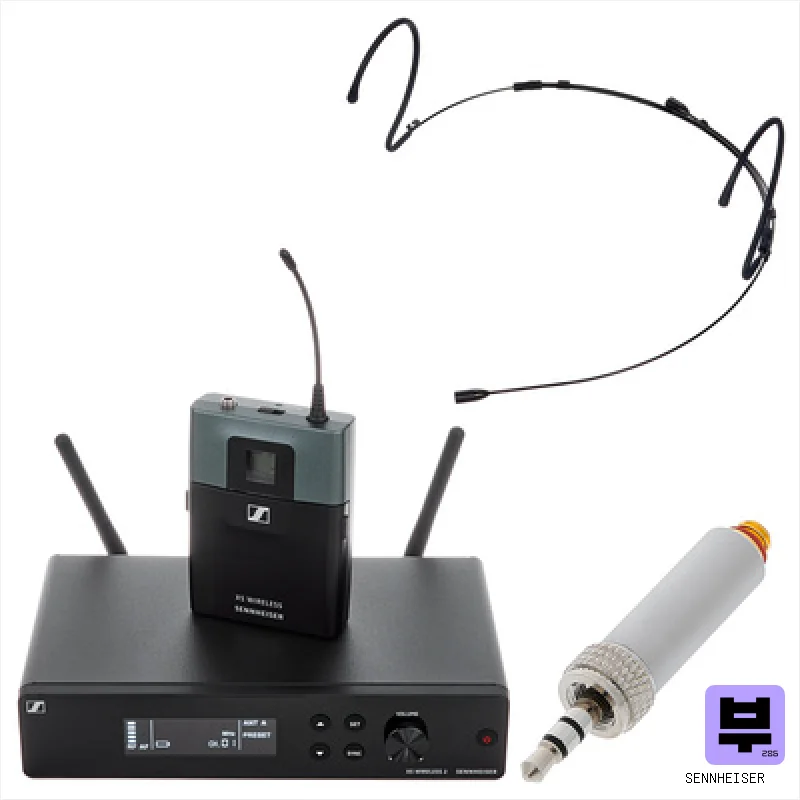
This kit packs a lot into a small bag, including a tripod and phone clamp for instant recording. The ME2-II mic delivers solid lavalier sound, and the cold-shoe adapter makes mounting simple. It's a budget-friendly choice for anyone needing a quick, portable wireless setup without extra gear.
Pros
- Includes a dedicated cold-shoe adapter for easy receiver mounting
- Comes with a Manfrotto PIXI tripod for stable handheld use
- Features a smartphone clamp with cold shoe mount for quick setup
Cons
- No frequency band or range specifications listed in the description
- Missing stated battery life duration for transmitter and receiver
26AudioFu
Index↓ 21.8%since Aug 17 · lowest so far$256 · Aug 17$200 now$200€179 at Thomann · in stockCheck price ↗
Wireless camera microphone systems by the numbers
Measured across all 11 models we track, not a sample.
Median $111 — half of all wireless camera microphone systems here cost less.
How the AudioFu Index works
Five measured signals and nothing else — no stars from strangers, no “tested by experts” we didn’t do. The weights are fixed and public. We don’t play these instruments; we measure the market around them.
This chart covers 11 wireless camera microphone systems from the Thomann catalogue. Before you buy, read hands-on reviews and, where you can, play it. Full methodology.
AudioFu earns a commission when you buy through our Thomann links. It never changes the order — the index does.
- Demand40%
How many of this exact model are for sale on Reverb right now — what musicians actually buy and resell.
- Lineup20%
How many finishes Thomann stocks — makers expand the models that sell.
- Price15%
Where the price has moved since we started tracking in August.
- Specs15%
How completely the maker documents it.
- Maker10%
How deep the brand’s range is in this category.
Questions
What should I look for when buying wireless camera microphone systems?
Key factors include build quality, sound characteristics, playability, brand reputation, warranty coverage, and value for money. Consider your musical style, skill level, and intended use to find the best match.
How much should I spend on wireless camera microphone systems?
Budget depends on your needs and experience level. Beginners can find quality options for $200-500, intermediate players should consider $500-1500 range, while professionals often invest $1500+ for premium features.
Are expensive wireless camera microphone systems worth the investment?
Higher-priced wireless camera microphone systems typically offer better materials, craftsmanship, and performance. They're worth it if you're serious about music, perform regularly, or need professional-grade features.
What are the best brands for wireless camera microphone systems?
Top brands combine quality, innovation, and reliability. We evaluate brands based on build quality, sound performance, durability, and customer satisfaction to recommend the best options for different budgets.
Should I buy wireless camera microphone systems online or in-store?
Both have advantages. Online offers better prices and selection, while stores allow hands-on testing. We recommend researching online first, then testing in stores if possible. Many online retailers offer excellent return policies.