AudioFu
AudioFu Chart · October 2026
Best Voice Processor for Advanced 2026
The top pick is TASCAM TA-1VP Vocal Processor ($514). TC-Helicon Critical Mass gives you the most for the money at $104. Ranked by the AudioFu Index from 11 models across 4 brands, prices checked every night.
Last updated: October 12, 2026
Top 10
Full detail for the 10 highest AudioFu Index scores. Every other model is listed below.
-
- Size19"
- Weight2 kg
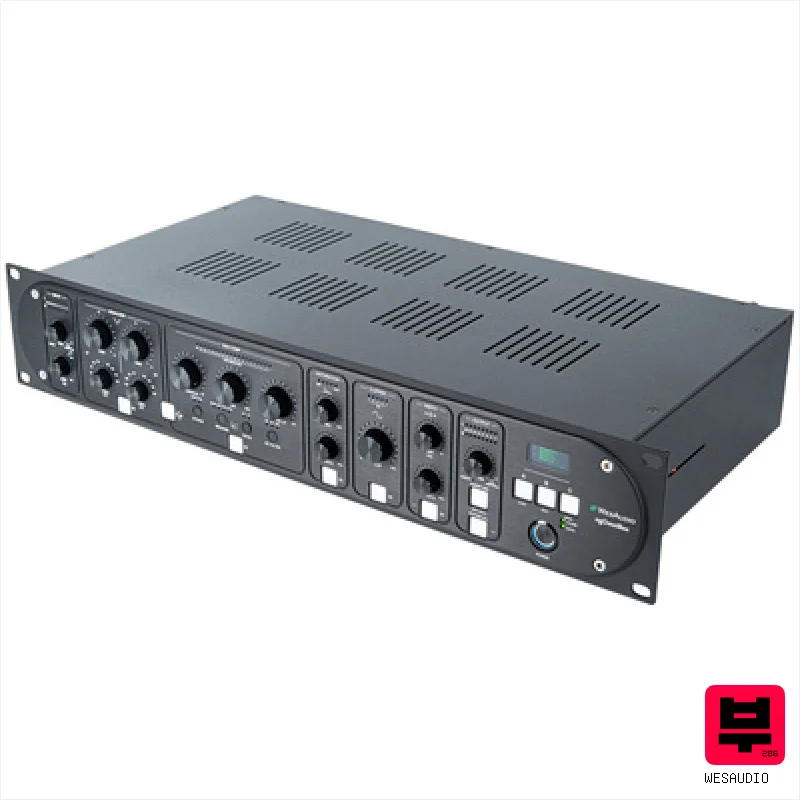
The Tascam TA-1VP is a surprisingly capable vocal processor, blending Antares’ renowned Auto-Tune with Tascam’s EVO processing. It’s a solid choice for gigging vocalists and home studios looking for a compact, all-in-one solution – particularly those who want a blend of automated correction and creative vocal shaping without diving into a full DAW workflow.
Pros
- Antares Auto-Tune integration delivers polished, professional vocal correction
- EVO voice processing offers unique, characterful tonal shaping possibilities
- Comprehensive connectivity suite handles diverse studio and live setups
Cons
- Limited flexibility compared to modular software vocal processing chains
- The tube modelling, while pleasant, is a simulation – lacks true tube warmth
71AudioFu
Index↓ 2.1%since Aug 14 · lowest so far$526 · Aug 14$514 now$514€459 at Thomann · in stockCheck price ↗ -
Old Blood Noise Endeavors MAW XLR Pedal
20 for sale on Reverb1 finish at Thomann
The MAW is a seriously cool, creative tool for vocalists and instrumentalists working with microphones. It’s like having a boutique effects rack dedicated to your mic signal, allowing for complex, evolving textures—perfect for experimental musicians, vocalists seeking unique processing, or anyone wanting to add some serious character to their recordings.
Pros
- Excellent preamplifier for dynamic mics, adds significant warmth
- Creative effects routing via the FX loop offers tonal flexibility
- Expression pedal inputs allow for nuanced, real-time control
Cons
- Limited preset storage demands diligent knob tweaking
- The interface, while creative, can feel overwhelming initially
-
The VT-4 is a fun, accessible voice processor – think of it as a digital playground for vocal experimentation. It's perfect for singer-songwriters, bedroom producers, or anyone wanting to add instant character to their vocals without a ton of technical fuss. The vocoder alone makes it a worthwhile grab.
Pros
- Intuitive controls offer immediate, creative vocal manipulation.
- Vocoder is surprisingly usable and sounds genuinely vintage.
- Compact size and battery operation enable performance flexibility.
Cons
- Limited routing options restrict complex signal chains.
- Effect quality, while decent, isn't flagship-level Roland.
67AudioFu
IndexStableno change since Aug 14Aug 14$313 now$313€279 at Thomann · in stockCheck price ↗ -
Roland E-4 AIRA Compact Voice Tweaker
AIRA Compact E-4 Voice Tweaker · Roland
38 for sale on Reverb1 finish at Thomann
The Roland E-4 is a clever little box for vocal experimentation. It’s perfect for singer-songwriters, beatmakers, and anyone wanting to add immediate, creative vocal processing without a massive setup. The vocoder is surprisingly good for the price, and the looper is a genuine boon for live performance.
Pros
- Intuitive fader control offers immediate, expressive vocal manipulation.
- Compact size and battery power enable portable performance and experimentation.
- Built-in looper simplifies layering and creating vocal textures on the fly.
Cons
- Limited 24-second looper length restricts complex song construction.
- 3.5mm connections feel a bit flimsy for a professional environment.
73AudioFu
IndexStableno change since Aug 14Aug 14$206 now$206€184 at Thomann · in stockCheck price ↗ -
- Weight0.5 kg
The Critical Mass is a solid, budget-friendly option for singer-songwriters or smaller bands needing basic vocal effects on the fly. It’s got a clean preamp and decent effects, but don't expect the depth or complexity of a flagship processor – it's a workhorse, not a studio powerhouse.
Pros
- Clean preamp provides a surprisingly transparent and low-noise signal
- Compact size makes it ideal for gigging musicians with limited space
- Footswitch offers immediate effect engagement for dynamic performance
Cons
- Limited effects selection compared to more modern voice processors
- USB connection requires external power – no included power adapter
80AudioFu
Index↓ 21.8%since Aug 14 · lowest so far$133 · Aug 14$104 now$104€93 at Thomann · in stockCheck price ↗ -
- Weight0.5 kg
The TC-Helicon Talkbox Synth is a genuinely clever and affordable unit for guitarists wanting to experiment with the classic talkbox sound and synth textures. It's a blast for live performance and songwriting, especially if you're into funk, synth-rock, or just quirky sounds, but don’t expect pristine studio quality. It’s a fun toy, not a professional vocal processing chain.
Pros
- Unique talkbox emulation, surprisingly authentic and fun
- Guitar-triggered synth sounds add creative sonic possibilities
- Adaptive Tone technology simplifies gain staging and EQ
Cons
- Requires external power supply, adding to overall cost
- Microphone preamp quality is adequate, not high-end studio level
78AudioFu
Index↓ 20.8%since Aug 14 · lowest so far$140 · Aug 14$111 now$111€99 at Thomann · in stockCheck price ↗ -
The VoiceTone T1 is a solid entry point into TC-Helicon’s vocal processing world. It’s a great solution for singer-songwriters or gigging musicians who need a compact, affordable way to clean up and enhance their vocals on stage—just don’t expect the full feature set of a VoiceLive.
Pros
- Excellent VoiceLive 2 algorithms deliver professional vocal polish
- Built-in phantom power simplifies setup with condenser mics
- Recessed gain control prevents accidental signal adjustments
Cons
- Limited effects compared to full VoiceLive units
- Phantom power is always on, potentially problematic for some mics
76AudioFu
Index↓ 16.8%since Aug 14 · lowest so far$133 · Aug 14$111 now$111€99 at Thomann · in stockCheck price ↗ -
The VoiceTone H1 is a surprisingly capable vocal processor for guitarists and singers who want harmonies on the fly. It's a great entry point into vocal effects, especially for those already comfortable with pedals, but don't expect studio-grade sonic depth. It's ideal for gigging musicians who want a simple, portable solution.
Pros
- Compact footprint ideal for pedalboards, even smaller ones
- Solid build quality; feels robust for its size and price
- Excellent chord recognition for surprisingly accurate harmonies
Cons
- Harmonies can sound 'processed' without careful tweaking
- Limited effect options compared to more expensive vocal processors
74AudioFu
Index↓ 2.6%since Aug 14 · lowest so far$128 · Aug 14$124 now$124€111 at Thomann · in stockCheck price ↗ -
The VoiceTone X1 is a surprisingly capable little vocal processor, especially for singer-songwriters or performers needing a quick dose of grit or megaphone character. It’s a great entry point into the TC-Helicon ecosystem and a handy tool for adding a little something extra to a vocal signal without a ton of complexity. It’s particularly useful for those wanting a compact, portable solution.
Pros
- Solid build quality with robust foot-switches and housing
- XLR input & phantom power simplifies recording and live use
- Megaphone effect adds unique character for performance
Cons
- Limited effect selection compared to higher-end vocal processors
- USB connectivity primarily for software, not audio interface functionality
70AudioFu
Index↓ 20.8%since Aug 14 · lowest so far$140 · Aug 14$111 now$111€99 at Thomann · in stockCheck price ↗ -
The VoiceTone R1 is a solid, affordable reverb pedal for vocalists wanting a quick and easy way to add space and dimension. It’s perfect for singer-songwriters or gigging musicians needing a reliable, high-quality reverb without a complex signal chain. Just plug in, choose a preset, and go—it's that straightforward.
Pros
- Excellent reverb quality leveraging VoiceLive algorithms
- Compact footprint ideal for pedalboard integration
- XLR input with phantom power simplifies mic connectivity
Cons
- Limited to reverb effects; lacks broader vocal processing options
- Phantom power cannot be disabled, potentially problematic with some mics
65AudioFu
Index↓ 42.6%since Aug 14 · lowest so far$166 · Aug 14$95 now$95€85 at Thomann · in stockCheck price ↗
All 11 voice processor
Same index, same nightly prices — compact. Colour options of one model share a row. Tap a photo to zoom.
- 11
TC-Helicon FuseTC-Helicon55↓ 13.3%$95€85$95€85Check ↗
Voice Processor by the numbers
Measured across all 11 models we track, not a sample.
Median $111 — half of all voice processor here cost less.
How to choose the best voice processor
Modulation Complexity
Advanced players need more than a simple chorus or flanger. Look for processors with nested modulation, LFO shaping, and the ability to route effects within the processor - think granular delays and complex pitch shifting.
Dynamic Vocal Processing
It's not just about compression; it's about responsive, transparent gain reduction that doesn't suck the life out of your performance. Look for processors with sophisticated sidechaining, de-essing, and adaptive EQ that adjusts based on vocal input.
Harmonies & Pitch Correction
Forget auto-tune. We're talking about nuanced pitch correction that preserves character, and robust harmony generation with customizable intervals, voicings, and spread. The ability to control the 'humanization' of these effects is key.
Playability & Workflow
A wall of menus isn't user-friendly; it's a nightmare. Look for intuitive controls, expressive assignable parameters, and a logical workflow that allows for real-time manipulation on stage or in the studio. Knobs and tactile feedback are your friends.
Routing & Integration
Can you send individual effects to external processors? Does it play nicely with your existing rig? Advanced players need flexible routing options to integrate the voice processor into a complex signal chain, not just be a standalone box.
Buying guide
Okay, so you're beyond the basic doubling and chorus effects on your interface. You want to sculpt vocal textures, create complex harmonies, and dial in effects that actually react to your performance - not just sit there like a digital ornament. This isn't about making your voice sound 'good'; it's about using a voice processor as an instrument itself. Let's ditch the beginner's guides and talk about the real deal for players who know what they want.
Don't fall for the 'more features' trap. A processor overloaded with options you'll never use is just as frustrating as one that's too limited. Pay attention to the signal path - cheap units often use lower-quality converters which will muddy your tone.
Spending more on a processor with a clean, transparent sound and a responsive feel is always worth it; you can always add effects later, but you can't fix a bad foundation.
How the AudioFu Index works
Five measured signals and nothing else — no stars from strangers, no “tested by experts” we didn’t do. The weights are fixed and public. We don’t play these instruments; we measure the market around them.
This chart covers 11 voice processor from the Thomann catalogue. Before you buy, read hands-on reviews and, where you can, play it. Full methodology.
AudioFu earns a commission when you buy through our Thomann links. It never changes the order — the index does.
- Demand40%
How many of this exact model are for sale on Reverb right now — what musicians actually buy and resell.
- Lineup20%
How many finishes Thomann stocks — makers expand the models that sell.
- Price15%
Where the price has moved since we started tracking in August.
- Specs15%
How completely the maker documents it.
- Maker10%
How deep the brand’s range is in this category.
Questions
How much of a learning curve are we talking about?
These aren't plug-and-play boxes. Expect to spend a solid week just familiarizing yourself with the interface and core functions. The payoff is huge, but it requires dedication.
Can I use this for live performance?
Absolutely, but consider the routing and preset recall. Live performance demands a quick, reliable workflow, so make sure the processor can handle complex presets and integrate with your stage setup.
What's the difference between a vocal effects plugin and a dedicated hardware processor?
Plugins are convenient, but often suffer from latency and CPU load. Hardware processors offer lower latency, more tactile control, and can sound more 'analog' due to the warmth of dedicated converters and circuitry.
I'm worried about adding more latency to my signal. How can I minimize it?
Buffer size is your friend. Experiment with lower buffer sizes, but be mindful of potential pops and clicks. A good processor will offer transparent latency compensation.
Are these processors really worth the investment?
If you're serious about vocal production and performance, yes. The ability to create truly unique and expressive vocal textures is a game-changer, and a good voice processor can be as essential as your microphone.