
Best Vocalists for Vocal Enhancement 2026
So, you're looking to polish your vocals, huh? It's not about making them perfect - nobody's perfect - it's about bringing out what's already there and helping them cut through the mix. The right vocalist can add warmth, clarity, or even a subtle shimmer, but picking the wrong one will leave you with a sterile, unnatural sound. Let's break down what to look for in a vocalist for vocal enhancement, beyond just 'it sounds good'.
Last updated: July 15, 2026 • Next update: July 22, 2026
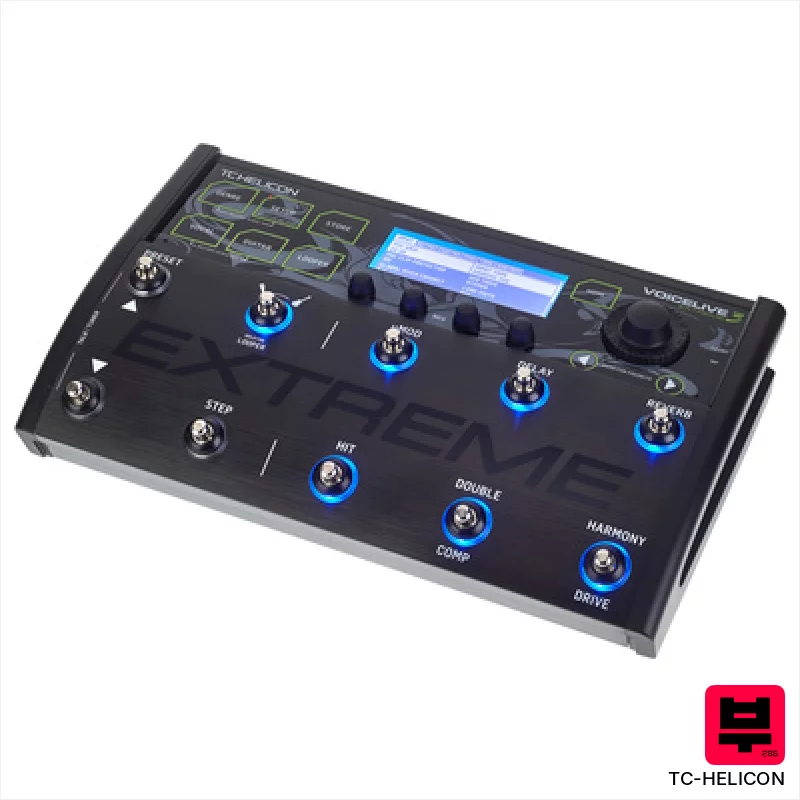
TC-Helicon VoiceLive 3 Extreme
- • Impressive vocal harmony engine with excellent guitar sync.
- • Robust loop functionality for creating complex vocal layers.
- • Versatile effects suite covers a wide range of vocal and guitar tones.
- • Intuitive LCD display simplifies navigation and parameter adjustments.
- • Size and weight make it less ideal for smaller pedalboards or travel.
- • Vocoder functionality, while creative, can be complex to master.
- • Menu diving can become tedious for quick adjustments during live performance.
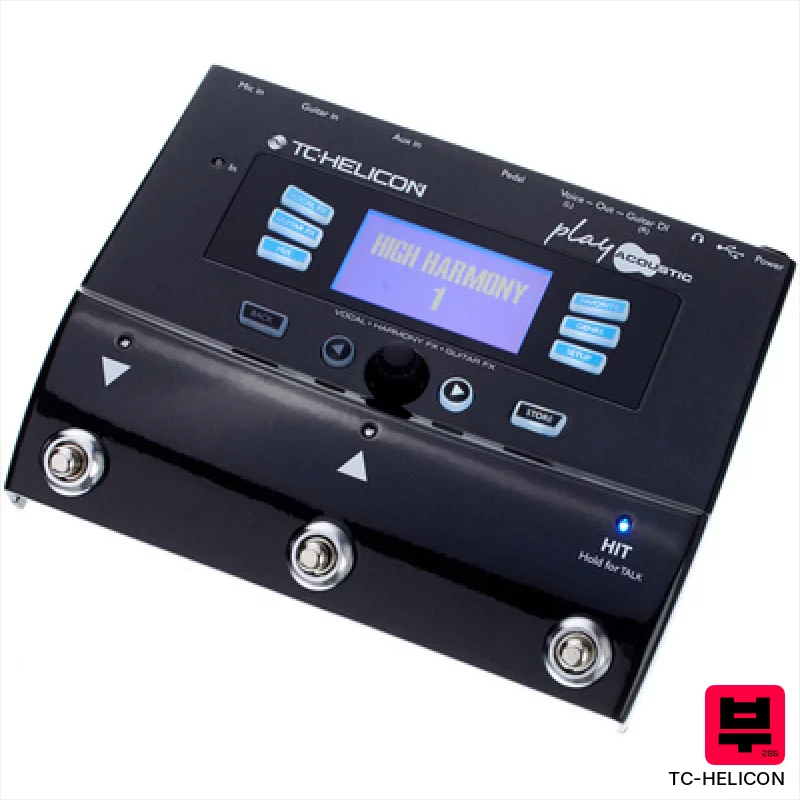
TC-Helicon Play Acoustic
- • BodyRez filter noticeably tames harsh acoustic guitar frequencies.
- • Integrated effects are surprisingly usable and well-voiced for a compact unit.
- • VLOOP looper provides a convenient performance tool for live looping.
- • XLR DI output offers a clean, usable signal for recording or PA systems.
- • Harmonizer algorithms can sound artificial, especially with complex chord progressions.
- • Limited EQ control compared to standalone acoustic processors.
- • Plastic enclosure feels a little budget-friendly, lacks premium robustness.

Boss VE-8 Acoustic Singer Bundle
- • Excellent vocal processing for acoustic guitar pairings
- • Gator bag offers robust protection and portability
- • Intuitive interface simplifies complex effects layering
- • Harmonizer is surprisingly responsive and musically useful
- • Limited looper time may frustrate serious looping artists
- • Build quality feels plasticky, not as robust as flagship Boss units
- • AUX input lacks dedicated level control, can be tricky to balance
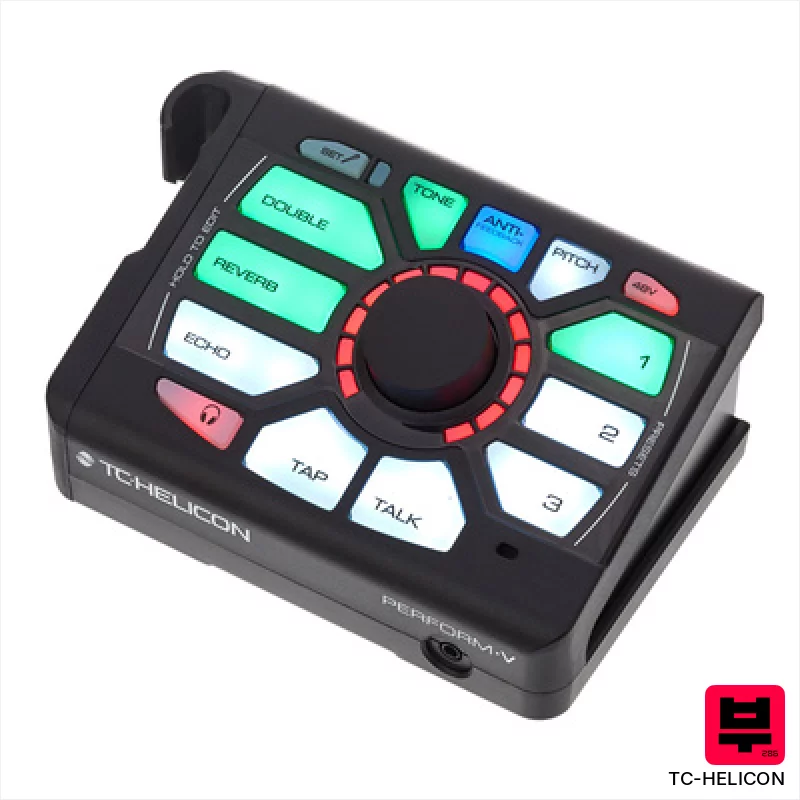
TC-Helicon Perform-V
- • Compact design offers great portability for gigging musicians
- • Adaptive Tone app integration allows for quick, personalized EQ adjustments
- • Built-in preamp delivers a surprisingly clean and usable mic signal
- • Intuitive pedal layout makes creating harmonies and effects relatively easy
- • Limited effect options compared to more premium vocal processors
- • Aux input is a basic 3.5mm jack – feels a bit cheap for the price
- • Harmony voice quality can sound synthetic at higher complexity settings
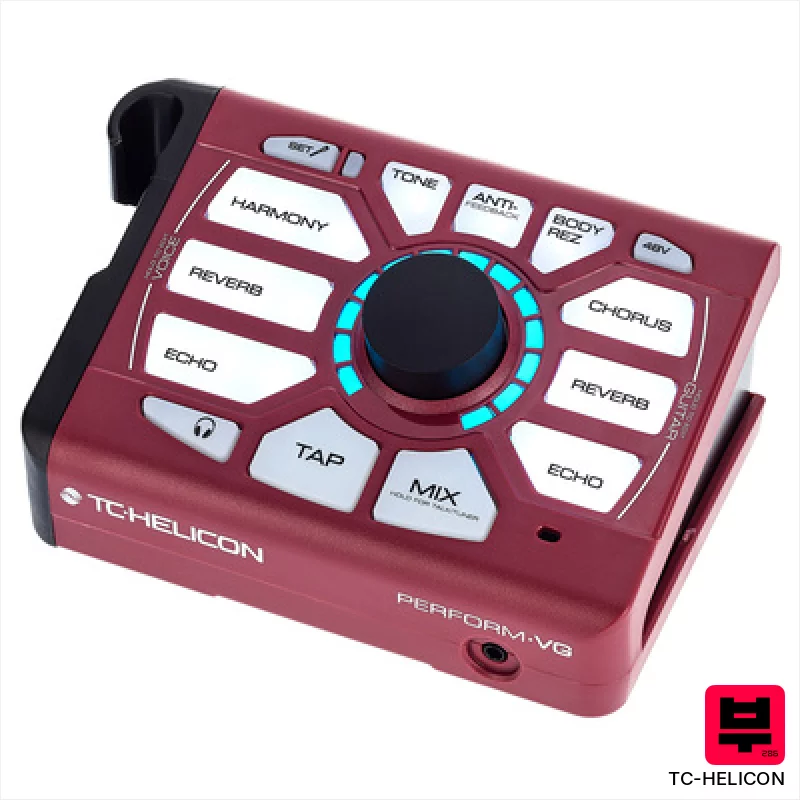
TC-Helicon Perform-VG
- • Excellent vocal doubling and harmony creation for live performance
- • Built-in preamp delivers clean gain, suitable for dynamic mics
- • Compact size makes it travel-friendly for gigging musicians
- • Anti-feedback function is surprisingly effective for live stages
- • Limited effect customization compared to dedicated multi-effects units
- • Guitar input impedance isn't ideal for high-impedance pickups
- • AUX input is line-level only, not mic-level

Boss VE-8 Acoustic Singer
- • Excellent vocal clarity with Boss’s renowned processing
- • Intuitive harmonies sound surprisingly natural and usable
- • Compact design makes it stage-ready and easy to transport
- • Looper offers a solid foundation for practice and performance
- • Limited effects compared to dedicated multi-effects units
- • Guitar input lacks tonal shaping beyond preamp functionality
- • Build quality feels plasticky for the price point

Boss VE-2
- • Intuitive interface simplifies harmony creation, even for beginners
- • Excellent vocal enhancement tools subtly polish performance
- • Robust Boss build quality ensures gig-ready reliability
- • USB interface streamlines recording directly to a DAW
- • Limited flexibility compared to dedicated vocal processors
- • Harmony algorithms can sound artificial with complex vocal styles
- • Reverb and delay effects are basic, lacking nuanced control
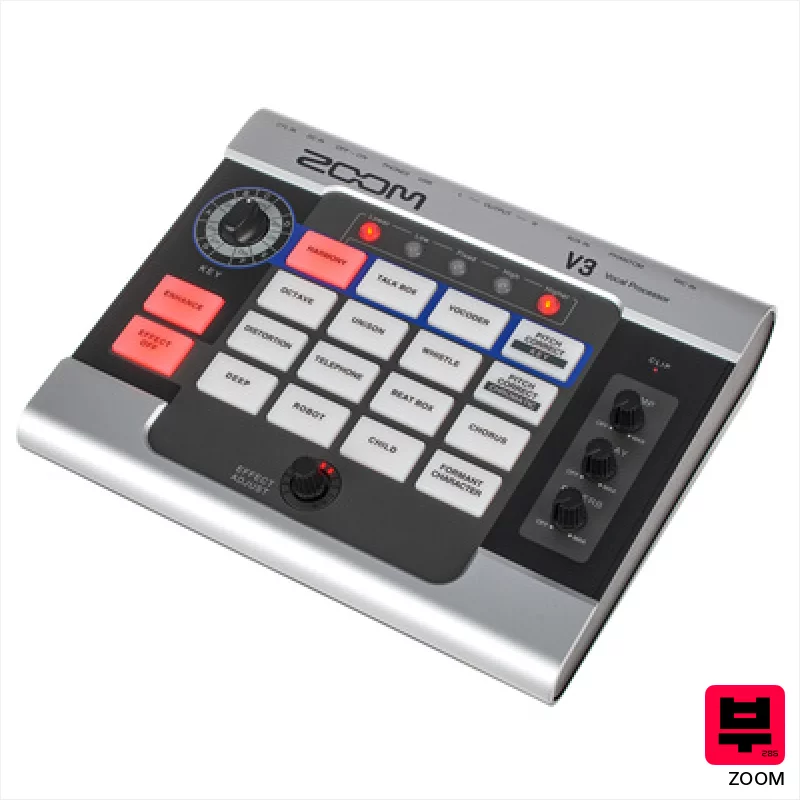
Zoom V3
- • Creative vocal effects offer unique performance possibilities
- • Built-in USB interface simplifies recording and digital integration
- • Phantom power accommodates condenser microphones directly
- • Compact size and battery operation allow for portable use
- • Effect quality is good for the price, but not studio-grade
- • Limited physical controls can make live tweaking challenging
- • Construction feels plasticky; lacks premium build feel

TC-Helicon Mic Mechanic 2
- • Integrated preamp delivers clean, usable gain even with dynamic mics
- • Tone correction subtly smooths vocals without obvious robotic artifacts
- • Compact size makes it ideal for gigging musicians with limited space
- • Presets offer quick recall for diverse vocal styles and performance needs
- • Limited effects compared to larger, rack-mounted vocal processors
- • Battery power is a stop-gap; AC power supply is essential for regular use
- • De-esser can be aggressive if not carefully adjusted for vocal dynamics

Boss VE-1
- • Excellent vocal doubling effect for thickening tracks.
- • Robust Boss build quality; feels solid and reliable.
- • XLR output provides clean, professional vocal signals.
- • USB interface simplifies recording and editing vocal tracks.
- • Limited effect choices compared to dedicated vocal processors.
- • Enhance/pitch correction is basic, not studio-grade.
- • Can sound artificial if effects aren't dialed in carefully.
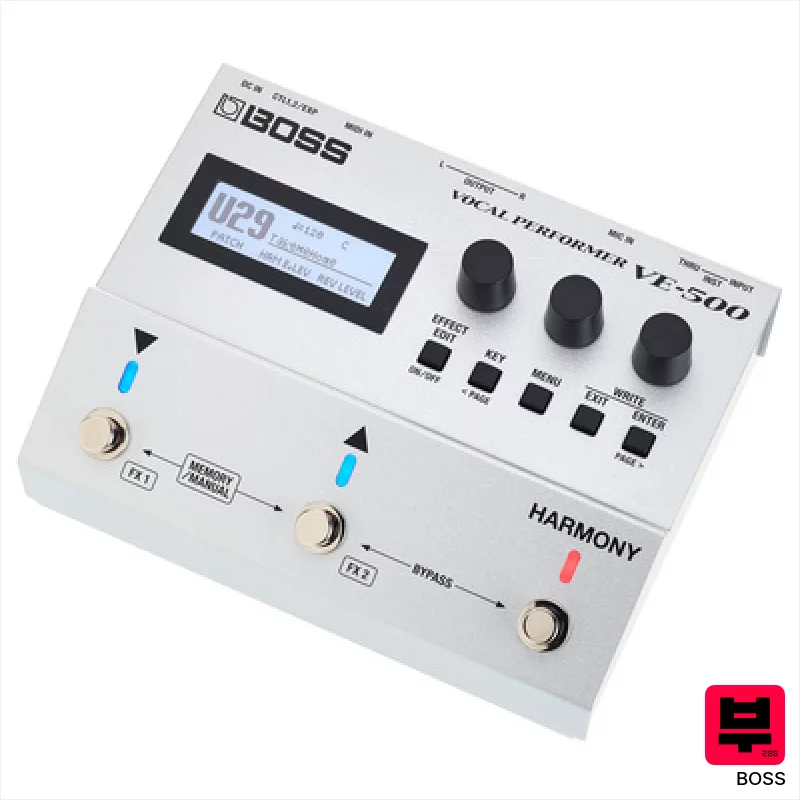
Boss VE-500 Vocal Performer
- • Gapless tracking is genuinely impressive for real-time harmony creation
- • Intuitive interface makes complex effects chains surprisingly accessible
- • Robust BOSS build quality inspires confidence for gigging musicians
- • Looper is a surprisingly capable addition for live performance
- • Harmonies, while good, can still sound artificial with complex vocal styles
- • Limited physical controls necessitate reliance on footswitches or expression pedal
- • Effect selection, while broad, lacks truly unique or boutique-level sounds

Boss VE-22 Vocal Performer
- • Excellent vocal doubling and harmonization algorithms sound surprisingly natural.
- • Intuitive LCD and knob layout drastically reduces learning curve for real-time tweaks.
- • Built-in looper is genuinely useful for practice and live performance layering.
- • XLR inputs and phantom power offer professional-grade connectivity and flexibility.
- • Effects can sound a bit 'processed' if not carefully dialed; requires experimentation.
- • Limited EQ control compared to dedicated vocal processors; lacks surgical precision.
- • Battery life is adequate, but AC power is preferable for longer gigs.

TC-Helicon VoiceLive Play
- • NaturalPlay harmonies sound surprisingly convincing for the price.
- • Built-in mics are genuinely useful for practice and pitch training.
- • VLoop looper provides a simple, effective performance tool.
- • Compact size makes it stage-friendly and easy to transport.
- • Harmony algorithms can occasionally sound 'robotic' with complex vocal styles.
- • Limited preset customization compared to higher-end vocal processors.
- • XLR outputs are unbalanced, not ideal for critical studio applications.

TC-Helicon VoiceTone D1
- • Excellent doubling and detune algorithms derived from VoiceLive 2
- • Robust, roadworthy construction typical of TC Helicon pedals
- • Integrated fader for precise dry/wet signal blending is a huge convenience
- • USB connectivity allows for easy firmware updates and access to support resources
- • Limited to doubling and detune effects, lacks broader vocal processing options
- • XLR phantom power is always on, which can be problematic with some mics
- • Preset selection is basic, requiring more tweaking for nuanced sounds

Boss VE-5 RD Vocal Performer
- • Intuitive interface simplifies complex vocal processing quickly.
- • Solid build quality; feels robust for gigging and travel.
- • Integrated looper is surprisingly functional for live performance.
- • Harmonizer offers usable, creative vocal textures.
- • 38-second looper is limiting for extended song sections.
- • Dynamic processing can be a bit harsh without careful tweaking.
- • Limited flexibility compared to dedicated DAW vocal chains.
How to Choose the Best Vocalists
Tonal Character
This isn't just 'bright' or 'dark'. We're talking about the specific frequencies they emphasize - a vocalist with a naturally warm low-midrange can fill out a thin mix, while one with a pronounced upper-midrange sparkle can help a vocal cut through a dense wall of guitars. Think about how they'll sit with your existing instruments.
Dynamic Range
A vocalist with a wide dynamic range gives you more flexibility. You can subtly shape their performance with compression and gain staging, or let their natural dynamics shine. A compressed vocalist straight out of the box leaves less room to maneuver.
Articulation Clarity
A clear articulation helps intelligibility, especially in complex arrangements. You want to hear the consonants - the 's' sounds, the 't's' - without them sounding harsh or brittle. Muddy articulation is a nightmare to clean up in the mix.
Versatility Across Genres
Some vocalists sound amazing on acoustic tracks but fall flat with distortion. We're looking for vocalists that can handle a variety of sonic landscapes - from clean and intimate to aggressive and processed. This is especially important if you record different styles.
EQ Response & 'Air'
This is about more than just high frequencies. It's the way the vocalist responds to EQ boosts and cuts. A vocalist with 'air' - those subtle high-frequency harmonics - can add a sense of space and presence without sounding brittle or sibilant. Watch out for harshness above 8kHz.
Buying Guide
Don't chase the 'expensive' vocalist just because they have a fancy website. Spend time really listening to demos in contexts similar to your own music. Often, a less-hyped vocalist with a unique tonal quality will serve you better than a generic 'perfect' one. Be wary of vocalists who claim to be able to 'fix everything' - that's a red flag. The best vocalists enhance, they don't replace good recording and performance.
Our Methodology
We're not just looking at specs here. We've spent countless hours A/B-ing these vocalists against each other, throwing them into different mixes - everything from acoustic singer-songwriter tracks to full-band rock gigs - and critically listening for how they interact with other instruments and vocals. It's about real-world performance, not just a pretty demo.

