
Best Phono Preamps for Signal Boost 2026
Alright, so you're boosting a phono signal. Whether you're running vinyl through a club sound system, tracking for a sample pack, or just trying to get a cleaner signal from a vintage turntable into your interface, the phono preamp is your gatekeeper. It's not just about volume; it's about preserving the nuances in that groove. A bad preamp will smear transients and muddy the low-end - and that's a crime against vinyl.
Last updated: July 15, 2026 • Next update: July 22, 2026

Sonifex Redbox RB-PA2
- • Robust, all-steel chassis provides exceptional shielding and durability
- • Discrete component design delivers exceptionally low noise and distortion
- • Balanced XLR outputs ensure clean signal transfer to mixers and interfaces
- • Dual, independent preamps allow for flexible setup and monitoring
- • Premium-priced compared to consumer-grade phono preamps
- • Limited headroom may be a concern for extremely loud sources
- • Relatively large footprint; not ideal for cramped DJ setups
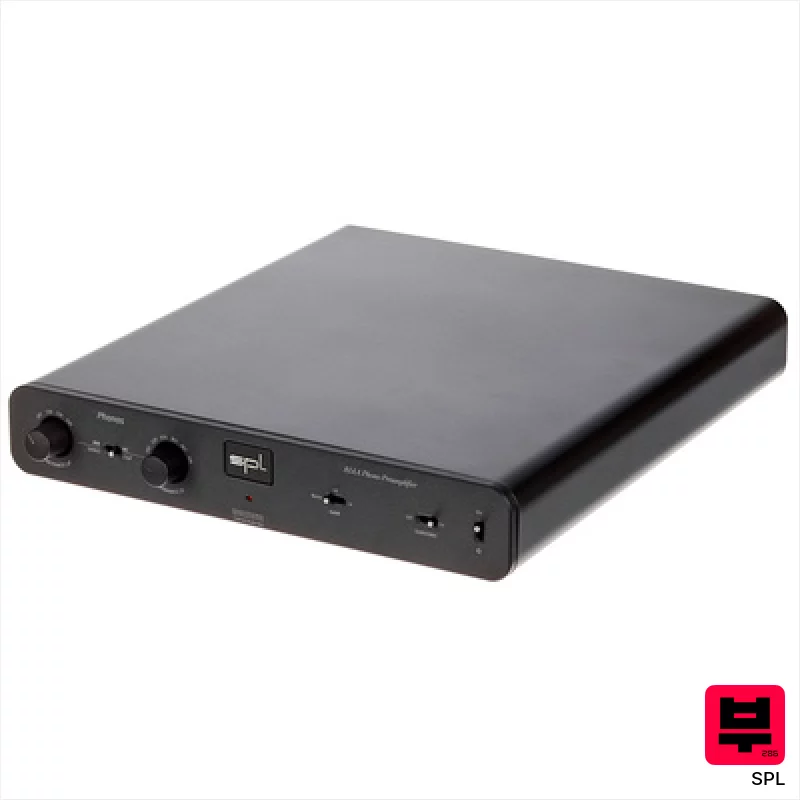
SPL Pro-Fi Phonos black
- • Doug Self RIAA curve delivers exceptional accuracy and detail.
- • Powdered steel housing minimizes vibration and resonance for clean signal.
- • Switchable gain offers precise adjustment for both MM and MC cartridges.
- • Linear power supply with ring core transformer ensures ultra-low noise.
- • Premium-priced, a significant investment for most home setups.
- • Relatively heavy at 3.2 kg, not ideal for portable setups.
- • Aluminum front panel, while attractive, could be prone to minor scratches.

Rodec BUNK 01 Bamboo Black
- • Bamboo enclosure offers unique aesthetic and subtle sonic dampening.
- • Dual phono stages (MX-180 & Rodec) provide exceptional versatility.
- • EQ is musical and genuinely useful for shaping vinyl sounds.
- • Discrete Rodec stage delivers a refined, low-noise phono signal.
- • Eco-bamboo housing, while attractive, isn't as rigid as metal.
- • Premium-priced, a significant investment for a phono preamp.
- • Limited input impedance options might not suit all cartridge types.

Pro-Ject Phono-Box E BT 5
- • Solid build quality with a surprisingly hefty metal chassis for the price.
- • Bluetooth 5.0 with aptX HD offers a reliable, low-latency wireless connection.
- • Gold-plated RCA connectors minimize signal degradation and ensure a clean connection.
- • Compact size makes it ideal for tight spaces or portable setups.
- • The minimalist design, while clean, lacks a bit of premium tactile feel.
- • Limited gain range might struggle with particularly low-output moving coil cartridges.
- • External power supply adds to cable clutter and reduces portability.

ART DJ Pre II
- • Simple, clean gain for budget turntables and beginner setups.
- • Low-cut filter helps tame bass frequencies on older or boomy records.
- • RCA connections offer broad compatibility with standard audio gear.
- • Compact size makes it easy to integrate into cramped DJ booths or home studios.
- • Limited headroom; prone to clipping with high-output cartridges.
- • Plastic enclosure feels somewhat flimsy; lacks premium build quality.
- • Basic feature set; lacks advanced options like adjustable loading.

Pro-Ject Phono-Box E
- • Solid metal shielding effectively reduces hum and interference from external sources.
- • Gold-plated RCA connectors offer reliable signal transfer and resist corrosion.
- • Compact size makes it ideal for tight spaces and portable setups.
- • Dr. Sykora’s design principles deliver a surprisingly clean and balanced sound signature.
- • Limited gain range restricts compatibility with very low-output moving coil cartridges.
- • External power supply adds to clutter and limits true portability.
- • The high-gloss black finish is prone to fingerprints and scratches.
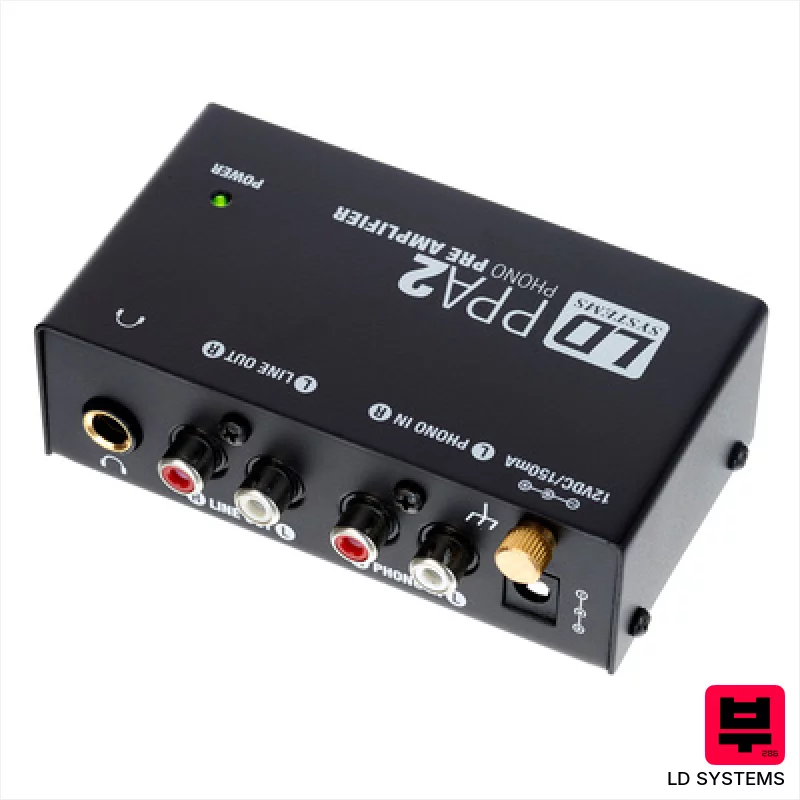
LD Systems PPA 2
- • Solid metal housing provides excellent shielding from interference.
- • RIAA equalization accurate enough for most vinyl playback scenarios.
- • Headphone output allows for private monitoring during mixing.
- • Compact size makes it suitable for space-constrained DJ setups.
- • Lacks adjustable gain, potentially problematic for low-output cartridges.
- • External power supply adds clutter and a potential point of failure.
- • Basic functionality; no advanced features like ground lift or filters.

Pro-Ject Optical Box E Phono Black
- • Excellent optical output simplifies digital recording workflows.
- • Solid metal shielding effectively reduces hum and interference.
- • Compact size makes it ideal for tight studio spaces.
- • Gold-plated RCA connectors ensure reliable signal transfer.
- • Limited gain range might struggle with low-output moving coil cartridges.
- • External power supply adds clutter and potential for cable management issues.
- • Plastic housing feels somewhat less premium than higher-end preamps.

Behringer PP400
- • Clean signal conversion, surprisingly effective for budget vinyl setups
- • Compact size makes it easy to integrate into tight DJ booths
- • Robust build for a product in its price bracket – feels solid
- • Acceptable noise floor; won't introduce significant hiss with decent cartridges
- • Limited headroom; struggles with higher-output moving coil cartridges
- • Plastic enclosure feels budget, lacks premium feel of higher-end units
- • No grounding post; can be an issue with noisy turntables or environments

ART Precision Phono Preamp
- • Handles both MC and MM cartridges surprisingly well for the price.
- • Low-cut filter effectively tames unruly bass frequencies.
- • Ground lift eliminates hum, a common problem with budget preamps.
- • Compact size makes it easy to integrate into tight spaces.
- • Build quality feels a bit plasticky; not a long-term heirloom piece.
- • Gain adjustment isn't granular; limited fine-tuning options.
- • Soundstage lacks depth; best suited for focused listening, not critical audiophiles.

IMG Stageline SPR-6
- • Metal housing effectively minimizes noise and interference
- • Enclosed power supply reduces external hum and potential faults
- • Respectable signal-to-noise ratio for budget-conscious setups
- • Compact size allows for easy integration into tight spaces
- • Limited gain might struggle with low-output cartridges
- • Basic build quality; don't expect premium componentry
- • No adjustable loading options for cartridge optimization

Pro-Ject Phono-Box
- • Gold-plated RCA jacks minimize signal loss and offer a clean connection.
- • MM/MC switch provides flexibility for a wide range of cartridge types.
- • Compact size (103x36x104mm) makes it ideal for tight spaces and portable setups.
- • 40dB gain for MM and 60dB for MC cartridges ensures ample signal for older turntables.
- • Lacks a grounding post, potentially introducing hum with some turntables.
- • Basic build; the enclosure feels lightweight and not as robust as higher-end models.
- • Limited connectivity – only RCA outputs restrict integration with modern digital setups.

Millenium PHP 2
- • Includes a power supply, simplifying setup and eliminating noise issues.
- • Compact size makes it ideal for tight DJ booths or home setups.
- • RCA inputs/outputs offer standard connectivity for most DJ gear.
- • Provides a clean, functional signal boost for older or lower-output cartridges.
- • Construction feels decidedly budget-oriented; plastic housing lacks premium feel.
- • Limited gain adjustment restricts compatibility with high-output turntables.
- • Basic RIAA equalization might lack refinement for critical listening.
How to Choose the Best Phono Preamps
Gain & Headroom
Signal boost is the name of the game, but you need headroom. Clipping is ugly and ruins the dynamics. A preamp that gives you clean gain up to a reasonable level is crucial, especially for loud club systems.
RIAA Accuracy
This is non-negotiable. A poorly implemented RIAA curve will introduce phase shifts and frequency imbalances, making your vinyl sound unnatural and muddy. Listen for clarity and a balanced frequency response.
Noise Floor
Vinyl already has inherent noise; you don't need a preamp adding more. A low noise floor is vital for clean recordings and a pleasant listening experience - especially when boosting for a loud environment.
Tonal Character
Some preamps are neutral, others impart a subtle color. A warmer, slightly rolled-off top end can sit nicely in a dance mix, while a more transparent preamp is better for recording pristine samples.
Connectivity & Features
Balanced outputs are a huge plus for noise reduction in long cable runs. Multiple inputs and adjustable gain stages can be incredibly useful for different cartridge types and varying signal levels.
Buying Guide
Don't fall for the hype. A lot of expensive preamps just add a 'vintage' color that isn't actually desirable - it's just coloration for the sake of coloration. Budget options can get the job done well enough, but often cut corners on RIAA accuracy or introduce more noise. Spend a bit more for a unit with a clean signal path and accurate RIAA curve - it'll pay off in the long run.
Our Methodology
We're not looking at spec sheets here. We've spent hours A/B'ing these units against each other, running them through different systems - everything from high-end studio setups to club rigs - and listening critically for tonal colorations and noise. It's about how they sound in a real-world scenario, not just the numbers on a page.

