AudioFu Chart · October 2026
Best Passive Subwoofers Under $300 2026
The top pick is the box pro Achat 112 Sub ($279). the box pro Achat 108 Sub gives you the most for the money at $189. Ranked by the AudioFu Index from 4 models across 3 brands, prices checked every night.
Last updated: October 26, 2026
Top 4
Full detail for the 4 highest AudioFu Index scores. Every other model is listed below.
-
- Size12"
- Weight17 kg
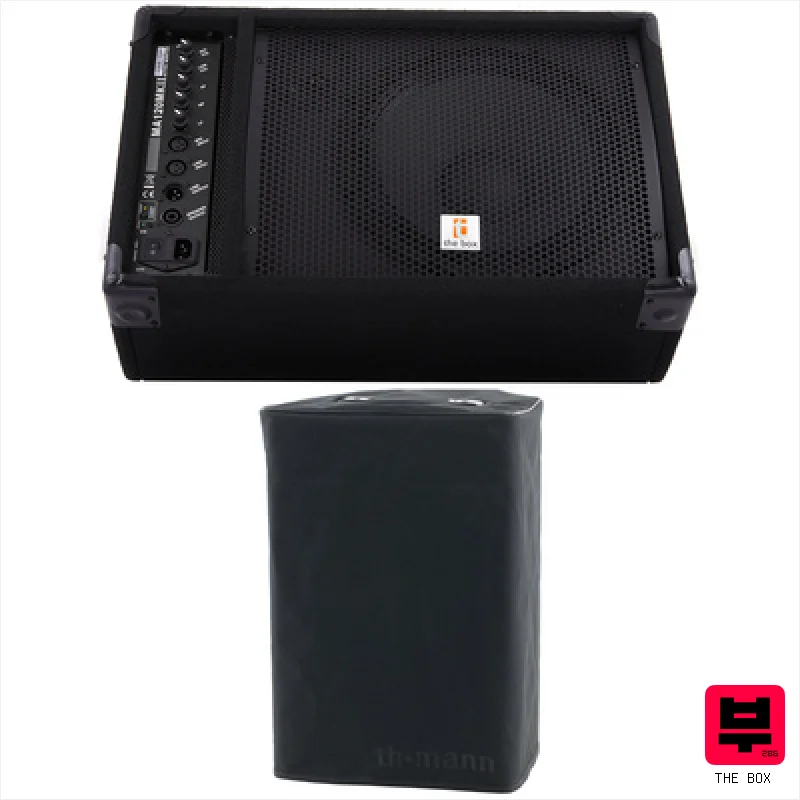
The Achat 112 Sub is a solid, affordable option for smaller bands or DJs needing some serious low-end reinforcement. It’s surprisingly punchy for its class, and the integrated crossover is a nice touch for simpler setups. Great for rock, pop, and electronic music where you want a defined, powerful bass presence.
Pros
- Robust MDF construction suggests durability for frequent gigging and transport.
- Integrated crossover simplifies setup and ensures optimal amplifier usage.
- 12 in woofer delivers surprising low-end extension for its size and price.
Cons
- 4 Ohm impedance demands careful amplifier selection to avoid clipping.
- Limited frequency response beyond 250 Hz restricts its use as a full-range solution.
64AudioFu
IndexStableno change since Aug 17Aug 17$279 now$279€249 at Thomann · in stockCheck price ↗ -
- Size8"
- Weight10 kg
This Achat 108 Sub is a budget-friendly option for smaller gigs and mobile DJs needing a little extra low-end reinforcement. It's not going to shake a stadium, but it'll add some thump to a bar band or small event without breaking the bank. Think rehearsal spaces, coffee shops, or intimate venues where portability is key.
Pros
- Compact size makes transport and setup remarkably easy.
- Solid MDF cabinet offers reasonable rigidity for its price point.
- 100W RMS power handles moderate volume levels adequately.
Cons
- 8-inch woofer limits low-frequency extension, noticeable at lower volumes.
- Power handling is modest; not suited for large venues or high-energy performances.
57AudioFu
IndexStableno change since Aug 17Aug 17$189 now$189€169 at Thomann · in stockCheck price ↗ -
- Weight11 kg
The Sub 88 is a surprisingly capable little subwoofer, perfect for DJs, smaller bands, or mobile entertainers needing a budget-friendly low-end boost. Don’t expect earth-shattering power, but it delivers a decent rumble for its size and price – just be mindful of headroom.
Pros
- Surprisingly robust MDF construction for its price bracket
- Decent low-end extension for smaller to mid-sized venues
- Lightweight for a 18 in subwoofer, facilitating transport
Cons
- Limited headroom at higher volumes – not for serious sound reinforcement
- Bass response lacks refinement; can sound a bit muddy
48AudioFu
IndexStableno change since Aug 17Aug 17$178 now$178€159 at Thomann · in stockCheck price ↗ -
- Weight17.8 kg
This DownFire 10 is a surprisingly powerful little sub for the money. The downfire design really delivers a solid, felt-in-your-chest low end – perfect for DJs, smaller bands, or anyone needing extra thump without a massive footprint. It's a great value for the power and versatility you're getting.
Pros
- Robust cube design enhances stability and portability for live use.
- Downfire configuration minimizes floor vibrations and maximizes low-end projection.
- Transformer allows flexible power distribution for various venue setups.
Cons
- Frequency response tops out at 500Hz; requires pairing with full-range speakers.
- 17.8kg weight makes transport a challenge for solo performers.
43AudioFu
IndexStableno change since Aug 17Aug 17$279 now$279€249 at Thomann · in stockCheck price ↗
Passive Subwoofers by the numbers
Measured across all 5 models we track, not a sample.
median of 5 models · 10 kg–17 kg
How to choose the best passive subwoofers
Power Handling
At this price point, expect around 500-800 watts peak. It's not a ton, so don't expect it to shake a stadium, but it's enough for smaller venues and rehearsals. Clipping is your enemy - watch your levels!
Frequency Response
Ideally, you want something that extends down to at least 40Hz to get that real low-end rumble. Anything higher and your bass lines will sound thin and anemic. Don't expect sub-40Hz response without serious power.
Driver Size
10-inch and 12-inch are the common sizes. 12-inch generally delivers more low-frequency extension, but a well-designed 10-inch can still pack a punch. It's about the driver quality, not just the size.
Construction Quality
Let's be honest, you're not getting rock-solid construction. Check for sturdy bracing and a decent-feeling enclosure. Rattling cabinets kill the low-end clarity - you'll hear it, the audience will hear it.
Efficiency (Sensitivity)
Measured in dB, this tells you how loud the sub will be with a given amount of power. Higher sensitivity means you can get more volume with less amplifier power, which is a bonus for budget setups. Lower sensitivity means you'll need more juice.
Buying guide
So, you need some low-end rumble but your budget's tighter than a Les Paul neck? Been there. Getting a decent passive sub for under $300 is doable, but it's a reality check - you're not getting a massive, studio-grade powerhouse. We'll look at some options that give you the most thump for your dollar, and what compromises you're making to get there. Let's keep that kick drum felt, not just heard.
At this price, you're making trade-offs. Don't expect deep, sustained low-end like you'd find on a $1000 sub. The cabinets are often MDF, not Baltic birch, so be careful handling them.
Focus on finding a sub with a decent frequency response and enough power to handle your amp - headroom is more important than raw volume. Don't skimp on the amp either - a weak amp will just make the sub sound muddy.
How the AudioFu Index works
Five measured signals and nothing else — no stars from strangers, no “tested by experts” we didn’t do. The weights are fixed and public. We don’t play these instruments; we measure the market around them.
This chart covers 5 passive subwoofers from the Thomann catalogue. Before you buy, read hands-on reviews and, where you can, play it. Full methodology.
AudioFu earns a commission when you buy through our Thomann links. It never changes the order — the index does.
- Demand40%
How many of this exact model are for sale on Reverb right now — what musicians actually buy and resell.
- Lineup20%
How many finishes Thomann stocks — makers expand the models that sell.
- Price15%
Where the price has moved since we started tracking in August.
- Specs15%
How completely the maker documents it.
- Maker10%
How deep the brand’s range is in this category.
Questions
Can I use this sub for recording?
Sure, but be mindful of its limitations. It'll add some low-end weight, but it won't have the clarity or headroom of a studio-grade sub. Keep the levels low and be prepared to EQ out some muddiness.
What kind of amplifier do I need?
You'll need a power amplifier that matches the sub's impedance (usually 8 ohms) and provides enough wattage. A 300-500 watt amp is a good starting point, but more headroom is always welcome.
Will this rattle my stage?
Probably, especially at higher volumes. A good stage is crucial for minimizing unwanted vibrations. Consider using isolation pads or risers to decouple the sub from the floor.
Is a powered sub better?
Powered subs offer convenience and integrated amplification, but at this price, you're often getting a less powerful amp than you could buy separately. Passive subs give you more flexibility to choose your own amp.
What's the deal with phase switches?
Phase switches are important when using multiple subs to avoid cancellations. Experiment with the switch to find the setting that gives you the fullest, most even bass response. A little trial and error goes a long way.