
Best Other Saxophones for Specialty Performance 2026
So, you're looking beyond the standard alto and tenor sax for something specific? Good move. Whether you're chasing a vintage vibe for a jazz quartet, need a unique timbre for film scoring, or just want to shake up your solo performance, the world of less common saxophones holds some serious possibilities. Let's dive into the options that actually deliver on those specialty needs, and what you should be listening for.
Last updated: July 15, 2026 • Next update: July 22, 2026
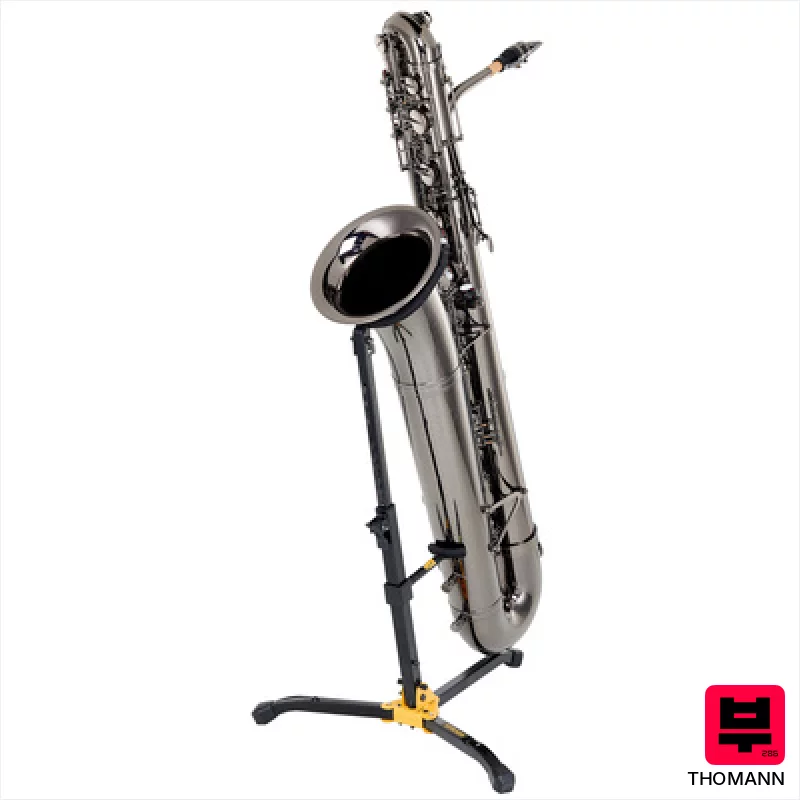
Thomann TBB-150BN Bass Saxophone
- • Solid brass body delivers a warm, resonant low-end tone.
- • Black nickel plating offers a unique aesthetic and resists tarnish.
- • Adjustable thumb rest enhances comfort and playing ergonomics.
- • Includes a robust case with castors for easy transport and storage.
- • The 8.6 kg weight demands significant physical stamina for extended playing.
- • Bass saxophones inherently lack the versatility of smaller saxophones.
- • The included mouthpiece is functional but likely a limiting factor for advanced players.

Thomann TSI-350 Sopranino Saxophone
- • Solid brass construction lends a warm, resonant tone.
- • Gold lacquer finish provides protection and a bright aesthetic.
- • Inclusive mouthpiece offers a playable starting point for beginners.
- • Surprisingly stable intonation for a saxophone in this price range.
- • Keywork feels a bit stiff; requires more effort than higher-end models.
- • The included mouthpiece is basic and will likely be upgraded soon.
- • Sopranino saxophones are inherently challenging to play in tune.
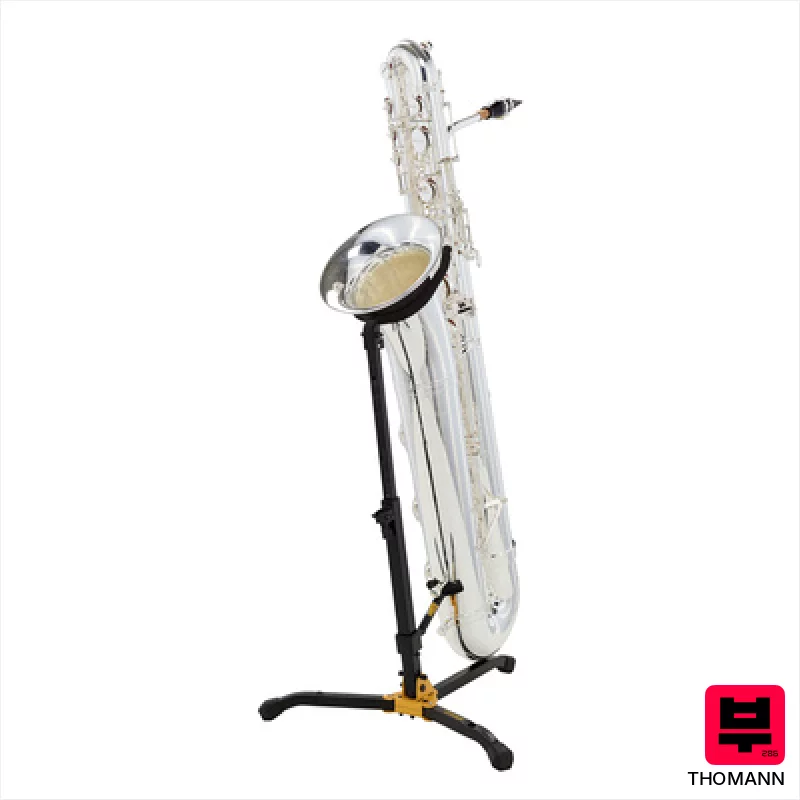
Thomann TBB-150S Bass Saxophone
- • Solid brass construction provides a warm, resonant low-end tone.
- • Adjustable thumb rest offers improved ergonomics and comfort for extended playing.
- • Silver-plated finish enhances brilliance and protects against tarnish.
- • Includes a robust case with wheels, making transport significantly easier.
- • The 8.6 kg weight makes it challenging for less experienced or smaller players.
- • Limited keywork (Low Bb to High F#) restricts high-register capabilities.
- • While decent, the included mouthpiece is likely a stepping stone for serious players.
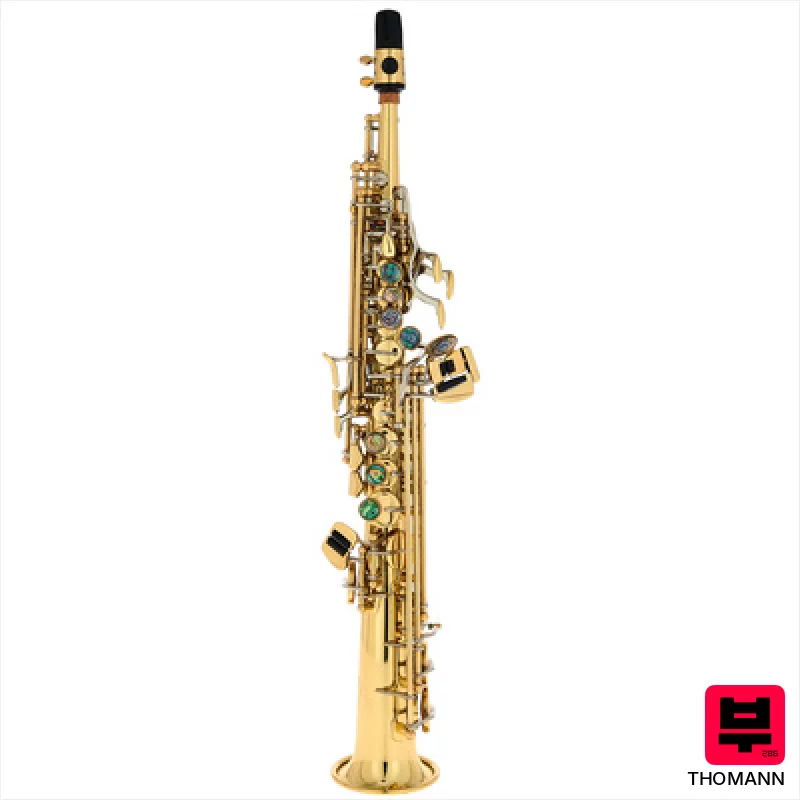
Thomann TSI Custom Line Sopranino Sax
- • Solid brass construction yields a warm, resonant, and focused tone.
- • Gold lacquer finish provides excellent protection and a professional aesthetic.
- • Custom Line keywork offers surprisingly smooth and responsive action for the price point.
- • Includes a decent, playable mouthpiece, lowering the initial investment.
- • Sopranino saxophones are inherently challenging to play in tune; requires skilled embouchure.
- • The instrument's smaller size and weight can feel unwieldy for some players.
- • While good, the included mouthpiece is a step below high-end options, limiting tonal potential.

Thomann CMS-600 L C- Melody Sax
- • Solid build quality for the price point, feels surprisingly robust
- • High F# key expands melodic possibilities significantly
- • Metal resonators improve pad response and overall tone clarity
- • Adjustable thumb rest enhances comfort and playing ergonomics
- • Lacquer finish may be prone to wear with heavy use
- • Mouthpiece is likely a basic model, upgrade recommended for tonal refinement
- • Weight (3070g) can be tiring for younger or smaller players
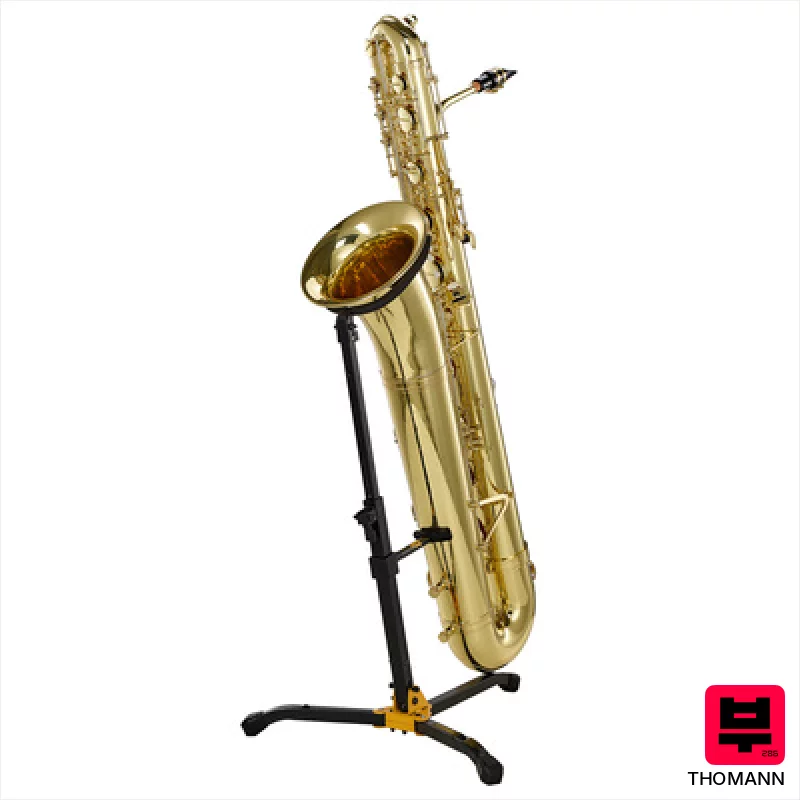
Thomann TBB-150 Bass Saxophone
- • Solid brass construction delivers a warm, resonant low-end tone.
- • Adjustable thumb rest improves ergonomics for extended playing.
- • Inclusive mouthpiece provides a playable starting point for beginners.
- • Wheeled case offers excellent portability, especially considering the instrument's weight.
- • The lacquer finish, while attractive, might be prone to wear with heavy use.
- • Bass saxophones generally lack versatility compared to more common sax models.
- • Weight (8.6 kg) can be fatiguing for players with less strength or experience.
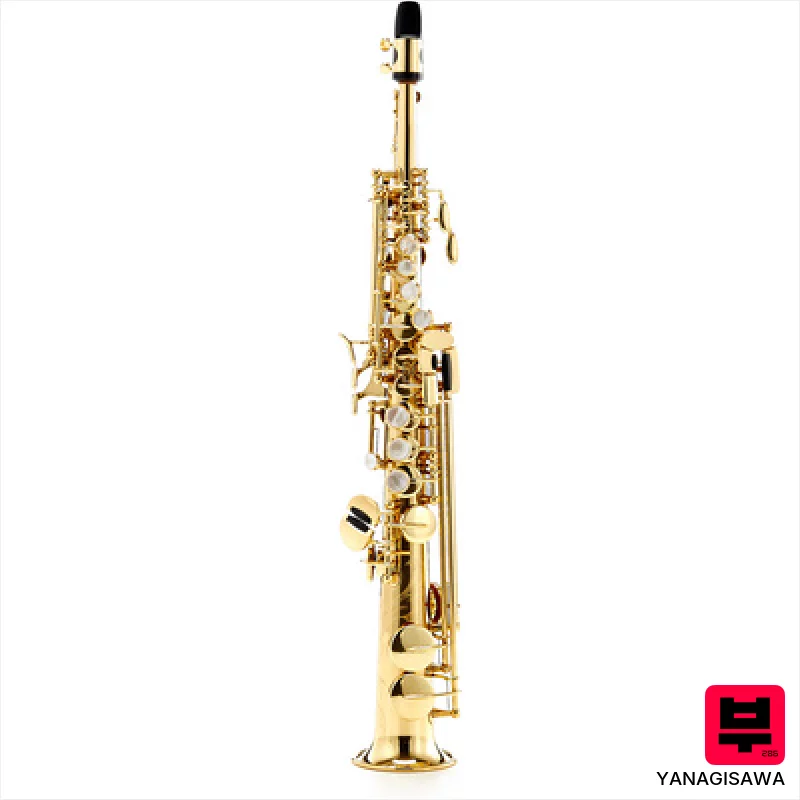
Yanagisawa SN-981 Sopranino Sax
- • Refined brass construction yields a remarkably warm, complex tone.
- • High E key significantly expands the instrument's upper register accessibility.
- • Yanagisawa’s renowned keywork provides exceptional smoothness and precision.
- • Gold lacquer finish offers beautiful aesthetics and enhanced protection.
- • Sopranino saxophones are inherently challenging to master, requiring considerable embouchure control.
- • The instrument's size and weight can be fatiguing for extended playing sessions.
- • Limited repertoire compared to more common saxophones like alto or tenor.
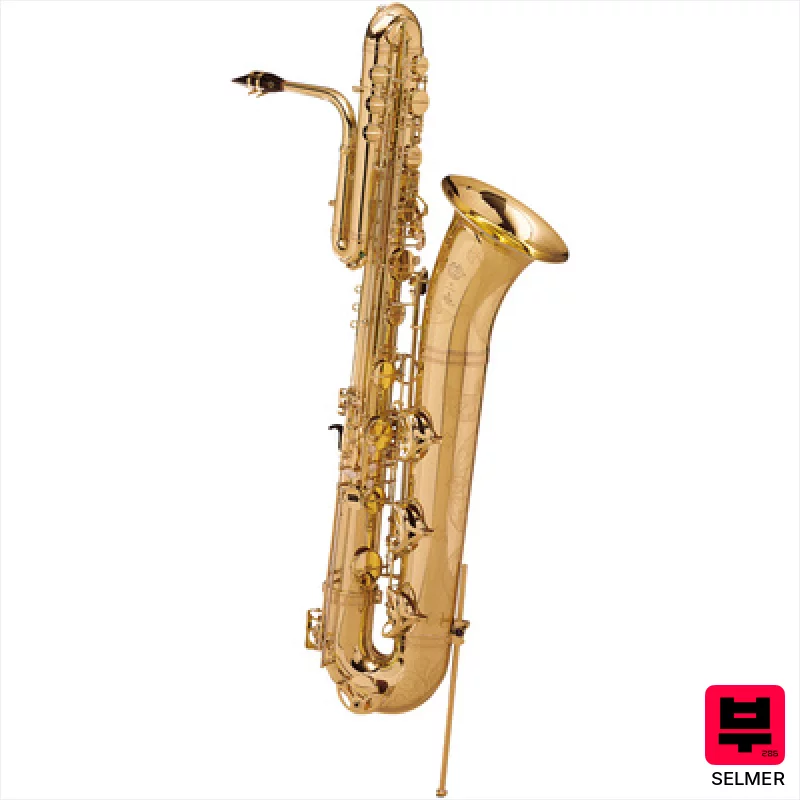
Selmer Bass Saxophone SA80/II
- • Exceptional Selmer build quality, robust and reliable for stage and studio.
- • Gold lacquer finish provides a warm, resonant, and focused tone.
- • High F# key expands range and offers unique tonal possibilities.
- • Metal pad resonators improve response and evenness across the register.
- • The sheer size and weight demand significant physical strength and stamina.
- • Bass saxophones are inherently less versatile than their smaller counterparts.
- • Premium-priced, representing a substantial investment for most musicians.
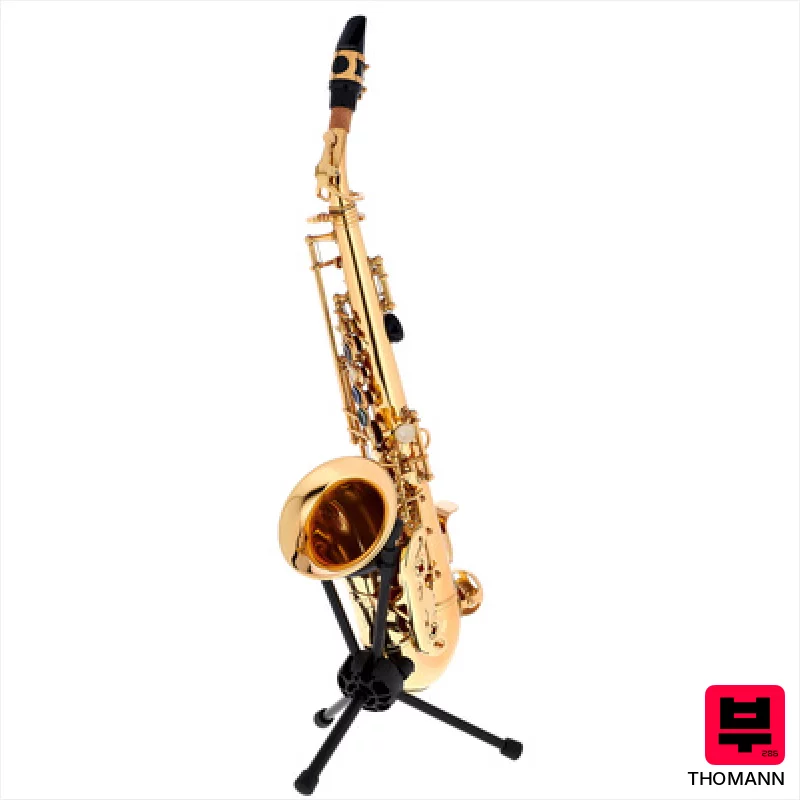
Thomann Piccolino Kids Saxophone in Bb
- • Brass construction provides a surprisingly warm, resonant tone for a student horn
- • Compact size and lightweight design (around 3 lbs) makes it manageable for young players
- • Bb tuning offers a familiar key for beginner band programs and ensemble playing
- • Clear lacquer finish protects the brass and offers a clean, professional aesthetic
- • The included mouthpiece is basic and will likely be the first upgrade needed for improved tone
- • Brass body requires diligent care to prevent tarnish and maintain appearance
- • Limited range (D' to C#'') restricts advanced playing and repertoire options
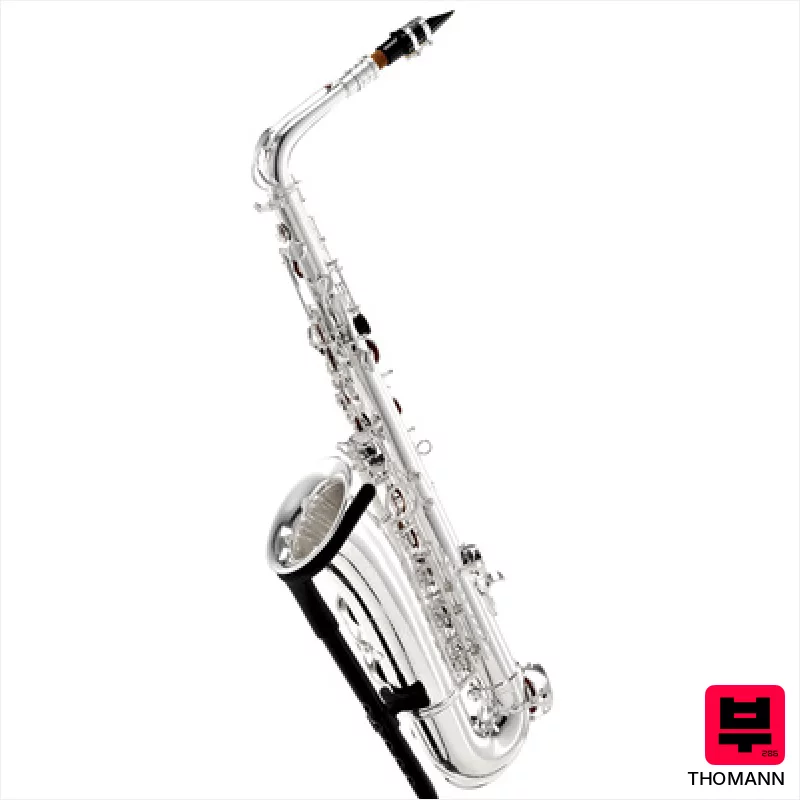
Thomann CMS-600 S C- Melody Sax
- • Solid silver plating enhances tone and offers good durability.
- • Metal thumb rest and adjustable tilter improve ergonomics and comfort.
- • High F# key expands range and offers more melodic possibilities.
- • Included accessories like strap and case provide immediate playability.
- • The mouthpiece is likely a basic model, limiting tonal flexibility.
- • Silver plating requires regular cleaning to prevent tarnish and maintain shine.
- • Build quality, while decent, won't match premium professional saxophones.
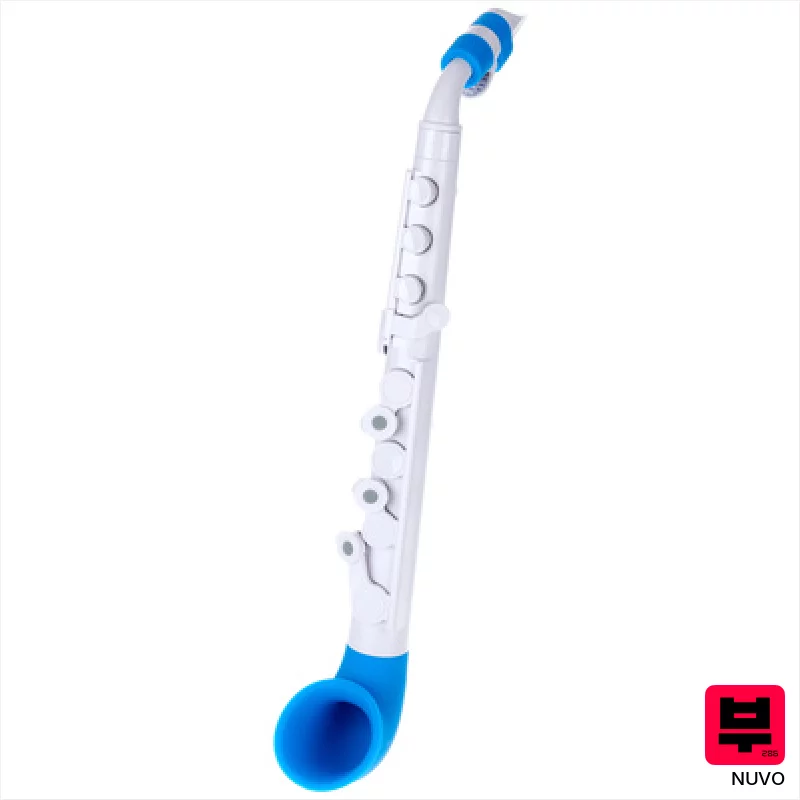
Nuvo jSAX Saxophone white-blue 2.0
- • Durable ABS and silicone construction withstands rough handling.
- • Waterproof design allows for unique playing environments.
- • Silicone valves simplify maintenance and eliminate tuning headaches.
- • Lightweight design (under 1 lb) is truly portable and comfortable.
- • Limited range restricts advanced playing and repertoire.
- • The ABS plastic sound is inherently less resonant than brass.
- • Silicone bell lacks the tonal complexity of metal alternatives.

Nuvo jSAX Saxophone black-blue 2.0
- • Durable ABS and silicone construction withstands beginner handling.
- • Chromatic range provides a surprisingly full musical scope.
- • Waterproof design simplifies cleaning and outdoor use.
- • Lightweight design eliminates the need for a neck strap.
- • The silicone keywork lacks the precise feel of metal keys.
- • Sound quality is limited compared to traditional saxophones.
- • ABS material can produce a slightly 'plastic' tone.
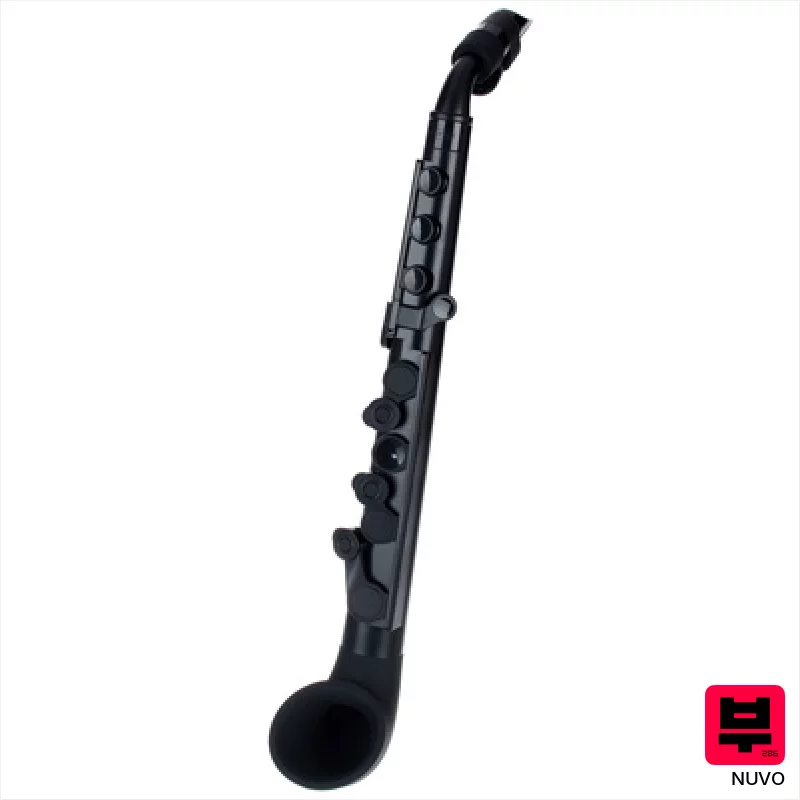
Nuvo jSAX Saxophone black 2.0
- • Durable ABS and silicone construction withstands significant abuse.
- • Silicone bell and neck offer a uniquely comfortable and secure grip.
- • Simplified fingering aligns with traditional saxophone layouts for easy transition.
- • Waterproof design allows for practice anywhere, even in humid conditions.
- • Limited range compared to a full-size saxophone restricts musical possibilities.
- • ABS plastic tone lacks the warmth and complexity of brass instruments.
- • Silicone construction, while durable, can feel less 'authentic' to experienced sax players.
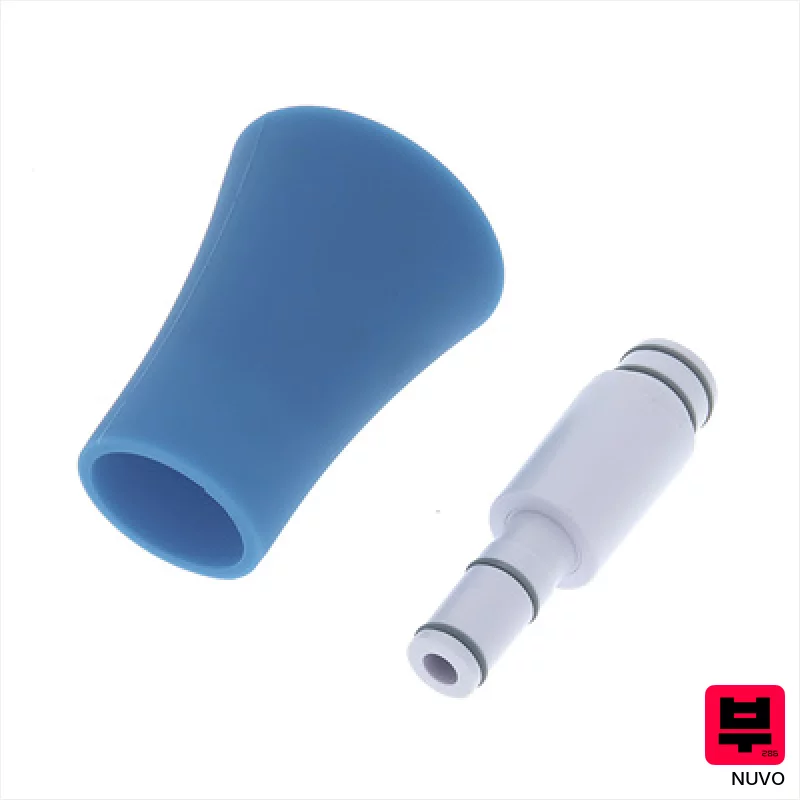
Nuvo Kit Straighten Your jSax w/b
- • Offers adult comfort, transforming the jSax's ergonomics.
- • Straight neck improves airflow, potentially aiding tone production.
- • Silicone bell is durable and resistant to impacts, ideal for younger players.
- • Simple, reversible modification allows switching between curved and straight configurations.
- • Limited tonal change; primarily affects ergonomics, not fundamental sound.
- • Silicone bell may slightly dampen higher frequencies compared to plastic.
- • Straight neck design might feel less intuitive for players accustomed to curved instruments.
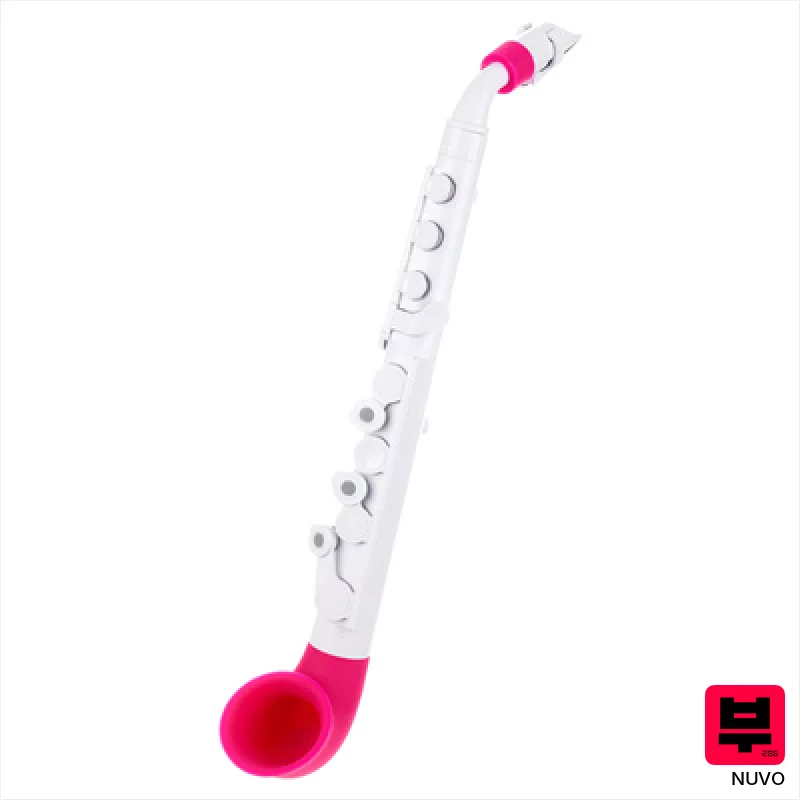
Nuvo jSAX Saxophone white-pink 2.0
- • Durable ABS/silicone construction withstands rough handling by beginners.
- • Chromatic range allows for surprisingly expressive musical exploration.
- • Silicone keys and plugs simplify playing for smaller hands.
- • Waterproof design enables playing in diverse environments, easy cleaning.
- • Sound quality lacks the richness and projection of a traditional saxophone.
- • Limited tonal range compared to a full-sized saxophone restricts advanced playing.
- • ABS plastic construction feels less premium than metal saxophone counterparts.
How to Choose the Best Other Saxophones
Tonal Character
It's not enough to be 'different'; it needs a usable tonal character. We're looking for unique qualities - a baritone's low-end thump that doesn't just muddy the mix, a sopranino's piercing clarity that isn't ice-pick harsh, or a bass sax's resonant depth that's still articulate. The 'flavor' is everything here.
Articulation & Response
Specialty performance often demands precision and nuance. A sax with sluggish response or uneven articulation just won't cut it, especially when you're trying to evoke a specific mood or texture. We're listening for clean, consistent action across the range.
Ergonomics & Playability
Let's be real, playing a less common sax often means compromises. A bass sax is going to be unwieldy. A sopranino might have a neck profile that's just plain uncomfortable. We assess how those physical realities impact performance.
Intonation Stability
Weird keys and unusual bore designs can be intonation nightmares. A sax that needs constant tweaking to stay in tune is a liability, especially in a live setting. We're using tuners and ear tests to verify its consistency.
Versatility (Within the Niche)
A bass sax might be amazing for a big band throwback, but terrible for a smooth jazz gig. We evaluate how well each instrument serves its intended purpose - and if it can realistically handle related subgenres.
Buying Guide
Don't chase novelty. Seriously. A cheap sub-par bass sax isn't going to suddenly make you sound like Paul McCartney. Focus on the tonal qualities you actually need, and be prepared to invest in a good setup - neck, mouthpiece, and reeds all play a massive role in shaping the final sound. And factor in repair costs; these horns are often older and require more maintenance.
Our Methodology
We're not pulling numbers off a spec sheet here. Every sax we consider gets time in our hands - gigging, tracking, and just plain noodling to see how it behaves. We A/B against benchmarks, listen critically in different environments, and ultimately ask: does this horn do what it's supposed to do, reliably and musically?

