
Best Modular all-in-one systems Under $2,000 2026
Alright, so you're diving into the modular world but don't want to mortgage the house? Smart move. Under $2000 for a complete modular system used to be a pipe dream, but there are some seriously capable all-in-one rigs emerging that won't leave you eating ramen for a month. We're talking about systems that can actually deliver usable sounds for gigging, recording, and serious sound design - not just blinking lights and patch cables.
Last updated: April 11, 2026

Erica Synths Pico System III Desktop
- • Excellent build quality with robust, all-analogue components.
- • Voice cards offer incredible flexibility for preset management and experimentation.
- • Compact form factor maximizes space while retaining modular functionality.
- • BBD delay provides a lush, vintage-flavored sonic character.
- • Limited patching options compared to full-sized modular systems.
- • Steep learning curve for those unfamiliar with modular synthesis concepts.
- • The all-in-one design restricts ultimate signal routing customization.
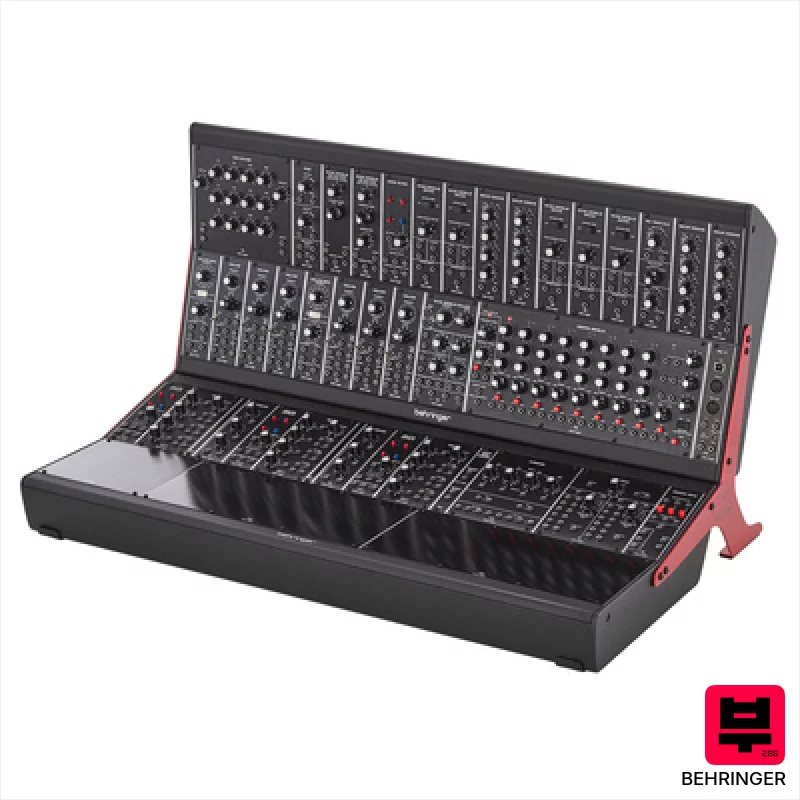
Behringer System 55
- • Excellent value for a fully functional modular system
- • Faithful recreation of classic System 55 architecture and sound
- • Comprehensive module selection provides immediate sonic versatility
- • Eurorack Go enclosures offer a practical, portable format
- • Plastic case construction feels less robust than premium alternatives
- • Module labeling and documentation could be improved for clarity
- • Steep learning curve for those new to modular synthesis
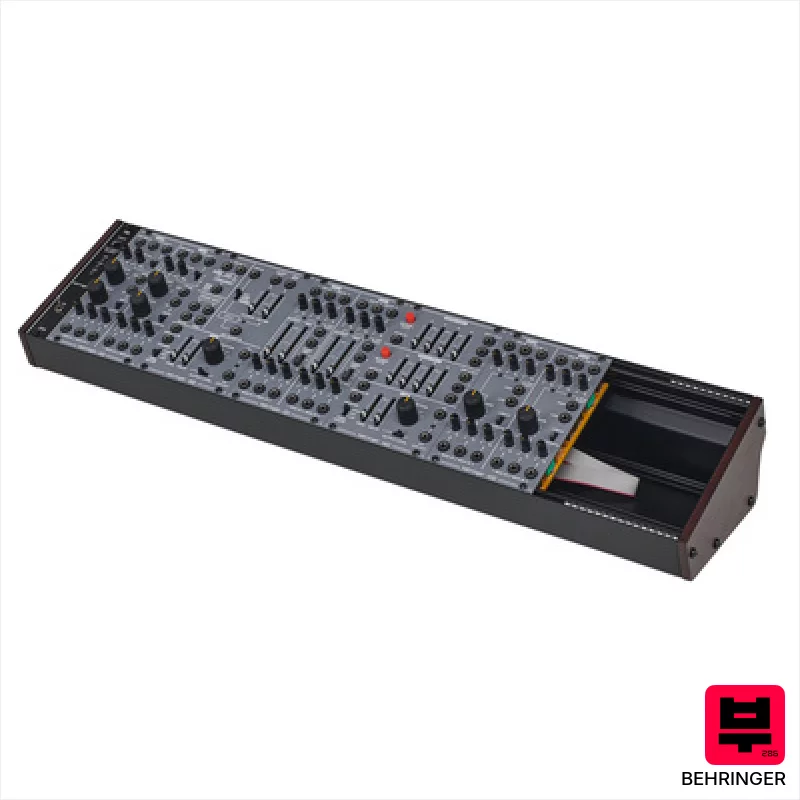
Behringer System 100 Bundle
- • Dual VCOs offer rich, complex tonal possibilities for experimentation.
- • The Eurorack case provides a sturdy, compact platform for expansion.
- • Sliding nuts simplify module mounting and rearrangement considerably.
- • Affordable entry point into modular synthesis, a significant value.
- • Case depth (38mm) limits larger modules and cabling options.
- • Build quality, while acceptable, feels budget-focused; expect some plastic feel.
- • Limited onboard sequencing or modulation beyond the VCOs.
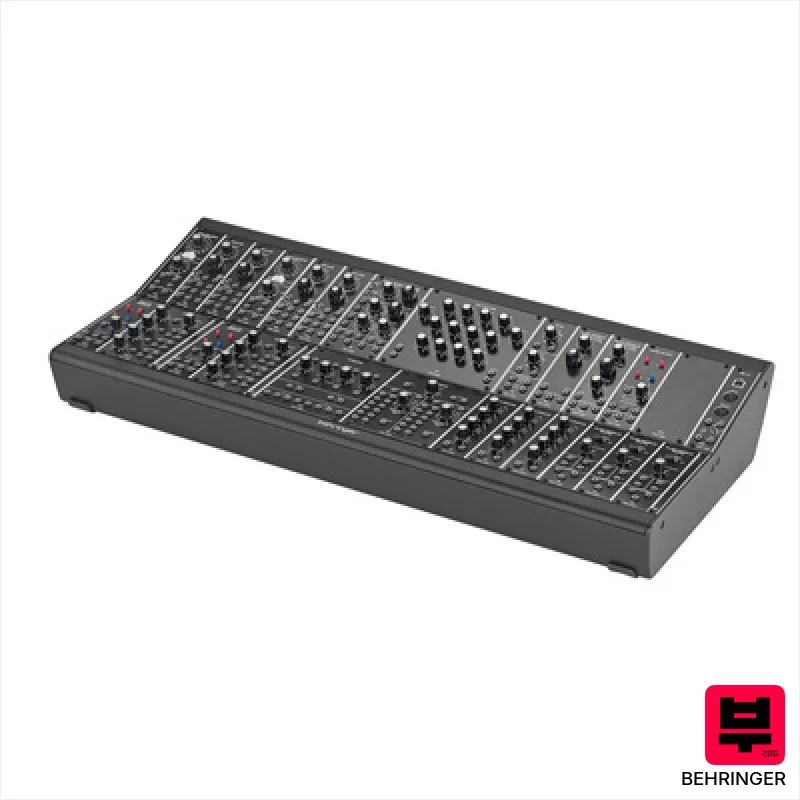
Behringer System 35
- • Excellent module selection provides a broad sonic palette for experimentation.
- • The included Eurorack Go case offers immediate portability and protection.
- • Comprehensive module set allows for complex sound design without external purchases.
- • The 914 Fixed Filter Bank delivers unique, resonant filter textures unavailable elsewhere.
- • Limited HP space restricts module expansion beyond the provided set.
- • Build quality, while improved, still shows cost-saving measures in plastic components.
- • Steep learning curve for beginners unfamiliar with modular synthesis concepts.
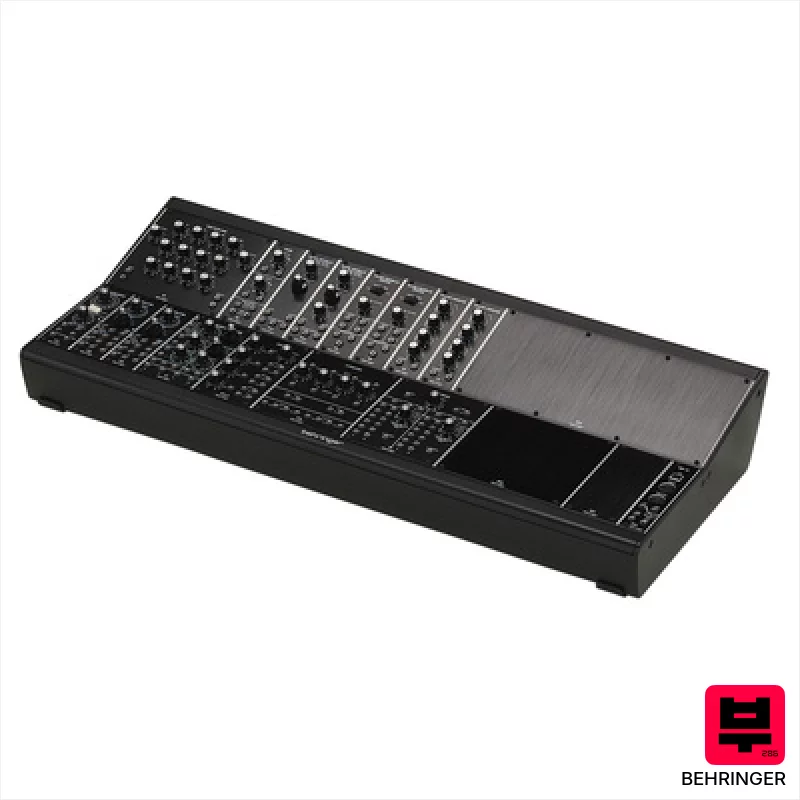
Behringer System 15
- • Excellent value for a complete, semi-modular system.
- • The included modules offer a surprisingly versatile sonic palette.
- • Eurorack Go case provides portability and a professional aesthetic.
- • Fixed Filter Bank adds unique, characterful sound design possibilities.
- • Build quality of some modules feels plasticky, typical of the price point.
- • Limited HP depth restricts future module expansion significantly.
- • Steep learning curve for beginners unfamiliar with modular synthesis.
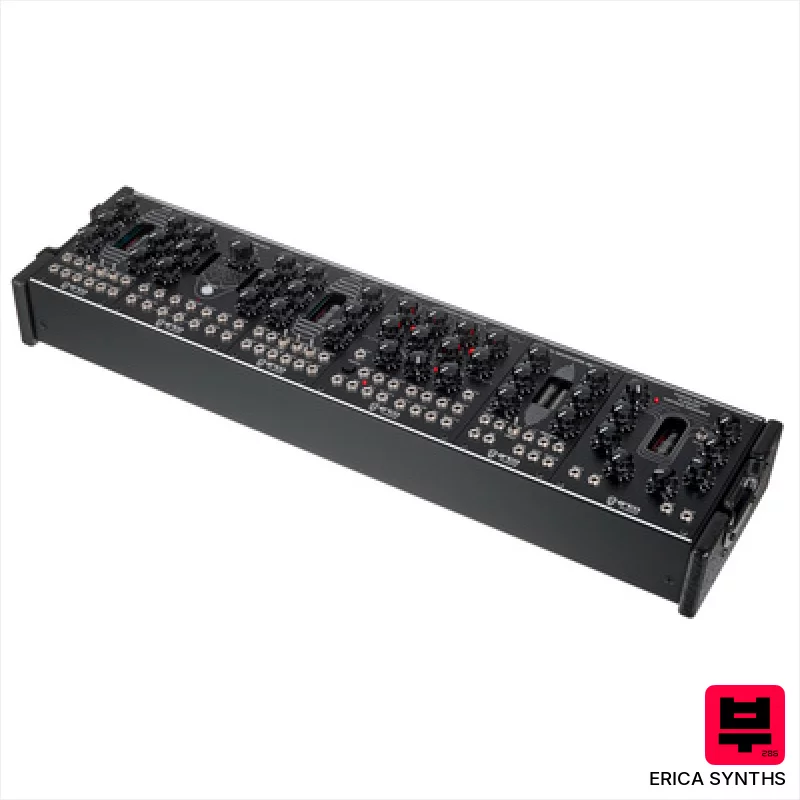
Erica Synths Fusion System II (with Lid)
- • Tube-driven warmth delivers a uniquely vintage and organic character
- • Pre-patched workflow allows immediate sound exploration and creative patching
- • Compact 1U skiff case with lid offers portability and protection
- • Fusion modules are known for their robust build quality and reliable performance
- • Limited HP space restricts future module expansion significantly
- • The pre-configured patch matrix might feel restrictive for advanced users
- • Eurorack format requires some learning curve for complete beginners

cre8audio NiftyBundle
- • Nifty Case provides a compact, portable starting point for modular exploration
- • Cellz module offers intuitive touch-sensitive voltage generation
- • Chipz module provides versatile digital oscillator/LFO functionality
- • Panel blanks allow for future module customization and a clean aesthetic
- • Limited HP space restricts module expansion possibilities significantly
- • Cre8audio modules are entry-level, lacking advanced features of higher-end brands
- • Patch cable quality feels a bit flimsy for long-term reliability
How to Choose the Best Modular all-in-one systems
Patching Flexibility
How easily can you reroute signals? True modularity is about experimentation, so limitations here kill the vibe. We're looking for systems that offer more than just pre-baked sequences.
Sound Quality
This isn't just about 'warmth' or 'brightness'. We're evaluating the headroom, the clarity of oscillators, the character of filters - does it have a usable low-end thump? Can it get nasty when you want it to?
Modulation Options
Oscillators are cool, but modulation is where the magic happens. LFOs, envelopes, sequencers - how many do you get, and how deeply can you modulate parameters? A limited modulation matrix will quickly stifle creativity.
Build Quality & Ergonomics
This is where budget systems often show their age. We're assessing panel stability, knob feel, and overall robustness - can you actually gig with this without fearing for its survival?
Expandability
Can you add modules later? A closed system is a dead end. We're prioritizing rigs that allow for future upgrades, even if it's just a few Eurorack slots.
Buying Guide
At this price point, expect some compromises. You're unlikely to get pristine audio converters or the most exotic oscillator designs. Look for systems that prioritize core functionality-a good oscillator, filter, and envelope generator are more valuable than a bunch of gimmicky modules you won't use. Don't be afraid of used gear; you can often snag a higher-end system for less if you're willing to take a chance.
How This List Is Built
We don't play these instruments — we're a catalog, not a review desk, and we'd rather say so than pretend otherwise. This page ranks 7 modular all-in-one systems from the Thomann catalogue, which is the largest single source of specification data in this category.
Position is computed, not curated. Four signals, in order of weight: how completely the manufacturer documents the instrument (number of published specifications), where it sits in the price range, how specific the model designation is — which filters out generic accessories — and whether a product image exists. The same inputs always produce the same order, so nothing here is shuffled to look fresh.
What this list is good for: narrowing a category down to a shortlist by spec and budget. What it isn't: a substitute for hearing an instrument. Before you buy, read hands-on reviews and, where you can, play it. Full methodology.

