
Best Master Keyboards (up to 25 Keys) for Electronic Music 2026
Alright, so you're diving into the world of electronic music production and need a compact controller? 25-key master keyboards are the sweet spot - portable enough for the bedroom studio, but with enough keys to get some serious playing done. Forget those toy-like MIDI controllers; we're talking about instruments that feel good under your fingers and give you the nuance you need for everything from pulsing techno to lush ambient soundscapes. Let's find you the right one.
Last updated: July 15, 2026 • Next update: July 22, 2026
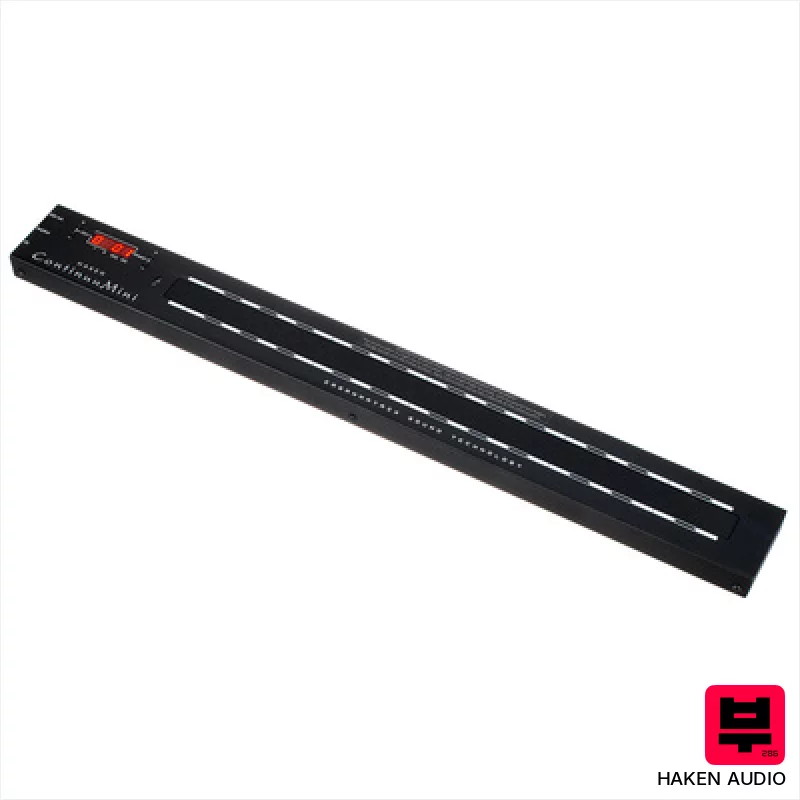
Haken Audio ContinuuMini Black Edition
- • Exceptional expressive control via X, Y, and Z axes.
- • Compact size belies its powerful multidimensional capabilities.
- • Integrated Eagan Matrix provides surprisingly rich, unique sounds.
- • Robust build quality; feels solid despite its small footprint.
- • Limited 2-octave range restricts certain musical applications.
- • Price point positions it as a premium investment for serious users.
- • Requires learning curve to fully exploit its advanced features.
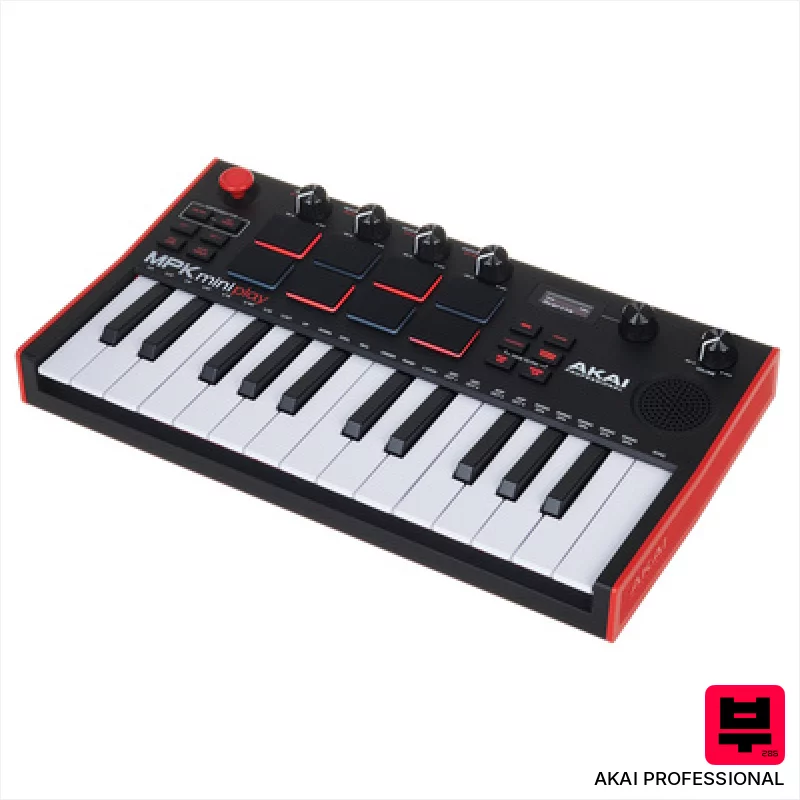
AKAI Professional MPK mini Play MK3
- • Gen 2 keys offer noticeably improved feel over previous models.
- • Built-in speaker is surprisingly decent for casual practice.
- • NKS support unlocks a vast library of high-quality instruments.
- • Compact size and lightweight design make it ultra-portable.
- • Mini keys are cramped; not ideal for advanced playing techniques.
- • Plastic build feels budget-oriented, lacks premium robustness.
- • Limited knob/fader options restrict complex parameter control.

AKAI Professional MPK Mini MK3
- • Velocity-sensitive mini keys offer surprisingly playable feel.
- • MPC pads deliver AKAI's signature responsive, dynamic feel.
- • 4-way joystick provides nuanced pitch/mod control for expressive playing.
- • NKS integration unlocks a massive library of instruments and effects.
- • Mini keys aren't ideal for complex, fast passages or pianists.
- • Plastic build feels a bit flimsy compared to higher-end controllers.
- • USB-B port limits connection options; no MIDI DIN.
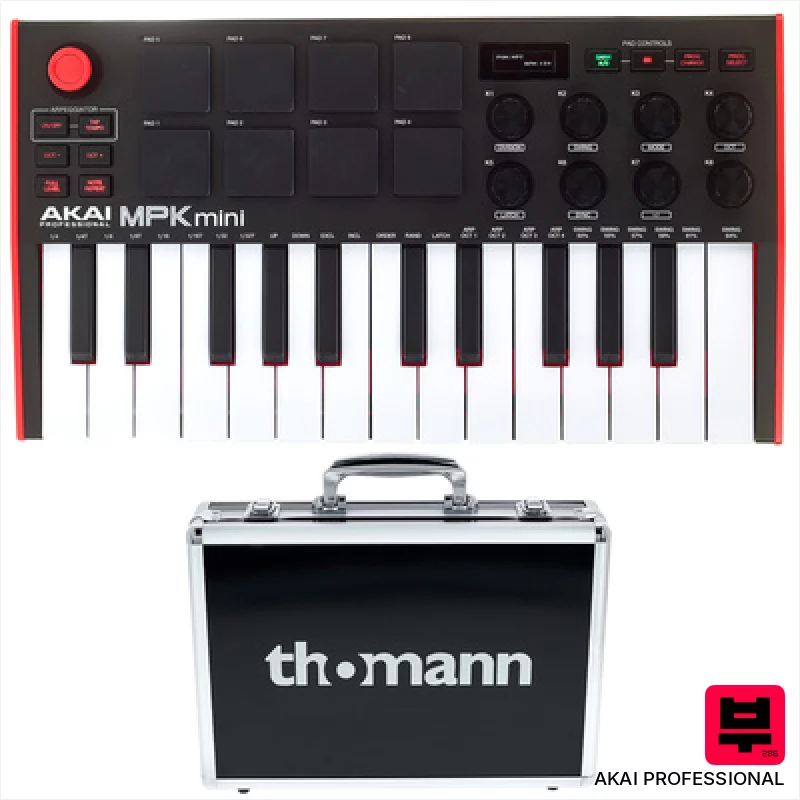
AKAI Professional MPK Mini MK3 Case Bundle
- • Excellent pad response for beat production and sampling.
- • The included Komplete Select bundle is a substantial value add.
- • Compact size makes it highly portable for mobile music creation.
- • OLED display offers clear feedback, a nice upgrade over older models.
- • Mini keys can be challenging for players with larger hands.
- • USB-B connection limits flexibility compared to USB-C.
- • The included bag isn't a dedicated case – offers minimal protection.

AKAI Professional MPK Mini MK3 White - AIEP3 Bdl
- • Excellent keybed for a mini-keyboard; surprisingly playable action.
- • The included AIR plugins offer a wide range of sounds and creative tools.
- • Compact and lightweight; ideal for travel and small workspaces.
- • Velocity-sensitive pads are responsive and useful for beatmaking.
- • Limited key range restricts complex chord voicings and arrangements.
- • Plastic build feels a bit budget-friendly; not as robust as higher-end options.
- • Plugin bundle requires registration and download; can be a slight hurdle.
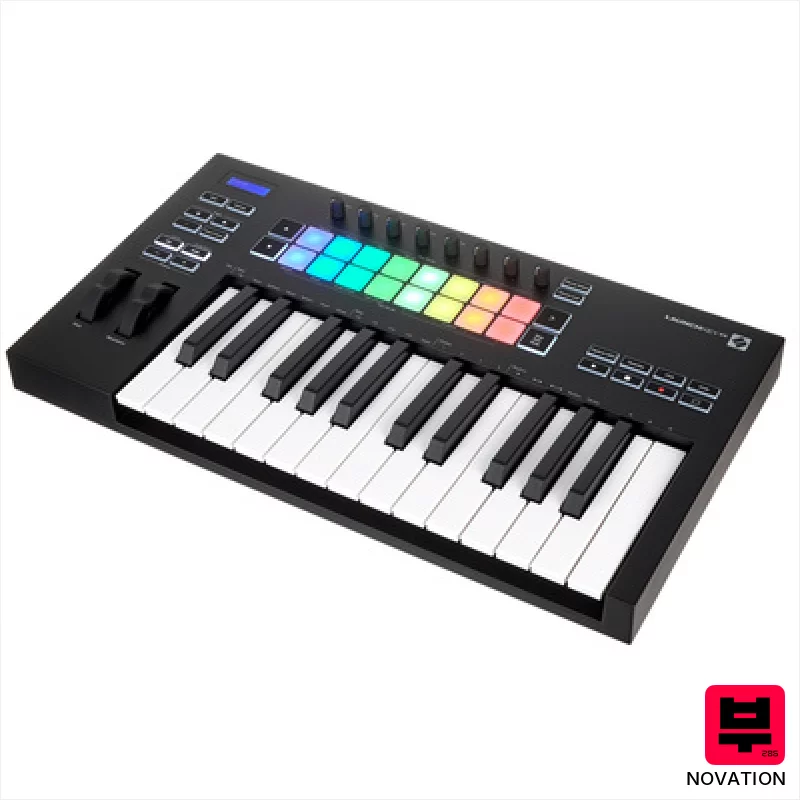
Novation Launchkey 25 MK3
- • Solid plastic construction feels surprisingly robust for its size.
- • Excellent integration with Ableton Live Lite simplifies workflow.
- • The Chord mode is genuinely useful for quick arrangement ideas.
- • Velocity-sensitive pads offer a responsive and playable feel.
- • 25 keys severely limit playing complex chords or basslines.
- • Plastic keys lack the premium feel of synth-action alternatives.
- • The USB-B connection feels a bit dated compared to USB-C.
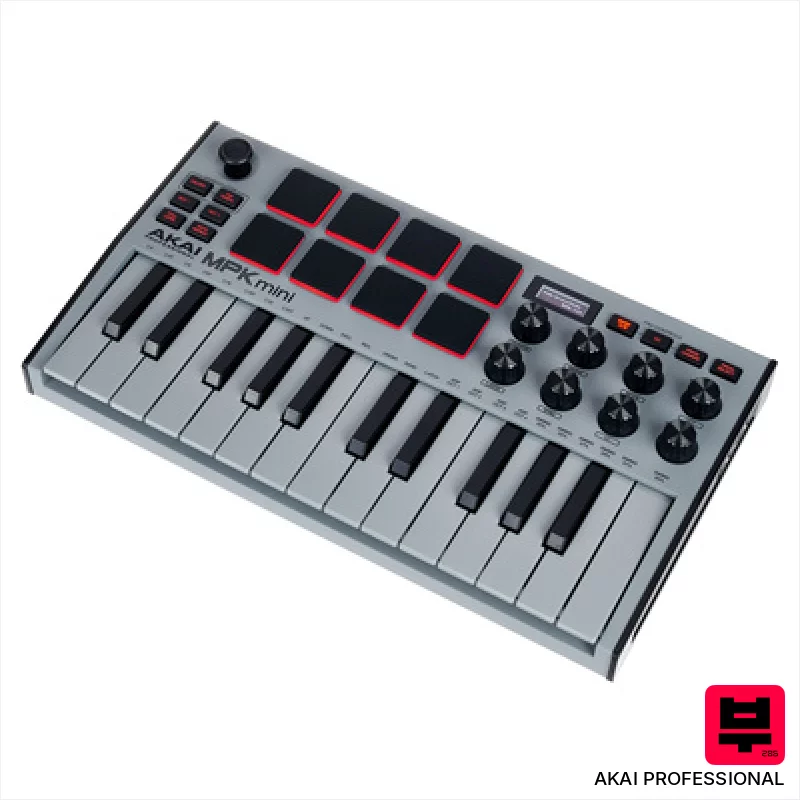
AKAI Professional MPK Mini MK3 Gray
- • Excellent value for a compact, feature-rich MIDI controller.
- • The four-way joystick offers surprisingly nuanced pitch/mod control.
- • Solid plastic build feels more robust than similar budget options.
- • Native Instruments Komplete Select bundle is a significant bonus.
- • Mini keys can be challenging for players with larger hands or experience.
- • USB-B connection limits portability without an adapter.
- • Assignable rotary knobs lack detents, requiring careful control.

Nektar Impact LX Mini
- • Compact size ideal for travel and small workspaces.
- • Velocity curves offer nuanced expressive control for varied playing styles.
- • Dedicated transport buttons streamline DAW workflow significantly.
- • Bitwig 8-Track inclusion provides immediate creative production capabilities.
- • Mini keys can be challenging for players accustomed to full-size action.
- • Limited knob quantity restricts detailed parameter control in complex setups.
- • Plastic build feels somewhat budget-oriented despite decent stability.

AKAI Professional LPK25 MKII
- • Extremely portable and lightweight, ideal for mobile music production.
- • MPC Beats software provides a great starting point for beginners.
- • Velocity-sensitive mini keys offer surprising expressiveness for their size.
- • Tap Tempo sync is reliable and useful for live performance loops.
- • Mini keys can be cramped and challenging for players with larger hands.
- • Limited physical controls restrict advanced DAW manipulation.
- • Plastic build feels somewhat flimsy; lacks a premium feel.
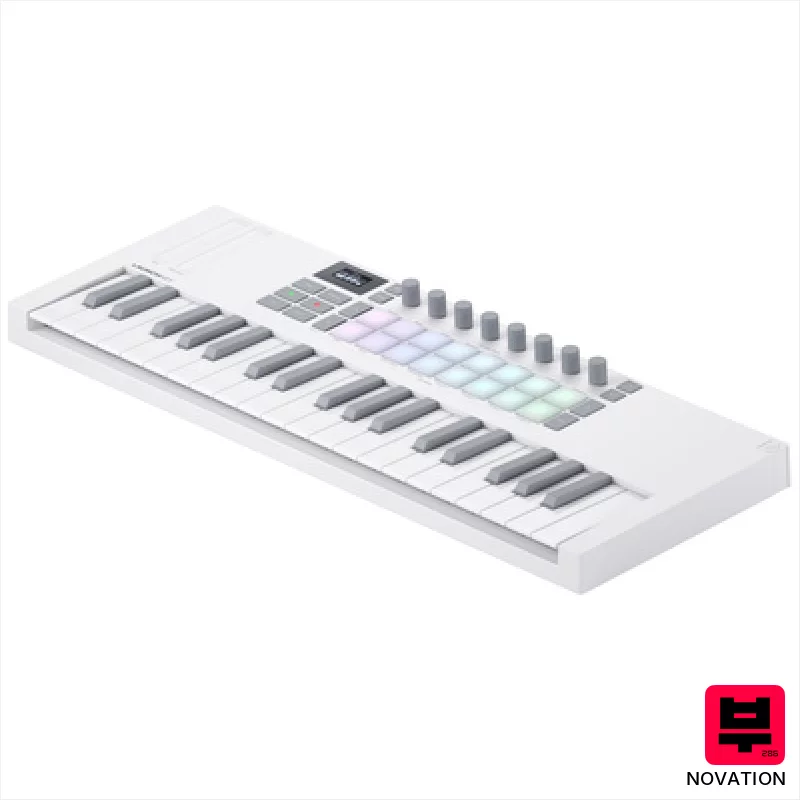
Novation Launchkey Mini 37 MK4 WH
- • Excellent FSR pads offer responsive, expressive polyphonic aftertouch.
- • Compact size makes it highly portable for music production on the go.
- • Comprehensive software bundle (Ableton Live Lite, GForce) provides immediate creative tools.
- • Well-integrated scale and chord modes simplify songwriting and experimentation.
- • The mini keys, while playable, lack the feel of full-sized keys for extended playing.
- • Plastic build, while lightweight, doesn't inspire ultimate confidence in long-term durability.
- • Limited MIDI connectivity beyond USB restricts integration with older or less common setups.
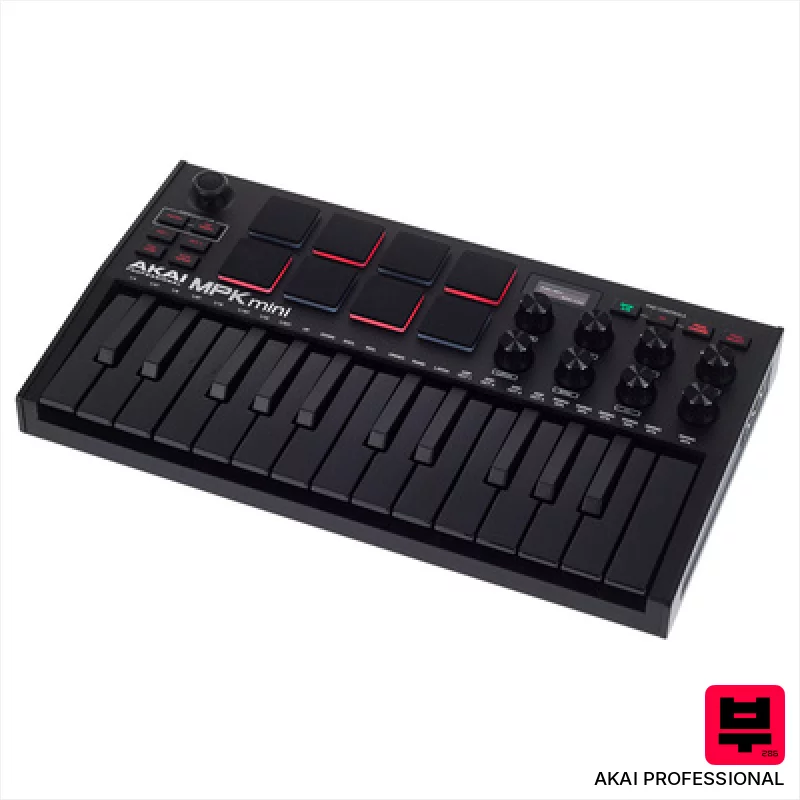
AKAI Professional MPK Mini MK3 Black
- • Excellent MPC pad feel with responsive note repeat
- • 4-way joystick offers surprisingly nuanced modulation control
- • Compact size makes it ultra-portable for music creation on the go
- • Included software bundle provides a great starting point for beginners
- • Mini keys can be challenging for players with larger hands
- • USB-B connection limits mobility without a hub
- • Assignable rotary encoders lack detents for precise adjustments
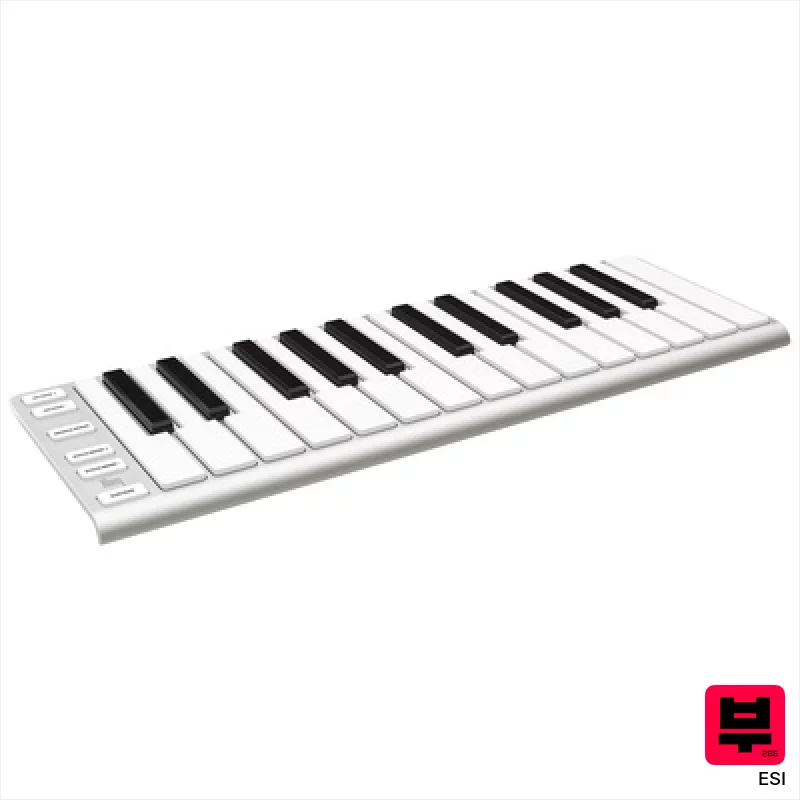
ESI Xkey 25
- • Sleek, minimalist design with premium aluminum housing feels surprisingly solid.
- • Velocity and polyphonic aftertouch offer expressive control for nuanced playing.
- • Class-compliant USB-C simplifies setup; works immediately with most DAWs.
- • Compact size makes it incredibly portable and desktop-friendly.
- • 25 keys severely limit range; best suited for sketching and simple parts.
- • The ultra-flat key action lacks the tactile feedback of traditional keys.
- • Limited physical controls; relies heavily on software mapping.
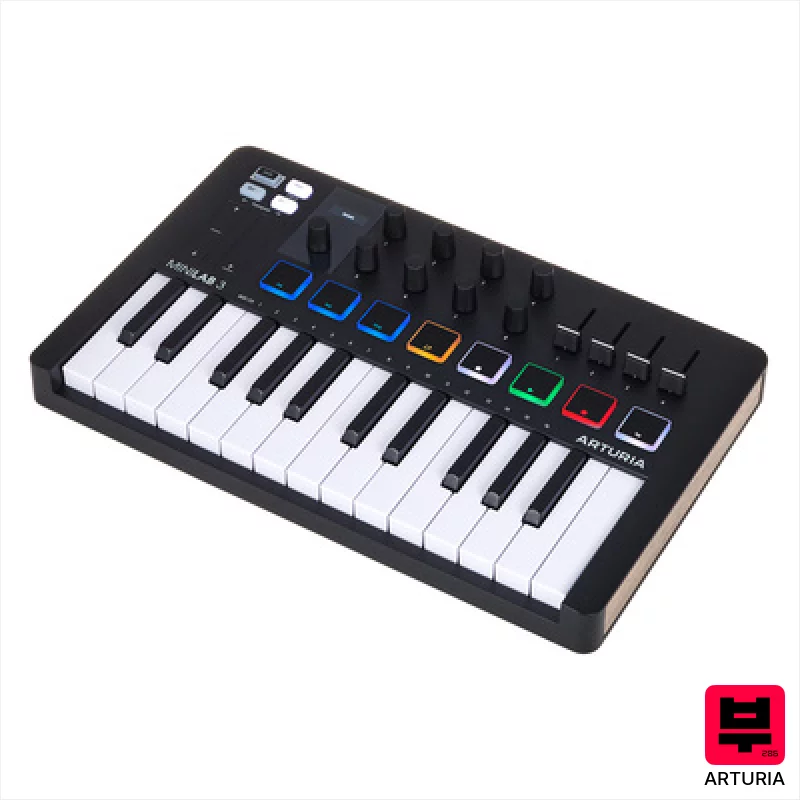
Arturia MiniLab 3 Black
- • Excellent build quality for the size; feels solid and well-assembled.
- • The OLED display is a significant upgrade, offering clear visual feedback.
- • NKS compatibility unlocks a massive library of instruments instantly.
- • Compact size and USB bus-power make it supremely portable and convenient.
- • 25 keys limit creativity for complex chord progressions and arrangements.
- • Slim keys can feel cramped for players with larger hands or experience.
- • Assignable encoders lack dedicated detents, making precise adjustments tricky.

Arturia MiniLab 3 White
- • Excellent value; the included Komplete Select is a huge bonus.
- • The OLED display is crisp and genuinely useful for parameter identification.
- • Slim keys offer surprising playability for a mini-keyboard.
- • Assignable encoders and faders provide flexible control over software.
- • The mini-keys are undeniably cramped; not ideal for extended piano playing.
- • Plastic build feels a little budget-oriented, though surprisingly sturdy.
- • Limited key range restricts certain chord voicings and playing styles.

AKAI Professional MPK Mini MK3 Black Bag Bundle
- • Excellent portability thanks to its compact size and included bag.
- • MPC pads offer a surprisingly responsive and tactile playing experience.
- • OLED display provides clear visual feedback, a welcome upgrade from LCDs.
- • Native Instruments NKS support streamlines workflow within NI environments.
- • Mini keys require adaptation; not ideal for players accustomed to full-size keys.
- • USB-B connection limits mobility; a Type-C would be more modern.
- • Limited knob range restricts complex parameter control and mixing.
How to Choose the Best Master Keyboards (up to 25 Keys)
Keybed Action
Forget mushy synth actions. For electronic music, you want something with a decent amount of travel and a clear, defined response - semi-weighted is a good starting point, but fully-weighted can really elevate your playing, especially if you're coming from a piano background. It's about articulation, not just hitting notes.
Aftertouch
This is HUGE for expressive electronic sounds. Subtle aftertouch can add warmth and movement to pads, while more aggressive aftertouch can create dynamic filter sweeps or modulation effects. Lack of aftertouch really limits what you can do.
Knob/Pad/Slider Implementation
Electronic music is all about tweaking. How well are the knobs, pads, and sliders mapped to your software? Are they responsive and precise, or do they feel like you're fighting the controller? Good integration is key to a smooth workflow.
Velocity Sensitivity
Can the keyboard accurately reflect your dynamics? A keyboard with poor velocity response will feel lifeless, especially when trying to create nuanced rhythms or expressive melodies. It needs to react to how hard or soft you're playing.
Build Quality & Portability
Let's be real - you're going to be moving this thing around. Cheap plastic feels cheap and will fall apart quickly. A solid, well-built keyboard that's still relatively lightweight is the ideal combination for both studio and gigging.
Buying Guide
Don't be fooled by flashy features. A 25-key keyboard will always have limitations - you're not going to be playing full piano concertos on it. The biggest trade-off is always going to be keybed quality; those super-cheap models often use membrane keys that feel awful. Spend a little more for a decent semi-weighted action - it's worth it. Also, check DAW integration - seamless mapping saves you a ton of frustration.
Our Methodology
We don't just look at spec sheets here. We've spent countless hours playing these keyboards through a variety of synths - hardware and software - in both studio and live settings. Our evaluations are based on feel, responsiveness, how well they translate your playing into the sounds you're creating, and whether they can actually hold up to the demands of gigging or a serious recording workflow.

