
Best LFO Modules for Movement 2026
So you're chasing movement in your modular - that evolving texture, those subtle shifts that breathe life into a patch. It's not just about a simple vibrato; it's about organic undulation, rhythmic pulse, and unexpected sonic surprises. A weak LFO can kill that vibe faster than a feedback loop at a loud gig, so let's look at some modules that actually deliver the motion you're after. We're not talking about just sine and triangle waves here - we're talking about tools for sculpting soundscapes.
Last updated: July 22, 2026 • Next update: July 29, 2026
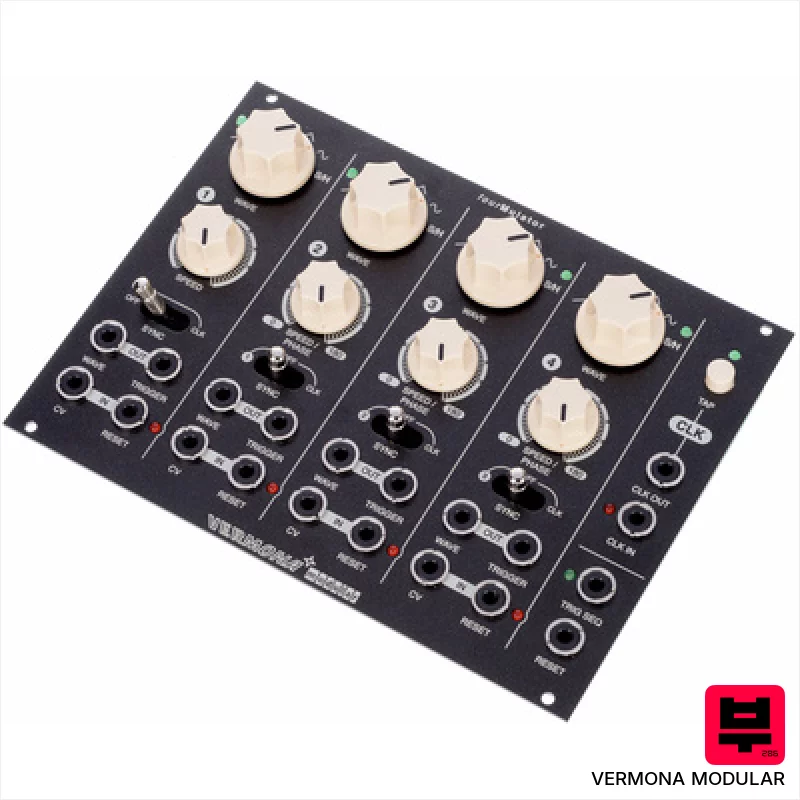
Vermona Modular fourMulator
- • Exceptional sync capabilities for complex rhythmic patterns.
- • Vermona's signature clean, precise digital signal path.
- • Compact 34HP footprint maximizes precious rack space.
- • Integrated clock generator offers flexible tempo control.
- • Limited waveform selection compared to some rivals.
- • Digital nature may not appeal to purists seeking analog warmth.
- • Power consumption is moderately high for a small module.

XAOC Devices Batumi II
- • Exceptional flexibility with unique sync modes for complex modulation.
- • The free-running mode provides truly unpredictable, organic movement.
- • Waveform selection goes beyond the basics, offering creative possibilities.
- • Poti II expander unlocks even deeper control and customization.
- • The learning curve is steep, especially for those new to modular synthesis.
- • Power draw, while manageable, could be a constraint in smaller systems.
- • The physical size (10HP) is considerable for its functionality.
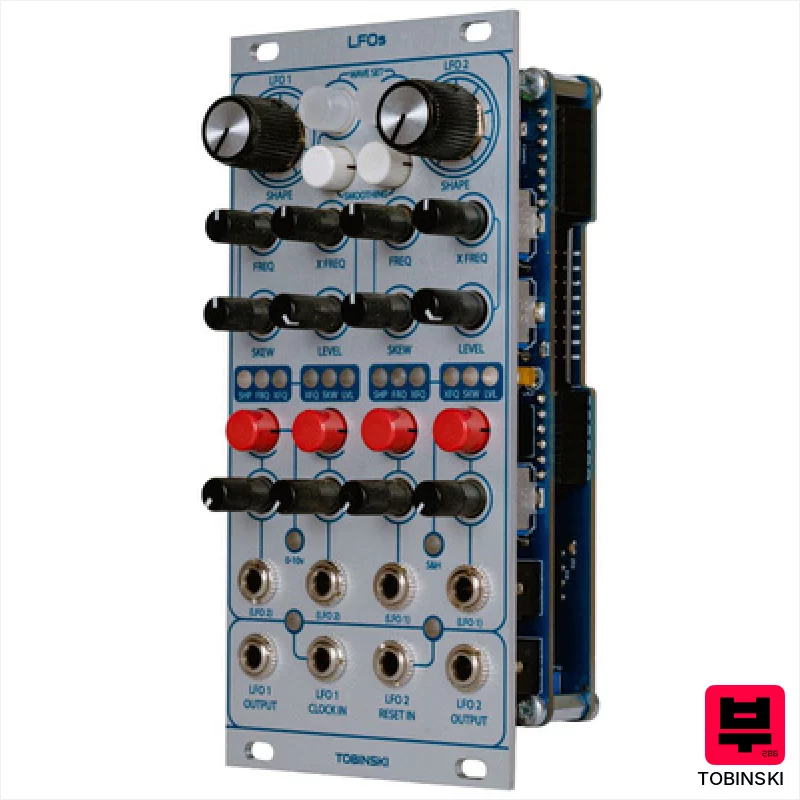
Tobinski LFOs
- • Exceptional waveform variety offers immense creative possibilities.
- • Cross-modulation capabilities create complex, evolving textures.
- • Flexible CV routing allows for deep modulation matrix integration.
- • Compact 12HP footprint maximizes space in tight modular setups.
- • The smoothing switch can introduce subtle rounding of sharper waveforms.
- • Reset input on channel 2 lacks dedicated CV control for advanced sequencing.
- • Power draw, while manageable, is slightly higher than some competitors.
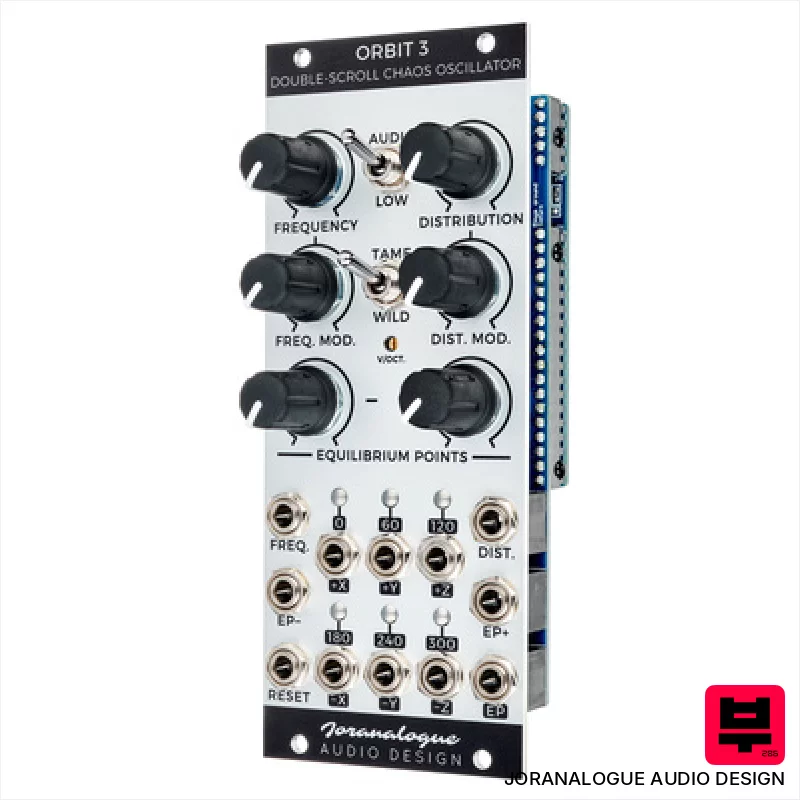
Joranalogue Audio Design Orbit 3
- • Unique chaotic output offers unpredictable, evolving modulation.
- • Joranalogue's build quality ensures robust operation and longevity.
- • Distribution controller provides nuanced control over chaotic behavior.
- • Equilibrium CV output simplifies integration into modulation schemes.
- • 10HP footprint can be restrictive in smaller Eurorack cases.
- • Steep learning curve; mastering its behavior requires experimentation.
- • Limited waveform options compared to more versatile LFO modules.

Shakmat Modular Mod Medusa
- • Euclidean sequencing provides uniquely complex, evolving rhythms.
- • Four correlated LFOs unlock intricate modulation possibilities.
- • Correlation modes offer nuanced rhythmic interplay and experimentation.
- • Compact 12HP footprint maximizes space in crowded modular racks.
- • Steep learning curve for mastering Euclidean sequencing intricacies.
- • Limited waveform shapes compared to dedicated oscillator modules.
- • Bipolar CV inputs can be confusing for beginners to Eurorack.

Doepfer A-143-4
- • Four independent LFOs offer immense modulation possibilities.
- • Doepfer's robust construction ensures long-term reliability.
- • Triangle core provides a clean, predictable waveform foundation.
- • Sum output simplifies complex modulation routing and signal management.
- • 22HP footprint can be restrictive in smaller Eurorack cases.
- • Limited waveform options compared to more modern LFO modules.
- • Lack of attenuators limits precise modulation level control.
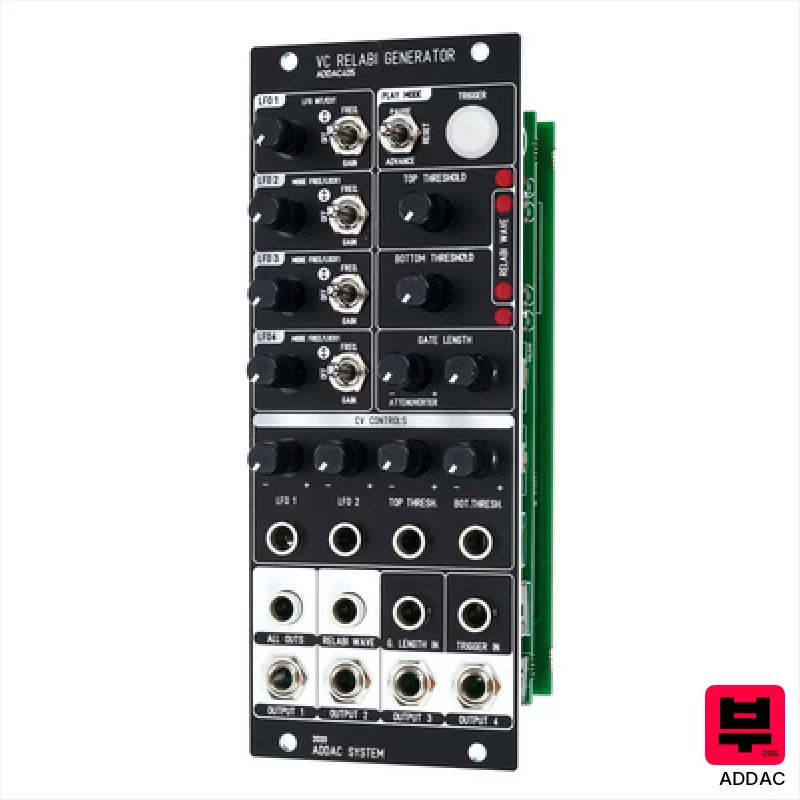
ADDAC 405 VC Relabi Generator
- • Relabi wave creation offers uniquely complex modulation possibilities
- • Independent LFOs provide flexible and nuanced control
- • CV input allows for dynamic and expressive parameter adjustments
- • Compact 10HP footprint maximizes space in dense modular setups
- • Limited waveform selection compared to dedicated multi-LFO modules
- • Gate length adjustment could benefit from finer resolution
- • Relabi wave shaping can be initially challenging to master
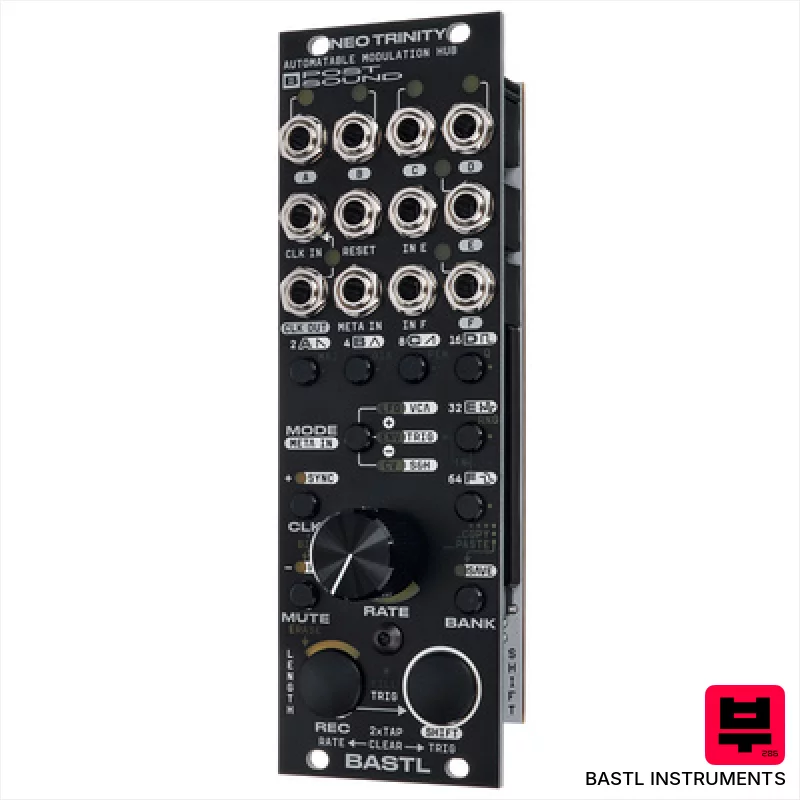
Bastl Instruments Neo Trinity
- • Highly versatile modulation hub, exceeding typical LFO functionality.
- • Excellent internal quantizer simplifies complex sequence creation.
- • Bastl's robust build quality ensures long-term reliability and durability.
- • Assignable Meta CV input expands creative possibilities significantly.
- • The learning curve is steep; mastering all modes takes dedicated practice.
- • Power consumption is relatively high for a module of its size.
- • Limited waveform selection compared to dedicated, higher-end LFO modules.
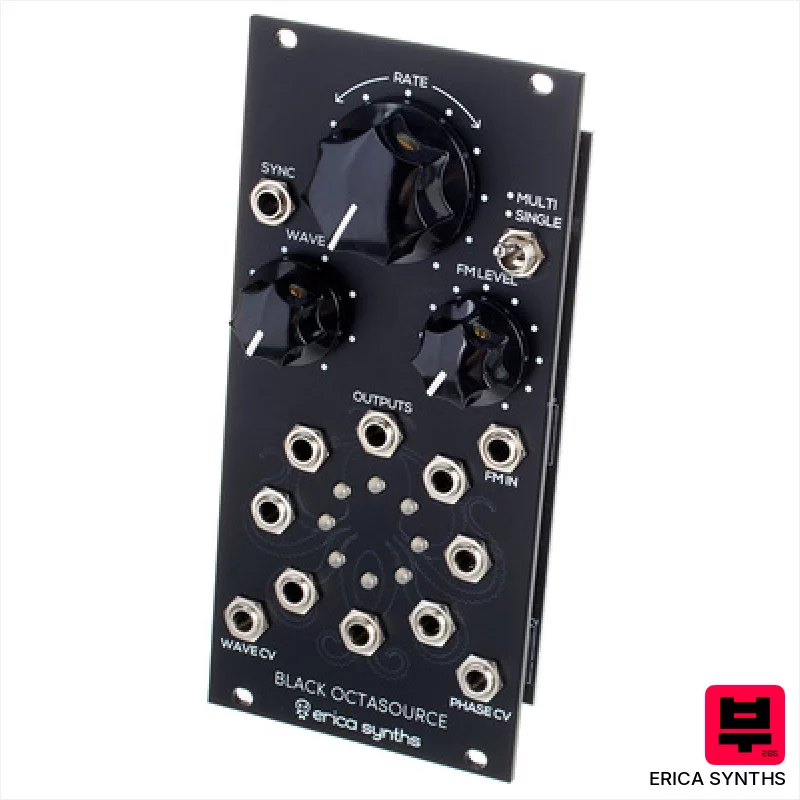
Erica Synths Black Octasource
- • Eight simultaneous waveforms offer incredible flexibility for modulation.
- • Morphing function provides seamless transitions between LFO shapes.
- • Compact 12HP footprint is ideal for dense modular setups.
- • Excellent synchronization capabilities for tight timing with other modules.
- • Limited rate range compared to some dedicated LFO modules.
- • Power draw is relatively high, requiring a robust power supply.
- • Lack of attenuators on outputs limits precise CV control.
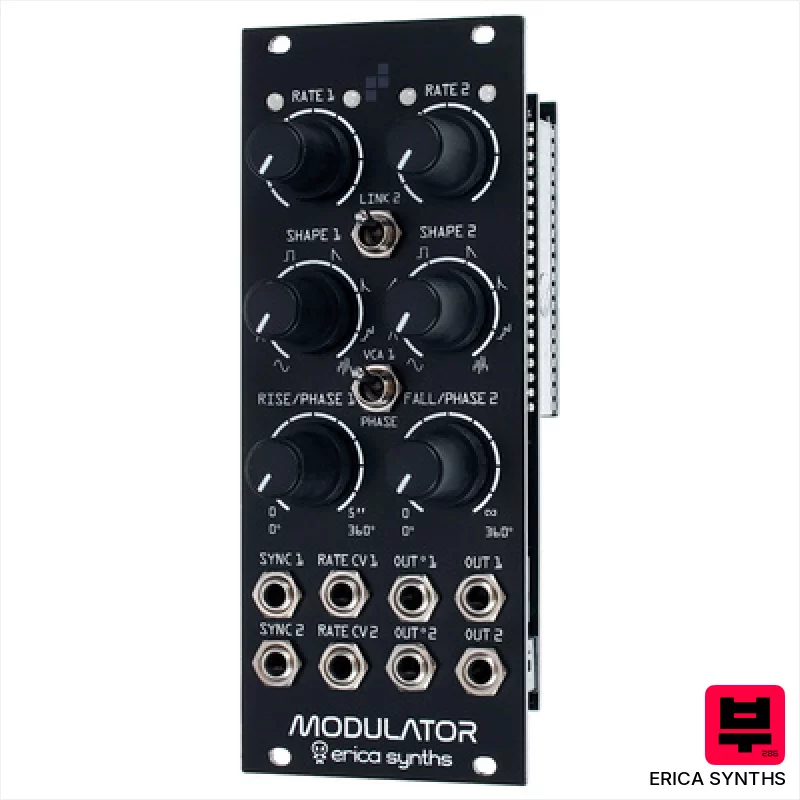
Erica Synths Drum Modulator
- • Erica's wave morphing is uniquely smooth and musical
- • Dual-channel design offers incredible modulation flexibility
- • Noise source with HP/LP filter is surprisingly versatile
- • Compact size (10HP) makes it ideal for space-constrained racks
- • VCA on Channel 1 feels a little basic for complex modulation
- • Limited waveform selection compared to some higher-end LFOs
- • Sync input can be finicky with certain voltage ranges
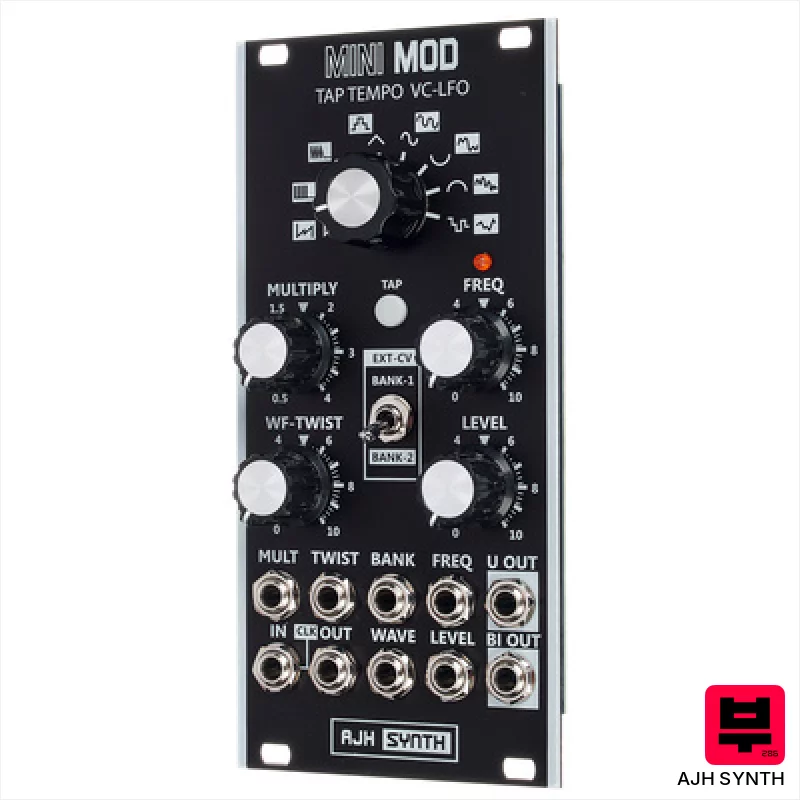
AJH Synth Tap Tempo VC-LFO black
- • 16 waveforms offer substantial tonal flexibility for complex modulation.
- • Multiply control provides creative rhythmic and harmonic possibilities.
- • Waveform twist adds nuanced shaping beyond standard LFO functionality.
- • Compact depth (26mm) makes it suitable for dense Eurorack setups.
- • Price point is premium considering similar basic LFO modules exist.
- • Limited waveform shapes compared to more expansive, multi-banked options.
- • 35mA current draw could be a concern in power-constrained systems.

Doepfer A-147-2 Vintage Edition
- • Vintage black panel adds a classic, understated aesthetic.
- • Unique delayed LFO functionality creates complex, evolving textures.
- • Compact 8HP footprint ideal for space-constrained modular systems.
- • Robust Doepfer build quality ensures long-term reliability.
- • Limited waveform options compared to modern, multi-waveform LFOs.
- • Single delay/attack parameter can feel restrictive for precise control.
- • Power draw is moderate, consider your PSU’s capacity.
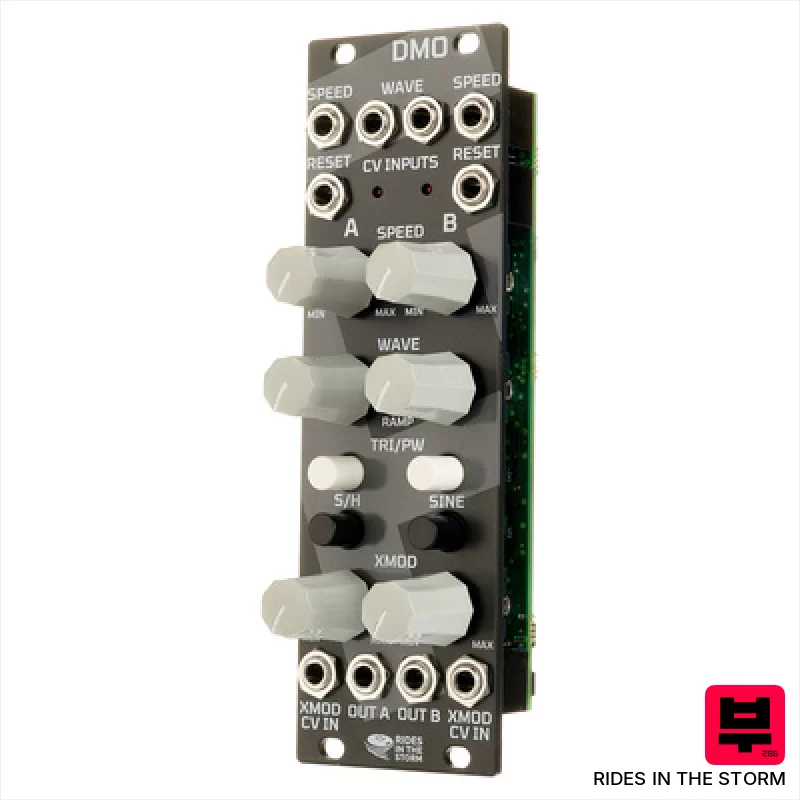
Rides In The Storm DMO
- • Extremely wide frequency range offers unique modulation possibilities.
- • XMod feature allows for complex, evolving textures easily.
- • Compact 8TE width maximizes space in tight Eurorack setups.
- • Sample & Hold waveform adds character and unpredictable movement.
- • 80mA draw per rail can strain power supplies in smaller systems.
- • Limited modulation destinations compared to more complex modules.
- • Plastic knobs feel a bit cheap given the potential for nuanced control.

Doepfer A-147-4 Dual VCLFO
- • Dual channels offer incredible modulation flexibility.
- • Doepfer's robust build quality ensures long-term reliability.
- • Comprehensive waveform selection provides diverse sonic possibilities.
- • CV control over frequency, pulse width, and reset is exceptionally versatile.
- • The 8U width can be restrictive in smaller Eurorack cases.
- • The initial frequency range selection via jumpers feels somewhat dated.
- • Pulse width modulation can sometimes be a little unpredictable.
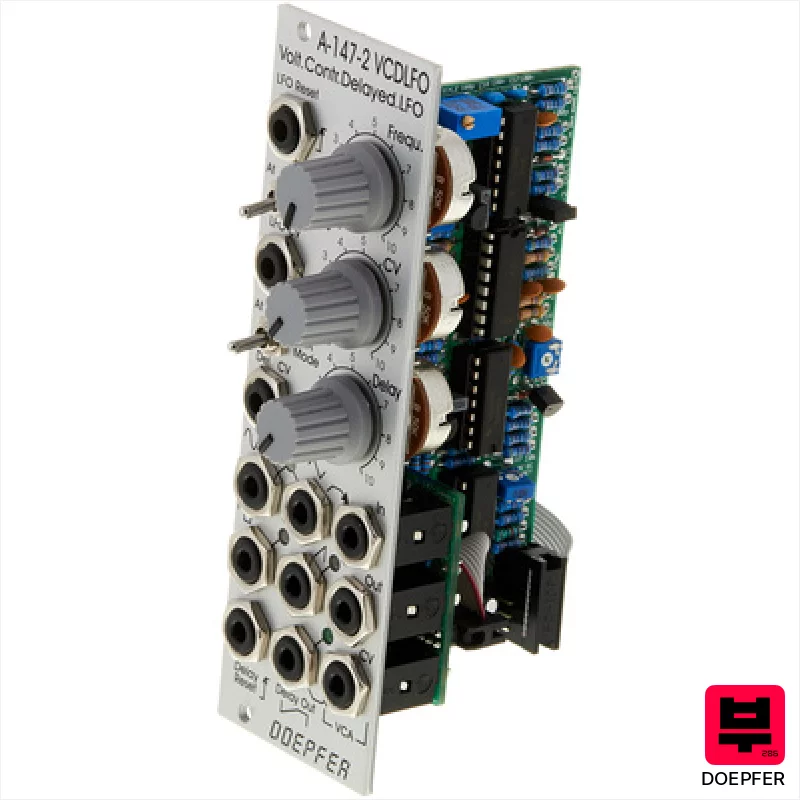
Doepfer A-147-2 VCD LFO
- • Versatile modulation options beyond standard LFO behavior
- • Ring modulation function adds unique sonic textures
- • Compact 8HP footprint optimizes modular space
- • Robust Doepfer build quality ensures long-term reliability
- • Limited waveform selection compared to more modern LFOs
- • Delay/Attack parameter lacks finer control for precise envelopes
- • Power consumption is relatively high for a single module
How to Choose the Best LFO Modules
Waveform Variety
A good movement LFO needs more than just the basics. Think complex shapes - stepped waveforms for glitchy rhythms, random for unpredictable textures, and even user-creatable shapes for truly unique movement. A single sine wave just isn't going to cut it when you're trying to create evolving soundscapes.
Rate Range & Accuracy
You need both glacial drifts and frantic pulses. But accuracy is just as vital; a wobbly rate can ruin a groove. Modules with clean, stable rates, even at the extremes, are a must, especially if you're syncing to external clocks.
Modulation Input Sensitivity
How much influence can other modules have on the LFO's behavior? A dull, unresponsive modulation input will limit your creative potential. Look for modules that react visibly and musically to incoming signals - this is where the real magic happens.
Output Signal Strength & Polarity
A weak signal can get lost in the mix, while a reversed polarity can cause phase cancellation. Having adjustable output levels and polarity options gives you the control to properly integrate the LFO's influence into your patch without fighting other elements.
Stepped vs. Smooth
Stepped LFOs create a robotic, stuttering effect ideal for glitchy textures and rhythmic patterns. Smooth LFOs offer more organic, flowing movement. The best modules often offer both or a blend, giving you the versatility to cover a wide range of movement styles.
Buying Guide
Don't be fooled by modules with a million features; often, those are just distractions from core functionality. Cheaper modules often skimp on waveform accuracy or have a limited rate range - they'll work, but they won't inspire. Paying a bit more for a module with a wide range of waveforms, stable rates, and a responsive modulation input will pay off in the long run, especially if you're serious about creating evolving soundscapes for gigs or recordings. Look for modules with solid build quality too; a flaky potentiometer can be a nightmare on stage.
Our Methodology
We've spent countless hours patching these LFOs into everything from ambient drones to driving techno sequences. Our evaluations aren't based on spec sheets - we're listening for how they feel in a mix, how they respond to modulation, and how reliably they perform in a live setting. A/B comparisons against each other and against standard waveforms are key; we're looking for character, not just numbers.

