
Best Installation Amps for Fixed Install 2026
So, you're building a fixed install - a bar, a restaurant, a house of worship, whatever. It's a different beast than lugging a PA around for gigs. You need reliability, clean power, and something that can handle a wide range of scenarios, from background music to a full-on band. Forget about chasing the perfect tube warmth; you need something that just works, consistently, for years to come.
Last updated: July 8, 2026 • Next update: July 15, 2026

Bose Professional PowerShareX PSX1204D
- • PowerShareX intelligently distributes power, minimizing amp stress.
- • Dante integration simplifies network audio routing and control.
- • Integrated DSP offers precise EQ and processing flexibility.
- • Compact 1U design maximizes rack space efficiency.
- • Premium-priced, a significant investment for smaller installations.
- • Euroblock connectors can be less familiar than standard XLR.
- • Limited headroom at very high output levels for demanding applications.
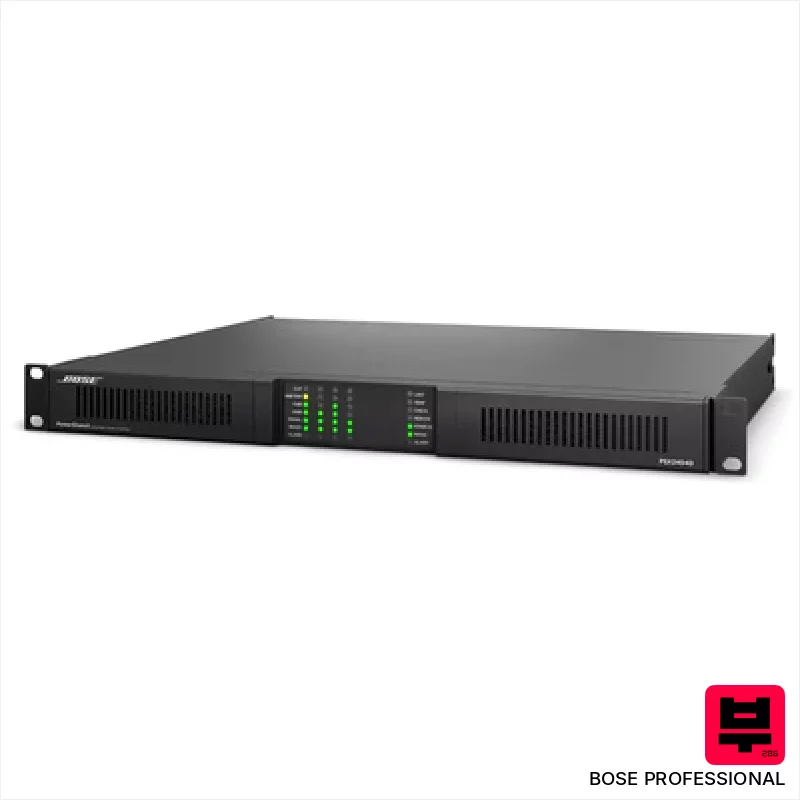
Bose Professional PowerShareX PSX2404D
- • PowerShareX intelligently distributes power, reducing amplifier load.
- • Dante integration simplifies network audio routing and control.
- • Bose ControlSpace Designer offers precise DSP customization.
- • Compact 1U design maximizes rack space in installations.
- • Premium-priced, making it a significant investment for smaller setups.
- • Limited flexibility for traditional stereo applications.
- • Euroblock connectors may require adapters for some users.

Bose Professional PowerSpace P21000A
- • Rock-solid build quality; feels like it’ll withstand years of heavy use.
- • AMPLINK offers serious flexibility for complex, networked audio systems.
- • Impressive dynamic range minimizes noise even at high power levels.
- • Excellent channel separation minimizes unwanted artifacts in multi-zone setups.
- • Limited analog input options for a modern install; only two channels.
- • Form factor is fairly deep, requiring significant rack space.
- • Premium-priced; a significant investment for smaller installations.
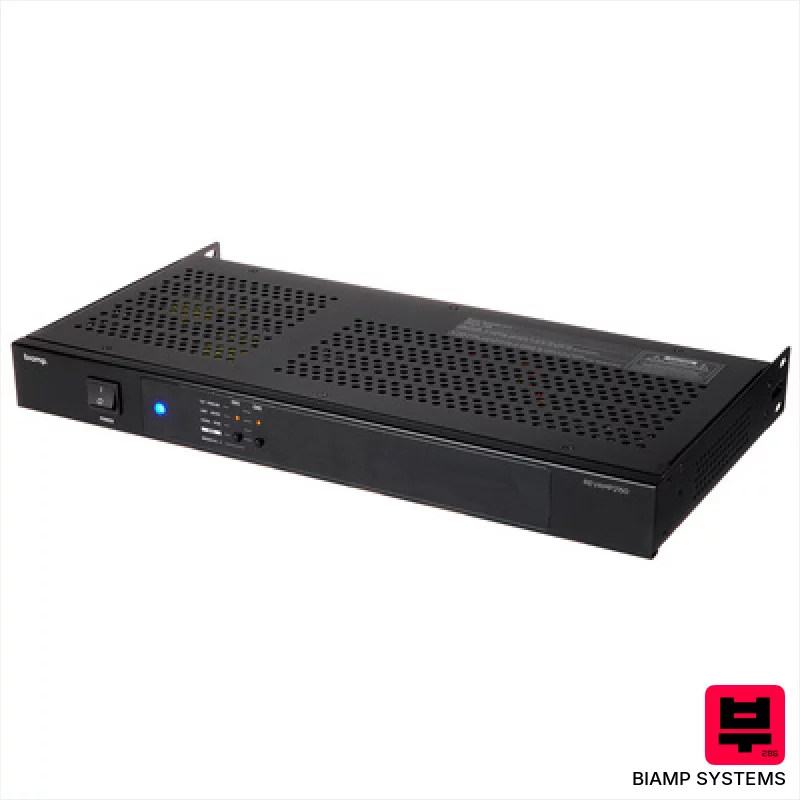
Biamp Systems REVAMP2150
- • Excellent thermal management; fanless operation is truly silent.
- • Biamp's DSP integration offers seamless system control.
- • Compact 1U height maximizes rack space efficiency.
- • Robust construction; feels solid and well-built for demanding installs.
- • Limited connectivity compared to more feature-rich amplifiers.
- • Bridged mode power isn't exceptional for demanding bridged applications.
- • Lacks advanced protection features found on higher-end Biamp models.
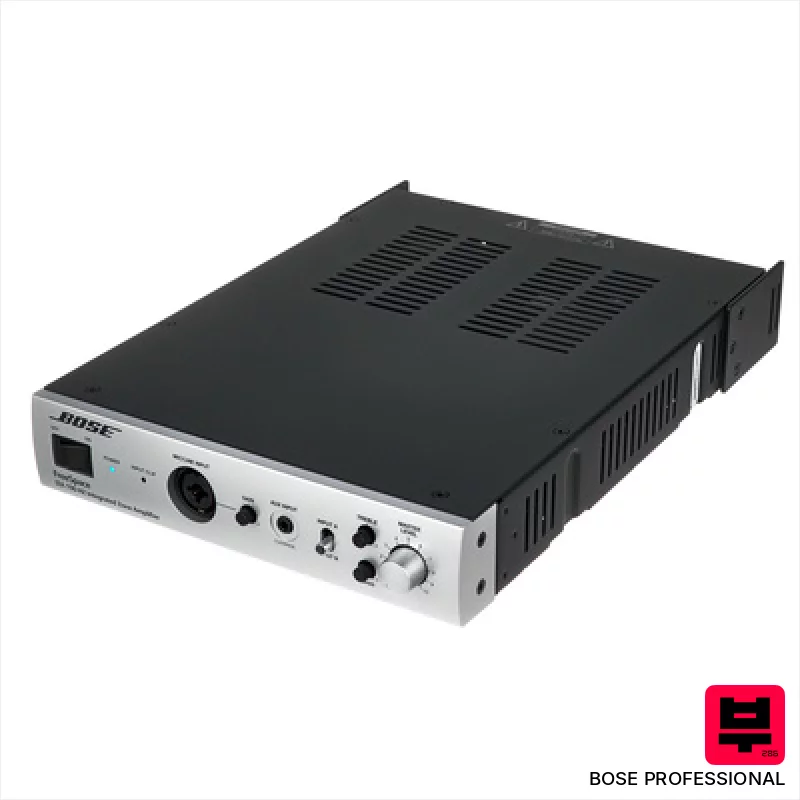
Bose Professional FreeSpace IZA 190-HZ
- • Solid build quality; typical Bose reliability and durability.
- • Excellent dynamic range minimizes noise floor in demanding environments.
- • EQ tailored for FreeSpace speakers ensures optimal sonic integration.
- • Compact size and lightweight design simplify installation and routing.
- • Limited connectivity compared to more versatile multi-channel amplifiers.
- • Single channel design restricts flexibility for complex audio setups.
- • Lacks advanced features like Dante or network control for remote management.
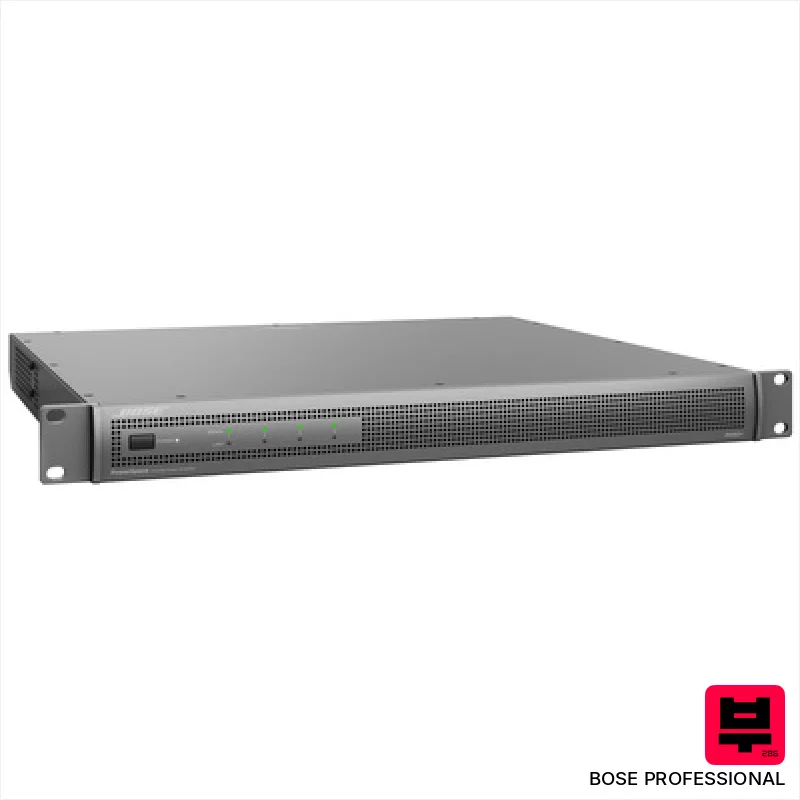
Bose Professional PowerSpace P4150+
- • Excellent SmartBass technology delivers impactful low-end response.
- • Robust build quality; feels solid and durable for installation use.
- • Low latency (<1ms) ensures pristine audio signal transmission.
- • Flexible routing and EQ options offer precise sonic tailoring.
- • Premium-priced compared to generic install amps; budget-conscious users beware.
- • Limited input options; lacks XLR inputs beyond the Euroblock.
- • Relatively compact, but still requires rack space; not ideal for small setups.
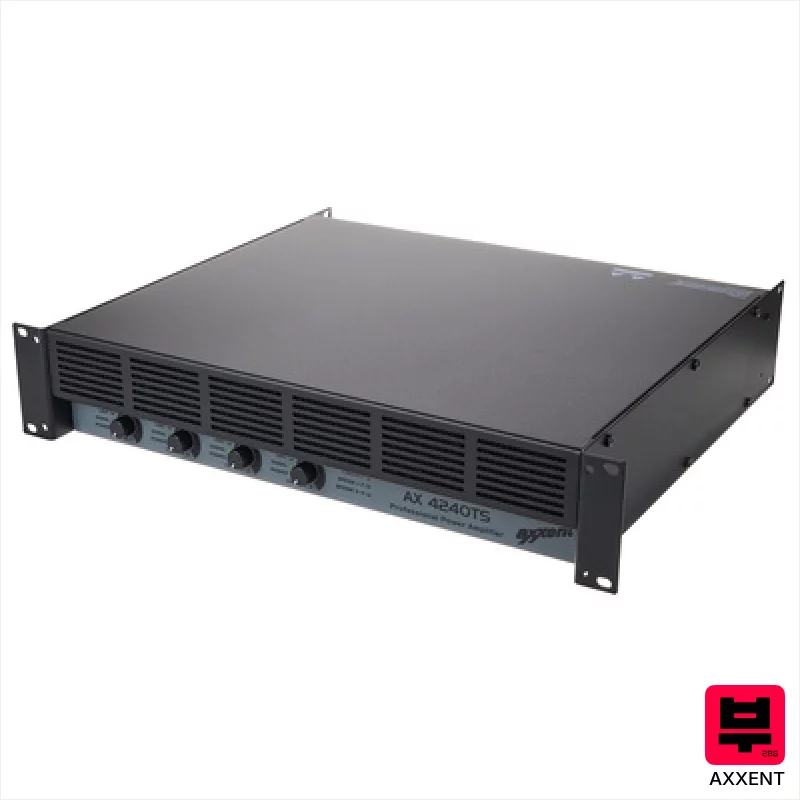
Axxent AX-4240TS
- • Robust build quality; feels like it can handle demanding installations
- • Flexible 70/100V operation simplifies distributed audio systems
- • Bridged mode offers substantial power for subwoofers or demanding zones
- • Efficient switched-mode power supply minimizes heat and energy consumption
- • Relatively heavy for a 2U amp, requiring sturdy rack mounting
- • Euroblock outputs may necessitate adapter cables for some users
- • Limited low-impedance channel options compared to some competitors

Axxent AX 1400TS
- • Fanless operation truly eliminates distracting hum and noise
- • Removable gain knob is a smart security and safety feature
- • Euroblock/binding post combo provides versatile output options
- • Solid 19in rackmount chassis ensures secure installation and portability
- • Single-channel design limits flexibility for complex sound systems
- • Weight (8.95 kg) can be a factor for smaller installations or transport
- • Lacks advanced DSP or EQ features found in higher-end amps
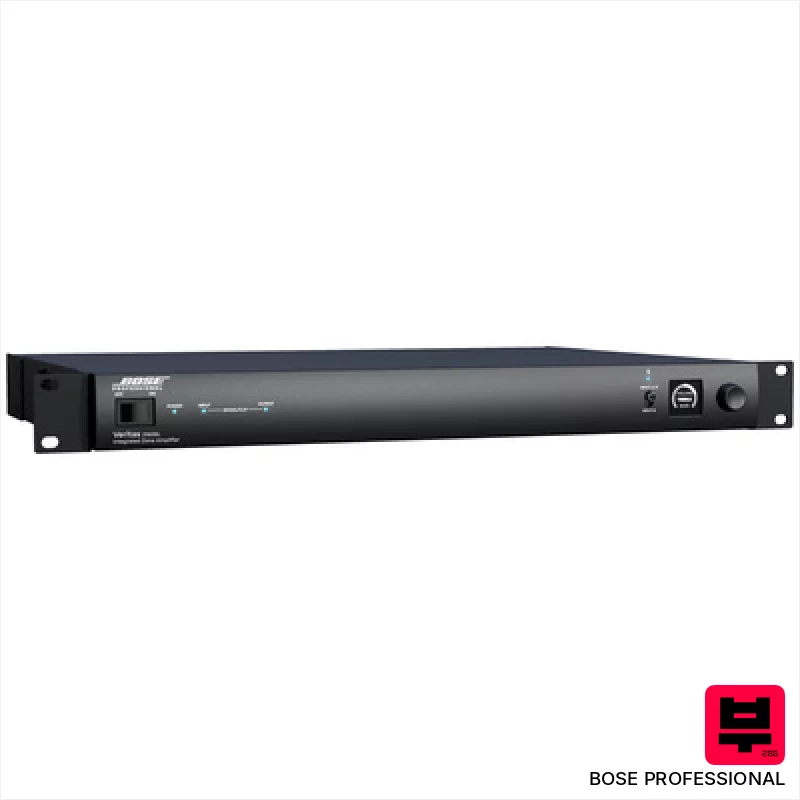
Bose Professional Veritas 2160BL
- • Robust build quality; feels incredibly solid for its weight.
- • Flexible input options cater to diverse installation scenarios.
- • Bluetooth 5.0 offers reliable, low-latency wireless connectivity.
- • Mute trigger connection simplifies integration with control systems.
- • Limited frequency response lacks deep bass extension for some applications.
- • Euroblock connectors can be less familiar to some users.
- • Relatively compact size might restrict headroom in demanding situations.
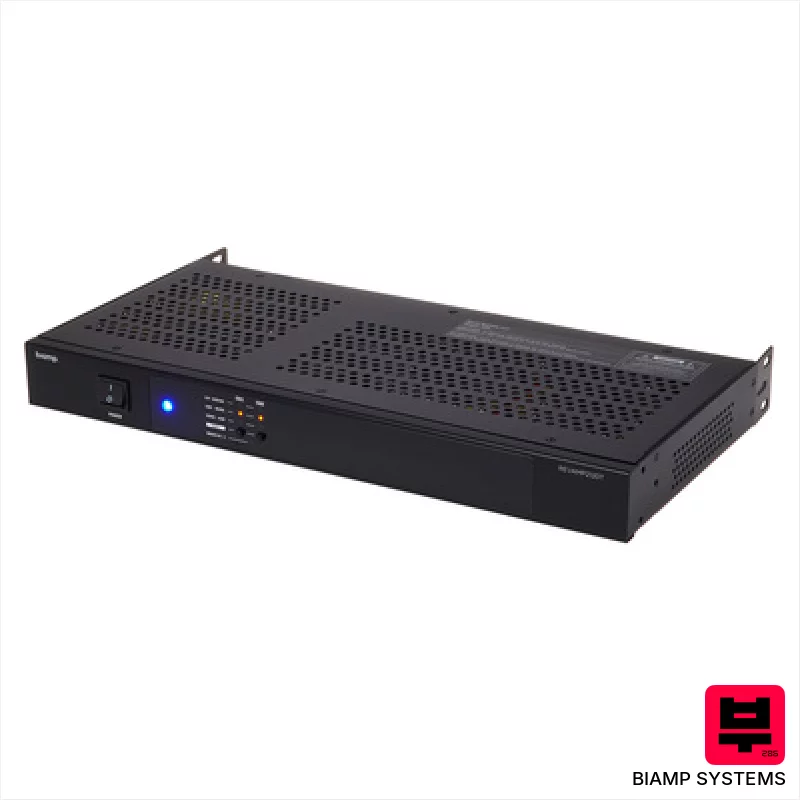
Biamp Systems REVAMP2120T
- • Fanless operation eliminates noise, ideal for quiet installations.
- • Biamp's DSP integration ensures clean, reliable amplification.
- • Euroblock inputs offer robust, secure connectivity for pro audio.
- • Bridged mode provides substantial power for demanding subwoofers.
- • Limited channel flexibility compared to multi-channel amps.
- • The compact 1U height restricts rack space in crowded setups.
- • Lack of onboard DSP might necessitate external processing.
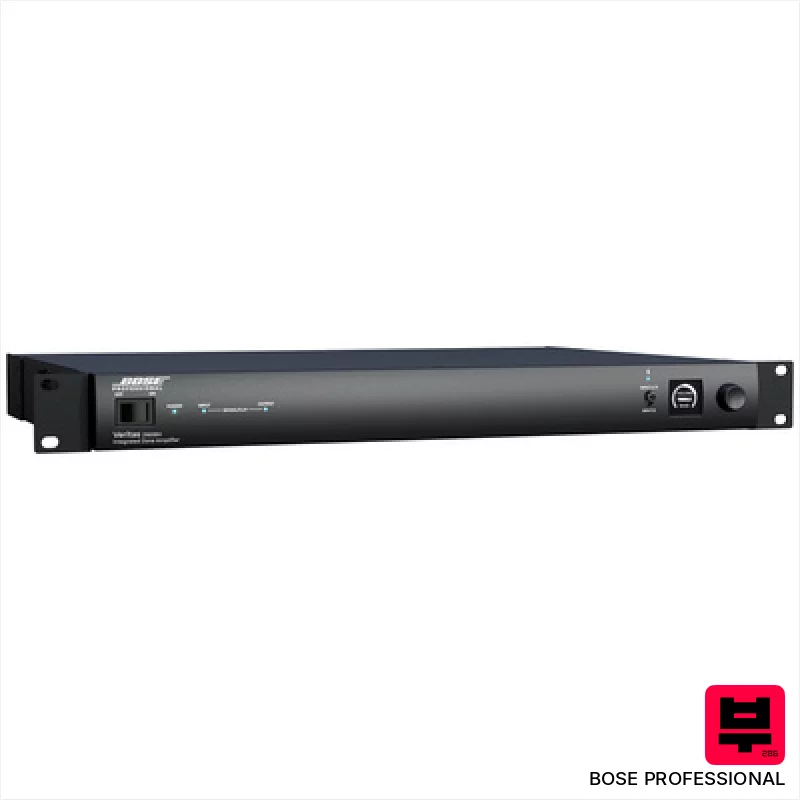
Bose Professional Veritas 1100BH
- • Compact size belies robust power, ideal for space-constrained installs
- • Bluetooth 5.0 provides reliable wireless connectivity for background music
- • Euroblock connectors offer secure, professional loudspeaker connections
- • Mute trigger contact closure simplifies integration with control systems
- • Limited input options compared to more versatile commercial amps
- • RCA inputs might be a bottleneck for high-end, balanced audio sources
- • While efficient, it lacks advanced DSP features for complex sound shaping
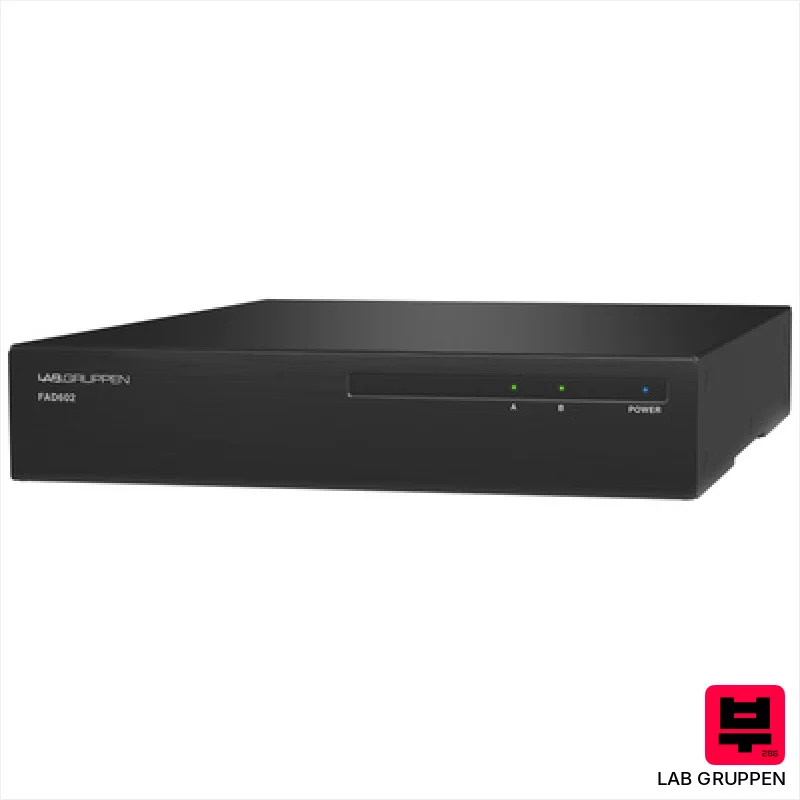
LAB Gruppen FAD602
- • Direct Drive tech delivers impressively clean power for its size.
- • Compact form factor simplifies installation in tight spaces.
- • Dante networking provides flexible, scalable audio routing.
- • Robust Euroblock connectors ensure reliable, secure output connections.
- • Limited power output restricts use to smaller systems or distributed audio.
- • Lack of active cooling may limit sustained output in high-temperature environments.
- • High-Z operation, while present, isn't as feature-rich as dedicated matrix amps.
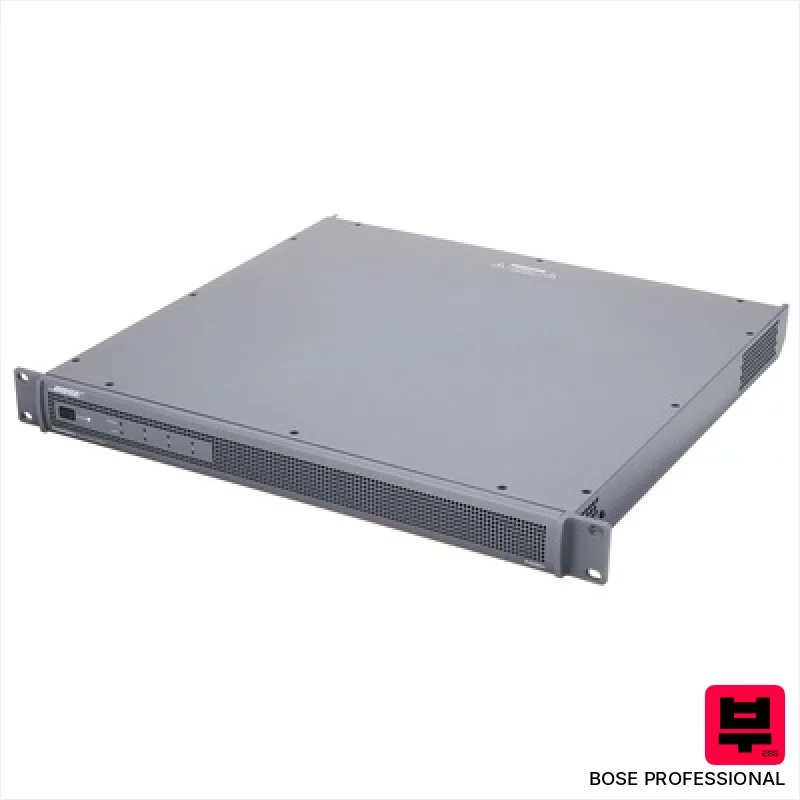
Bose Professional PowerSpace P4300+
- • Exceptional clarity and headroom thanks to SmartBass technology
- • Flexible routing and EQ options for precise system tuning
- • Robust, 1U rackmount design ideal for space-constrained installations
- • Low latency (<1ms) ensures pristine audio signal integrity
- • Premium-priced compared to competing amplifiers in its class
- • Limited input options for a broader range of audio sources
- • Bose ControlCenter is an optional extra, adding to overall system cost
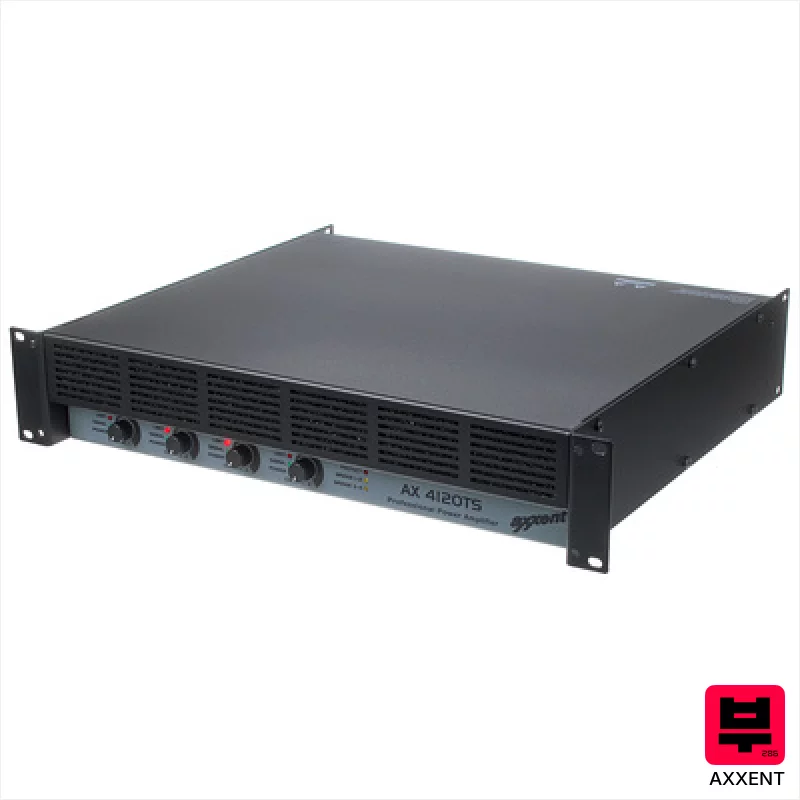
Axxent AX 4120TS
- • Excellent build quality; feels rock-solid and durable.
- • Quiet, temperature-controlled fan is genuinely impressive.
- • Flexible connectivity with XLR, Euroblock, and binding posts.
- • Detachable gain knobs offer clean aesthetics and security.
- • Size (483 x 88 x 387 mm) makes it less suitable for tight spaces.
- • Limited channel gain adjustment compared to some competitors.
- • While versatile, it’s primarily an installation amp, less ideal for live sound.
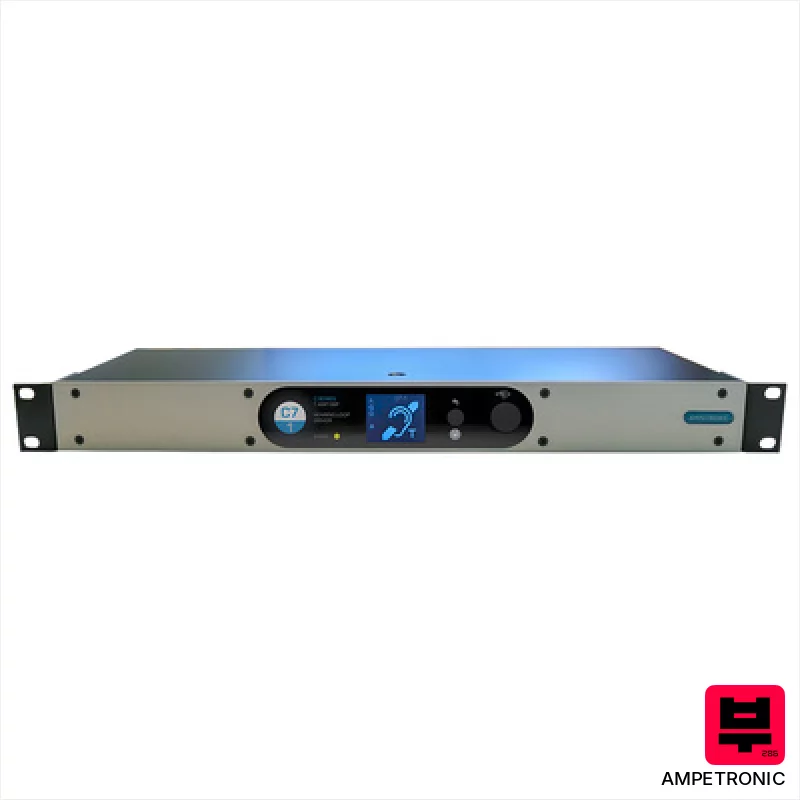
Ampetronic C7-1
- • Exceptional speech intelligibility, truly optimized for vocal clarity.
- • Energy-efficient Class D design minimizes operating costs and heat.
- • Compact 1U rackmount saves valuable space in installations.
- • Digital signal processing allows for precise system tuning.
- • Limited channel count restricts flexibility for complex audio routing.
- • Phoenix connectors, while industry standard, aren’t as user-friendly for some.
- • Primarily geared towards speech, music playback might lack warmth.
How to Choose the Best Installation Amps
Reliability
Fixed installs aren't about swapping out a blown amp mid-set. You need something built to last, with robust components and solid heat dissipation. Cheap amps often skimp here, leading to early failures - nobody wants that.
Clean Headroom
Background music is easy. A loud, energetic band? Not so much. Ample headroom means the amp won't start to compress and distort unpleasantly when things get loud. Listen for that muddy breakup when you push it.
Low Noise Floor
A quiet noise floor is critical. Hum, hiss, and other unwanted artifacts will be amplified in a fixed install environment, becoming incredibly distracting. It's the difference between a pleasant vibe and a sonic headache.
Protection Circuitry
Overload protection, short-circuit protection, thermal protection - these aren't just buzzwords. They're essential for safeguarding your speakers and the amp itself from damage. A good protection circuit is a silent hero.
Versatility
Can it handle passive speakers? Does it have multiple input sensitivities for different sources? The more flexible an amp is, the easier it'll be to integrate into your specific install.
Buying Guide
Don't get lured in by flashy features or inflated wattage claims. Focus on reputable brands known for their build quality and reliability. Paying a little more upfront is almost always cheaper than replacing a failed amp - and the aggravation it causes - down the line. Look for amps with a decent warranty and a good track record. And remember, a clean, consistent signal is worth more than a few extra watts of distorted power.
Our Methodology
We don't just look at spec sheets here. We've spent countless hours throwing these amps at everything from acoustic singer-songwriters to full-stack metal bands, pushing them to their limits to see how they handle the heat and the sonic demands. Our evaluations involve direct comparisons against similar models, listening for subtle tonal differences, and assessing their real-world performance in various fixed install environments.

