
Best Guitar Amp Footswitches for Hands Free Operation 2026
Alright, let's talk footswitches. You're tired of hopping off the stage to tweak your amp mid-song, or fumbling with knobs while your band's laying down a killer groove? Hands-free operation is a game-changer, especially when you're trying to nail a layered rhythm part or dial in a searing lead tone on the fly. We're going to break down the best options for getting that control without sacrificing your playing.
Last updated: July 22, 2026 • Next update: July 29, 2026

Kemper Profiler Remote MK 2
- • Robust metal housing provides excellent protection during gigging.
- • Dedicated buttons streamline tuner, looper, and tap tempo workflows.
- • The large, illuminated display is easily readable on dark stages.
- • Extends Kemper control range with up to 100m cable length.
- • Price point places it at the higher end of footswitch controllers.
- • Limited customization beyond the preset button assignments.
- • The 18cm depth can be a constraint in smaller pedalboard setups.
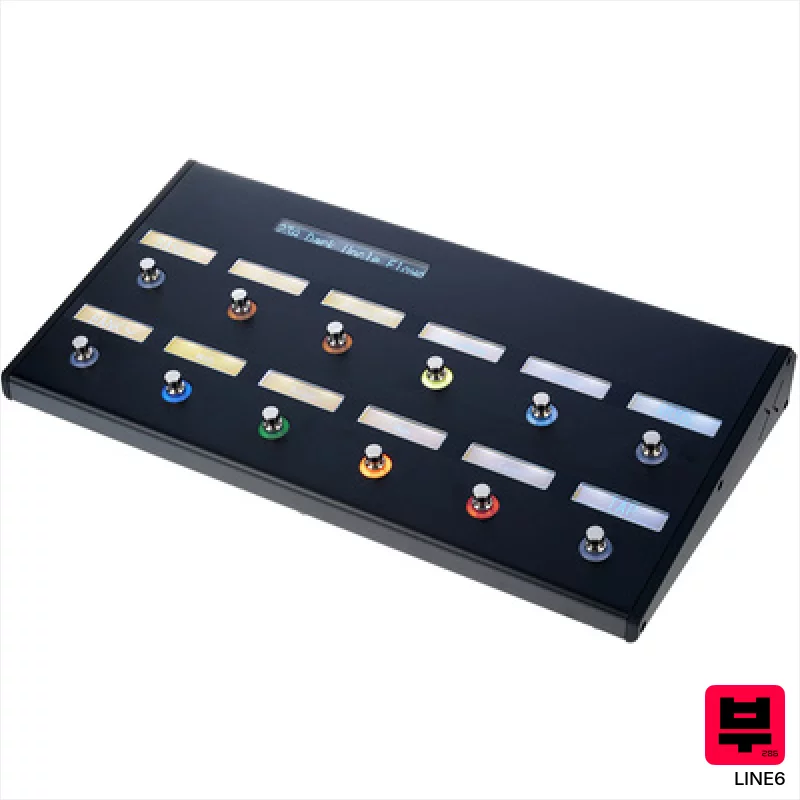
Line6 Helix Control
- • Robust metal chassis provides excellent road-worthiness and stability.
- • The touch-sensitive footswitch offers a surprisingly responsive and tactile feel.
- • Three expression pedal inputs dramatically expand performance possibilities and control.
- • Custom display provides clear visual feedback, crucial for complex setups.
- • The size and weight (3.26 kg) make it less ideal for very small or portable rigs.
- • Limited to Helix ecosystem – not as versatile for controlling other gear.
- • Price point puts it in a premium-priced category for a footswitch.
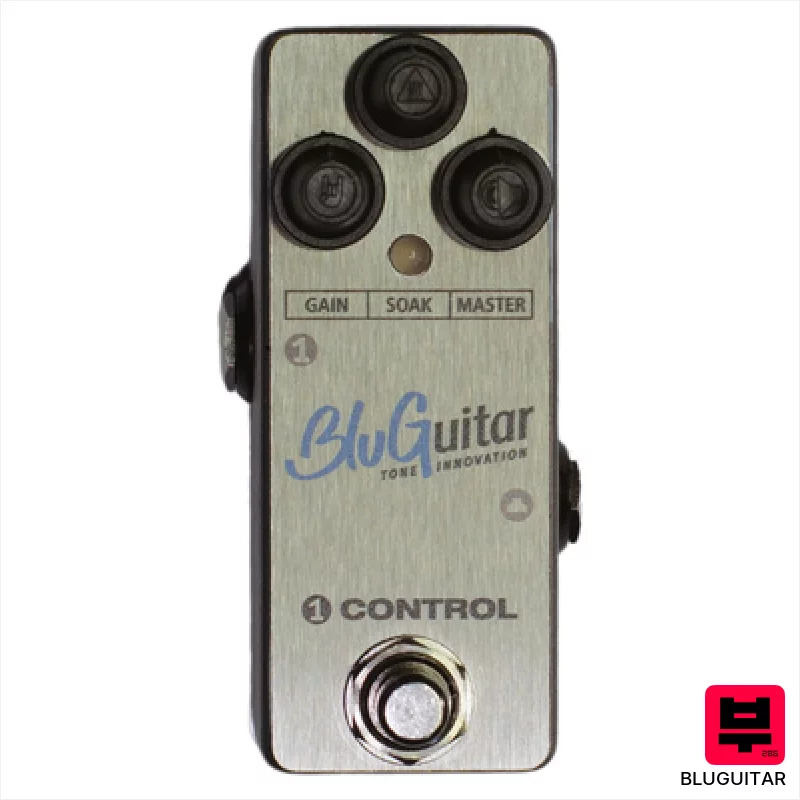
BluGuitar 1Control
- • Intuitive layout drastically simplifies Amp1 navigation and tweaking.
- • Powersoak adjustment offers incredible dynamic range and volume control.
- • Preset mode allows for quick, seamless transitions between tones.
- • Compact size keeps pedalboard real estate minimal and organized.
- • Limited to BluGuitar Amp1 Mercury and Iridium models; no universal compatibility.
- • Powersoak adjustment range, while wide, might be too granular for some users.
- • Preset recall speed could be slightly faster for live performance demands.
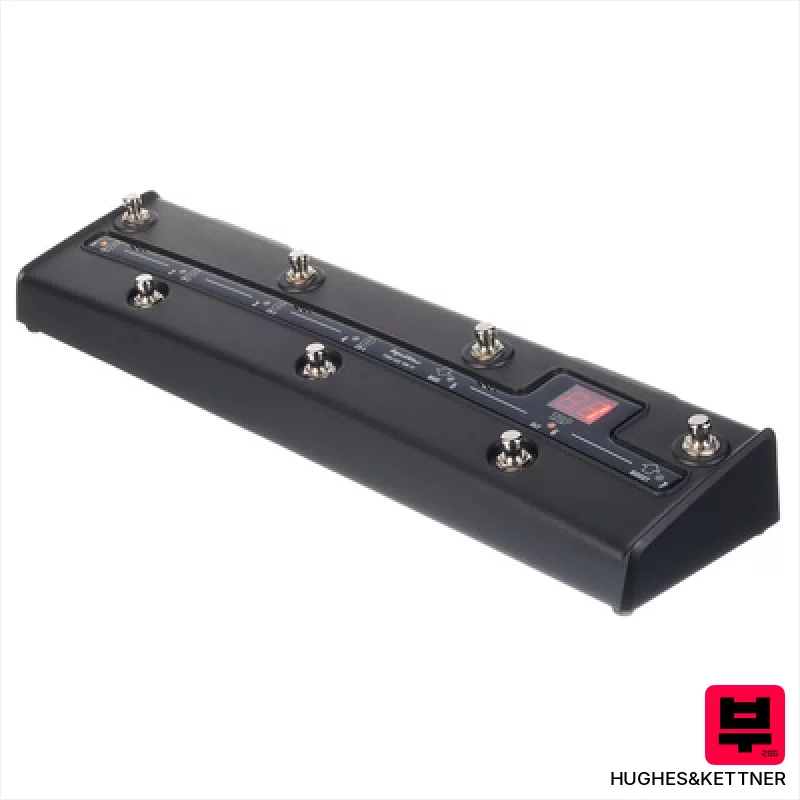
Hughes&Kettner FSM 432 MK IV
- • 128 memory locations offer extensive tonal customization options.
- • Direct 7 mode simplifies complex switching for live performance.
- • Slimmer design integrates seamlessly into most pedalboard setups.
- • Individual preset controller assignments add significant flexibility.
- • Price point might be a barrier for budget-conscious players.
- • H&K ecosystem lock-in limits compatibility with non-H&K amps.
- • Complex feature set demands a learning curve for new users.
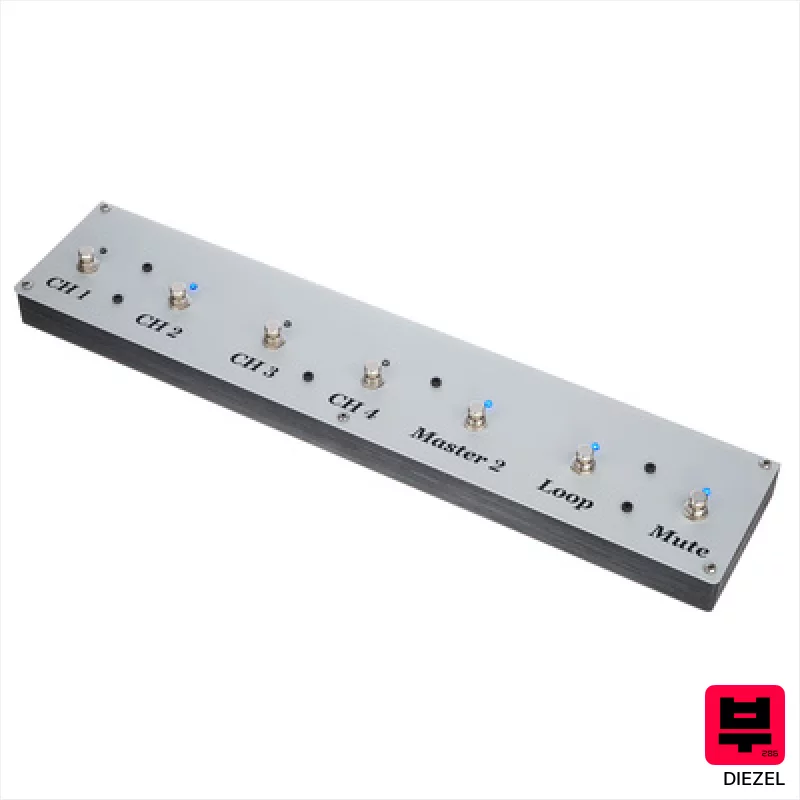
Diezel FS7-HA Hagen Footswitch
- • Robust metal construction feels incredibly solid and dependable.
- • Direct switching is fast and precise, eliminating any switching latency.
- • Dedicated Mute function offers quick and silent song sections.
- • Seamless integration with Diezel Hagen amplifiers, designed specifically.
- • Price point positions it as a premium-priced accessory.
- • Limited to Diezel Hagen amps; lacks universal compatibility.
- • Cable length might be restrictive for some stage setups.
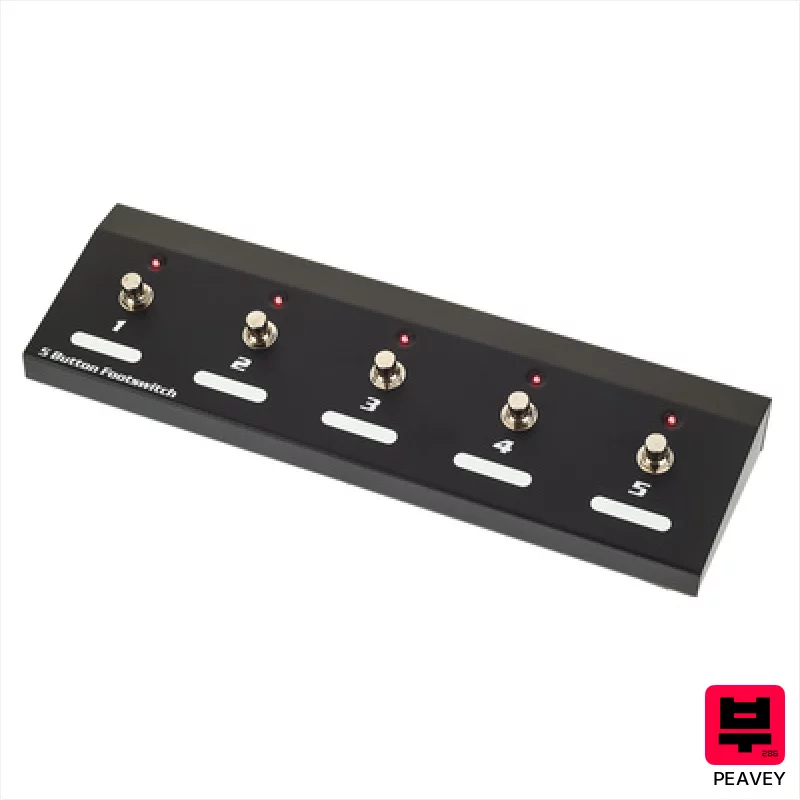
Peavey MIDI Footswitch
- • Solid steel construction ensures reliable gigging performance.
- • Five robust footswitches offer flexible control options.
- • Removable MIDI cable caters to both studio and stage needs.
- • Clear white area allows for personalized switch labeling.
- • Limited compatibility outside of specific Peavey gear.
- • The weight (1.89 kg) makes it less portable.
- • DIN MIDI connection might require adapters for modern setups.

Boss GA-FC EX
- • Robust metal chassis provides excellent durability for gigging musicians.
- • Expression pedal jacks offer nuanced, real-time amp parameter control.
- • XPAND mode allows for complex multi-amp setups with ease.
- • Intuitive LED indicators clearly display channel and mode status.
- • Limited to controlling BOSS amplifiers or those with compatible MIDI implementation.
- • The single TRS cable connection can be restrictive for some setups.
- • Lack of MIDI connectivity limits integration with other external gear.
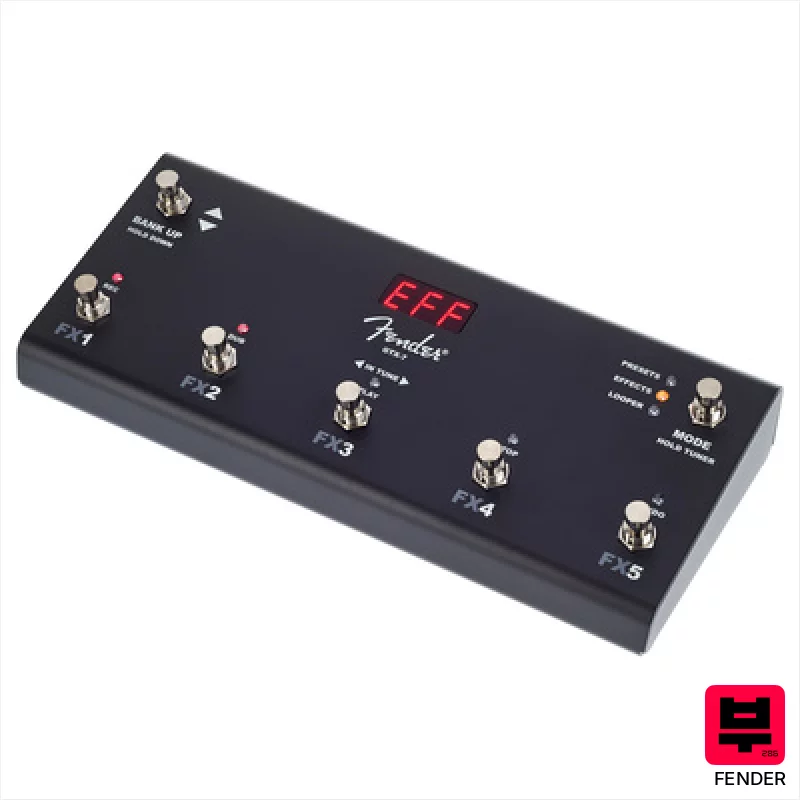
Fender GTX-7 Footswitch
- • Solid construction with robust, dependable footswitch action
- • Seamless integration with Fender GTX Mustang amp presets
- • Dedicated looper controls simplify performance workflows
- • Included cable is a nice touch, saving on immediate setup costs
- • Limited versatility with amps outside the Fender GTX ecosystem
- • Plastic enclosure feels a bit budget-oriented compared to premium alternatives
- • Cable length might be restrictive for some stage setups
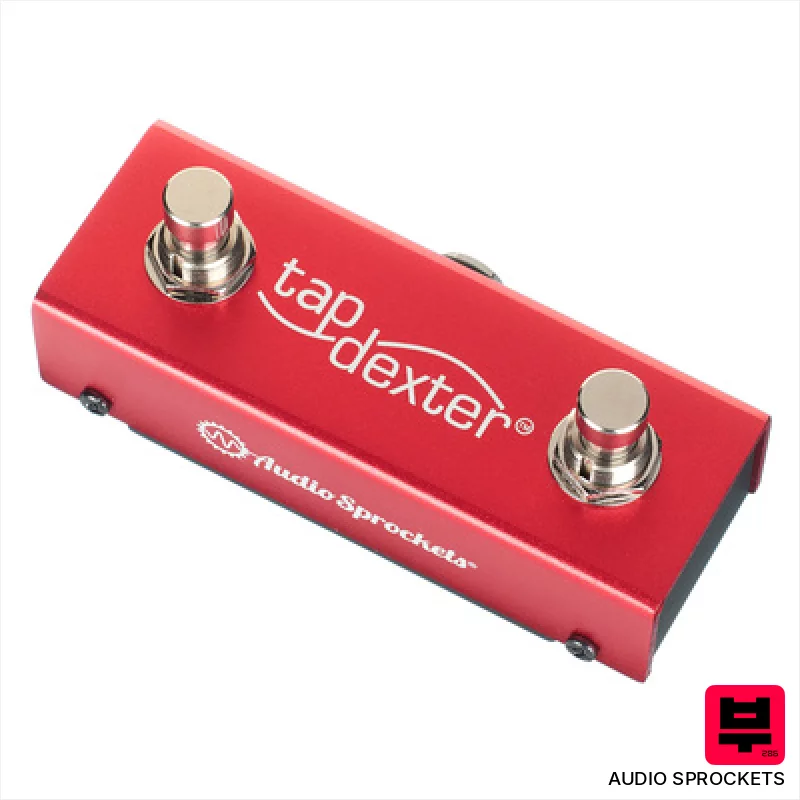
Audio Sprockets TapDexter Dual Footswitch
- • Optical switches offer exceptionally reliable, wear-free operation.
- • Compact size makes it ideal for cramped pedalboard setups.
- • Stereo jack eliminates need for batteries or external power.
- • Designed specifically for ToneDexter II, ensuring seamless integration.
- • Strictly limited compatibility; unusable with other devices.
- • The plastic housing feels a little less robust than metal alternatives.
- • Short cable length may require an extension for some setups.
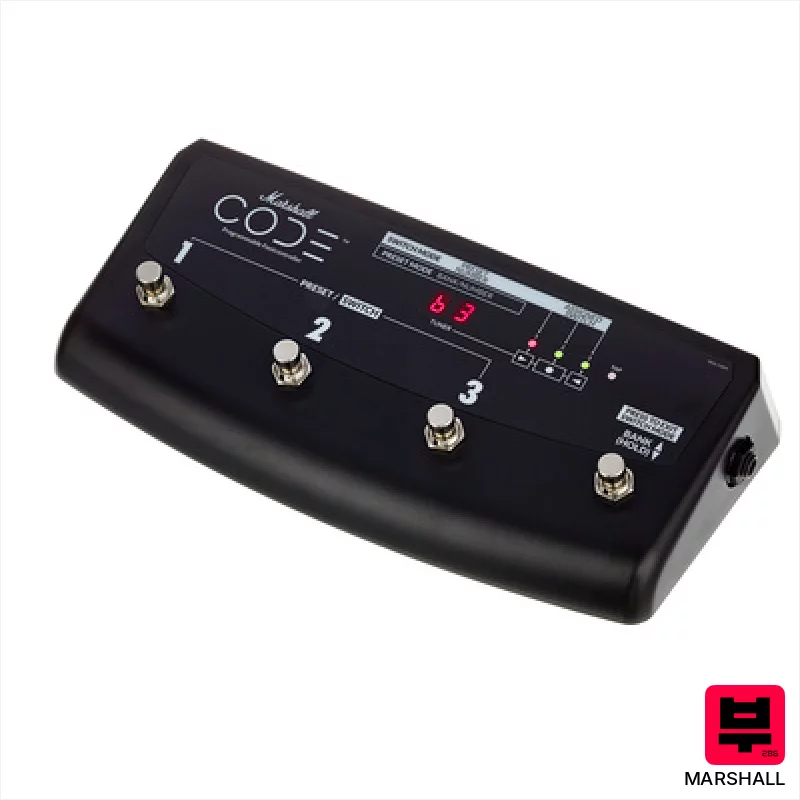
Marshall Footswitch Code Serie
- • Solid build quality with a robust, metal footswitch plate
- • LED illumination is clear and bright, easy to see onstage
- • Seamless integration with Marshall Code series amplifiers
- • Provides significant tonal flexibility for Code users
- • Limited functionality outside of the Marshall Code ecosystem
- • Cable length is a bit restrictive for larger pedalboards
- • Plastic enclosure feels a little less premium than some competitors

Darkglass Intelligent Footswitch
- • Solid, weighty build inspires confidence during live performance
- • Intuitive design simplifies complex Darkglass amp functionality
- • Compact size minimizes stage footprint and cable clutter
- • Dedicated mute function is invaluable for silent tuning backstage
- • Limited to Darkglass Microtubes 500/900, lacks universal footswitch versatility
- • The plastic enclosure, while durable, feels slightly less premium than the amps
- • Short cable length may require extension for some stage setups
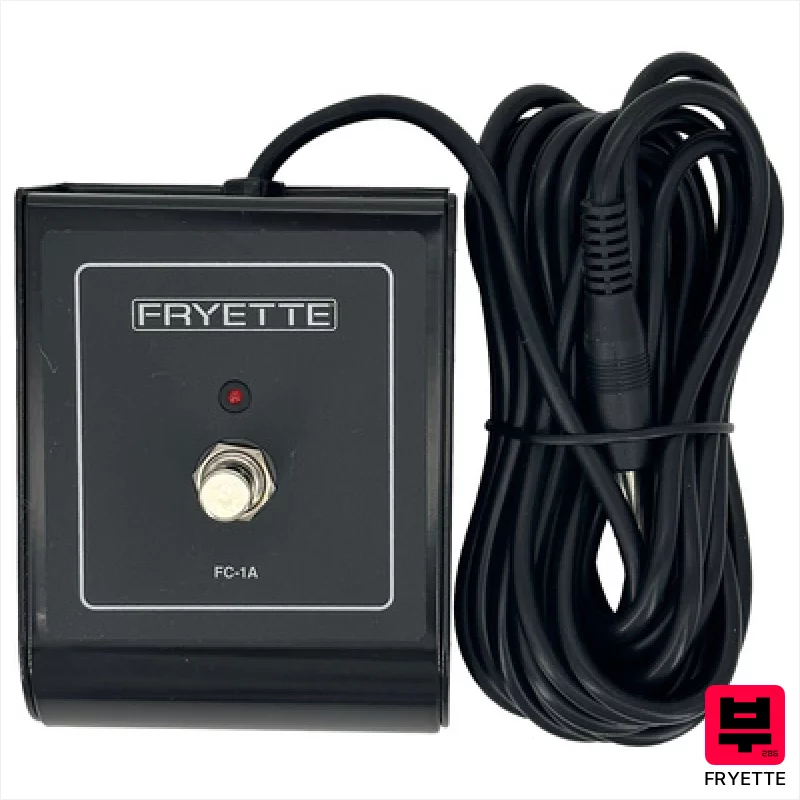
Fryette FC-1A Footswitch for Cyclops
- • Robust metal construction feels solid, inspiring confidence in its longevity.
- • Dedicated Cyclops compatibility ensures seamless, reliable switching.
- • Well-spaced footswitches prevent accidental activations during performance.
- • Long cable provides ample reach for stage or studio setups.
- • Lacks LED illumination, making it difficult to see in dimly lit environments.
- • Limited to Cyclops units; not a universal amp switcher solution.
- • Basic design – no advanced features like programmable presets or MIDI control.
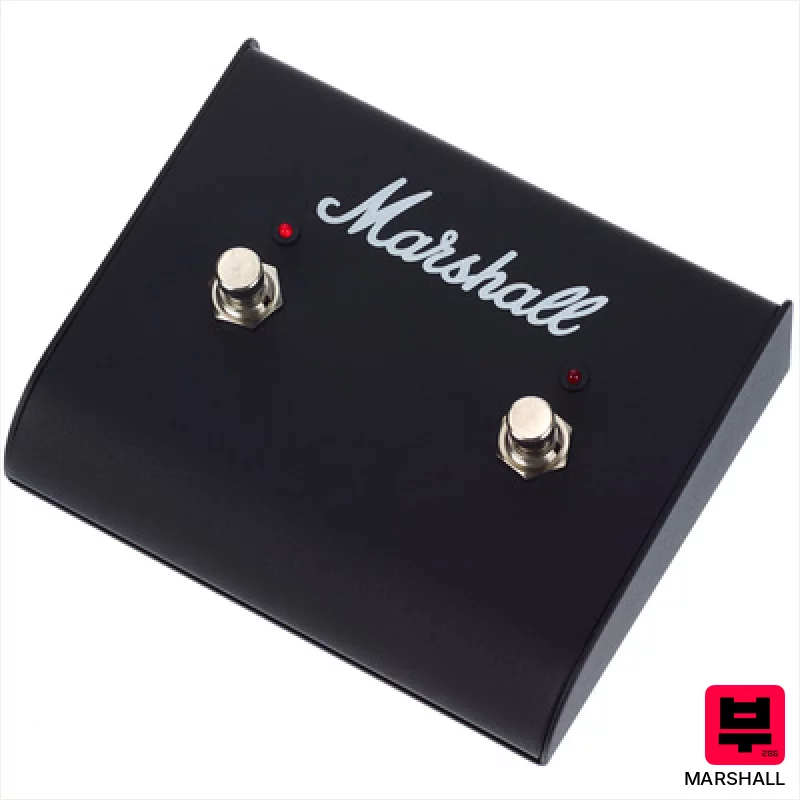
Marshall MRPEDL91003 Footswitch
- • Robust metal construction feels solid and dependable for gigging.
- • LED illumination is bright and clear, easily visible onstage.
- • Universal latch design accommodates a wide range of Marshall amp functions.
- • Replaces multiple older footswitches, simplifying your pedalboard.
- • The plastic cable strain reliefs feel a bit flimsy compared to premium alternatives.
- • Limited to two functions – more complex switching needs require more elaborate solutions.
- • The size is somewhat bulky, taking up more space on a crowded pedalboard.
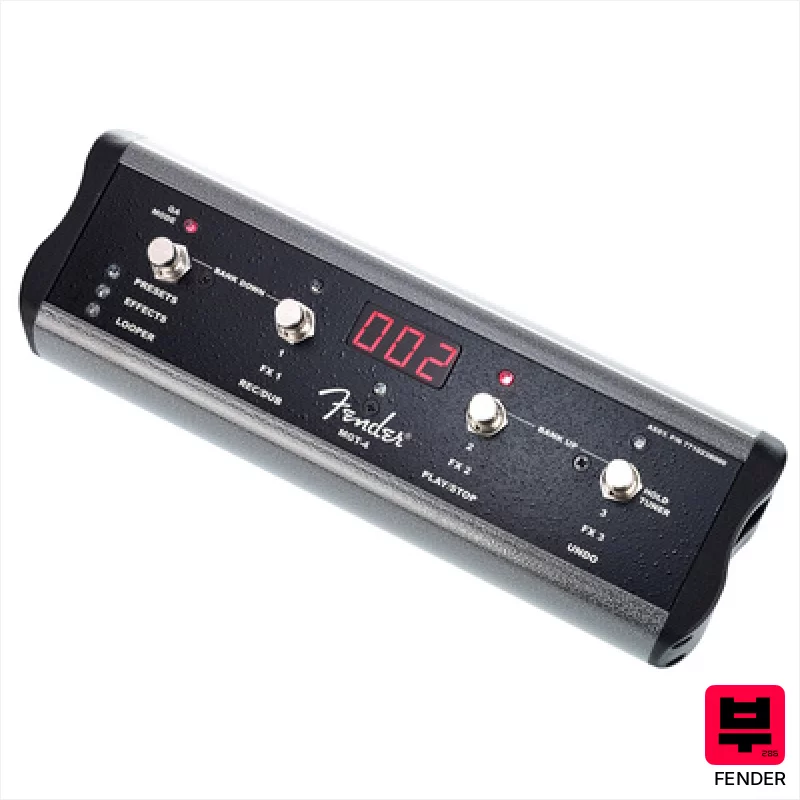
Fender MGT4 Footswitch
- • Solid plastic construction feels durable for gigging use
- • LEDs are bright and clearly illuminate switch status
- • Simple, direct connection to Mustang amps eliminates complex setups
- • Four switches offer a good range of amp channel/effect switching
- • Plastic construction lacks the premium feel of metal footswitches
- • Limited functionality – only works with specific Fender Mustang amps
- • Cable length might be restrictive for some stage setups
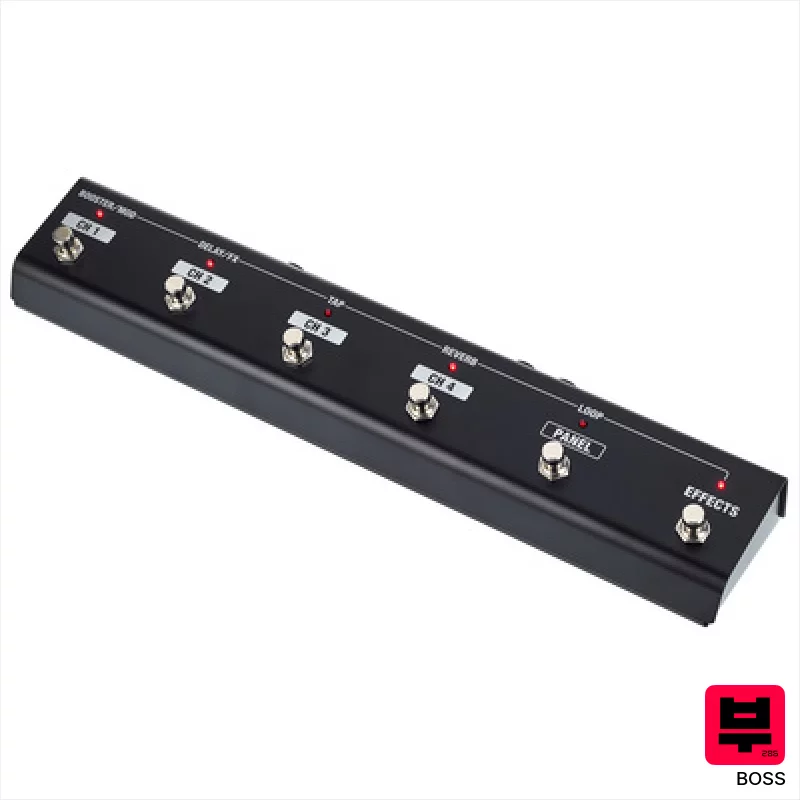
Boss GA-FC
- • Robust Boss build quality ensures long-term reliability.
- • Expression pedal inputs offer nuanced real-time control.
- • Compact size minimizes pedalboard footprint and clutter.
- • Versatile switching caters to various Boss amp models.
- • Limited compatibility outside of specified Boss amplifiers.
- • Plastic enclosure feels less premium than some competitors.
- • Expression pedal jacks lack individual level adjustment.
How to Choose the Best Guitar Amp Footswitches
Durability
Gigging isn't kind to gear. We're looking for switches with solid construction, robust hinges, and a feel that suggests they'll survive a few accidental kicks and cable snags. Cheap plastic feels... cheap, and it'll fail.
Switch Travel & Feel
Short, positive switch travel is key - you want to know immediately when a switch engages. Mushy, long travel feels imprecise and can lead to missed cues during a performance. This impacts timing and confidence.
Noise & Signal Integrity
A footswitch introducing hiss or altering your tone is useless. We scrutinized each unit for unwanted noise, signal loss, and any subtle tonal shifts when engaged or disengaged. Clean signal is non-negotiable.
Versatility
Can it handle multiple channels, effects loops, reverb? The more functions you can control, the less you have to interrupt your playing. A versatile switch is an investment in your workflow.
Ease of Integration
Some amps are finicky about footswitches. We considered how easily each unit integrates with different amp models and signal chains, noting any potential compatibility issues or required modifications.
Buying Guide
Don't cheap out on this, seriously. A poorly made footswitch will just add frustration to your setup. Pay attention to the construction - metal is better than plastic. Consider what functions you really need to control, and don't buy a 10-button behemoth if you only need two. Think about your amp's MIDI capabilities too; a MIDI footswitch opens up a world of possibilities, but it's a steeper learning curve.
Our Methodology
We didn't just look at spec sheets here. We put these footswitches through the ringer - bedroom practice, band rehearsals, and even a few club gigs. We A/B'd them against each other and against manual amp adjustments to see if they truly deliver the promised convenience without introducing any unwanted noise or signal degradation. It's about feel, reliability, and how they actually perform in a real-world musical context.

