
Best Glockenspiels Under $1,000 2026
Alright, so you need a glockenspiel but you're not looking to remortgage the house. Finding a decent one under $1000 is totally doable, but you gotta know what to look for - it's not all shimmering, pristine tones. We're talking about instruments that'll work for gigging, studio sessions, or just adding some sparkle to your songwriting, without breaking the bank. Let's cut through the marketing and find you something that sounds good and holds up to some real use.
Last updated: April 11, 2026
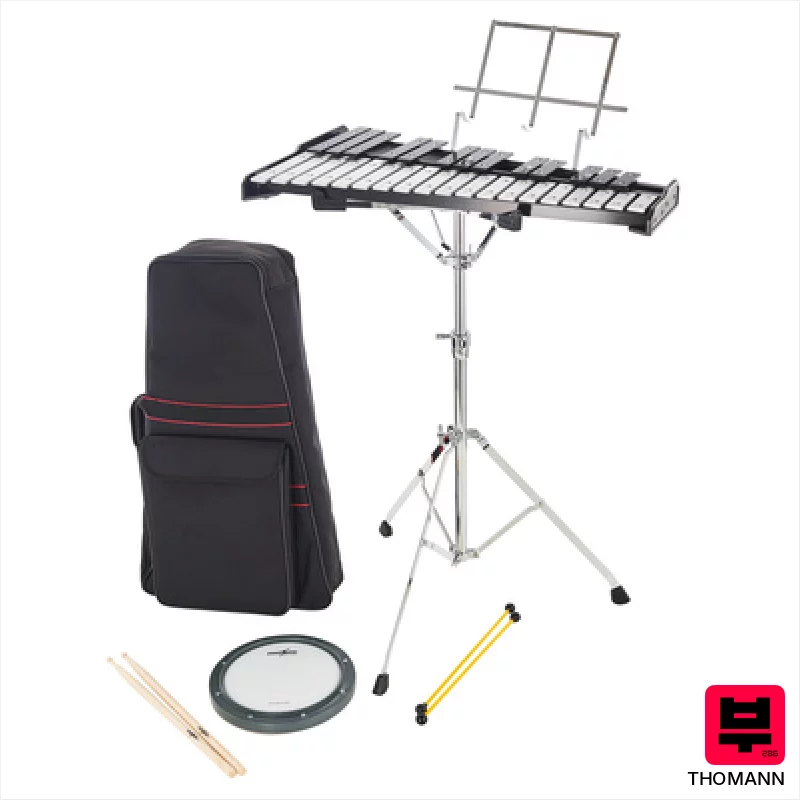
Thomann Glockenspiel THGS2.5
- • Solid steel bars provide a clear, bright, and resonant tone.
- • The included stand is surprisingly stable for an entry-level instrument.
- • The practice pad is a genuine bonus for quiet practice sessions.
- • Comprehensive accessory package offers immediate playability and convenience.
- • Steel bars, while bright, lack the warmth of some higher-end bronze or brass models.
- • The included mallets are basic and will likely need upgrading for nuanced playing.
- • The bag feels a little flimsy and offers minimal protection for transport.

Thomann Glockenspiel THTG2.5
- • Solid aluminum bars deliver a clear, bright, and resonant tone.
- • The 30-bar range (G2-C5) offers considerable melodic flexibility.
- • Sturdy case provides excellent protection and portability for performances.
- • Included mallets are adequate for beginners, a decent starting point.
- • The included mallets are basic and might be upgraded for a richer sound.
- • The case, while sturdy, is somewhat bulky and may be challenging to transport long distances.
- • Aluminum bars, while bright, lack the subtle warmth of steel or brass.
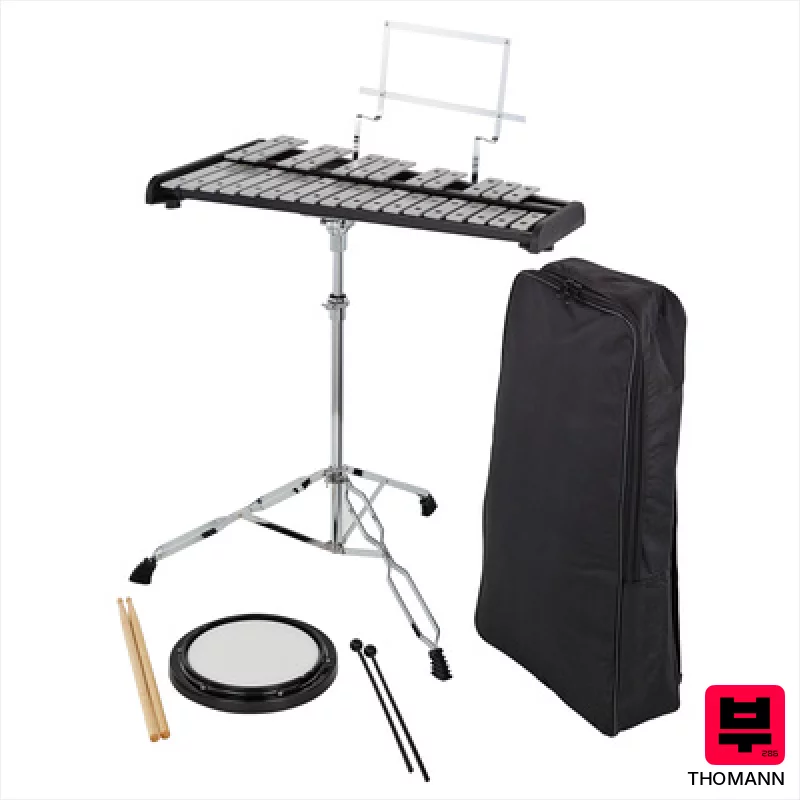
Thomann Glockenspiel THGS2.3
- • Solid steel bars offer bright, clear tones with good sustain.
- • Comprehensive package includes stand, bag, and practice pad – great value.
- • 2.3 octave range (G2-C5) provides ample melodic possibilities.
- • Lightweight aluminum alloy frame allows for easy transport and setup.
- • Steel bars, while bright, lack the warmer character of bronze or brass.
- • The included mallets are basic, upgrade recommended for nuanced playing.
- • Stand is functional but somewhat wobbly at higher volumes; stability could be improved.

Bergerault GS Glockenspiel A=442Hz
- • Excellent resonance thanks to the tuned steel bars
- • Solid construction provides reliable stability and durability
- • 442Hz tuning is ideal for orchestral and stage work
- • Well-spaced bars facilitate comfortable and precise playing
- • The size makes it less practical for smaller spaces or travel
- • The included mallets are basic and may need upgrading
- • The finish, while functional, lacks the premium aesthetic of higher-end models
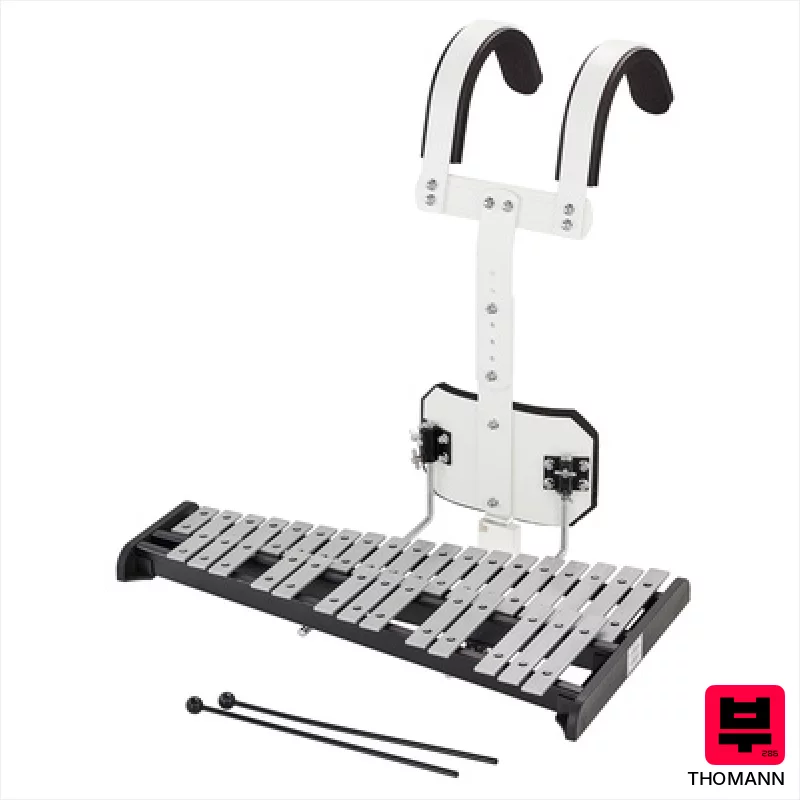
Thomann MG32 Marching Glockenspiel
- • Lightweight aluminum support makes it manageable for marching applications.
- • 2.6 octave range (F2-C5) offers good melodic flexibility.
- • Tuned to A=442Hz, standard for orchestral performance and tuning.
- • Included mallets are serviceable for basic marching band practice.
- • Aluminum bars may not offer the sustain or complexity of bronze bars.
- • The included mallets are basic and will likely need upgrading for nuanced playing.
- • Marching-specific design limits versatility for studio or orchestral use.
How to Choose the Best Glockenspiels
Tuning Stability
Cheap glocks are notorious for going out of tune. Check for solid, well-fitted bars and a responsive tuning mechanism. A glock that drifts pitch mid-song is worse than a slightly dull tone.
Resonance & Sustain
You want a good bloom and sustain, not a quick 'tick.' The material of the bars (usually steel, sometimes aluminum) and the resonating chamber (if it has one) significantly impact this. Avoid anything that sounds choked or dead.
Articulation & Response
The bars need to respond cleanly to your mallet strikes. Look for even response across the entire range - no muddy lows or brittle highs. Poor articulation makes it hard to get subtle dynamics.
Build Quality & Durability
Gigging instruments need to survive some abuse. Check for solid construction, a secure frame, and decent hardware. A wobbly frame or loose bars will kill the sustain and drive you crazy.
Mallet Compatibility
Different mallets bring out different tones. Consider the glockenspiel's inherent timbre and choose mallets that complement it. Softer mallets will tame harshness, harder ones will bring out more attack.
Buying Guide
At this price point, expect some compromises. You won't get the incredibly rich, complex overtones of a top-tier instrument, but you can get a functional and pleasing glockenspiel. The biggest trade-off will likely be tuning stability and overall resonance - those are the areas where manufacturers cut costs. Pay attention to the frame's construction; a flimsy frame will vibrate and muddy the sound. Don't be afraid to try before you buy, if possible.
How This List Is Built
We don't play these instruments — we're a catalog, not a review desk, and we'd rather say so than pretend otherwise. This page ranks 5 glockenspiels from the Thomann catalogue, which is the largest single source of specification data in this category.
Position is computed, not curated. Four signals, in order of weight: how completely the manufacturer documents the instrument (number of published specifications), where it sits in the price range, how specific the model designation is — which filters out generic accessories — and whether a product image exists. The same inputs always produce the same order, so nothing here is shuffled to look fresh.
What this list is good for: narrowing a category down to a shortlist by spec and budget. What it isn't: a substitute for hearing an instrument. Before you buy, read hands-on reviews and, where you can, play it. Full methodology.

