
Best Glockenspiels for Classical 2026
Alright, so you're looking for a glockenspiel for classical work? It's a surprisingly nuanced choice - you're not just looking for something that makes noise. You need something that delivers clarity, sustain, and a real singing quality, especially when layered in an orchestra. Let's cut through the marketing and find something that'll actually serve you well, whether you're recording a solo passage or gigging with a chamber ensemble.
Last updated: July 22, 2026 • Next update: July 29, 2026

Bergerault GS Glockenspiel A=442Hz
- • Excellent resonance thanks to the tuned steel bars
- • Solid construction provides reliable stability and durability
- • 442Hz tuning is ideal for orchestral and stage work
- • Well-spaced bars facilitate comfortable and precise playing
- • The size makes it less practical for smaller spaces or travel
- • The included mallets are basic and may need upgrading
- • The finish, while functional, lacks the premium aesthetic of higher-end models

Thomann Glockenspiel THTG2.5
- • Solid aluminum bars deliver a clear, bright, and resonant tone.
- • The 30-bar range (G2-C5) offers considerable melodic flexibility.
- • Sturdy case provides excellent protection and portability for performances.
- • Included mallets are adequate for beginners, a decent starting point.
- • The included mallets are basic and might be upgraded for a richer sound.
- • The case, while sturdy, is somewhat bulky and may be challenging to transport long distances.
- • Aluminum bars, while bright, lack the subtle warmth of steel or brass.
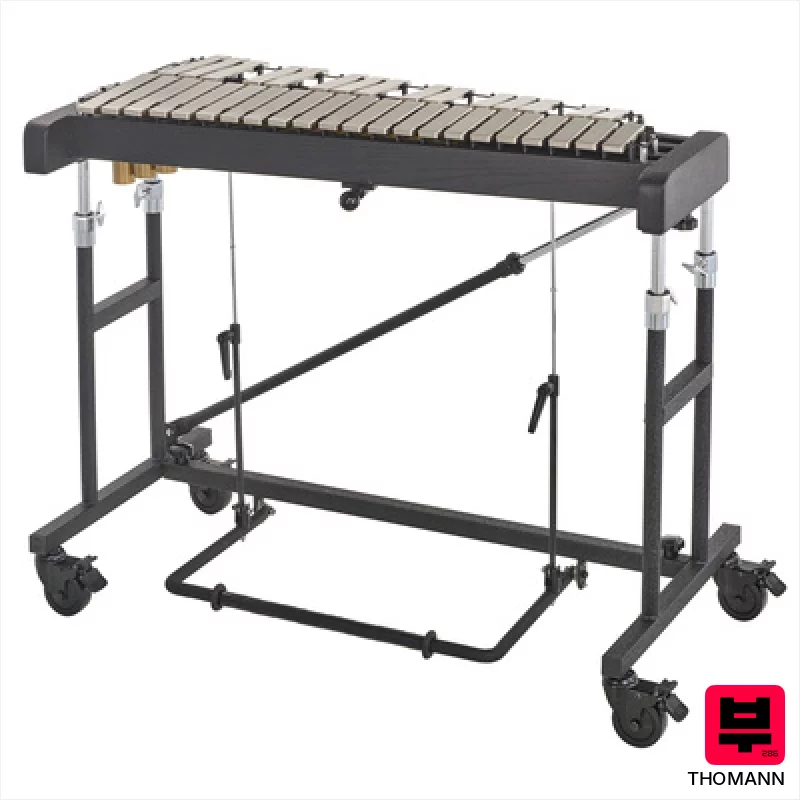
Thomann Orchesterglockenspiel THGS3.0
- • Rich, resonant sound thanks to the special steel bars.
- • Pedal damping offers excellent dynamic control for nuanced playing.
- • Continuously adjustable frame with casters provides ease of movement and storage.
- • Solid construction and resonators contribute to a professional, stable feel.
- • The size and weight make it less portable for frequent transport.
- • The tuning might require adjustments for players with exacting intonation needs.
- • While versatile, it’s primarily geared towards orchestral and classical settings.
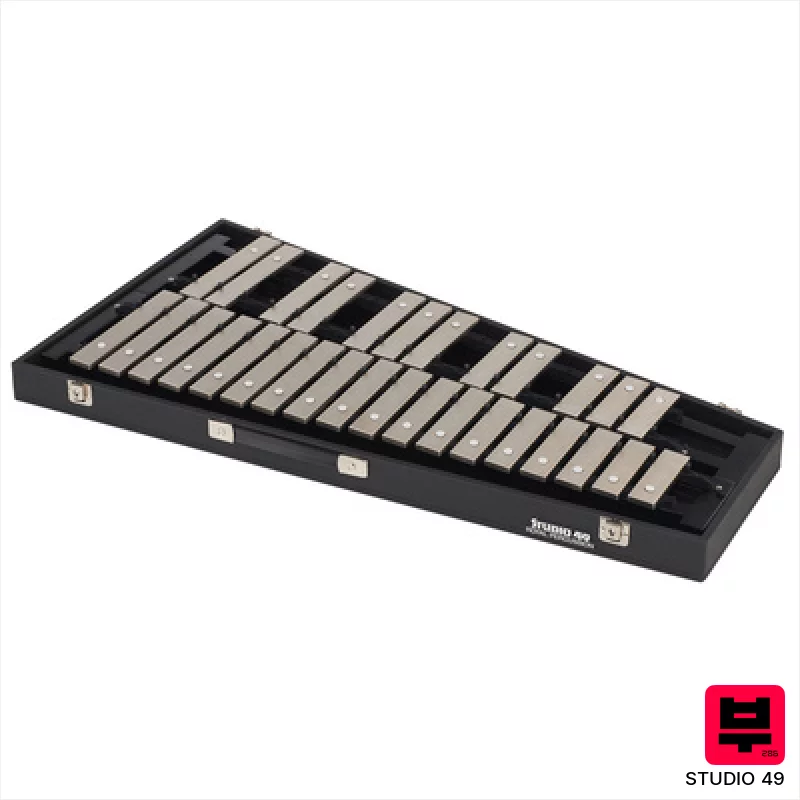
Studio 49 RGST/K/V Glockenspiel A=442Hz
- • Exceptional tuning stability thanks to high-quality sound steel bars.
- • Unique adjustable row allows for expressive, nuanced playing techniques.
- • Chrome plating provides a beautiful aesthetic and resists corrosion.
- • Solid construction ensures durability for frequent use and transport.
- • The 8cm height makes it less compact than some alternatives for transport.
- • Matte chrome finish can show fingerprints and require occasional cleaning.
- • Price point positions it as a premium investment for serious musicians.
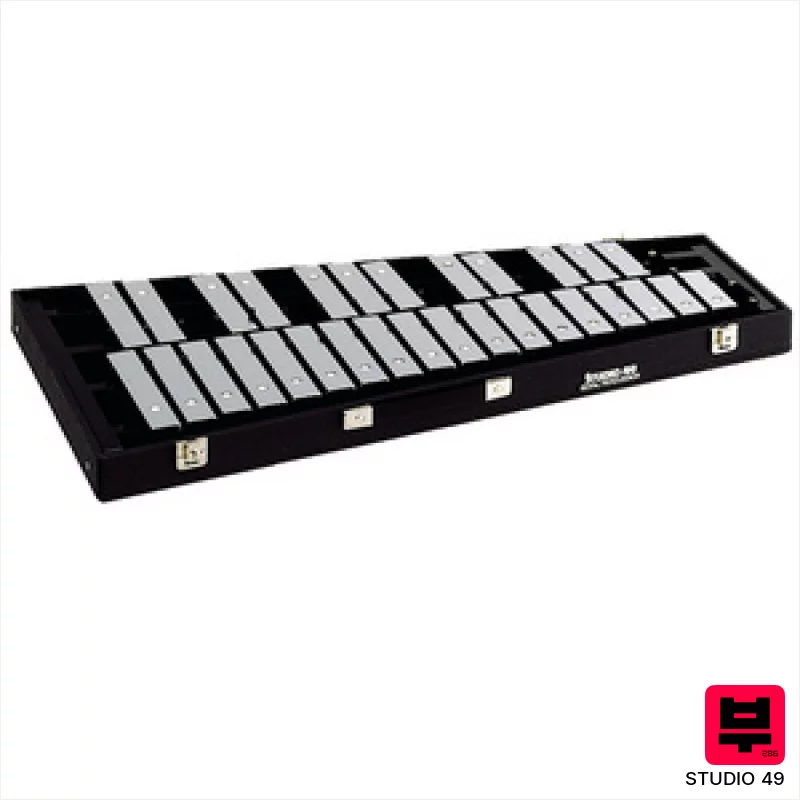
Studio 49 RGST/K/V Glockenspiel A=443Hz
- • Chrome bars offer bright, clear, resonant tone with excellent sustain
- • Adjustable bar height allows for personalized playing feel and timbre
- • Solid construction ensures stability and durability for frequent use
- • Includes lid for protection and mallets for immediate playability
- • A=443Hz tuning might require adjustment for some standard orchestral settings
- • Matte chrome finish can be prone to fingerprints and smudges
- • Relatively compact size limits resonance compared to larger models
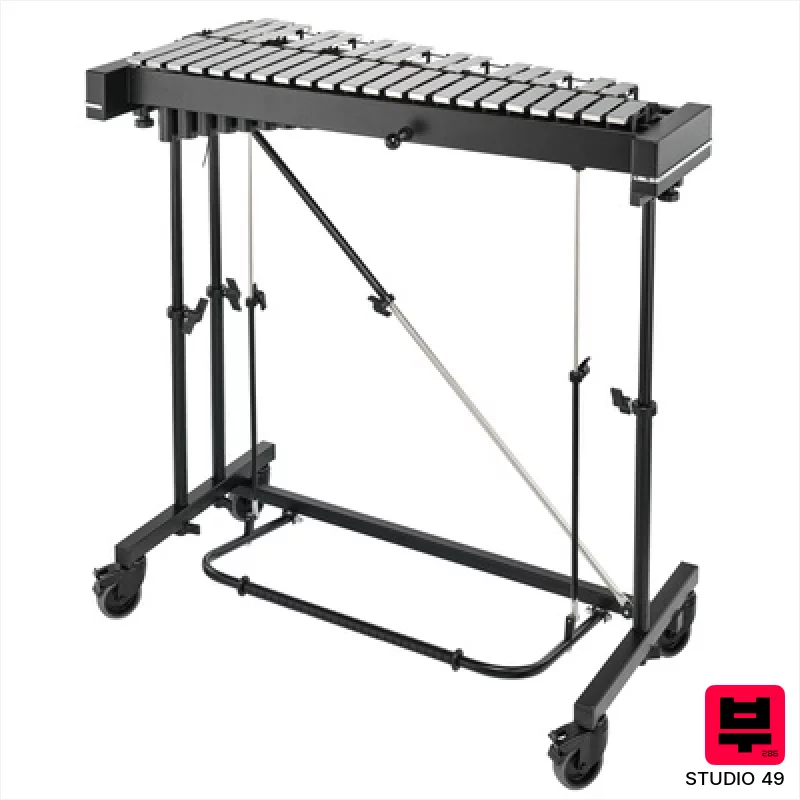
Studio 49 RGC 3030 Glockenspiel A=443 H
- • High-grade silver steel bars deliver exceptional clarity and sustain
- • A=443Hz tuning caters to historical performance practice needs
- • Continuous height adjustment ensures optimal playing posture and resonance
- • Sensitive pedal damping allows for nuanced dynamic control and quick stops
- • The chrome plating, while visually appealing, can be prone to fingerprints and smudging
- • At this premium price point, a hard case is expected, not just mallets
- • Limited portability due to substantial size and weight – not ideal for frequent transport
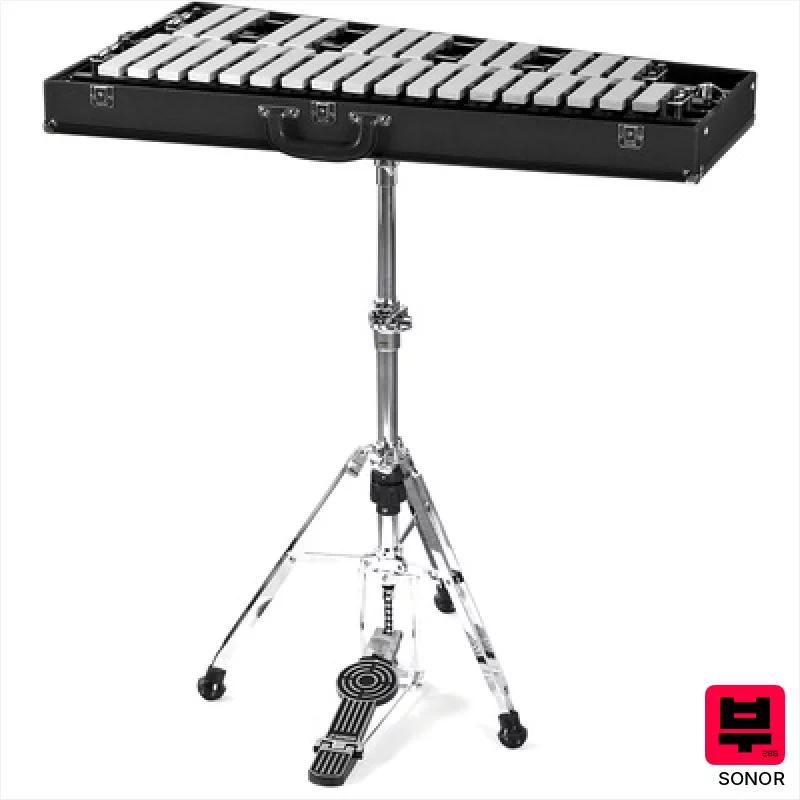
Sonor KGL100 Concert Glockenspiel
- • Hand-tuned alloy bars deliver a remarkably pure and balanced tone.
- • The pedal damper provides excellent dynamic control and quiet storage.
- • Sonor’s build quality ensures exceptional durability for years of use.
- • Lockable transport case protects the instrument and simplifies transport.
- • The aluminum bars, while bright, lack the warmth of some steel alternatives.
- • At nearly 23 kg, it's a substantial instrument to move regularly.
- • The included mallets are serviceable but a serious player will likely upgrade.
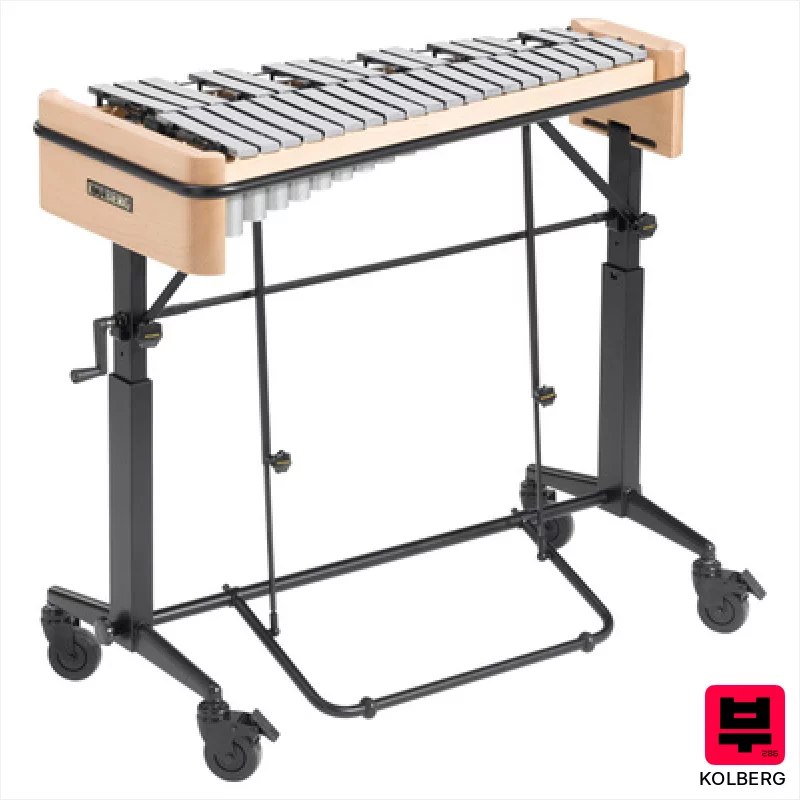
Kolberg 2425CH Glockenspiel
- • Exceptional resonance from the chrome-plated steel bars.
- • Copper beech frame provides a warm, stable foundation.
- • Foldable design significantly eases transport and storage.
- • Height adjustability caters to diverse player heights and preferences.
- • Premium-priced, representing a significant investment for most musicians.
- • Matte black chrome can be susceptible to fingerprints and smudging.
- • Limited tonal palette compared to more complex mallet percussion instruments.
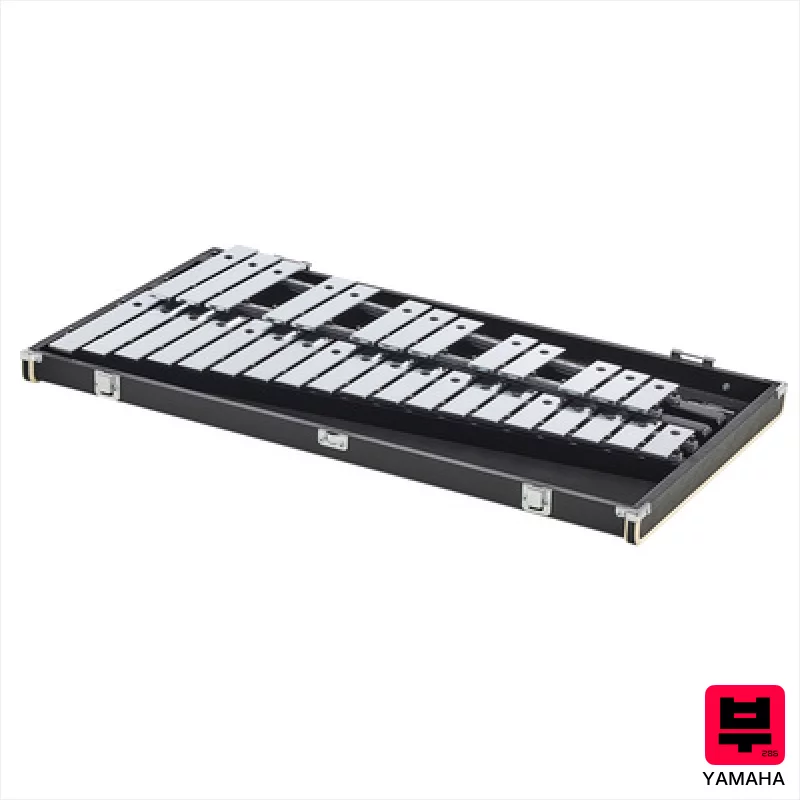
Yamaha YG-250 D Glockenspiel A=442
- • Carbon steel bars deliver a bright, clear, and focused tone.
- • Lightweight design (9.3 kg) enhances portability for rehearsals and performances.
- • The included case provides secure storage and transport protection.
- • A=442Hz tuning caters to professional orchestral requirements and modern tuning standards.
- • Stand is not included, adding to the overall expense and setup complexity.
- • The bright tone, while excellent for clarity, might lack warmth for some stylistic needs.
- • Carbon steel bars, while durable, can be sensitive to impacts and require careful handling.
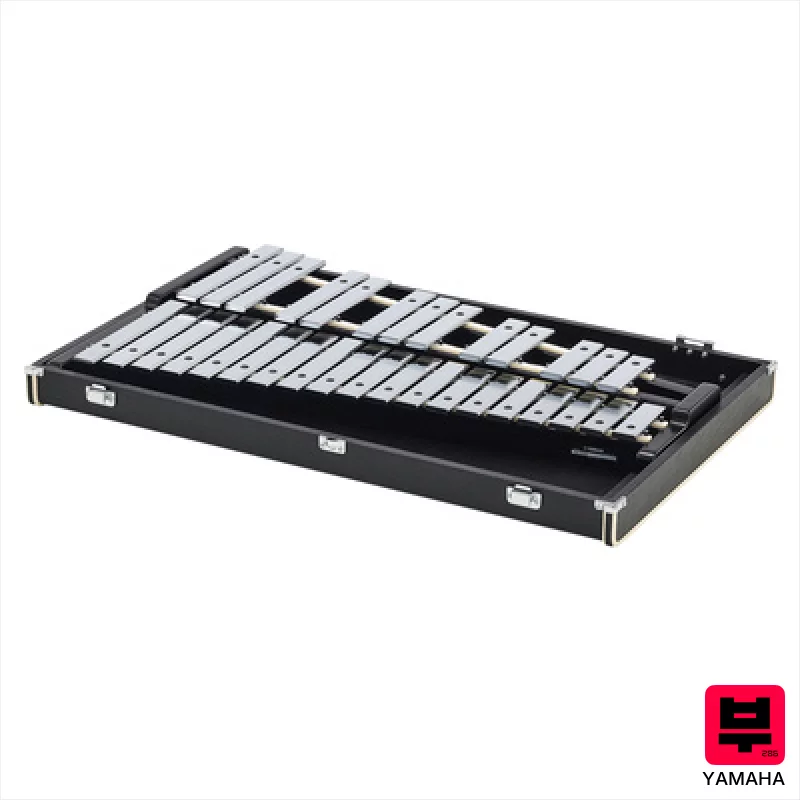
Yamaha YG-1210 Glockenspiel A=442
- • Carbon steel bars deliver a remarkably pure and resonant tone.
- • The heavy construction minimizes sympathetic vibrations, enhancing clarity.
- • Excellent intonation across the 2 1/2 octave range is consistent and reliable.
- • Robust case provides secure storage and transport, professional-grade durability.
- • The substantial weight (15.3 kg) makes it less portable for solo performers.
- • The included mallets are serviceable but a serious player will likely upgrade.
- • The fixed A=442 tuning limits adaptability for performances requiring alternate tunings.
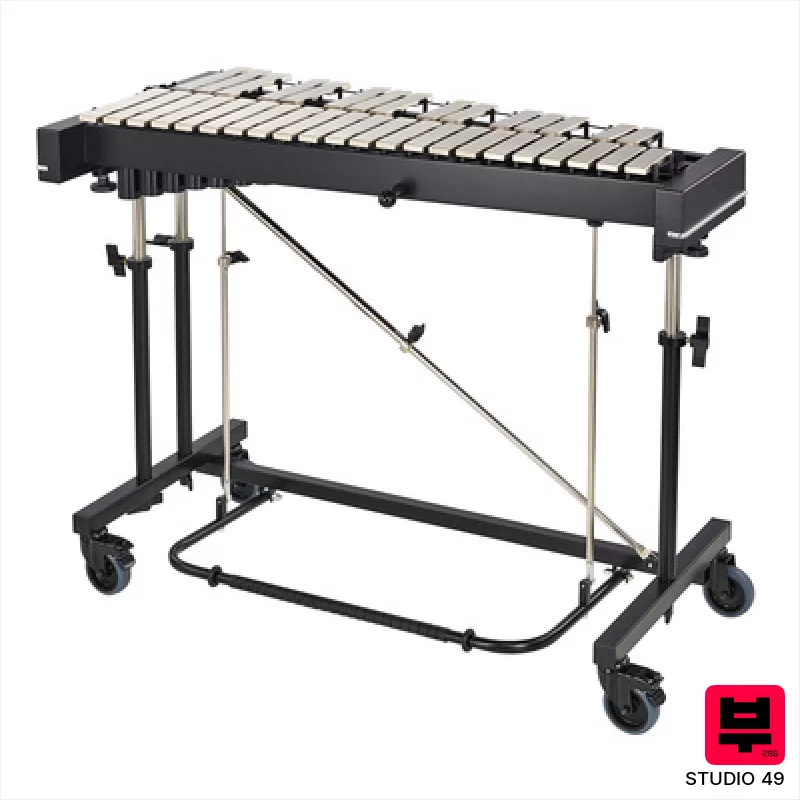
Studio 49 RGC 3030 Glockenspiel A=442 M
- • Exceptional silver steel bars deliver a remarkably pure, resonant tone
- • Stepless height adjustment caters to diverse player comfort and ergonomics
- • Sensitive pedal control offers nuanced dynamic expression and articulation
- • Robust, well-engineered stand ensures stability and long-term durability
- • The chrome-plated finish, while visually appealing, can be prone to fingerprints
- • The size and weight make it less practical for frequent transport or smaller stages
- • Premium-priced, representing a significant investment for most musicians
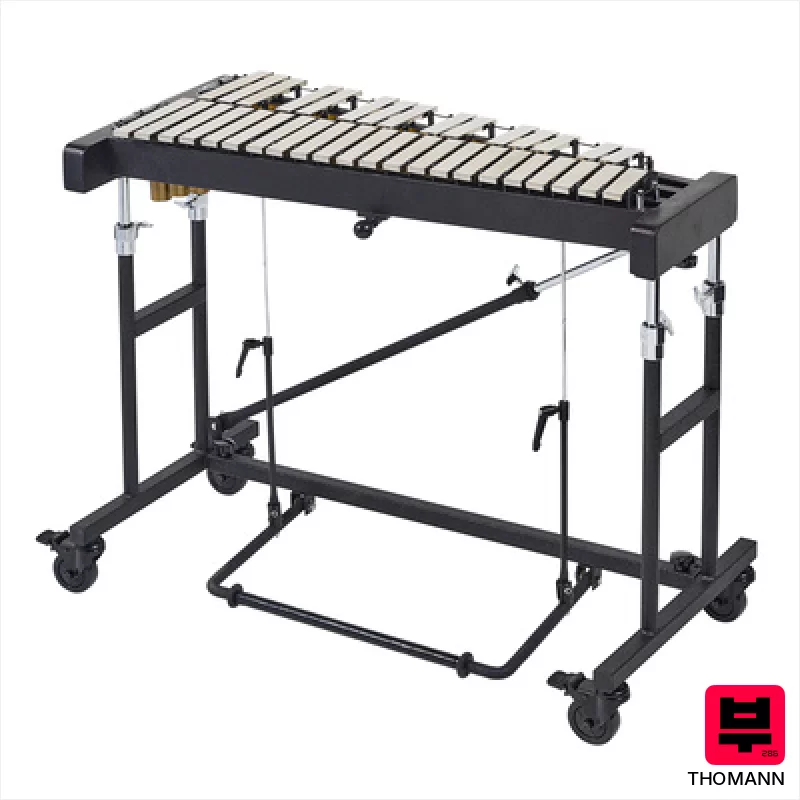
Thomann Orchesterglockenspiel THGS3.0
- • High-quality steel bars deliver a clear, resonant, and brilliant tone.
- • Pedal damping offers immediate dynamic control for orchestral precision.
- • Infinitely adjustable height and castors enhance mobility and ergonomic setup.
- • Resonators significantly expand the instrument's sonic projection and sustain.
- • The size and weight make it less practical for frequent transport or small spaces.
- • The finish, while durable, may not have the premium aesthetic of some higher-end brands.
- • While versatile for orchestral work, it's less suited for experimental or heavily processed sounds.
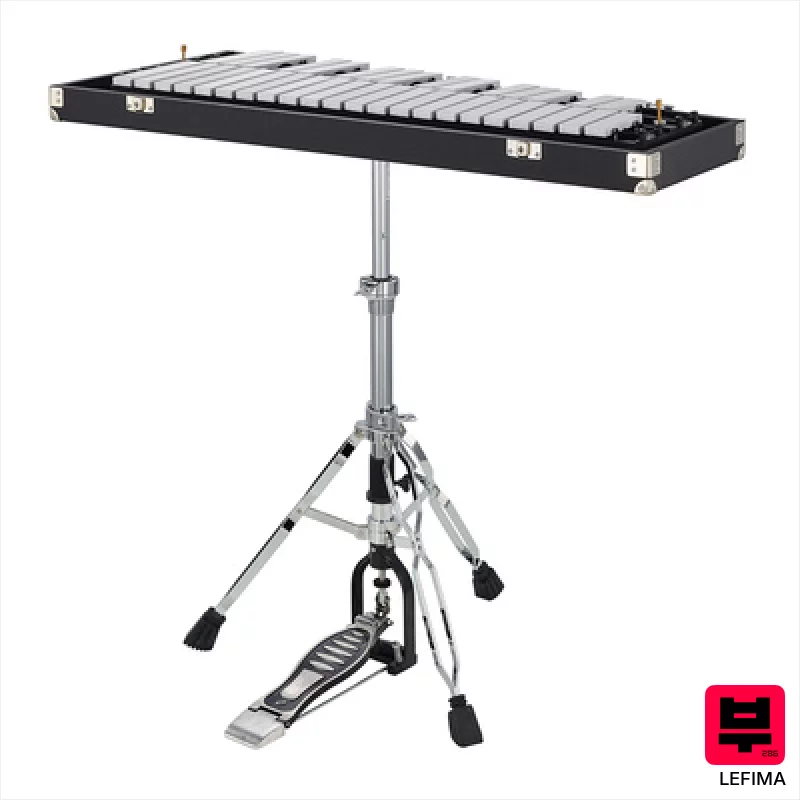
Lefima HPG 3.0 Chimes w Pedal 443Hz
- • Exceptional alloy bar resonance offers a pure, sustained tone.
- • 443Hz tuning provides a unique, slightly higher pitch for modern compositions.
- • Werckmeister III temperament expands harmonic possibilities beyond standard tuning.
- • Height-adjustable design caters to diverse player comfort and performance needs.
- • The alloy construction, while excellent for tone, can be prone to minor surface scratches.
- • The included transport trolley, while functional, might feel a bit basic for professional touring.
- • The limited range, while well-defined, restricts extreme harmonic exploration.
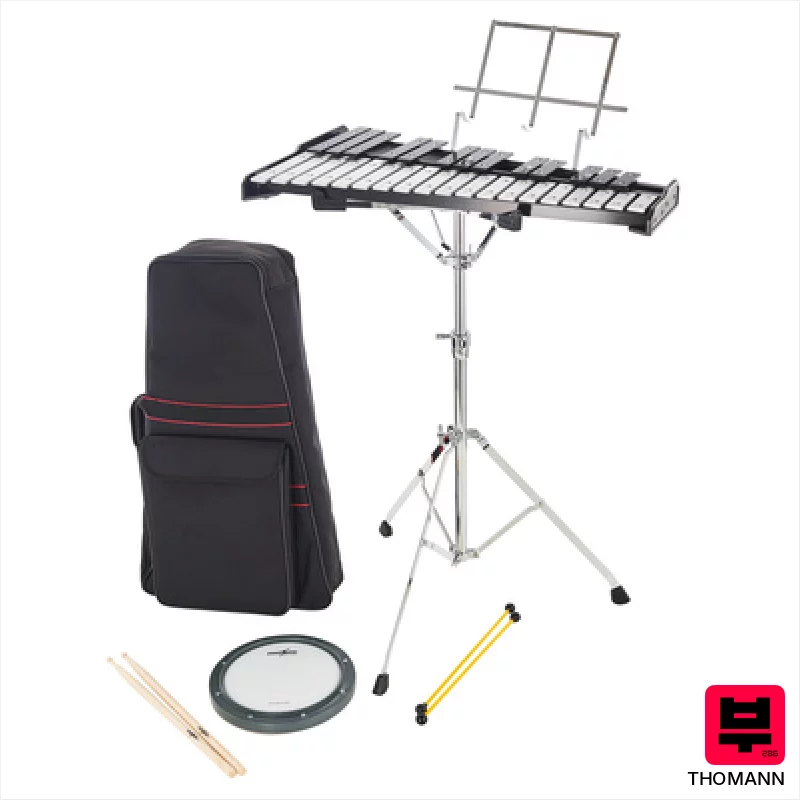
Thomann Glockenspiel THGS2.5
- • Solid steel bars provide a clear, bright, and resonant tone.
- • The included stand is surprisingly stable for an entry-level instrument.
- • The practice pad is a genuine bonus for quiet practice sessions.
- • Comprehensive accessory package offers immediate playability and convenience.
- • Steel bars, while bright, lack the warmth of some higher-end bronze or brass models.
- • The included mallets are basic and will likely need upgrading for nuanced playing.
- • The bag feels a little flimsy and offers minimal protection for transport.
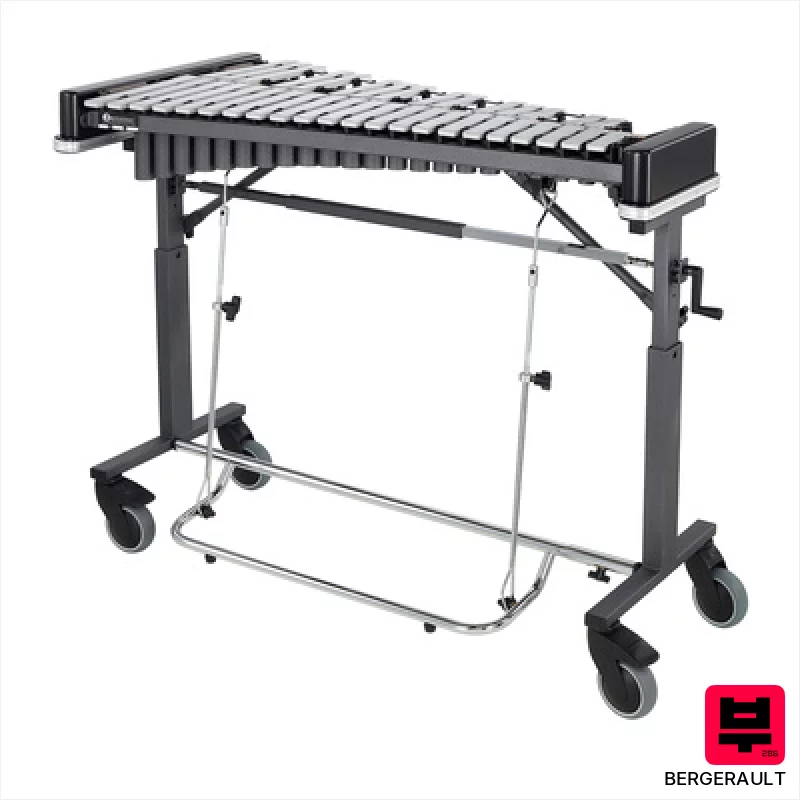
Bergerault BG30 Glockenspiel A=443Hz
- • Exceptional resonance thanks to precisely tuned steel bars
- • The 443Hz tuning is a boon for historically informed performance
- • Robust, height-adjustable frame offers excellent stability and ergonomics
- • Resonators significantly amplify and enrich the instrument's tonal projection
- • The substantial size demands significant storage and transportation space
- • Premium-priced, representing a considerable investment for most musicians
- • Limited versatility outside of orchestral and chamber music settings
How to Choose the Best Glockenspiels
Tonal Character
Classical demands a refined tone. Forget anything overly bright or "sparkly" - we're looking for a warm, bell-like quality with a good fundamental and clean overtones. That ice-picky top end is a dealbreaker. It needs to cut through without being harsh.
Sustain & Decay
A good classical glockenspiel shouldn't just ring; it should sustain with a controlled decay. Too short, and you lose nuance. Too long, and it'll muddy the mix. The sustain should feel even across the range, not tapering off noticeably.
Tuning Accuracy & Stability
This is non-negotiable. Out-of-tune notes are a disaster, especially in an orchestral context. Look for instruments with well-tempered tuning and a reputation for stability - temperature and humidity changes will affect them.
Material & Construction
Steel bars are the standard, but the quality of the steel and the construction of the frame dramatically impact the tone. Thicker bars generally provide better sustain and a richer tone, while a solid, well-damped frame minimizes unwanted resonance.
Action & Playability
The action needs to be consistent and comfortable, allowing for precise articulation. A high action makes fast passages difficult, while a too-low action can lead to accidental notes. It's a subtle thing, but a good action makes a huge difference in control.
Buying Guide
Don't be fooled by cheap glockenspiels - they almost always cut corners on bar material, tuning, and frame construction, resulting in a brittle, uneven tone. Spending a bit more gets you better steel, more precise tuning, and a more stable instrument. Consider the size; a smaller glockenspiel (2.5 to 3 octaves) is often sufficient for most classical applications, but ensure it covers the necessary range for your repertoire.
Our Methodology
We didn't just look at spec sheets here. We spent time playing each glockenspiel, A/B'ing them against each other in a variety of settings - from bedroom practice to simulated orchestral scenarios. We paid close attention to how they responded to different dynamics and articulations, and how they sat in a mix. It's about the feel, the sound, and the overall experience, not just the numbers.

