AudioFu
AudioFu Chart · October 2026
Best Diatonic Harmonicas for Advanced 2026
The top pick is Hohner M2011BXL-F Marine Band Thunderbird Harmonica - Key of Low F ($118). Hohner M2009BX-G Marine Band Crossover Harmonica - Key of G gives you the most for the money at $100. Suzuki F-20E Fabulous Diatonic LowF leads the high end. Ranked by the AudioFu Index from 55 models across 9 brands, prices checked every night.
Last updated: October 12, 2026
Top 10
Full detail for the 10 highest AudioFu Index scores. Every other model is listed below.
-
Hohner M2011BXL-F Marine Band Thunderbird Harmonica - Key of Low F
Marine Band Thunderbird Low Bb · Hohner
11 for sale on Reverb8 finishes at Thomann
This Thunderbird Low Bb is a powerhouse for blues, roots, and anything needing serious low-end thump. The Marine Band construction gives it that classic, raw vibe, while the Filisko covers add a touch of modern responsiveness. It's a fantastic choice for experienced players wanting a serious, affordable low harmonica.
Pros
- Triple-varnished comb delivers a robust, resonant tone with excellent projection.
- Joe Filisko-inspired covers provide a responsive, expressive feel for nuanced playing.
- Newly developed reed profile creates a remarkably deep, powerful low-end response.
Cons
- The Low Bb tuning limits versatility for cross-genre experimentation.
- Marine Band construction can be a bit 'raw' feeling for players accustomed to polished instruments.
54AudioFu
IndexStableno change since Aug 14Aug 14$118 now$118€105 at Thomann · in stockCheck price ↗ -
The Suzuki Manji F is a fantastic choice for blues and rock players seeking a controlled, warm tone. The walnut covers and carefully tuned reeds provide a classic feel, and the wood comb offers a comfortable playing experience – it’s a solid, reliable harmonica that delivers a lot of character without being overly aggressive.
Pros
- Walnut cover plates offer a warm, visually appealing aesthetic.
- Bronze/phosphor bronze reeds deliver a rich, bluesy tone.
- Wood/resin comb provides comfortable play and a stable air seal.
Cons
- The softer tone may lack bite for some aggressive rock styles.
- Wood comb requires more diligent cleaning to prevent moisture issues.
49AudioFu
IndexStableno change since Aug 14Aug 14$118 now$118€105 at Thomann · in stockCheck price ↗ -
The Yonberg D2 Typhoon in Eb is a serious instrument for blues, rock, and folk players. The Gamma reeds give it a raw, powerful voice, while the Tritan comb ensures it can handle a lot of abuse. It's a fantastic choice for intermediate to advanced players looking for a durable and expressive harmonica.
Pros
- Tritan comb offers exceptional durability and resists moisture well
- Gamma reeds provide a responsive, expressive, and powerful tone
- QDS system simplifies cleaning, a huge benefit for serious players
Cons
- Eb Major tuning limits versatility for players needing other keys
- The Tritan comb, while durable, can feel slightly less 'warm' than wood
47AudioFu
Index↓ 8.4%since Aug 14 · lowest so far$133 · Aug 14$122 now$122€109 at Thomann · in stockCheck price ↗ -
The Seydel 1847 Lightning C is a serious blues harp. The stainless steel construction delivers a robust, well-balanced tone, and the build quality is exceptional. It's a fantastic choice for intermediate to advanced players seeking a reliable and expressive instrument with a premium feel.
Pros
- Solid stainless steel comb eliminates breath noise, a significant improvement.
- The 1847 embossing adds a touch of class and durability.
- 20 reeds offer a full, rich, and surprisingly responsive tone.
Cons
- The stainless steel comb can feel a bit cold and dense for some players.
- Premium-priced, placing it outside the budget range for beginners.
45AudioFu
Index↓ 0.8%since Aug 14 · lowest so far$133 · Aug 14$132 now$132€118 at Thomann · in stockCheck price ↗ -
The Suzuki F-20E Fabulous is a seriously good Low F harp. It's got a warm, robust tone and a really solid build – the brass comb really makes a difference. Ideal for experienced players looking for a reliable, expressive Low F for blues and folk – it’s a workhorse instrument.
Pros
- Rich Low F tone, surprisingly responsive for a low key.
- Solid brass comb provides excellent vibration transfer and durability.
- Phosphor-bronze reedplates offer stability and a warm, full sound.
Cons
- Low F can be challenging for beginners; requires good breath control.
- The weight (157g) might feel a bit heavy for extended playing.
45AudioFu
IndexStableno change since Aug 14Aug 14$223 now$223€199 at Thomann · in stockCheck price ↗ -
The 1847 Noble LB is a seriously refined blues harp. Seydel's upgrade to stainless steel reeds gives it a really clear, articulate tone, and the low B key opens up a whole new world of soulful bends and expressive playing. This is a fantastic choice for intermediate to advanced players wanting a reliable, great-sounding harp.
Pros
- Stainless steel reeds offer exceptional durability and a bright, responsive tone.
- Anodized aluminum cover plates provide a secure, comfortable grip and airflow.
- Nickel silver reed plate promotes even reed vibration and consistent intonation.
Cons
- The stainless steel reeds can feel a bit 'stiffer' than traditional brass reeds initially.
- Low B tuning isn’t as universally versatile as a C or A harmonica.
-
Hohner M2009BX-G Marine Band Crossover Harmonica - Key of G
Marine Band Crossover HG · Hohner
6 for sale on Reverb13 finishes at Thomann
The Crossover HG is a fantastic evolution of the legendary Marine Band. That High G key gives it a real bite for blues and Celtic tunes, while the bamboo comb keeps things clean and responsive. It's a great choice for intermediate to advanced players looking for a classic sound with a bit more modern feel.
Pros
- Rich, complex High G tone delivers expressive blues potential
- Stainless steel cover plates offer improved projection and durability
- Laminated bamboo comb resists moisture, enhancing reed life
Cons
- High G key is challenging for beginners; requires strong breath control
- Stainless steel covers can feel slightly 'cold' compared to traditional brass
-
Hohner Performance Series Meisterklasse Chromatic Harmonica - Key of C
Meisterklasse MS Eb · Hohner
4 for sale on Reverb11 finishes at Thomann
The Meisterklasse MS Eb is a serious instrument for the dedicated player. Its aluminum comb and MS system offer incredible control and a powerful, clear tone, making it a fantastic choice for blues, folk, and anything requiring nuanced expression. This is a step up for intermediate to advanced players looking for a professional-grade harmonica without the absolute top-tier price tag.
Pros
- Aluminum comb provides exceptional breath response and airtightness.
- Nickel-plated brass reed plates deliver a robust, resonant tone.
- Chrome-plated covers offer a professional feel and improved durability.
Cons
- The light metal comb, while responsive, can feel less substantial than wood.
- Eb key limits versatility; not ideal for all musical genres.
-
- Weight0.25 kg
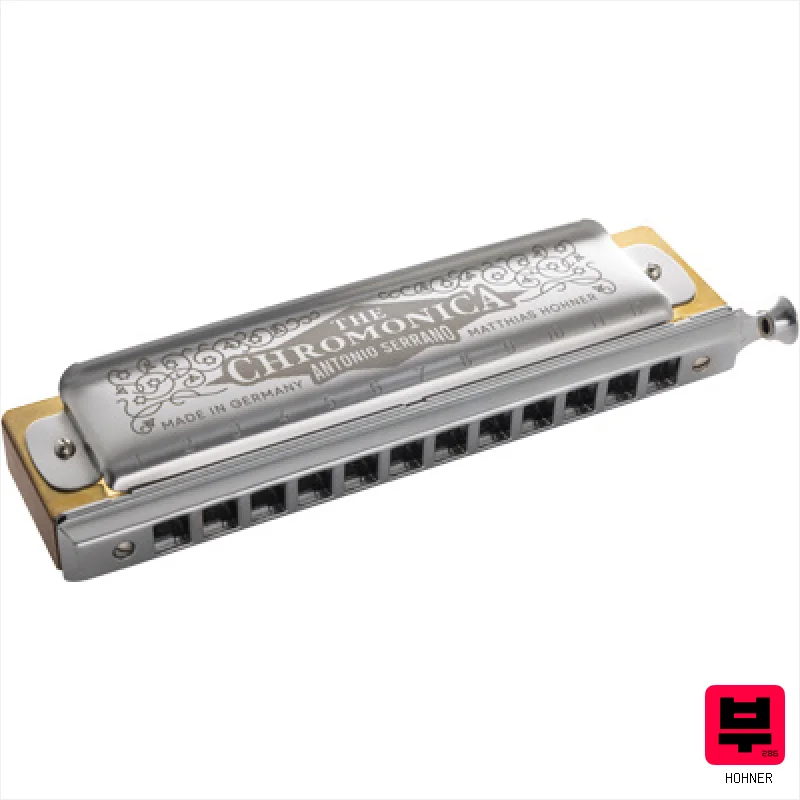
This harp lets you play missing tones using the slide, which is great for beginners. The 1.5 mm phosphor bronze reeds sound bright and crisp. While it has a case and is light at 0.25 kg, the missing hole count and lack of material details make it hard to compare to other models. It fits well as a travel-friendly option for low F sessions.
Pros
- Play missing tones easily with the included slide
- Reeds are made from 1.5 mm phosphor bronze
- Tuned specifically in the key of low F
Cons
- Lacks the full chromatic capability of a standard blues harp
- No specific cover or comb material is listed
-
C.A. Seydel Söhne 1847 Classic - Easy Third LF
Not on Reverb yet7 finishes at Thomann
This easy third harmonica lets you play minor songs without bending notes. The walnut comb and nickel silver reeds feel solid and sound clear. It is great for beginners learning third position or players who want simpler access to melody tones.
Pros
- Walnut comb sealed with food-safe varnish
- Nickel silver reed plates provide bright tone
- Simplifies third position playing in minor keys
Cons
- No specific reed count listed in specs
- Hole size and action not described
All 55 diatonic harmonicas
Same index, same nightly prices — compact. Colour options of one model share a row. Tap a photo to zoom.
- 11
Suzuki MR-350-C Promaster Diatonic Harmonica - Key of CMR-350V Promaster LowF · Suzuki · 22 finishes58Stable$77€69$77€69Check ↗
- 12
C.A. Seydel Söhne 1847 Classic Wilde Rock DC.A. Seydel Söhne · 4 finishes38Stable$111€99$111€99Check ↗
- 13
Hohner Marine Band Thunderb. LowLow FHohner33Stable$118€105$118€105Check ↗
- 14
C.A. Seydel Söhne Charlie Musselwhite SignatureC.A. Seydel Söhne33Stable$156€139$156€139Check ↗
- 15
Suzuki MR-550H Pure Harp C-MajorSuzuki33Stable$156€139$156€139Check ↗
- 16
C.A. Seydel Söhne Solist Pro-12 Steel Solo DC.A. Seydel Söhne · 4 finishes37↑ 3.2%$110€98$110€98Check ↗
- 17
C.A. Seydel Söhne 1847 Classic AC.A. Seydel Söhne · 30 finishes47↑ 2.5%$91€81$91€81Check ↗
- 18
Suzuki SUB-30 Ultrabend DSuzuki · 3 finishes36Stable$111€99$111€99Check ↗
- 19
C.A. Seydel Söhne 1847 Silver DC.A. Seydel Söhne · 17 finishes45Stable$89€79$89€79Check ↗
- 20
Hohner Performance Series Meisterklasse Chromatic Harmonica - Key of CMeisterklasse Harmonica MS G · Hohner37Stable$100€89$100€89Check ↗
- 21
Fender Blues DeVille Harmonica, Pack of 7, with Case 2016Blues Deville 7 pack with case · Fender27↓ 10.0%$241€215$241€215Check ↗
- 22
Suzuki PH-20N Pipe Humming CSuzuki · 7 finishes40Stable$89€79$89€79Check ↗
- 23
Hohner 542BL-C Progressive Series Golden Melody Harmonica - Key of CGolden Melody Db · Hohner · 12 finishes54Stable$62€55$62€55Check ↗
- 24
Fender Blues DeVille Harmonica, Pack of 3, with CaseBlues Deville 3 pack with case · Fender24↓ 3.4%$129€115$129€115Check ↗
- 25
Hohner Steve Baker Major 7 AHohner · 4 finishes40↓ 5.1%$84€75$84€75Check ↗
- 26
Hohner Steve Baker Natural Minor AHohner · 4 finishes40↓ 5.1%$84€75$84€75Check ↗
- 27
Thomann Woogie Blues Harmonica 7-SETThomann · 8 finishes22Stable$122€109$122€109Check ↗
- 28
C.A. Seydel Söhne Favorite Standard F#C.A. Seydel Söhne · 2 finishes35Stable$89€79$89€79Check ↗
- 29
Hohner M2005BX-EF Marine Band Deluxe Harmonica - Key of EbMarine Band Deluxe Ab · Hohner · 11 finishes49Stable$62€55$62€55Check ↗
- 30
C.A. Seydel Söhne Harp Set Solist ProC.A. Seydel Söhne18↑ 6.5%$369€329$369€329Check ↗
- 31
C.A. Seydel Söhne Harmonica Set Session SteelC.A. Seydel Söhne18↑ 8.6%$425€379$425€379Check ↗
- 32
C.A. Seydel Söhne Harp Set 1847 SilverC.A. Seydel Söhne18↑ 7.5%$481€429$481€429Check ↗
- 33
C.A. Seydel Söhne Harp Set 1847 ClassicC.A. Seydel Söhne18↑ 7.5%$481€429$481€429Check ↗
- 34
C.A. Seydel Söhne Harp Set 1847 NobleC.A. Seydel Söhne18↑ 6.0%$593€529$593€529Check ↗
- 35
C.A. Seydel Söhne 1847 Lightning SetC.A. Seydel Söhne18↑ 5.0%$940€839$940€839Check ↗
- 36
Thomann Boogie Blues Harmonica 7-SETThomann · 8 finishes22Stable$110€98$110€98Check ↗
- 37
C.A. Seydel Söhne Big Six SetC.A. Seydel Söhne17↑ 10.6%$245€219$245€219Check ↗
- 38
C.A. Seydel Söhne Harmonica Set SessionC.A. Seydel Söhne17↑ 10.2%$290€259$290€259Check ↗
- 39
Fender Blues Deluxe Harmonica 7 PackBlues Deluxe 7 pack with case · Fender32↓ 9.4%$86€77$86€77Check ↗
- 40
Suzuki HA-20 Hammond Low FSuzuki · 14 finishes43Stable$62€55$62€55Check ↗
- 41
Hohner Rocket low Harp LEHohner · 6 finishes40Stable$66€59$66€59Check ↗
- 42
Suzuki SNB-20CVS Shinobix SilencerSuzuki33Stable$66€59$66€59Check ↗
- 43
Harley Benton Blues Harmonica SetHarley Benton17Stable$95€85$95€85Check ↗
- 44
Hohner Blues Starter SetHohner20Stable$89€79$89€79Check ↗
- 45
Lee Oskar Low RiderLee Oskar31Stable$66€59$66€59Check ↗
- 46
C.A. Seydel Söhne Session Steel Beginner PackC.A. Seydel Söhne18↑ 7.6%$64€57$64€57Check ↗
- 47
Hohner 1896BX-A Marine Band 1896 Classic Harmonica - Key of AMarine Band Classic Ab · Hohner · 13 finishes75↓ 10.3%$39€35$39€35Check ↗
- 48
Hohner 532BX-A MS Series Modular Blues Harp Harmonica - Key of ABlues Harp MS Ab · Hohner · 12 finishes71Stable$37€33$37€33Check ↗
- 49
Hohner 560PBX-A Progressive Series 560 Special 20 Harmonica - Key of ASpecial 20 F# · Hohner · 13 finishes67Stable$37€33$37€33Check ↗
- 50
Lee Oskar 1910A Major Diatonic Harmonica - Key of AMajor Diatonic Low D · Lee Oskar · 18 finishes67↓ 4.8%$45€40$45€40Check ↗
- 51
Hohner 364/24-C Marine Band 364/24 Harmonica - Key of CMarine Band 364/24 G · Hohner · 3 finishes65Stable$55€49$55€49Check ↗
- 52
Hohner 590BX-C MS Series Modular Big River Harp Harmonica - Key of CBig River Harp MS D · Hohner · 7 finishes64Stable$31€28$31€28Check ↗
- 53
C.A. Seydel Söhne Session Low F#C.A. Seydel Söhne · 34 finishes49↓ 2.4%$40€36$40€36Check ↗
- 54
Hohner Rocket Harp EHohner · 12 finishes49↓ 13.0%$45€40$45€40Check ↗
- 55
Lee Oskar 1910 Natural Minor Harmonica - Key of ANatural Minor Ab · Lee Oskar · 12 finishes49Stable$47€42$47€42Check ↗
727 models exist in this category; the longest tail is capped at 400 to keep the page fast.
Diatonic Harmonicas by the numbers
Measured across all 727 models we track, not a sample.
Median $89 — half of all diatonic harmonicas here cost less.
median of 6 models · 0.25 kg–0.25 kg
How to choose the best diatonic harmonicas
Reed Profile & Material
This is huge. Factory-aligned reeds are a starting point; advanced players want reeds that respond to minute pressure changes, allowing for more controlled bends and expressive vibrato. Brass reeds offer a brighter, more articulate tone, while custom-profiled reeds (often bronze or stainless steel) can provide a smoother, more responsive feel - though they might lack that initial 'bite'.
Action & Embouchure Space
A tighter action - the distance between the reed and the reed plate - makes bending easier, but too tight and it'll feel choked. The amount of space between the holes dictates how easily you can play multiple notes simultaneously (overblows/overdraws), a critical skill for advanced players. Finding the sweet spot is key; some players prefer a slightly higher action for better clarity.
Comb Material & Tuning Stability
Plastic combs are common, but metal (brass or stainless steel) offer better tuning stability, especially in changing temperatures. A well-machined comb also contributes to a more resonant tone, minimizing unwanted vibrations and buzz. Wood combs offer a warmer, more traditional tone, but require more care.
Tone & Articulation
Forget that generic "bluesy" tone. Advanced players need a harmonica that offers a wide tonal palette - from a breathy whisper to a screaming overdrive. The ability to clearly articulate individual notes, even in a dense arrangement, is paramount. This often comes down to reed voicing and the overall construction of the harmonica.
Durability & Maintenance
Gigs happen. You're gonna sweat on these things. A harmonica that can withstand regular use and cleaning is essential. Quality construction means fewer reed failures, less comb warping, and a longer lifespan - saving you money in the long run.
Buying guide
So, you've mastered basic blues harp and are looking to seriously up your game? The stock Hohner Marine Band isn't gonna cut it anymore. We're talking about harmonicas that let you bend with surgical precision, navigate complex cross-harp passages, and really feel the nuance in your playing - and that demands a different class of instrument. This isn't about beginner-friendly; it's about unlocking the next level of expression.
Don't fall for the hype. Just because it's expensive doesn't mean it's good for you. The best harmonica is the one that feels right in your hands and inspires you to play.
Be prepared to experiment - different reed profiles and comb materials will suit different playing styles. And seriously, invest in a good cleaning kit; these aren't disposable instruments.
How the AudioFu Index works
Five measured signals and nothing else — no stars from strangers, no “tested by experts” we didn’t do. The weights are fixed and public. We don’t play these instruments; we measure the market around them.
This chart covers 400 diatonic harmonicas from the Thomann catalogue (of 727 in the category). Before you buy, read hands-on reviews and, where you can, play it. Full methodology.
AudioFu earns a commission when you buy through our Thomann links. It never changes the order — the index does.
- Demand40%
How many of this exact model are for sale on Reverb right now — what musicians actually buy and resell.
- Lineup20%
How many finishes Thomann stocks — makers expand the models that sell.
- Price15%
Where the price has moved since we started tracking in August.
- Specs15%
How completely the maker documents it.
- Maker10%
How deep the brand’s range is in this category.
Questions
What's the difference between a standard diatonic and a 'cross-harp' harmonica?
Standard diatonic harmonicas are typically tuned to the key they're labeled. Cross-harp is a playing technique where you play in a key different from the harmonica's key, using bends to access notes. It's the blues standard, but requires a harmonica with a responsive action and good bendability.
Are custom harmonicas worth the extra money?
Often, yes. Custom harmonicas, like those from Suzuki or Hohner's Special 20 series, often feature hand-tuned reeds and improved comb construction, offering a noticeable upgrade in playability and tone. But do your research; a custom harp doesn't automatically equal 'better'.
What about overblows and overdraws?
These are advanced techniques that allow you to play notes not normally available on a diatonic. Some harmonicas are designed to make these easier, but they're still challenging to master. Don't chase them just because they sound cool; focus on solid fundamentals first.
How important is the comb material?
Metal combs generally offer better tuning stability and a brighter tone, while wood combs offer a warmer, more traditional sound. Plastic is the most common and affordable, but can be prone to warping and doesn't resonate as well. It's a tonal trade-off.
I'm struggling to bend notes. What can I do?
It's a common problem. Focus on breath control and embouchure technique. Experiment with different harmonica models - some are simply more responsive to bending than others. Don't get discouraged; it takes time and practice.