
Best Controller Modules for Automation 2026
So you're diving deep into automation, huh? Forget just tweaking knobs - you want to program movement, evolving textures, and seriously complex sequences. A decent controller module isn't just about sending MIDI CC; it's about having a tactile interface that lets you wrangle those nuanced changes. Let's break down the best options for serious automation work, beyond the basic knobs and faders.
Last updated: July 15, 2026 • Next update: July 22, 2026
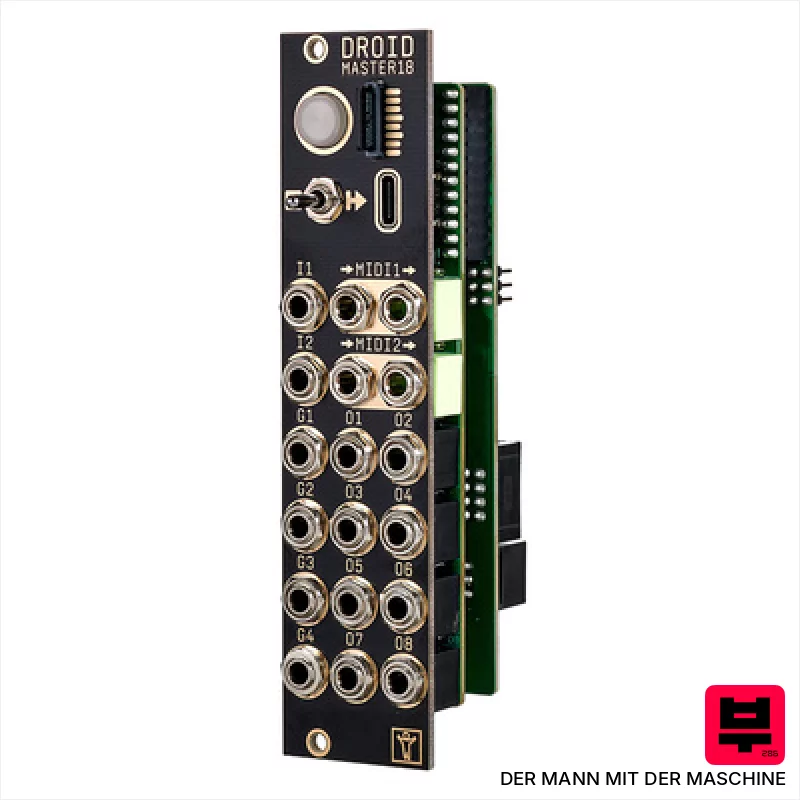
Der Mann mit der Maschine Droid Master 18
- • Incredible flexibility; user-created patches unlock vast sonic possibilities.
- • Eight CV outputs offer extensive modulation routing options.
- • MicroSD card patching simplifies patch management and sharing.
- • Expandability with G8 and X7 modules extends functionality significantly.
- • Text-file patching can be less intuitive than visual patching systems.
- • Limited onboard controls require external controllers for real-time manipulation.
- • Power draw might necessitate a robust power supply in larger systems.
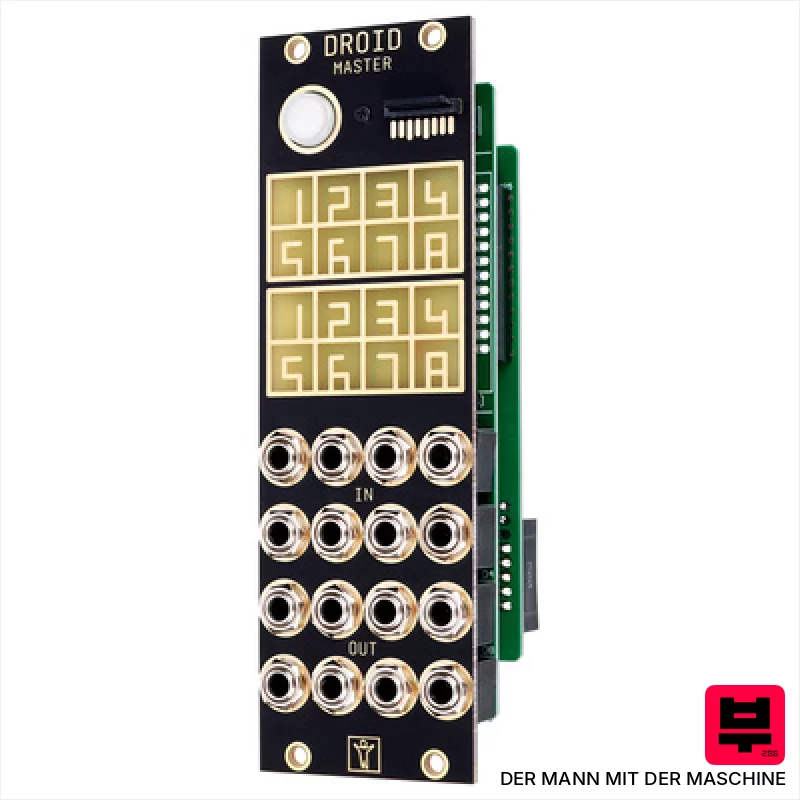
Der Mann mit der Maschine Droid Master
- • Highly flexible CV processing allows for complex patch creation.
- • Text-file patching simplifies editing and sharing with others.
- • Expandability via G8 and X7 opens up extensive customization options.
- • Broad range of potential functions from LFO to sequencer.
- • Steep learning curve for those unfamiliar with modular patching concepts.
- • MicroSD card dependency for patch management can be a potential point of failure.
- • Relatively high power draw for a single module.

Der Mann mit der Maschine Droid Master + G8 Set
- • Highly flexible CV processing allows for complex modulation designs.
- • G8 expander significantly boosts input/output capacity for intricate patching.
- • Text-file patch loading is streamlined and accessible for all skill levels.
- • Compact size makes it ideal for integrating into tight modular setups.
- • Steep learning curve; requires significant CV/modular synthesis knowledge.
- • MicroSD card dependency for patches can be a potential point of failure.
- • Limited physical controls; relies heavily on patch editing.
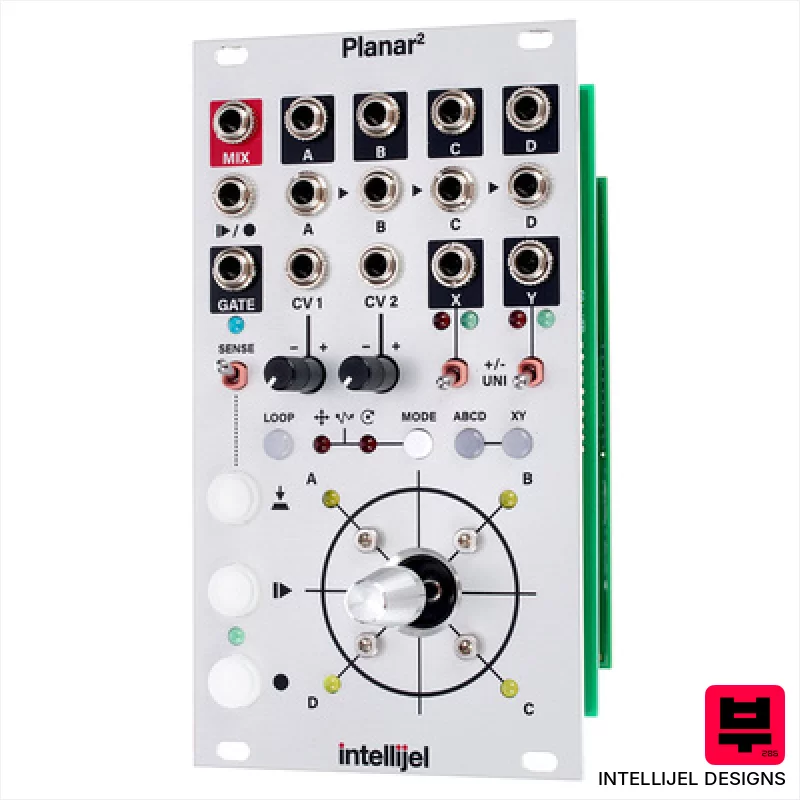
Intellijel Designs Planar 2
- • Excellent CV recording functionality for dynamic modulation
- • Four quadrant outputs provide nuanced panning and crossfading options
- • Robust build quality typical of Intellijel, feels very solid
- • Joystick offers expressive control beyond simple X/Y movement
- • Limited CV output range (0-10V) might restrict some workflows
- • Power draw, while manageable, can be a factor in smaller systems
- • Learning curve for mastering the advanced recording/playback features
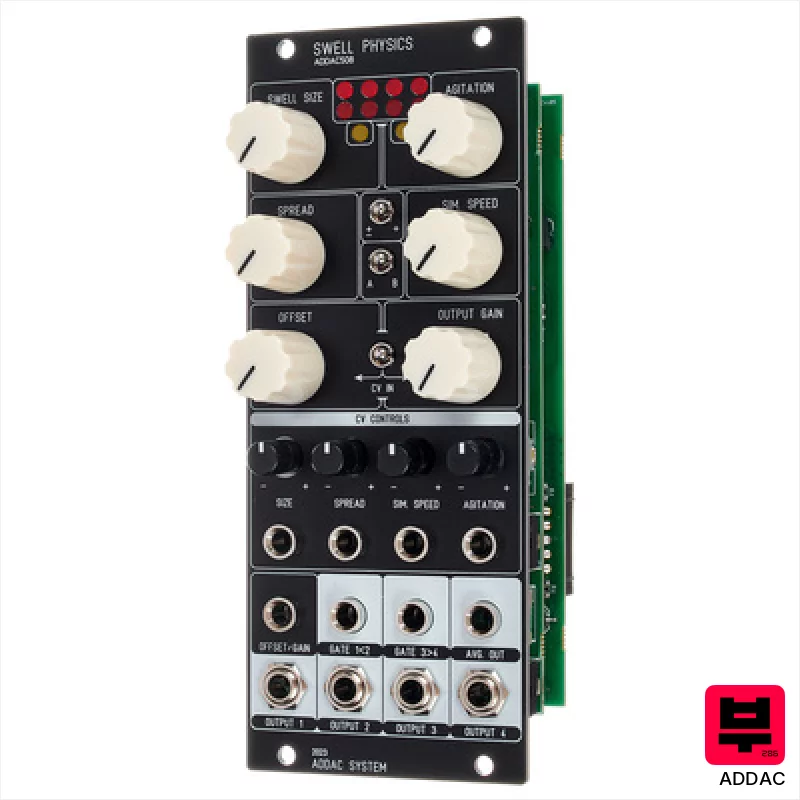
ADDAC 508 Swell Physics
- • Unique orbital simulation provides organic, evolving modulation.
- • Excellent CV range flexibility (+/-5V or 0V to +10V).
- • Assignable CV input offers dynamic parameter control.
- • Averaged signal output simplifies complex modulation patterns.
- • Limited modulation destinations compared to larger modules.
- • 4HP width can be restrictive in dense racks.
- • Parameter interaction can be initially complex to master.
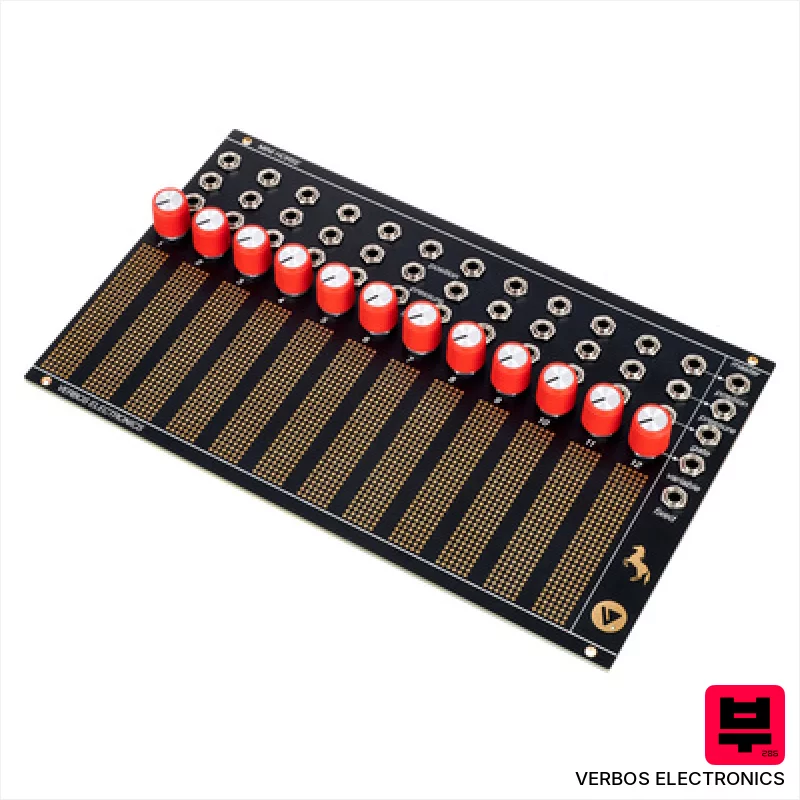
Verbos Electronics Mini Horse
- • Gold-coated contacts offer exceptional sensitivity and durability
- • Individual tuning per surface allows for incredibly nuanced control
- • Compact 42HP footprint maximizes modular space efficiency
- • Versatile CV outputs unlock complex modulation possibilities
- • Steep learning curve for mastering all control parameters
- • Limited tactile feedback can be challenging for some users
- • Price point positions it as a premium investment for serious modular enthusiasts
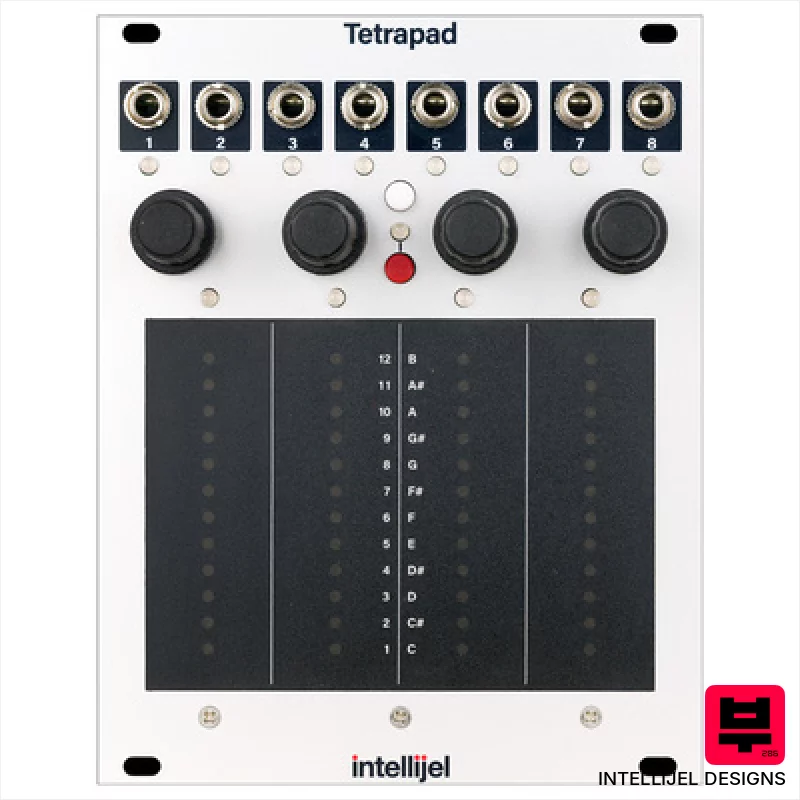
Intellijel Designs Tetrapad
- • Exceptional vertical position sensitivity enables nuanced modulation.
- • Eight independent outputs offer extensive routing flexibility.
- • Multi-color LEDs provide clear visual feedback in low-light conditions.
- • Compact 20HP footprint maximizes space in dense modular systems.
- • Steep learning curve for mastering advanced modes and configurations.
- • Power draw, while not excessive, impacts overall system power budget.
- • Limited tactile feedback compared to traditional keyboard controllers.

Erica Synths Black Joystick 2
- • Excellent joystick response with minimal dead zones.
- • Integrated recorder offers nuanced, repeatable modulation sequences.
- • Four CV channels provide extensive routing flexibility.
- • LFO/Drone modes expand creative possibilities beyond basic control.
- • Limited voltage range (-5V to +5V) restricts compatibility with some modules.
- • 12HP footprint can be restrictive in smaller modular systems.
- • Learning curve involved in mastering recorder functionality.
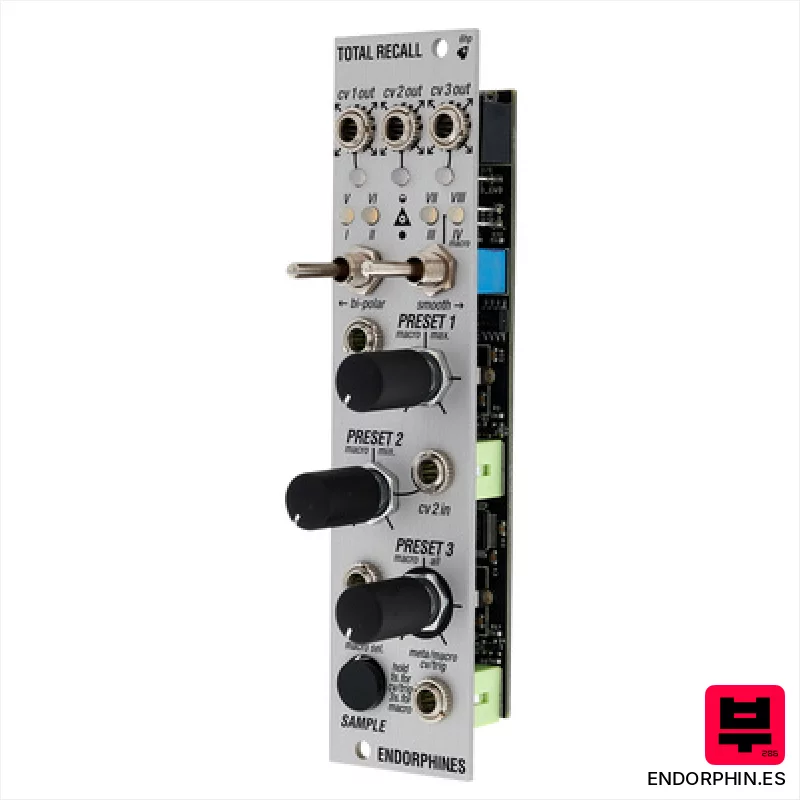
Endorphin.es Total Recall Silver
- • Three channels offer significant CV manipulation flexibility.
- • Rotary controls provide precise, tactile voltage adjustments.
- • Preset morphing via CV/clock unlocks dynamic sequencing possibilities.
- • Compact 6U width optimizes valuable Eurorack panel space.
- • Limited voltage range (0-5V/ -5 to +5V) restricts some applications.
- • No OLED display makes preset status less immediately obvious.
- • Requires careful power budgeting due to moderate current draw.
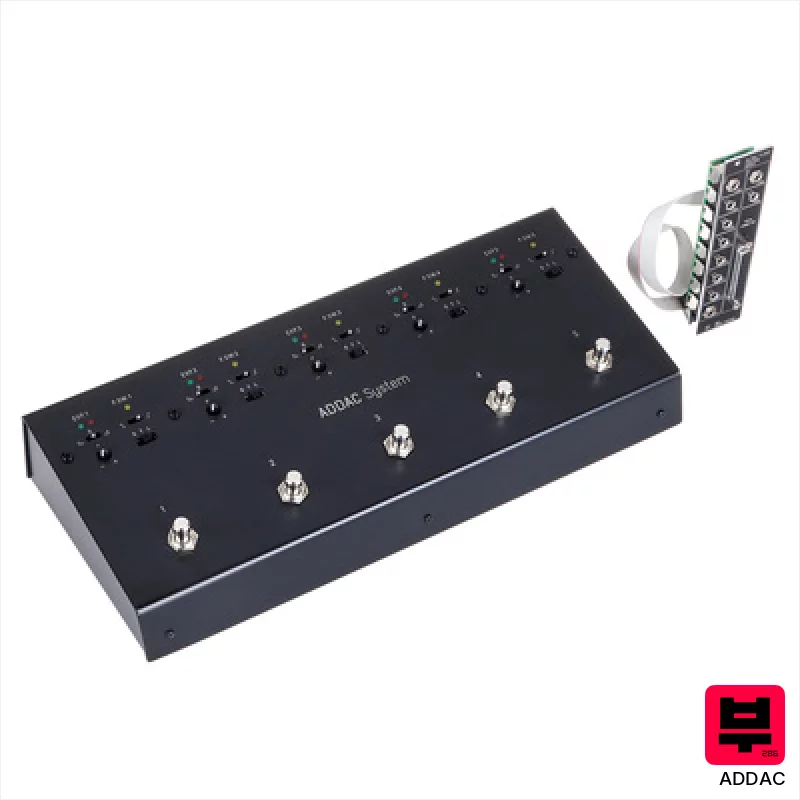
ADDAC 311 Ultra Floor Control
- • Five expression pedals offer nuanced, real-time modulation control.
- • DB25 connection simplifies routing and reduces cable clutter.
- • Footswitches provide robust gate/trigger functionality with visual feedback.
- • Compact 6U width maximizes space in Eurorack setups.
- • The DB25 cabling can feel a bit cumbersome for some setups.
- • Limited modulation options beyond expression and footswitches.
- • Higher price point might be prohibitive for budget-conscious users.
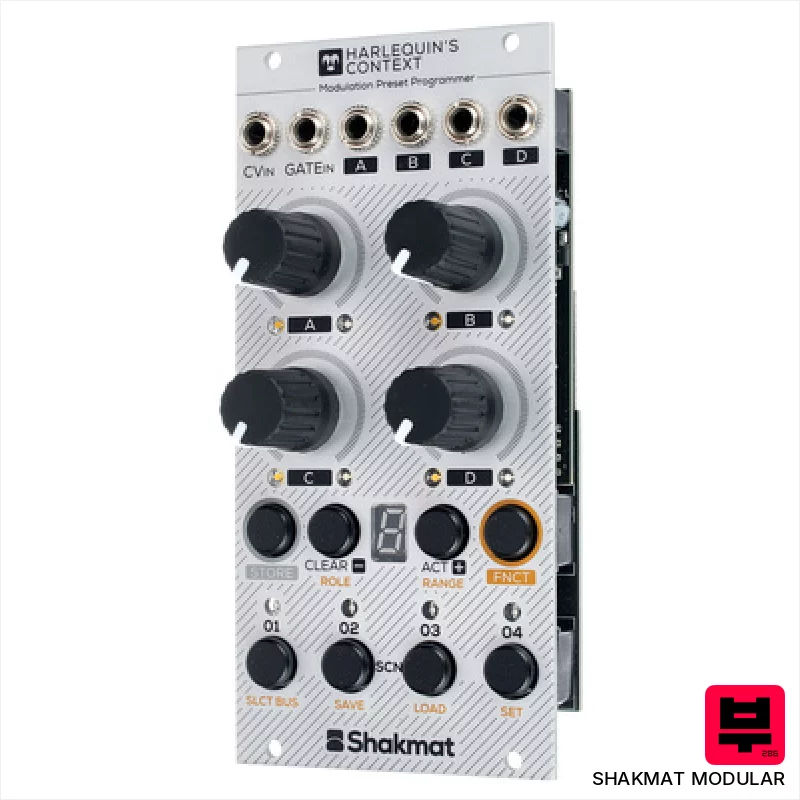
Shakmat Modular Harlequin´s Context
- • Excellent modulation sequencing with 4 independent channels.
- • Scenes offer fantastic recall and performance flexibility.
- • Select Bus compatibility simplifies complex modulation routing.
- • Compact 12HP footprint maximizes rack space efficiency.
- • Limited preset storage (16 scenes) may restrict extensive modulation setups.
- • Parameter control knobs are relatively small, potentially fiddly.
- • The learning curve for advanced modulation routing can be steep.
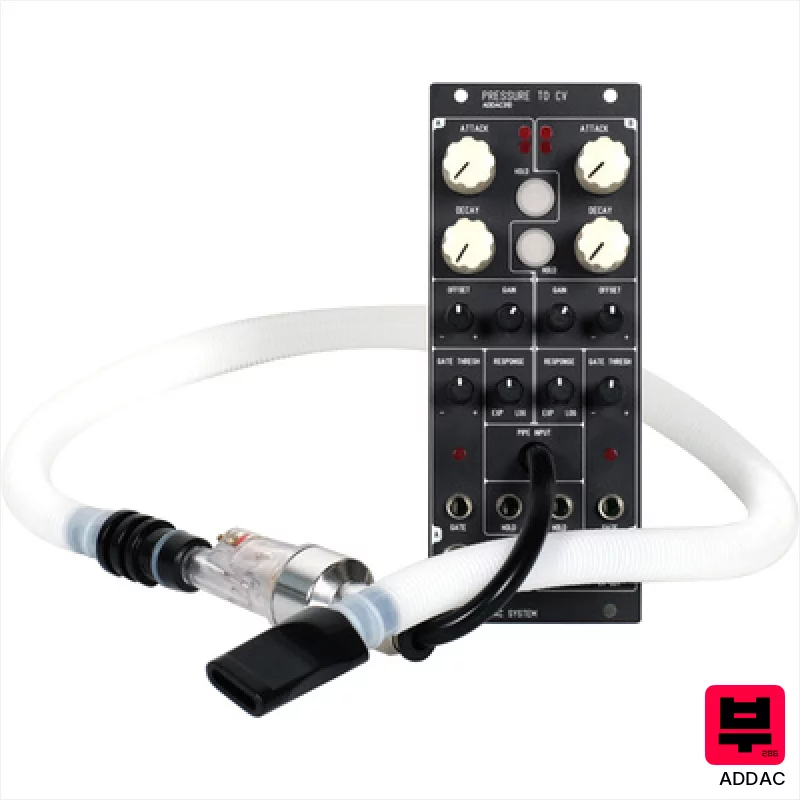
ADDAC 310 Pressure to CV
- • Dual channels offer flexible modulation routing options.
- • The included melodica hose provides immediate expressive control.
- • Adjustable attack/decay shaping allows for nuanced modulation curves.
- • Solid build quality; feels robust for its compact size and HP.
- • 10HP footprint might be restrictive in smaller modular setups.
- • The response curve control, while useful, lacks finer resolution adjustment.
- • Limited to breath control; no other sensor input options.

Doepfer A-174-4 3D Joystick
- • Spring-return mechanism offers tactile, responsive control.
- • Z-axis rotation adds unique modulation possibilities.
- • Four quadrants provide versatile mapping options for complex modulation.
- • Compact 12HP footprint maximizes space in tight Eurorack setups.
- • Limited travel on axes can feel restrictive for some users.
- • The spring return, while beneficial, can be slightly noisy.
- • Steeper learning curve compared to simpler controllers.

Doepfer A-174-4 3D Joystick VE
- • Robust spring-return mechanism ensures precise, repeatable movements
- • Vintage Edition black panel offers a classic, understated aesthetic
- • Four quadrant outputs with adjustable overlap provide complex modulation
- • Dedicated offset controls allow for fine-tuning of each axis's range
- • Limited to +/- 5V CV output range; may require scaling for some modules
- • The joystick itself can feel a bit stiff compared to more modern designs
- • 12HP footprint can be restrictive in densely populated modular systems
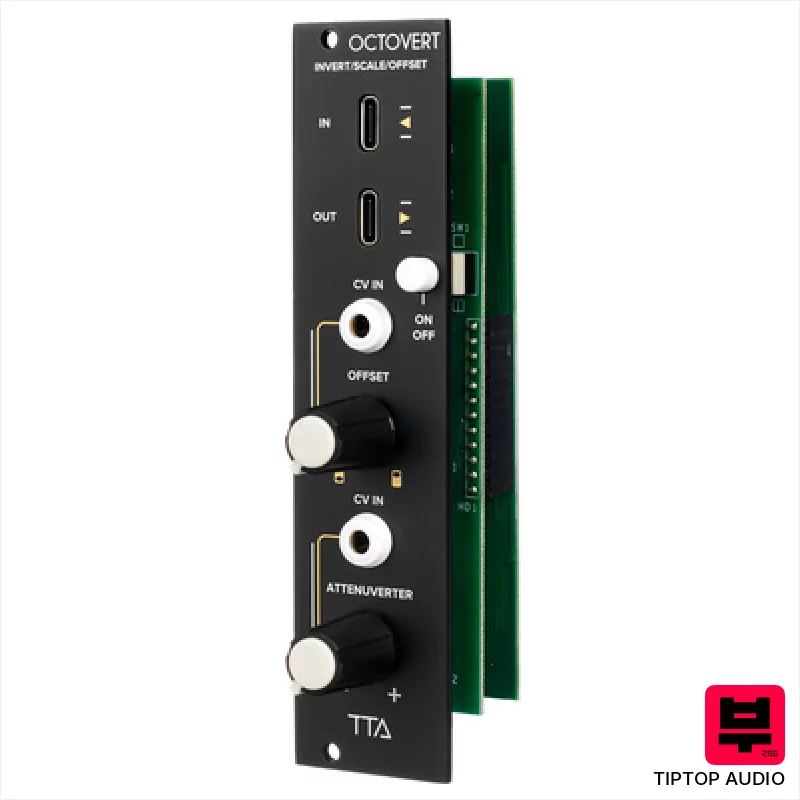
Tiptop Audio Octovert
- • Excellent polyphonic scaling for complex melodic sequences.
- • Polytip system simplifies patching multiple CV signals.
- • Bipolar attenuators offer nuanced control over pitch and offset.
- • Compact 6HP footprint maximizes space in tight Eurorack cases.
- • Polytip cables are proprietary, limiting patching flexibility.
- • Limited modulation destinations compared to larger processors.
- • Can be overwhelming for beginners unfamiliar with modular concepts.
How to Choose the Best Controller Modules
Resolution & Smoothness
Cheap potentiometers feel scratchy and jumpy. You want encoders with at least 14-bit resolution for subtle automation curves, and a rotational feel that doesn't fight you. That's the difference between a slowly evolving pad and a digital stutter.
Mapping Flexibility
Can you easily re-assign controls to different CCs, or even map multiple CCs to a single knob? Being locked into fixed assignments is a creativity killer, especially when you're crafting complex automation lanes.
Aftertouch/Velocity Sensitivity
True automation isn't just about position; it's about dynamics. Modules with adjustable aftertouch or velocity sensitivity allow you to inject expressive nuances into your automation sequences - a subtle swell, a filter sweep tied to your playing intensity.
Polyphonic Control
If you're automating multiple parameters across a multi-voice synth, a module that can send independent CC messages for each voice is crucial. Otherwise, you're stuck with a single, monotonous automation curve applied to everything.
Build Quality & Feel
Let's be honest, a flimsy module feels awful and will fail at a crucial gig. Solid construction, smooth knobs with good tension, and a reliable power connection are non-negotiable - especially when you're relying on it for critical performance.
Buying Guide
Don't fall for the 'more knobs = better' trap. A few well-designed, versatile modules are far more valuable than a wall of cheap, poorly implemented controls. Look for modules with a good balance of resolution, mapping options, and build quality. The sweet spot often lies in the $150-$350 range - below that, you'll likely be sacrificing something important, and above it, you're paying for features you might not need. Consider the power draw, too; Eurorack modules can suck down a surprising amount of current.
Our Methodology
We're not relying on spec sheets here. We've spent countless hours patching these modules into various synth setups - Eurorack, hardware effects, even Ableton - to see how they actually perform. Our evaluations focus on feel, responsiveness, and how well they integrate into a real-world workflow, both on stage and in the studio. It's about the experience, not the numbers.

