
Best Clock-, Trigger-Modules for Timing Control 2026
So, you're diving deeper into modular and realizing timing is everything? It's not just about a click track; it's about creating complex rhythms, polyrhythms, and sequences that breathe. A solid clock and trigger module is the backbone of that, and trust me, the cheap ones will hold you back - especially when you're trying to nail a groove live. Let's break down what to look for to get your timing locked and loaded.
Last updated: July 22, 2026 • Next update: July 29, 2026

Make Noise TEMPI
- • Six independent channels offer immense rhythmic complexity and flexibility.
- • Select Bus integration simplifies complex tempo manipulations and sequencing.
- • Tempo retention ensures smooth transitions and avoids frustrating resets.
- • Compact 10HP footprint maximizes space in dense modular racks.
- • The interface, while powerful, can be initially daunting for beginners.
- • Power draw, while not excessive, needs consideration in power-constrained systems.
- • Limited onboard controls necessitate heavy patching for intricate patterns.
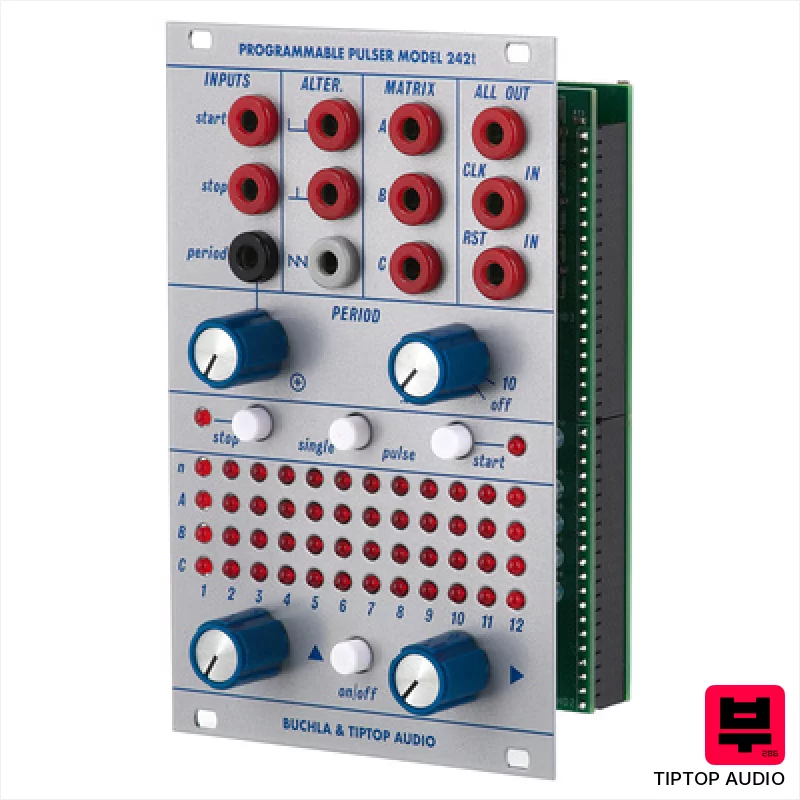
Tiptop Audio Model 242t
- • Excellent pattern creation with its 1-12 step sequencer.
- • Robust aluminum enclosure feels incredibly solid and durable.
- • Flexible CV attenuation offers precise tempo manipulation.
- • Matrix outputs allow for complex routing and modulation.
- • Limited step count compared to more expansive trigger modules.
- • Can feel a bit cramped for complex pattern programming.
- • 16HP can be restrictive in smaller Eurorack cases.
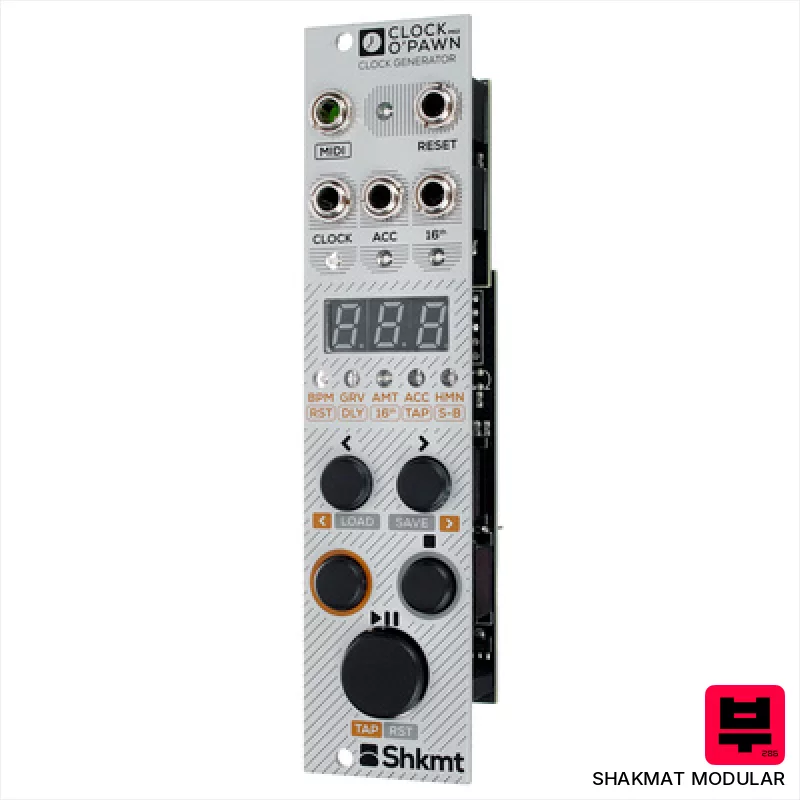
Shakmat Modular Clock O'Pawn MK2
- • Exceptional rhythmic complexity via 27 accent patterns.
- • Select bus compatibility offers seamless integration with other modules.
- • Compact 6HP footprint maximizes valuable rack space.
- • Intuitive transport section with tap tempo and start/pause functionality.
- • Limited MIDI implementation lacks advanced parameter control.
- • Accent patterns, while diverse, might feel restrictive for some workflows.
- • 27mm depth may pose challenges in shallow Eurorack cases.
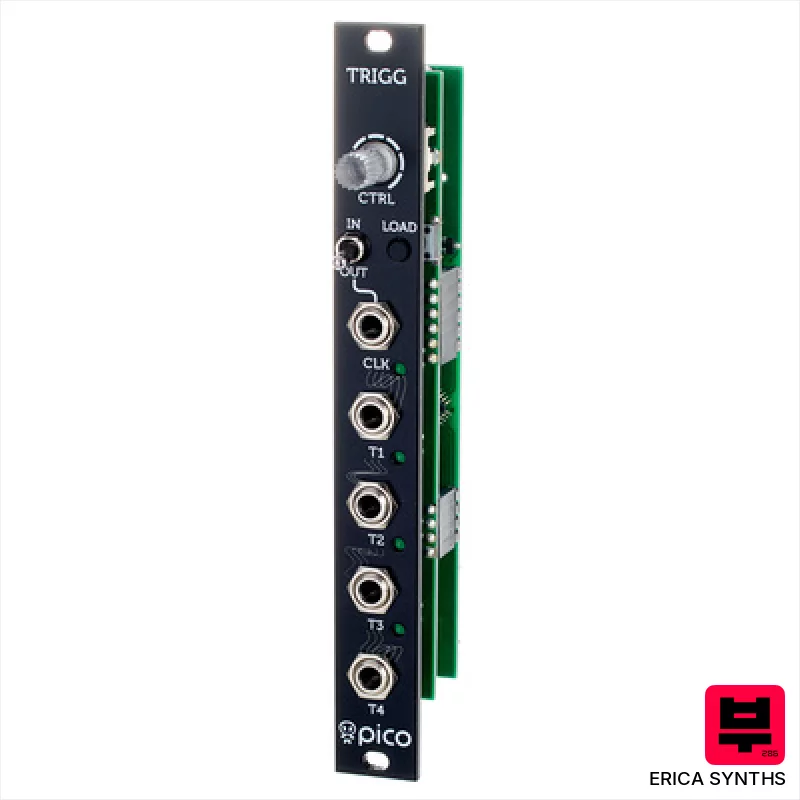
Erica Synths Pico Trigger
- • Incredibly compact form factor for dense modular setups
- • Shuffle function adds genuine rhythmic complexity and feel
- • Pattern loading via clock input opens creative workflow possibilities
- • Four discrete outputs allow for intricate polyrhythmic routing
- • Limited pattern resolution compared to higher-end pattern generators
- • Small controls can be fiddly for those with larger fingers
- • Power draw, while reasonable, can add up in large systems
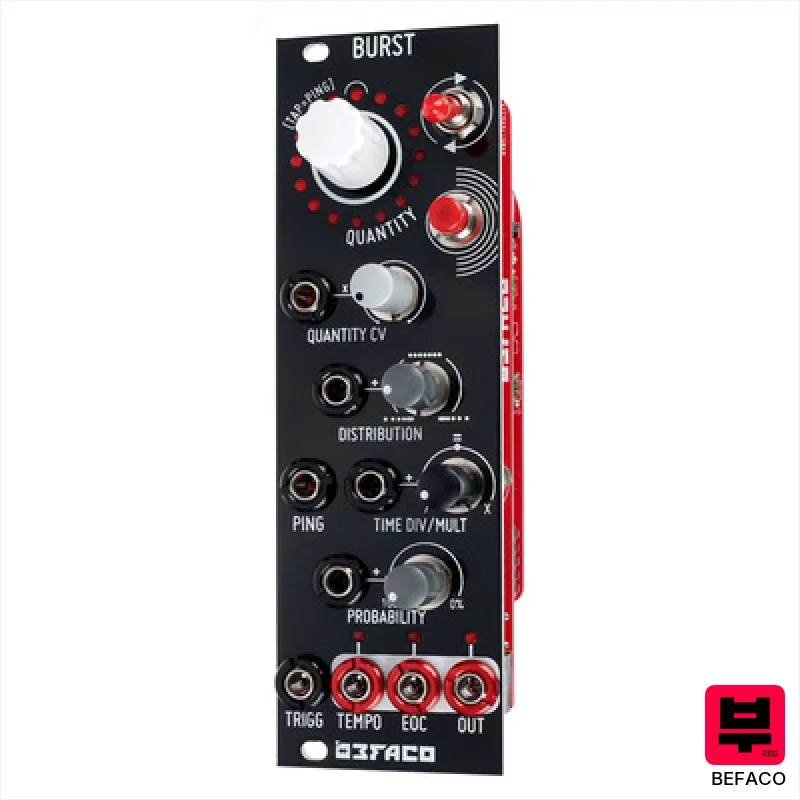
Befaco Burst
- • Highly flexible pulse generation for complex rhythms
- • CV control offers dynamic sequencing possibilities
- • Compact 8HP footprint saves valuable rack space
- • Burst loop creates evolving, hypnotic patterns
- • Limited number of pulses (max 64) restricts complexity
- • No built-in clock source; requires external signal
- • Probability modulation can be unpredictable without careful calibration
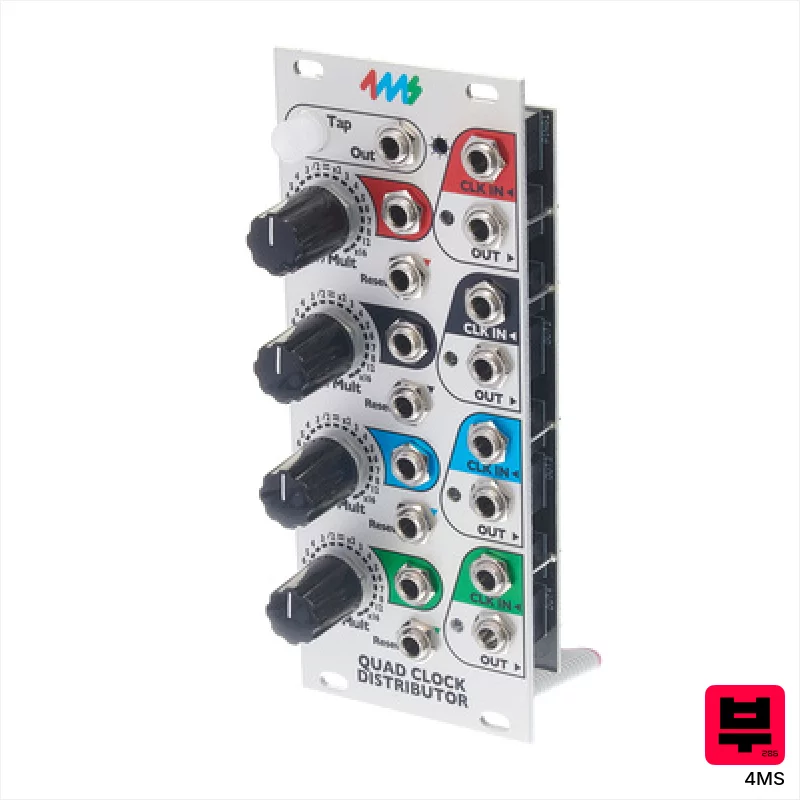
4ms Quad Clock Distributor
- • Excellent clock stability; 4ms's reputation is deserved.
- • Flexible CV control offers nuanced rhythmic manipulation.
- • Normalisation simplifies sequencing and cascading clock signals.
- • Compact 10HP footprint maximizes modular space efficiency.
- • Limited input range; extreme CV values can cause erratic behavior.
- • Lack of individual attenuators can complicate precise division/multiplication.
- • Power draw is noticeable, especially in power-constrained systems.

Doepfer A-160-5 Vintage Edition
- • Robust black front panel exudes classic Doepfer quality
- • Simple, reliable design ensures consistent clock multiplication
- • Compact 4HP footprint maximizes modular space efficiency
- • Vintage Edition offers a slightly warmer, more 'analog' feel
- • Limited to multiplication; lacks division capabilities
- • Power draw, while manageable, adds to overall system consumption
- • Vintage Edition’s black panel can show fingerprints easily
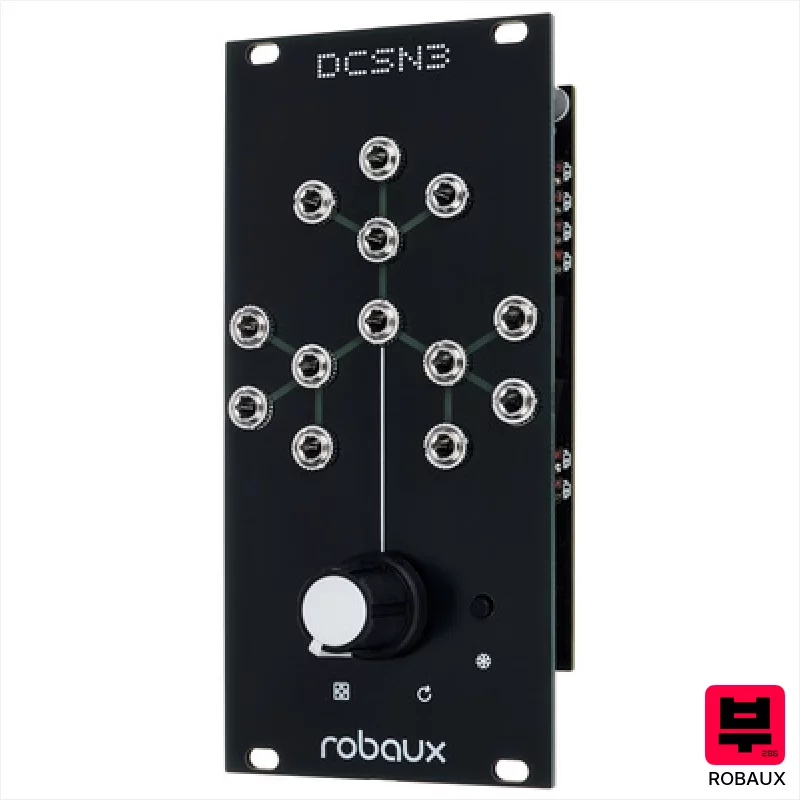
Robaux DCSN3
- • Excellent random sequence generation for evolving rhythms.
- • Knob-based control offers immediate, tactile pattern shaping.
- • Compact 12HP footprint maximizes space in dense racks.
- • Three output groups provide considerable signal routing flexibility.
- • Limited step resolution compared to more complex sequencers.
- • Mono output mode can feel restrictive for polyphonic sequences.
- • The initial learning curve is steeper than simpler clock dividers.
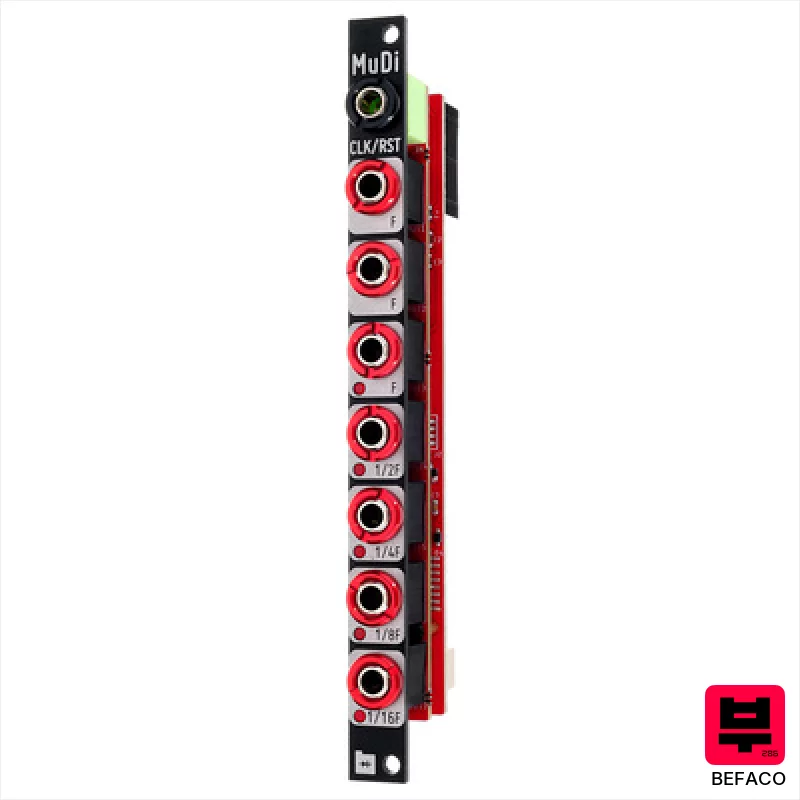
Befaco MuDi
- • Tiny footprint for maximum clock flexibility in tight Eurorack setups.
- • Reliable clock distribution without glitches or signal degradation.
- • Simple, intuitive design – immediately useful for any sequencer setup.
- • Solid build quality typical of Befaco; feels robust and well-assembled.
- • Limited to four divider ratios; more complex divisions require additional modules.
- • The splitter cable is a nice touch, but a bit flimsy for heavy use.
- • Lack of a tap tempo function limits real-time clock adjustments.
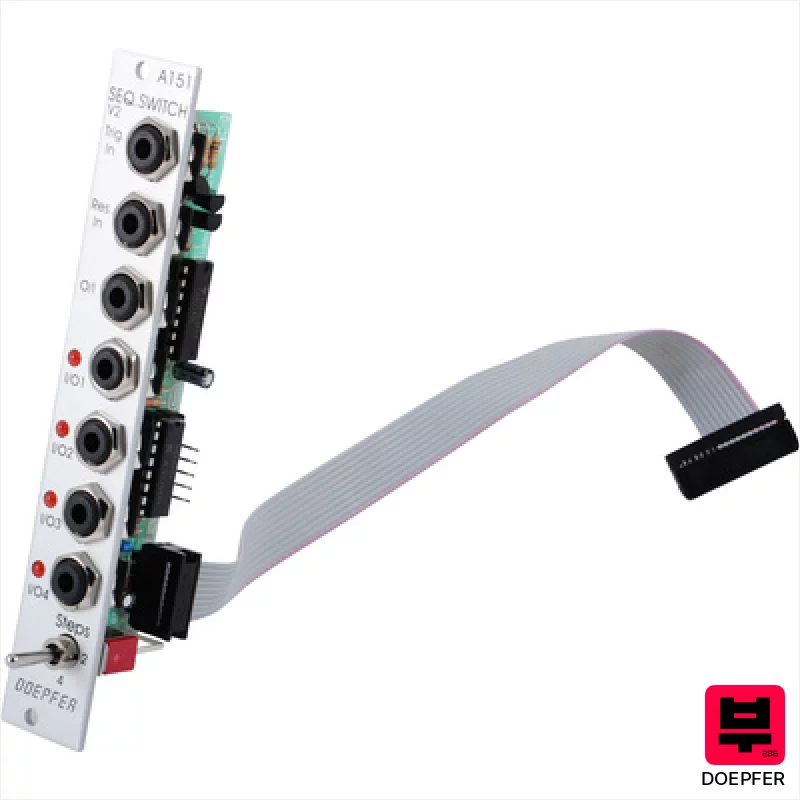
Doepfer A-151
- • Reliable sequencing for four voices, incredibly compact for its function
- • Simple, robust construction; classic Doepfer quality
- • Provides clean, predictable step sequencing; excellent for rhythmic foundations
- • Versatile for both melodic and percussive applications with careful patching
- • Limited resolution compared to more modern sequential modules
- • Can be a bit noisy depending on the surrounding modules
- • The rotary switch feels a little plasticky for a Doepfer module
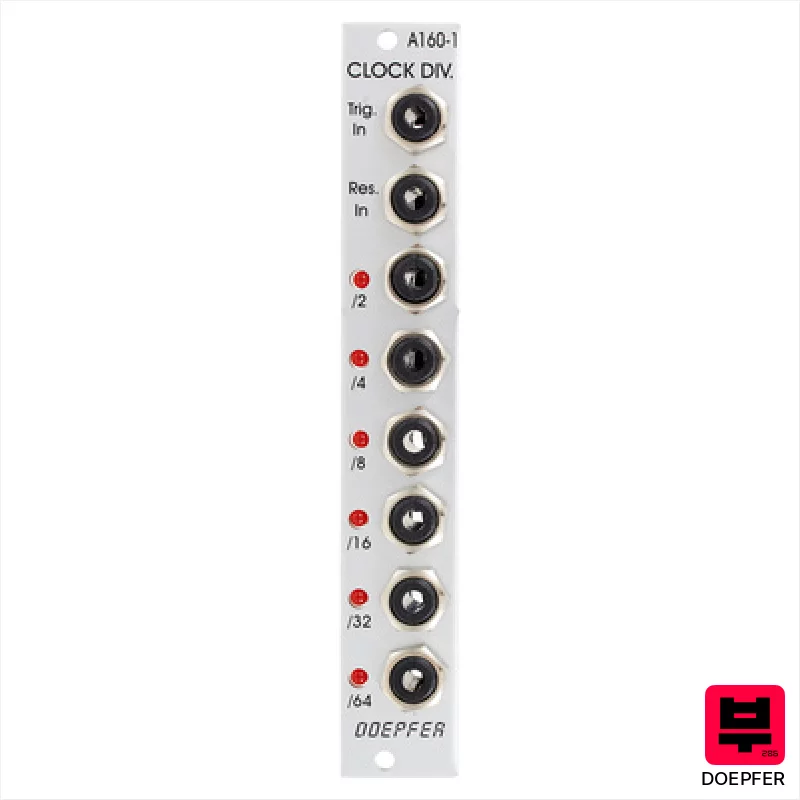
Doepfer A-160 Clock Divider
- • Rock-solid Doepfer build quality ensures long-term reliability
- • Compact 4HP footprint saves valuable rack space
- • Wide division range (1/2 to 1/64) offers rhythmic flexibility
- • Clear LED indicators simplify visual clock tracking
- • Limited number of outputs compared to larger divider modules
- • No tap tempo or other advanced features – purely a divider
- • Power draw, while modest, can add up in a large modular system

ADDAC 217 Quad Gate to Trigger
- • Four independent channels offer significant routing flexibility.
- • 1ms trigger conversion provides precise envelope shaping.
- • Compact 3HP footprint maximizes valuable rack space.
- • Bypass switches per channel allow for easy signal comparison.
- • 3HP width can feel cramped for complex patching scenarios.
- • Limited functionality beyond gate-to-trigger conversion.
- • Power draw, while modest, adds up in a densely populated rack.
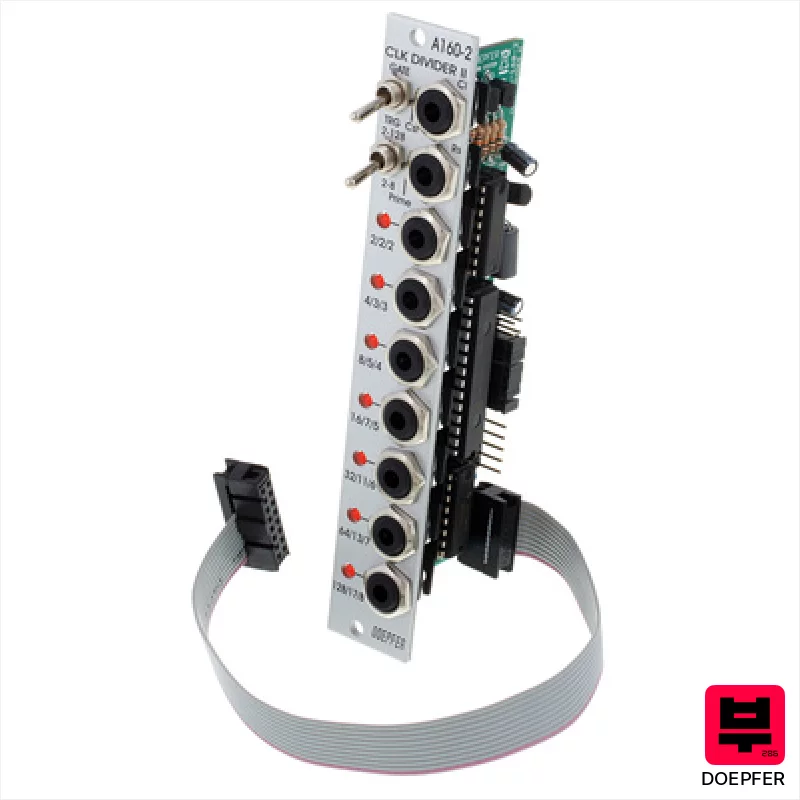
Doepfer A-160-2 Clock Divider II
- • Rock-solid Doepfer build quality; feels immediately durable
- • Clean, precise divisions with minimal jitter or rounding errors
- • Compact 4HP footprint maximizes precious modular space
- • Versatile gate/trigger/clock handling expands sequencing possibilities
- • Limited division ratios compared to more complex dividers
- • Analog design means slightly less absolute timing accuracy
- • Can introduce subtle rounding errors at very low frequencies
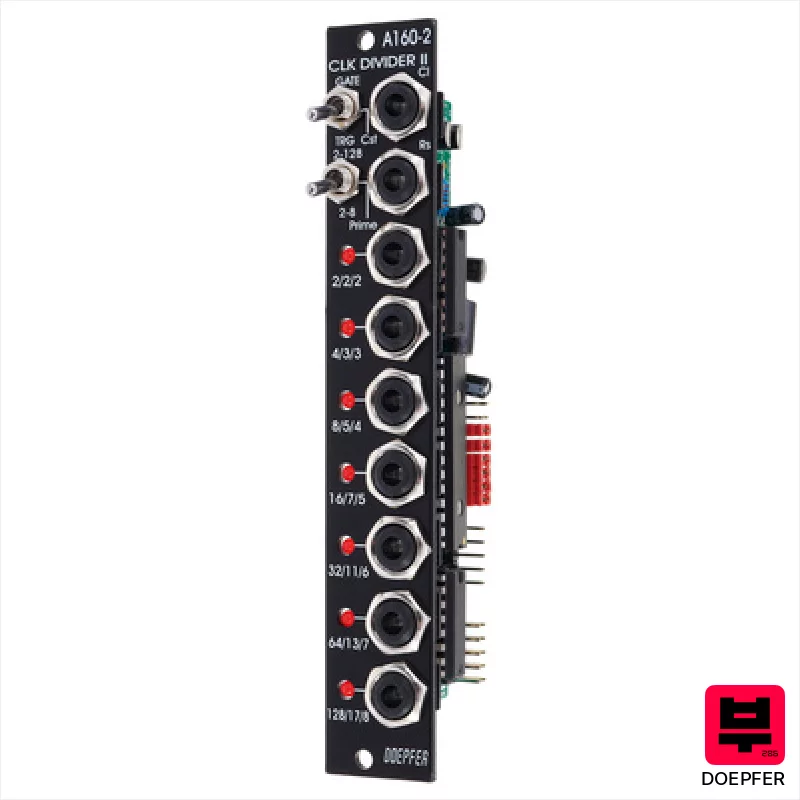
Doepfer A-160-2 Clock Divider II VE
- • Rock-solid Doepfer build quality; feels exceptionally durable.
- • Versatile division ratios for complex rhythmic patterns.
- • Compact 4HP footprint maximizes patch flexibility.
- • Clean, precise clock signals with minimal jitter.
- • Limited number of division options compared to more complex modules.
- • Black front panel can be difficult to read in low-light conditions.
- • Power draw, while reasonable, can add up in larger systems.
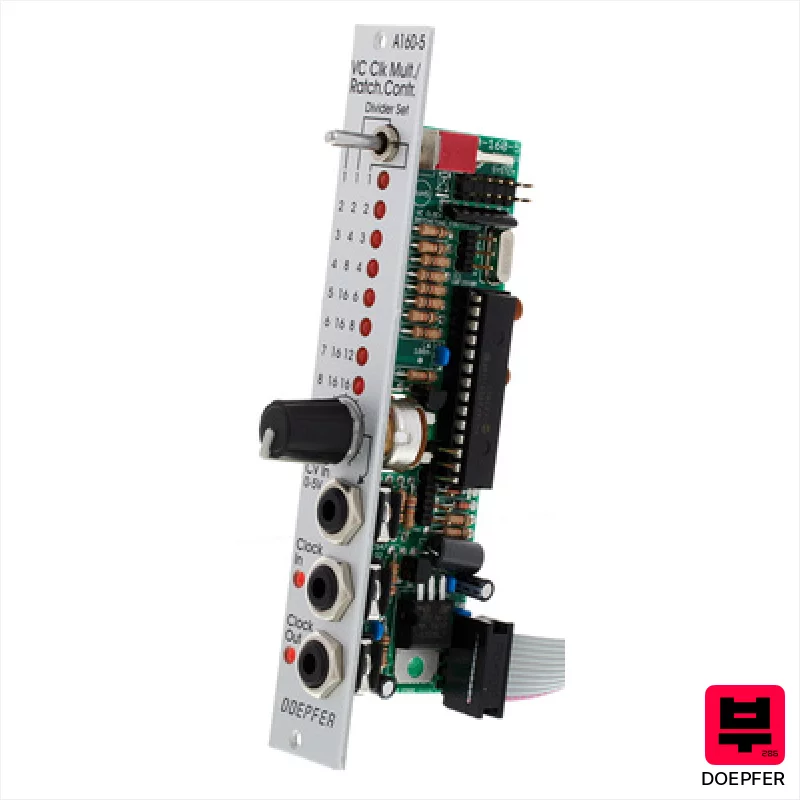
Doepfer A-160-5 VC Clock Multiplier
- • Rock-solid Doepfer build quality; feels exceptionally durable
- • Clean, predictable clock multiplication with minimal drift
- • Compact 4HP footprint ideal for dense modular setups
- • VC control provides nuanced rhythmic complexity and modulation
- • Limited output flexibility compared to more modern multipliers
- • Power draw is relatively high for a single module
- • Simple interface lacks advanced features like phase inversion
How to Choose the Best Clock-, Trigger-Modules
Clock Stability
This is paramount. A jittery clock will throw off everything. Look for modules with clear specs on clock accuracy and drift, especially if you're syncing to other gear or recording. A cheap CMOS clock might be okay for bedroom noodling, but a dedicated crystal oscillator is a must for serious work.
Trigger Resolution & Pulse Width
Cheap trigger modules often have clunky, quantized triggers. You need something with enough resolution to create nuanced rhythms - think of subtle ghost notes or complex polyrhythms. Pulse width modulation (PWM) on triggers lets you shape the attack and duration of events, adding character and groove.
Gate Length Flexibility
A fixed gate length is limiting. You want a module that lets you dial in gate lengths precisely, in milliseconds if possible. This is essential for creating evolving sequences and dynamic interactions with other modules - especially when you're trying to get that punchy, evolving percussive feel.
Sync Options (Analog/MIDI/DIN)
Most modern modules offer a mix, but think about your existing setup. DIN sync is the gold standard for Eurorack, but MIDI offers broader compatibility. Analog sync is useful for quirky, vintage-style timing relationships.
Modulation Input for Rate/Phase
Being able to modulate the clock rate or phase is what separates a simple sequencer from a truly generative system. Even a subtle LFO on the clock rate can create hypnotic, evolving rhythms that are way more interesting than a straight-up beat.
Buying Guide
Don't fall for the 'more features' trap. A simple, rock-solid clock is better than a feature-bloated mess that drifts after an hour. For gigging, reliability is king; a module that can take a beating and still sync your drums is worth its weight in gold. You'll often find that the slightly more expensive modules use better components and have more robust build quality - and that translates to fewer headaches down the line.
Our Methodology
We're not looking at spec sheets here. We've spent countless hours patching these modules into various systems - from simple drum machines to sprawling generative environments - and comparing them side-by-side. Our evaluations are based on real-world performance: how they handle sync from external sources, their stability under pressure, and how easily they integrate into a working setup, whether it's a studio recording or a sweaty gig.

