
Best Reverend Baritone Guitars 2026
So, you're chasing that low-end rumble, huh? Baritone guitars aren't a novelty anymore; they're a serious tool for adding depth and weight to your sound. Reverend has quietly become a go-to for baritone players, and for good reason - they nail that blend of vintage vibe and modern playability. Let's break down what makes their baritone offerings stand out from the crowd and whether one's right for your rig.
Last updated: April 11, 2026

Reverend Descent RA Baritone MBK
- • Korina body provides excellent resonance and sustain.
- • Roasted maple neck offers stability and a smooth, fast feel.
- • Railhammer Chisel pickups deliver thick, powerful, and articulate tones.
- • Reverend Pin-Lock tuners ensure rock-solid tuning stability.
- • Korina body can make it slightly heavier than some guitars.
- • The bass contour control might be a bit too subtle for some users.
- • Limited pickup options restrict versatility for extremely diverse genres.
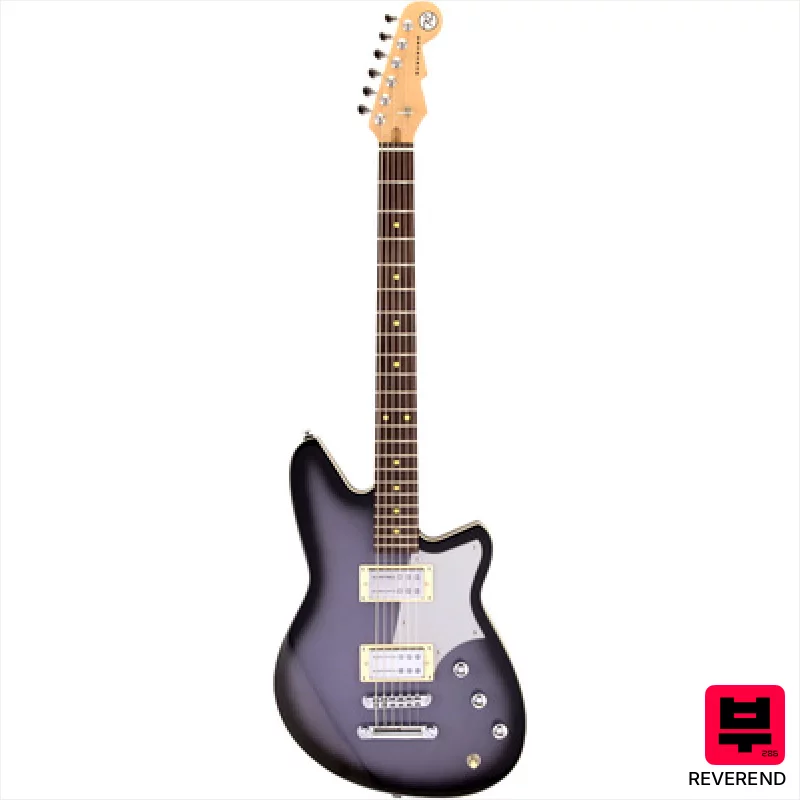
Reverend Descent RA Baritone PB
- • Korina body delivers warm resonance and excellent sustain.
- • Roasted maple neck provides exceptional stability and smooth playability.
- • Railhammer Chisel humbuckers offer thick, articulate, high-output tones.
- • Pin-Lock tuners ensure rock-solid tuning stability, even with a baritone scale.
- • Korina body may make it slightly heavier than some players prefer.
- • Treble bleed circuit, while good, might not satisfy tone purists seeking absolute clarity.
- • Limited pickup options restrict versatility for more extreme genre exploration.
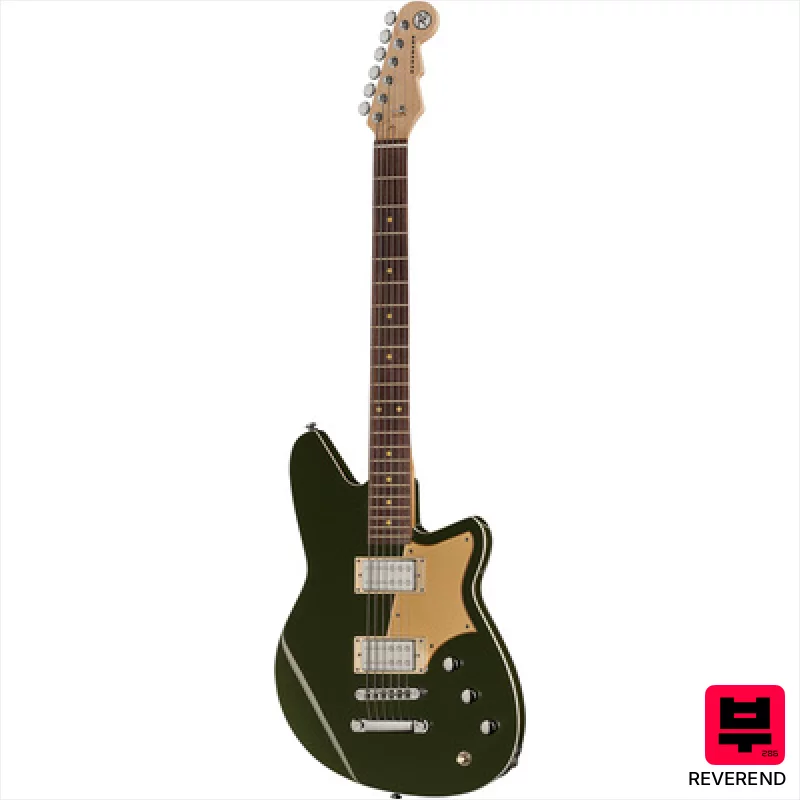
Reverend Descent RA Baritone AG
- • Korina body delivers excellent resonance and sustain.
- • Roasted maple neck offers stability and a smooth, fast feel.
- • Railhammer Chisel humbuckers provide thick, powerful, modern tones.
- • Pin-Lock tuners ensure rock-solid tuning stability, even with baritone strings.
- • Korina body can make it feel a bit heavier than some guitars.
- • Army Green finish might not appeal to everyone's aesthetic.
- • Baritone scale limits versatility for standard tuning applications.
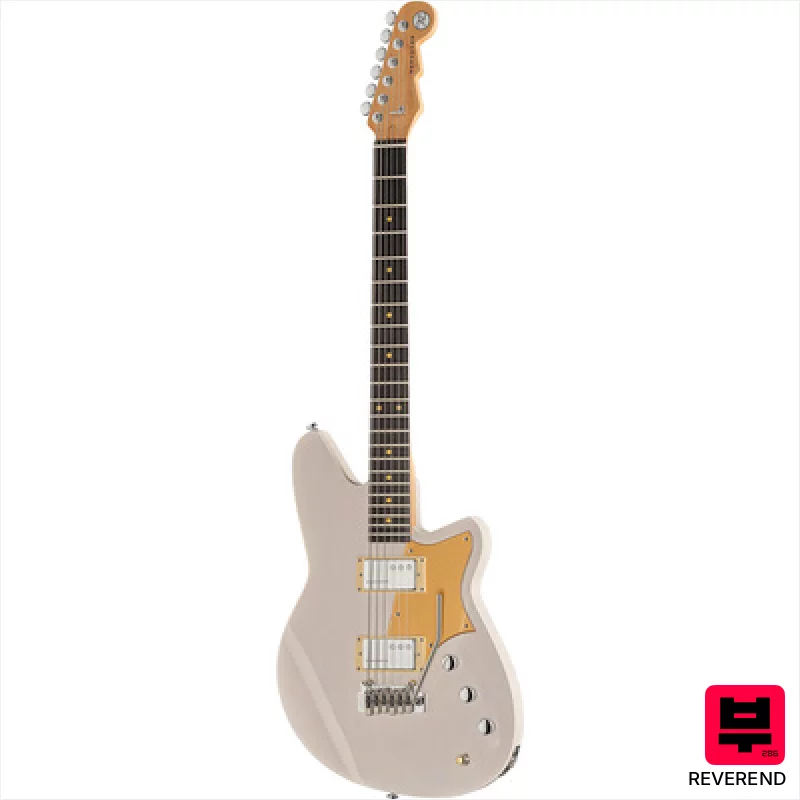
Reverend Descent W Baritone TWH
- • Korina body delivers surprising resonance and sustain.
- • Roasted maple neck offers exceptional stability and feel.
- • Nuevo 90/Cleancut combo provides versatile, articulate tones.
- • Wilkinson tremolo is smooth, reliable, and stays in tune well.
- • Korina body can make it a bit heavier than some players prefer.
- • Rosewood fretboard may require more frequent oiling for optimal feel.
- • Bass Contour control can be subtle and require tweaking.
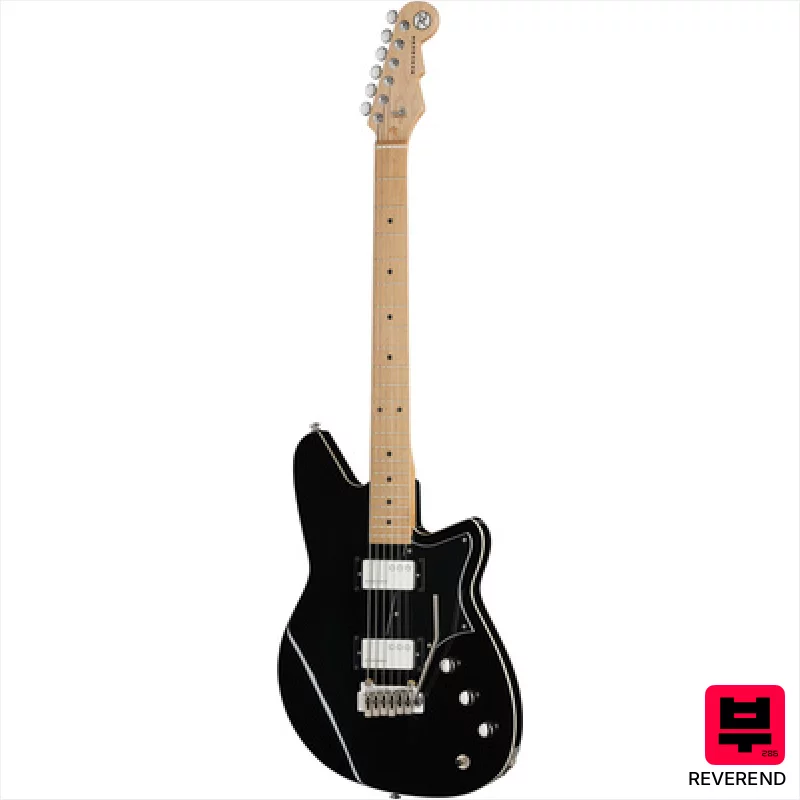
Reverend Descent W Baritone MBK
- • Korina body provides a warm, resonant foundation with surprising sustain.
- • Roasted maple neck and fingerboard offer stability and a smooth, fast playing experience.
- • Nuevo 90/Cleancut pickup combo delivers a versatile range, from clean to chunky.
- • Wilkinson tremolo provides reliable vibrato without excessive tuning instability.
- • Korina body, while resonant, can contribute to a moderately heavy feel.
- • Treble bleed circuit, while present, might not offer extensive high-end preservation.
- • Baritone scale limits versatility; not ideal for all genres or playing styles.
How to Choose the Best Baritone Guitars
Heritage & Design
Reverend's roots are in the classic offset designs of the 60s and 70s, but they've injected their own modern sensibilities. That translates to a unique aesthetic - not another Strat or Les Paul clone - and a surprisingly comfortable feel, often with thinner, more player-friendly neck profiles than you might expect.
Tone Characteristics
Reverend's pickups are a big part of the story. They're not chasing any one specific sound; instead, you get a versatile palette ranging from warm, bluesy tones to searing, high-gain leads. The baritone scale really emphasizes the lower mids and gives those chords a real thump without getting muddy - crucial for cutting through a dense mix.
Build Quality & Hardware
The build quality is consistently solid. Reverend uses real maple for the necks, generally with a satin finish that feels fast and smooth. The tuners are usually decent quality, and the bridges are well-designed for sustain and intonation, though you might want to upgrade to locking tuners if you're a heavy tremolo user.
Neck Profiles
Reverend offers a variety of neck profiles, from the slim '60s to the more substantial '50s. This is a huge factor in playability, especially on a longer scale like baritone. Finding one that fits your hand is key to enjoying the guitar's potential - a thick neck on a baritone can be a real slog.
Scale Length & Intonation
The 27" scale is the heart of the baritone experience. It drops the tuning significantly (often down to B or A) while maintaining string tension, resulting in a unique low-end response. Getting the intonation dialed in correctly is vital on a baritone - a slight error will be much more noticeable than on a standard-scale guitar.
Buying Guide
Don't chase the 'cool' factor; focus on feel and tone. Reverend's baritones aren't cheap, but you're paying for thoughtful design and solid construction. The neck profile is the most critical thing to try before you buy - a thick neck will feel unwieldy. Consider your amp too - a clean, powerful amp will really let the baritone's low-end shine.
How This List Is Built
We don't play these instruments — we're a catalog, not a review desk, and we'd rather say so than pretend otherwise. This page ranks 5 baritone guitars from the Thomann catalogue, which is the largest single source of specification data in this category.
Position is computed, not curated. Four signals, in order of weight: how completely the manufacturer documents the instrument (number of published specifications), where it sits in the price range, how specific the model designation is — which filters out generic accessories — and whether a product image exists. The same inputs always produce the same order, so nothing here is shuffled to look fresh.
What this list is good for: narrowing a category down to a shortlist by spec and budget. What it isn't: a substitute for hearing an instrument. Before you buy, read hands-on reviews and, where you can, play it. Full methodology.

