
Best Mackie Band PA Sets 2026
So, you're looking at a Mackie band PA? Smart move. They've been a staple for gigging musicians for decades, offering a solid blend of power and affordability. But not all Mackie band PA sets are created equal - some are better suited for smoky bar gigs, others for rehearsals, and still others for recording. Let's break down what makes Mackie's offerings tick and find the right setup for your needs.
Last updated: April 11, 2026
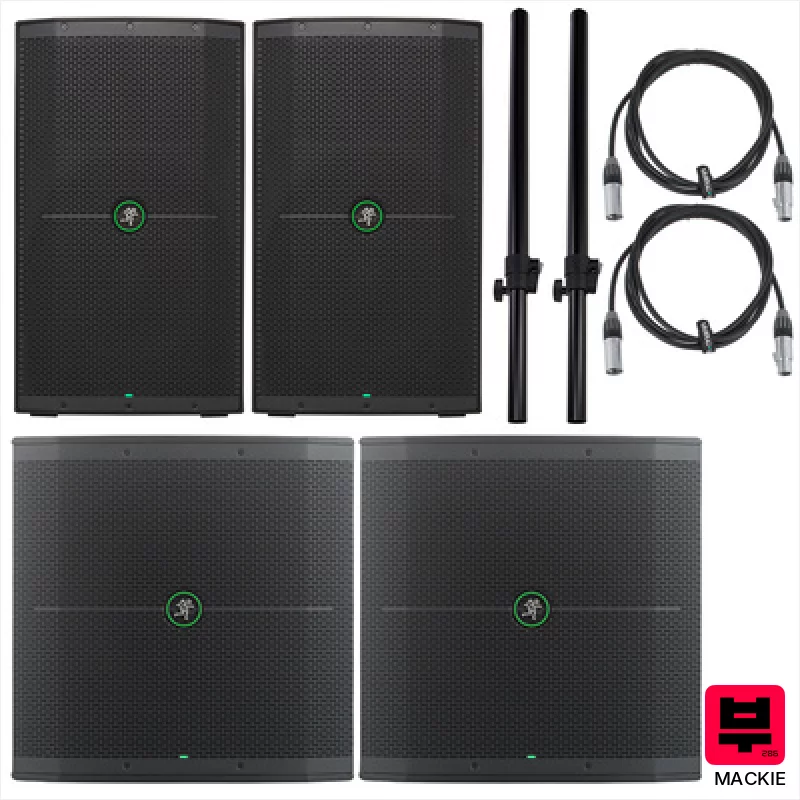
Mackie Thump 212/115s Power Bundle
- • Robust Class-D amplification delivers substantial headroom and clean power.
- • Thump 115s bandpass design emphasizes powerful low-end projection.
- • Versatile Voicing Modes cater to diverse musical genres and room acoustics.
- • Road-ready construction with durable enclosure for gigging musicians.
- • The 115s’ bandpass design can be slightly boomy in smaller, untreated rooms.
- • Weight is significant; transport requires careful planning and assistance.
- • High-frequency response on the 212s might lack refinement for critical listening.

Mackie Thump 210/115s Power Bundle
- • Robust Class-D amplification delivers significant headroom and clean power.
- • 131dB max SPL on the 115s handles large venues easily.
- • Voicing modes offer tailored sound shaping for various musical styles.
- • Road-ready construction inspires confidence for gigging musicians.
- • The 115s' bass response, while decent, lacks true low-end extension.
- • Weight makes transport a challenge for solo performers or smaller rigs.
- • While versatile, lacks advanced DSP features found in higher-end systems.
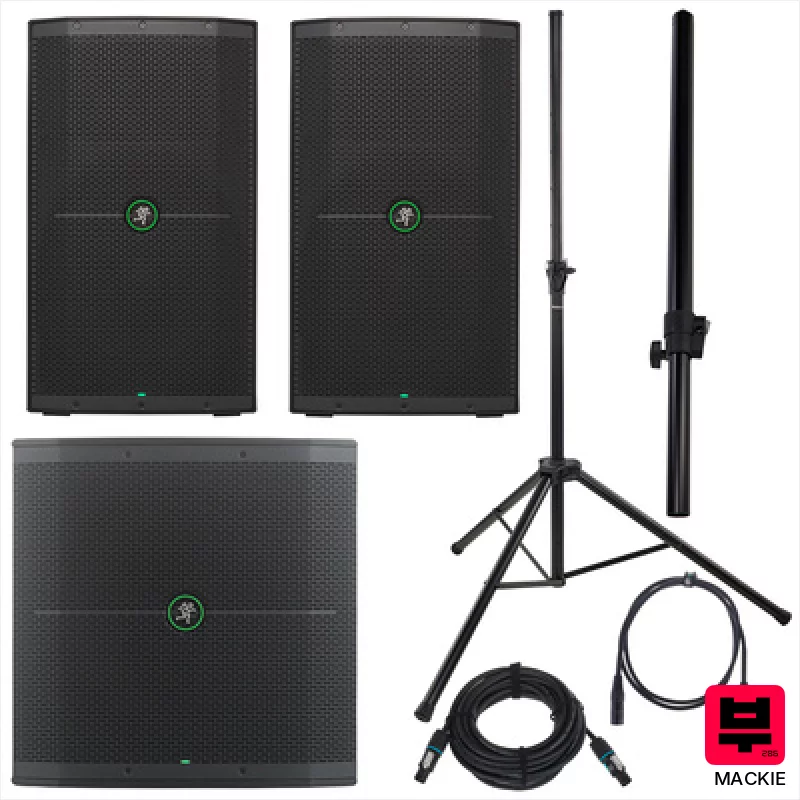
Mackie Thump 212/115s Basis Bundle
- • Robust Class-D amplification delivers serious headroom and clean power.
- • The bandpass design in the 115s provides impactful low-end reinforcement.
- • Mackie's Voicing Modes offer tailored sound profiles for different music styles.
- • Road-ready construction inspires confidence for gigging musicians and bands.
- • The 115s are quite heavy, making transport a challenge for solo performers.
- • While versatile, the Thump series lacks the finesse for critical studio monitoring.
- • The onboard EQ is limited, demanding external processing for nuanced sound shaping.
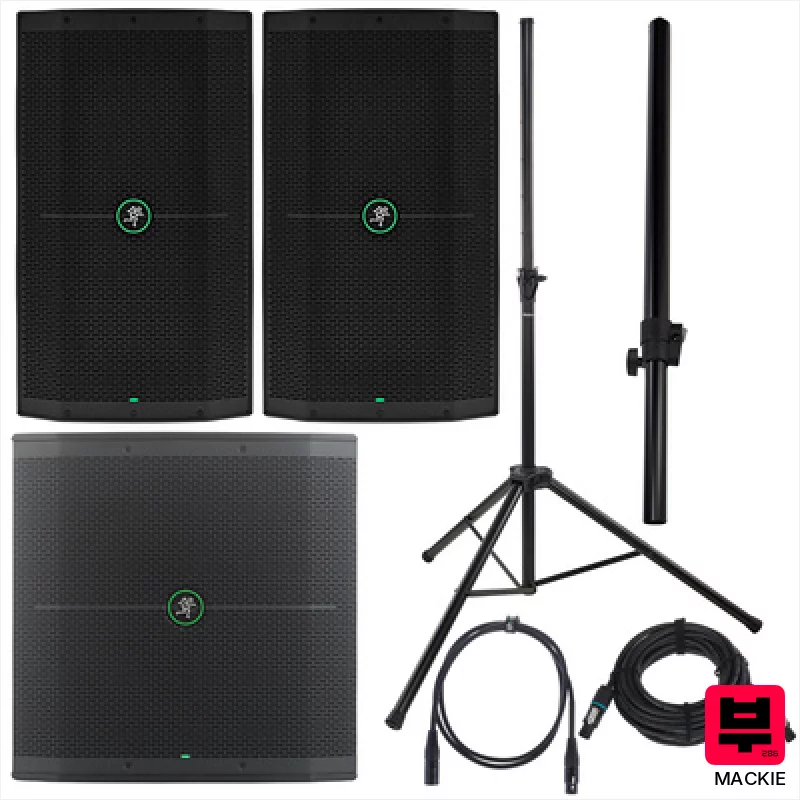
Mackie Thump 210/115s Basis Bundle
- • Class-D amplification delivers serious power and headroom for loud, clean sound.
- • Road-ready construction with robust enclosures handles the rigors of regular gigging.
- • Versatile Voicing Modes allow tailoring the sound for various music genres and room acoustics.
- • The 115s subwoofer provides a surprisingly deep and impactful low-end response.
- • The 210 speakers, while capable, might lack extreme high-frequency detail for some critical listening.
- • Significant weight makes transport and setup a two-person job, especially for frequent travel.
- • While versatile, the built-in processing isn’t as flexible as dedicated mixing consoles or external effects.
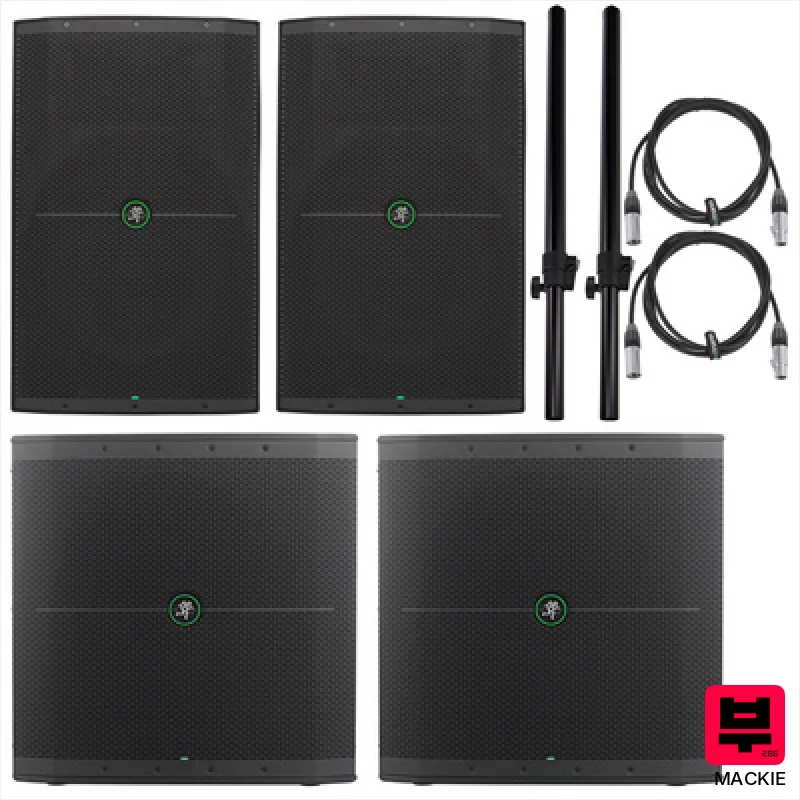
Mackie Thump 215/118s Power Bundle
- • Road-ready construction handles gigging demands reliably.
- • Class-D amplification delivers impressive power and efficiency.
- • Variable crossover provides flexibility for subwoofer integration.
- • 118s sub offers a surprisingly tight and defined low-end response.
- • 129dB max level on the 215s might be limiting for very loud gigs.
- • Weight makes transport a challenge for solo performers or smaller vehicles.
- • Limited EQ options compared to more sophisticated PA systems.
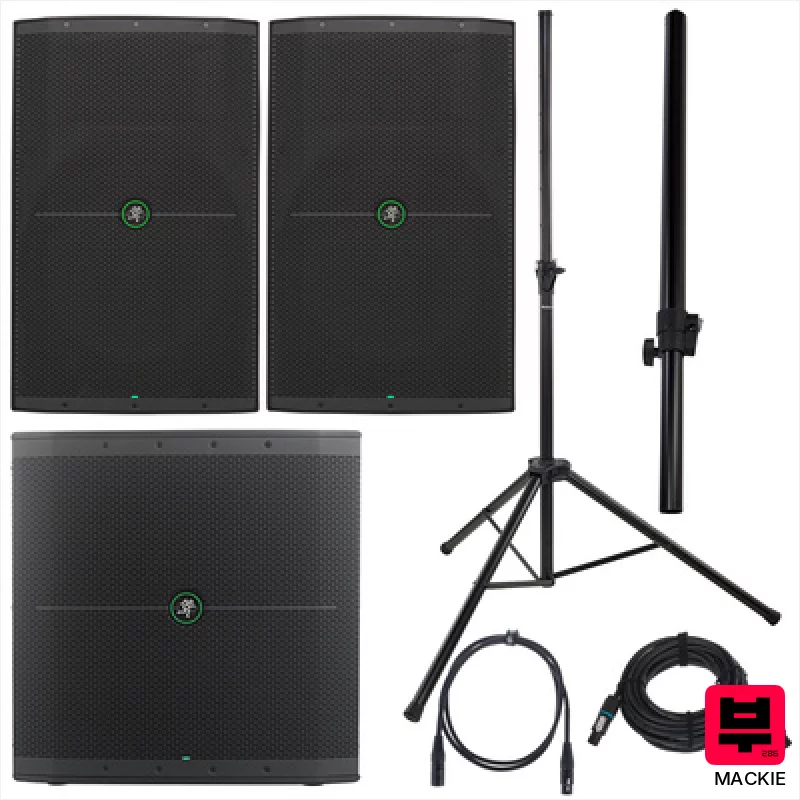
Mackie Thump 215/118s Basis Bundle
- • Robust Class-D amplification delivers clean power across the spectrum
- • The 18’ subwoofer provides serious low-end extension for live sound
- • Mackie’s Voicing Modes offer flexibility for various musical genres
- • Road-ready construction inspires confidence for gigging musicians
- • High weight makes transport and setup a two-person job
- • Limited EQ control compared to higher-end PA systems
- • Full-range speakers' dispersion might be narrow for larger venues
Band PA Sets by the numbers
Measured across all 39 models in this category, so «wide», «short» or «expensive» mean something you can check.
How to Choose the Best Band PA Sets
Mackie Heritage
Mackie's early designs, particularly the 1402 and 1604 mixers, defined a certain sound - a robust, slightly forward midrange presence that cut through a noisy room. This 'Mackie sound' is still present, though refined, in their modern PA systems, offering a familiar warmth and clarity.
Power & Headroom
Band PAs need to handle everything from acoustic duos to loud rock bands. We evaluated each system's clean headroom and how it handles breakup - does it distort smoothly or become harsh and brittle? A little headroom is always preferable to clipping out prematurely.
DSP & Effects
Mackie's built-in DSP (Digital Signal Processing) is a big draw. We looked at the quality of the reverb, delay, and compression - are they usable effects, or just filler? Good onboard effects can save you from hauling around extra gear.
Build Quality & Portability
Gigging musicians need gear that can take a beating. We assessed the robustness of the enclosures, the quality of the handles, and the overall portability - can you realistically load this into a van by yourself after a late-night gig?
Frequency Response & Articulation
A good PA isn't just loud; it's accurate. We listened for muddiness in the low-end, harshness in the high-end, and whether instruments retain their articulation and dynamics when played through the system. A PA that colors the sound too much can mask subtle nuances.
Buying Guide
Mackie band PA sets are generally a great value, but remember you're often trading some refinement for affordability. The smaller sets are fantastic for smaller venues or rehearsals, but they'll struggle with louder bands. Pay attention to the wattage - more isn't always better, but you need enough headroom to avoid distortion. And don't underestimate the importance of good speaker stands - cheap stands will muddy the low end and ruin your sound.
How This List Is Built
We don't play these instruments — we're a catalog, not a review desk, and we'd rather say so than pretend otherwise. This page covers 6 of 39 band pa sets from the Thomann catalogue, which is the largest single source of specification data in this category: 6 in detail, the rest listed with their specifications.
Position is computed, not curated. We parse the manufacturer's own description into actual values — nut width, scale, fret count, fingerboard radius, size, alloy — and rank on them: how many specifications a model has published, how many of them are measurable numbers, and how precisely it meets this page's criterion. A product image adds a little. Price is not a ranking signal: it tells you nothing about whether a neck fits your hand. The same inputs always produce the same order, so nothing here is shuffled to look fresh.
What this list is good for: narrowing a category down to a shortlist by spec and budget. What it isn't: a substitute for hearing an instrument. Before you buy, read hands-on reviews and, where you can, play it. Full methodology.

