
Best Acoustic Guitar Effects Under $200 2026
So, you want to spice up your acoustic tone without emptying your wallet? It's a common quest. Forget those pristine, studio-only sounds you hear; we're talking about adding some grit, depth, and character to your playing - whether you're gigging a smoky bar, tracking a song at home, or just want to make practice more inspiring. Let's look at acoustic effects that deliver real value under $200.
Last updated: September 29, 2026
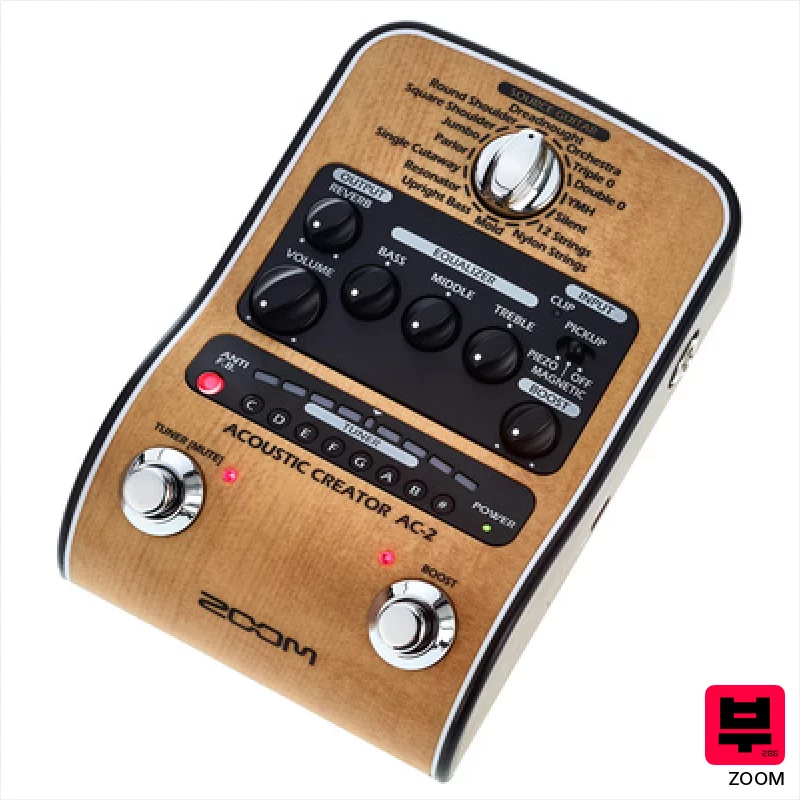
Zoom AC-2 Acoustic Guitar FX
- • Solid preamp section adds warmth, especially noticeable with piezo pickups
- • Anti-feedback control is surprisingly effective, a real time-saver live
- • Compact size makes it pedalboard-friendly for acoustic gigs
- • DI output provides a clean, usable signal direct to a PA system
- • Reverb algorithms are decent but lack the depth of dedicated reverb units
- • Limited preset storage restricts experimentation with complex signal chains
- • Plastic enclosure feels a bit budget-oriented for frequent gigging

Fishman Platinum Stage Analog Preamp
- • Warm, Class A preamp delivers a lush, natural acoustic tone.
- • Sweepable mids offer precise tonal shaping for stage clarity.
- • Excellent DI output with phase switch combats common feedback issues.
- • Compact size and robust build quality suitable for gigging musicians.
- • Requires a separate power supply, adding to overall cost and complexity.
- • 4-band EQ is limited for complex tonal sculpting needs.
- • Lack of onboard effects (reverb, chorus) necessitates external pedals.
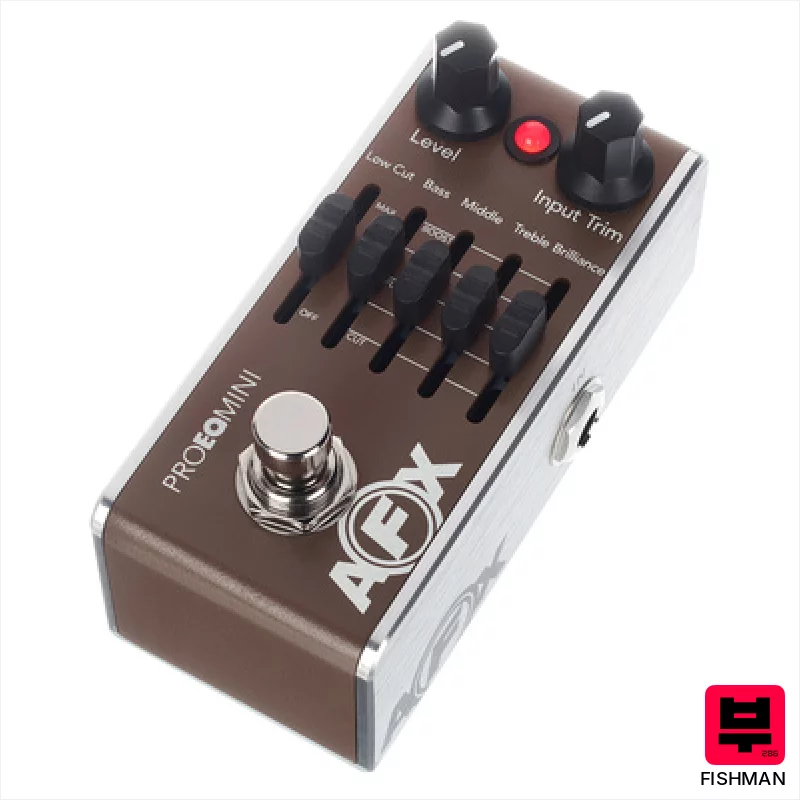
Fishman AFX Pro EQ Mini Ac. Pre & EQ
- • Excellent Fishman Platinum Series preamp voicing, warm and natural
- • Compact size ideal for stage or travel; very portable
- • Effective low-pass filter tames harsh high frequencies
- • True/buffered bypass preserves signal integrity when engaged
- • No battery operation severely limits its portability
- • Limited EQ control compared to larger Fishman units
- • Small size may make knobs slightly fiddly for some users

Fishman AFX Acoustiverb Mini Reverb
- • Excellent spring reverb tone, surprisingly lush for its size.
- • Parallel mixing preserves acoustic guitar's natural dynamics.
- • Compact footprint ideal for pedalboard space constraints.
- • True bypass ensures signal integrity when effect is off.
- • Limited reverb types; lacks more complex algorithmic options.
- • Power supply not included; a common, but frustrating, omission.
- • Tone control can be a bit muddy when overused.
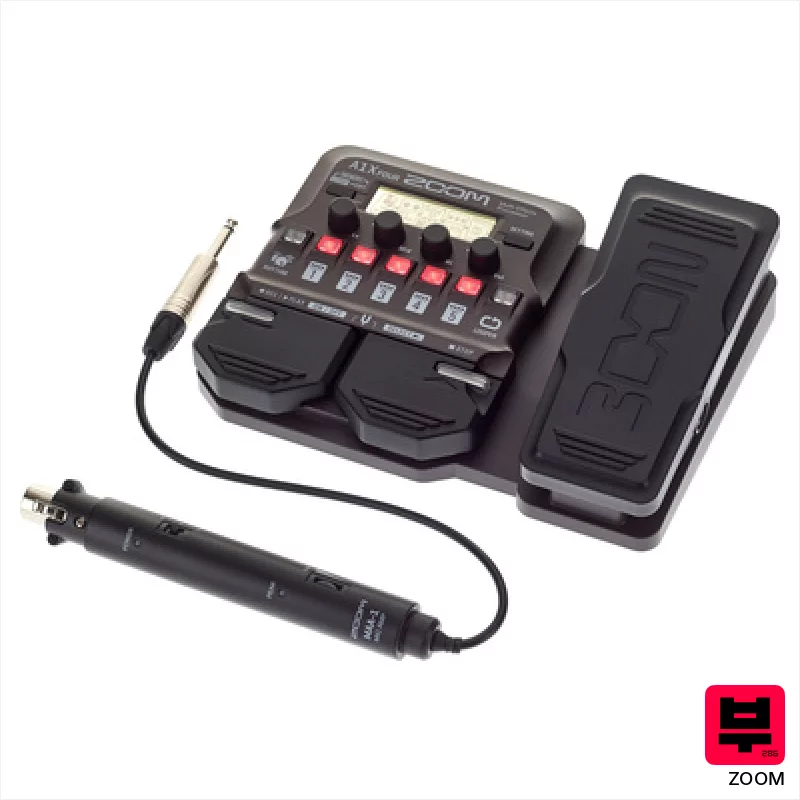
Zoom A1X Four Acoustic FX Pedal
- • Excellent acoustic modelling emulates various guitars, surprisingly convincing.
- • Anti-feedback filter is genuinely effective, a huge help live.
- • Looper is a solid addition for practice and performance layering.
- • Zoom’s Guitar Lab software expands possibilities far beyond the pedal itself.
- • Plastic enclosure feels a bit cheap, lacks premium robustness.
- • Effect routing can be slightly clunky, takes time to master.
- • Limited control over individual effect parameters on the pedal face.

Boss AD-2
- • Excellent Acoustic Resonance modeling for natural warmth
- • Ambience effect is surprisingly lush and usable
- • Notch filter is genuinely effective for feedback control
- • Boss’s rugged build ensures reliable gig-ready durability
- • Limited control over Ambience decay time
- • Acoustic Resonance can sound artificial with extreme settings
- • Power consumption is a bit higher than some competitors

Nux Stageman Floor Preamp
- • Surprisingly warm preamp section for piezo pickups
- • Looper offers a decent 30 seconds for practice/song building
- • Compact footprint makes it stage-friendly and easy to transport
- • Notch filter effectively tames harsh piezo resonances
- • Build quality feels a bit plasticky, not quite road-ready
- • Chorus effect is somewhat thin and lacks depth
- • Limited control over looper – no looping time adjustment

Zoom A1 Four Acoustic FX Pedal
- • Excellent acoustic modeling convincingly emulates various guitars
- • Anti-feedback filter is surprisingly effective for live performance
- • Zoom’s Guitar Lab software offers deep customization options
- • Looper and rhythm patterns add creative possibilities for solo practice
- • Build quality feels plasticky; not as robust as higher-end pedals
- • Effect routing can be slightly convoluted to master initially
- • Limited control knob flexibility restricts nuanced effect tweaking
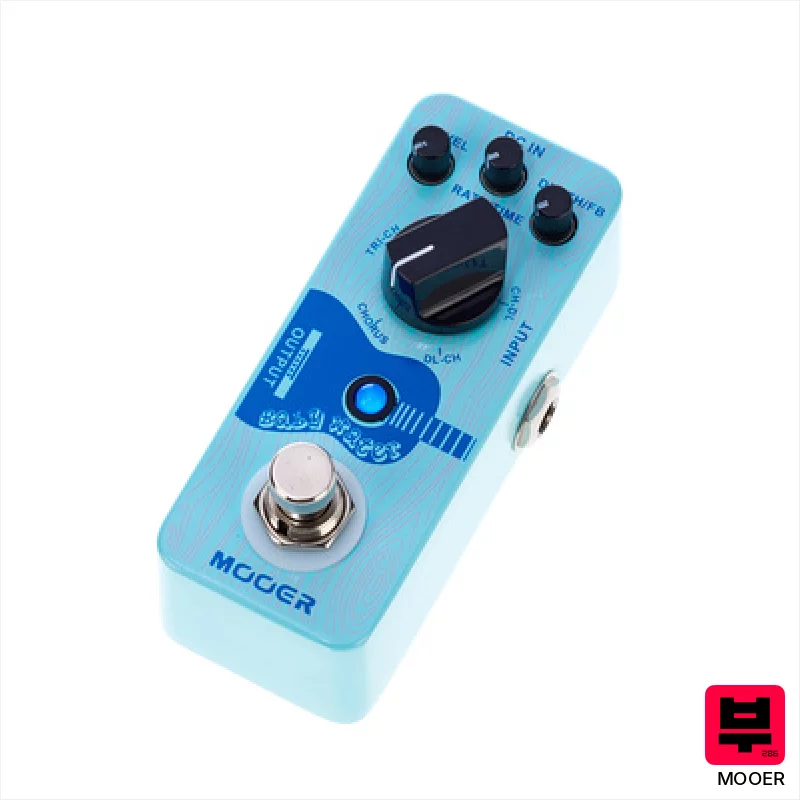
Mooer Baby Water
- • Compact metal housing offers surprising durability for the price.
- • Five modes provide a decent range of chorus and delay textures.
- • True bypass ensures signal integrity when the effect is off.
- • Small footprint makes it ideal for travel or pedalboard space constraints.
- • Limited control depth compared to higher-end chorus/delay units.
- • Digital artifacts can be noticeable at higher delay times and depths.
- • No battery operation restricts power source options.

tc electronic BodyRez
- • Restores piezo warmth, adding crucial body and sustain.
- • Feedback suppression is genuinely effective, stage-ready.
- • Tiny footprint minimizes pedalboard real estate impact.
- • Simple controls allow quick adjustments on the fly.
- • Limited tonal shaping beyond resonance restoration.
- • Effect’s subtlety might be lost in a loud band mix.
- • True bypass isn’t a full signal path isolation.
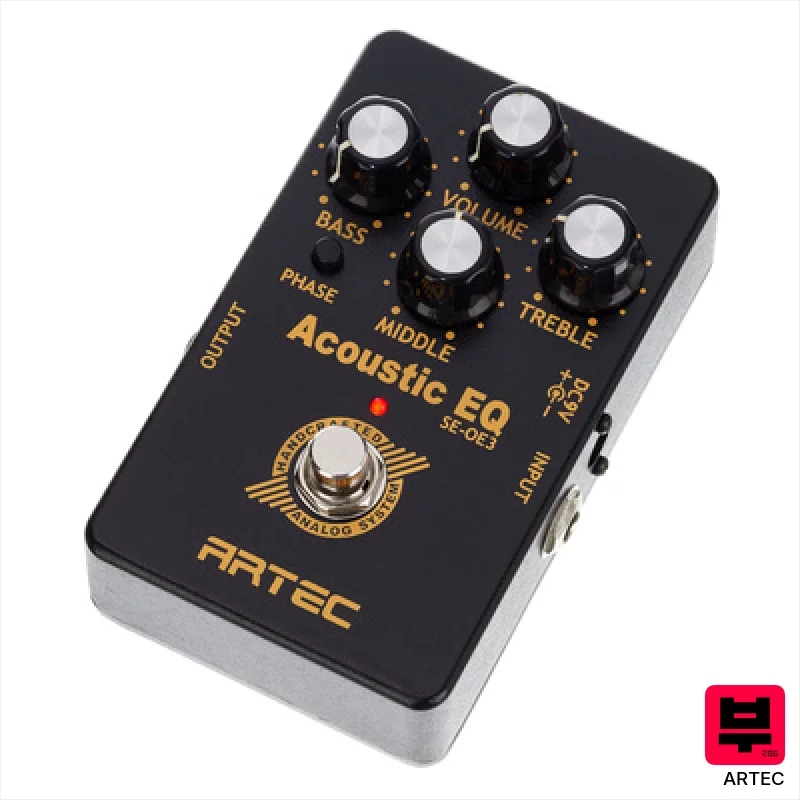
Artec SE-OE3 Acoustic Outboard EQ
- • Compact footprint ideal for pedalboards, especially smaller acoustic rigs
- • True bypass preserves natural acoustic tone when inactive
- • Simple 3-band EQ offers quick tonal shaping for live performance
- • Affordable entry point into outboard acoustic guitar processing
- • Plastic enclosure feels a bit budget-oriented; lacks premium feel
- • Battery power only is limiting; AC adapter is a separate purchase
- • Limited EQ control compared to more sophisticated acoustic processors

Behringer V-Tone Acoustic ADI21
- • Provides surprisingly usable tube amp simulation for the price
- • 3-band EQ with tunable mid offers decent feedback control
- • High input impedance preserves piezo pickup dynamics effectively
- • Balanced XLR output minimizes noise for direct recording
- • Plastic enclosure feels flimsy and not roadworthy
- • Analog modeling is a compromise; lacks true tube warmth
- • EQ is basic, limiting tonal sculpting possibilities
Acoustic Guitar Effects by the numbers
Measured across all 12 models in this category, so «wide», «short» or «expensive» mean something you can check.
How to Choose the Best Acoustic Guitar Effects
Tone Shaping
Does it offer meaningful control? Cheap effects often have a narrow palette - a subtle chorus might be nice, but a looper or a usable reverb is a game-changer.
Dynamic Response
How does the effect react to your playing? A good effect should breathe with your dynamics, not just be a static wash of sound. Watch out for effects that squash your articulation.
Build Quality
Let's be real, plastic enclosures and flimsy knobs are a sign of compromises. While not essential, a pedal that can survive a gig is worth something.
Noise Floor
Acoustic guitars are naturally quieter than electrics, so any noise from the effect is going to be amplified. A quiet signal chain is critical; hiss and hum can ruin a delicate acoustic tone.
Versatility
Can it do more than one thing, or at least be dialed to a variety of sounds? A multi-effect unit might be a better value than a single, limited-use pedal.
Buying Guide
At this price point, you're making trade-offs. Don't expect pristine studio-grade reverb or a transparent delay. Look for pedals that excel at a specific task - a gritty overdrive for adding some edge, a warm chorus for thickening your sound, or a simple reverb for adding space. Pay attention to reviews that mention noise - a noisy effect is just going to amplify any existing hum in your guitar or amp. And remember, a good power supply can make a huge difference in how an effect sounds and performs.
How This List Is Built
We don't play these instruments — we're a catalog, not a review desk, and we'd rather say so than pretend otherwise. This page covers 12 acoustic guitar effects from the Thomann catalogue, which is the largest single source of specification data in this category: 12 in detail, the rest listed with their specifications.
Position is computed, not curated. We parse the manufacturer's own description into actual values — nut width, scale, fret count, fingerboard radius, size, alloy — and rank on them: how many specifications a model has published, how many of them are measurable numbers, and how precisely it meets this page's criterion. A product image adds a little. Price is not a ranking signal: it tells you nothing about whether a neck fits your hand. The same inputs always produce the same order, so nothing here is shuffled to look fresh.
What this list is good for: narrowing a category down to a shortlist by spec and budget. What it isn't: a substitute for hearing an instrument. Before you buy, read hands-on reviews and, where you can, play it. Full methodology.

