AudioFu Chart · October 2026
Best 7/8 Size Classical Guitars for Professional 2026
The top pick is Alhambra Senorita 9 P - 7/8 ($2,455). La Mancha Rubi CM/63 7/8 Armrest Edition gives you the most for the money at $335. Ranked by the AudioFu Index from 29 models across 10 brands, prices checked every night.
Last updated: October 21, 2026
Top 10
Full detail for the 10 highest AudioFu Index scores. Every other model is listed below.
-
- Nut width50 mm (1.97")
- Scale636 mm (25.04")
The Alhambra Senorita 9 P is a beautifully crafted 7/8 size classical guitar perfect for students and smaller-statured players seeking a comfortable and expressive instrument. The solid cedar top provides a warm, inviting tone, while the Spanish cedar neck offers excellent playability. It’s a great value for a student-level instrument with premium features.
Pros
- Solid cedar top delivers a warm, responsive, and articulate tone.
- 7/8 size offers comfortable playability for smaller hands or younger players.
- Spanish cedar neck with ebony reinforcement ensures stability and smooth action.
Cons
- Rosewood back and sides, while beautiful, aren't as tonally complex as higher-grade woods.
- 7/8 size may lack projection for larger performance venues or ensemble playing.
46AudioFu
IndexStableno change since Aug 17Aug 17$2,455 now$2,455€2,189 at Thomann · in stockCheck price ↗ -
- Nut width48 mm (1.89")
- Scale620 mm (24.41")
- Frets20 frets
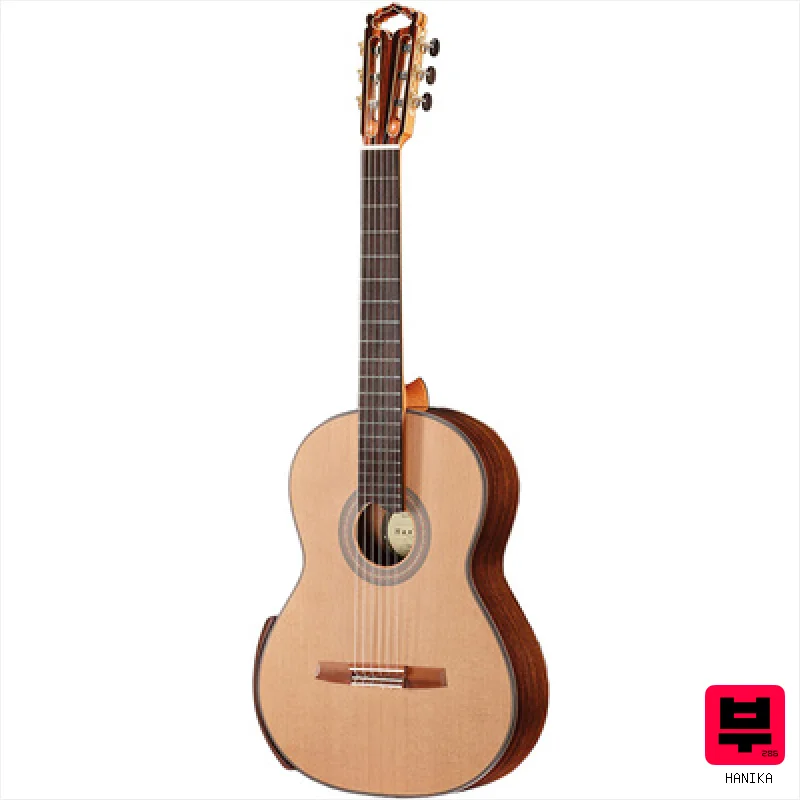
The Hanika 50TBF-7/8 is a fantastic choice for younger or smaller-framed players, or anyone wanting a slightly more compact classical guitar. The thermo wood construction delivers a surprisingly rich and balanced tone, and the build quality is very solid – a real step up from entry-level instruments.
Pros
- Thermo Pear back/sides offer a unique, warm tonal character.
- Solid thermo spruce top provides excellent projection and clarity.
- Grenadilla fingerboard offers a smooth, responsive playing experience.
Cons
- Thermo wood construction might lack the traditional resonance of aged tonewoods.
- 7/8 size isn't ideal for players with larger hands or longer arms.
46AudioFu
IndexStableno change since Aug 17Aug 17$1,345 now$1,345€1,199 at Thomann · in stockCheck price ↗ -
- Nut width50 mm (1.97")
- Scale630 mm (24.8")
- Frets19 frets
The C9 Parlor is a beautifully crafted instrument, offering a surprisingly full and rich classical tone in a smaller package. It's ideal for students, travelers, or anyone who appreciates a comfortable and intimate playing experience. The solid cedar top really shines, making it a joy to play and a great value for the money.
Pros
- Solid cedar top delivers a warm, responsive, and nuanced tone.
- Mahogany body provides a focused, balanced voice with good projection.
- Parlor size offers comfortable playability, especially for smaller hands or travel.
Cons
- The 7/8 size may feel cramped for players with larger hands.
- High tension strings require more finger strength; beginners might find them challenging.
52AudioFu
IndexStableno change since Aug 17Aug 17$1,120 now$1,120€999 at Thomann · in stockCheck price ↗ -
- Nut width50 mm (1.97")
- BodyMahogany body
- FingerboardRosewood fingerboard
This guitar uses a spruce top and mahogany body for a balanced tone. The rosewood fingerboard helps with playability, and the included bag is great for carrying it safely. It suits students or travelers who want a classic sound without extra weight.
Pros
- Solid spruce top for bright, responsive tone
- Mahogany body and neck for warmth and sustain
- Rosewood fingerboard offers smooth playability
Cons
- No fret count or string gauge listed
- Weight is not stated in the description
55AudioFu
IndexStableno change since Aug 17Aug 17$1,042 now$1,042€929 at Thomann · in stockCheck price ↗ -
- Nut width50 mm (1.97")
- Scale636 mm (25.04")
The Alhambra Senorita 5P 7/8 is a great choice for younger students or smaller-framed adults learning classical guitar. The solid cedar top gives it a surprisingly rich and mature voice for its size and price point, and the ebony fingerboard ensures a clean, comfortable playing experience. It’s a well-built instrument that offers excellent value.
Pros
- Solid cedar top delivers warm, responsive tone with excellent projection
- Rosewood back and sides add depth and sustain to the sound
- Sapele neck provides a comfortable playing feel and good stability
Cons
- Laminated rosewood back/sides limit the ultimate tonal complexity compared to all-solid construction
- 7/8 size might feel cramped for players with larger hands or longer arms
46AudioFu
IndexStableno change since Aug 17Aug 17$1,064 now$1,064€949 at Thomann · in stockCheck price ↗ -
- Nut width52 mm (2.05")
- Scale630 mm (24.8")
This guitar feels great to hold and play thanks to its arm rest and solid cedar top. The Toona Kalantas neck feels warm and stable under your fingers. It is a budget-friendly choice for students or casual players who want a nice tone without needing electronics.
Pros
- Solid Canadian cedar top for bright attack and quick response.
- Toona Kalantas neck offers a comfortable, stable playing feel.
- Built-in arm rest makes playing seated much easier and more relaxed.
Cons
- Lacks electronic pickups for use in loud modern bands or stages.
- No specific weight rating listed to confirm comfort for larger players.
50AudioFu
IndexStableno change since Aug 17Aug 17$335 now$335€299 at Thomann · in stockCheck price ↗ -
- Nut width50 mm (1.97")
- Scale636 mm (25.04")
- Frets18 frets
The Alhambra 1C HT 7/8 is a surprisingly capable instrument for the price. The solid cedar top provides a lovely warmth, and the smaller size makes it comfortable for students or those who find full-size guitars unwieldy. It's a fantastic entry point into classical guitar playing, offering a good balance of quality and affordability.
Pros
- Solid cedar top delivers a warm, responsive, and projecting tone.
- 7/8 size is ideal for smaller players or those preferring a more compact instrument.
- Ergo neck design enhances comfort, reducing fatigue during extended playing sessions.
Cons
- Open-pore finish, while aesthetically pleasing, can be more susceptible to humidity changes.
- Melamine saddle and nut are functional but not as resonant as bone or Tusq.
50AudioFu
IndexStableno change since Aug 17Aug 17$436 now$436€389 at Thomann · in stockCheck price ↗ -
- Nut width48 mm (1.89")
- Scale620 mm (24.41")
- Frets18 frets
This guitar feels great to play with its solid cedar top and mahogany body. The compact 7/8 size makes it easy to handle for smaller hands. It sounds warm and bright, perfect for students or those who prefer a traditional acoustic sound.
Pros
- Solid cedar top offers bright, responsive attack
- Mahogany back and sides add warmth to tone
- Ovangkol fingerboard provides smooth playability
Cons
- 7/8 size is smaller for larger players
- No electronics included for amplification
49AudioFu
IndexStableno change since Aug 17Aug 17$380 now$380€339 at Thomann · in stockCheck price ↗ -
Caballero by Manuel Rodriguez Europe CA-EUSM62 7/
8 Spruce Not on Reverb yet1 finish at Thomann
- Nut width48 mm (1.89")
- Scale620 mm (24.41")
- FingerboardRosewood fingerboard
The Caballero CA-EUSM62 is a great entry point into classical guitar playing. The 7/8 size makes it manageable for younger or smaller players, while the spruce top provides a pleasingly bright voice. It’s a well-built instrument offering a good balance of quality and affordability for students and casual players.
Pros
- Solid spruce top delivers a surprisingly bright and responsive tone.
- 7/8 size offers comfortable playability for smaller hands or students.
- Maple neck provides stability and a smooth, fast feel under the fingers.
Cons
- Plastic nut and saddle are a cost-saving measure; upgrades are recommended for optimal tone.
- Mahogany back and sides limit the guitar's potential for a truly complex, mature sound.
48AudioFu
IndexStableno change since Aug 17Aug 17$369 now$369€329 at Thomann · in stockCheck price ↗ -
- Nut width50 mm (1.97")
- Scale630 mm (24.8")
- FingerboardRosewood fingerboard
The Cordoba Dolce Iberia 7/8 is a fantastic entry-level classical guitar, especially for students or anyone who finds full-size guitars unwieldy. The solid cedar top provides a surprisingly rich tone for its price range, and the smaller size makes it comfortable to hold and play for extended periods. It's a really well-made instrument offering a great balance of affordability and quality.
Pros
- Solid cedar top delivers a warm, responsive, and articulate tone.
- 7/8 size makes it exceptionally comfortable for smaller players and travel.
- Mahogany back and sides contribute to a balanced and focused sound projection.
Cons
- Solid cedar top is more susceptible to humidity changes than laminate.
- Mahogany construction limits high-end shimmer compared to more exotic woods.
48AudioFu
IndexStableno change since Aug 17Aug 17$425 now$425€379 at Thomann · in stockCheck price ↗
All 29 7/8 size classical guitars
Same index, same nightly prices — compact. Colour options of one model share a row. Tap a photo to zoom.
- 11
La Mancha Arce/63La Mancha46Stable$470€419$470€419Check ↗
- 12
Alhambra 3C Senorita (7/8) incl.Gig BagAlhambra46Stable$600€535$600€535Check ↗
- 13
Manuel Rodriguez Ecologia E-62 7/8Manuel Rodriguez49Stable$324€289$324€289Check ↗
- 14
La Mancha Rubi SMX/63La Mancha50Stable$313€279$313€279Check ↗
- 15
Ortega Family Series R121 7/8 SizeR121-7/8 NT · Ortega72Stable$234€209$234€209Check ↗
- 16
La Mancha Rubi S/63La Mancha50Stable$279€249$279€249Check ↗
- 17
La Mancha Rubi CM63-NLa Mancha50Stable$279€249$279€249Check ↗
- 18
La Mancha Gem CM/63-N-BLa Mancha50Stable$279€249$279€249Check ↗
- 19
La Mancha Rubinito LSM/63-CENLa Mancha50Stable$279€249$279€249Check ↗
- 20
Gewa Pro Arte GC100A w/BagGewa · 2 finishes53Stable$268€239$268€239Check ↗
- 21
Manuel Rodriguez Caballero Principio CA-CM 7/8Manuel Rodriguez49Stable$257€229$257€229Check ↗
- 22
La Mancha Rubi CM/63La Mancha50Stable$252€225$252€225Check ↗
- 23
Ortega R122-7/8Ortega44Stable$257€229$257€229Check ↗
- 24
Startone CG-851 7/8Startone50Stable$51€46$51€46Check ↗
- 25
La Mancha Granito 32-7/8La Mancha50Stable$156€139$156€139Check ↗
- 26
La Mancha Rubinito LSM/63-NLa Mancha50Stable$167€149$167€149Check ↗
- 27
La Mancha Rubinito CM63La Mancha50Stable$219€195$219€195Check ↗
- 28
Caballero by Manuel Rodriguez Principio CA-PM 7/8Caballero by Manuel Rodriguez48Stable$201€179$201€179Check ↗
- 29
Gewa Pro Natura Silver 7/8 MapleGewa45Stable$196€175$196€175Check ↗
7/8 Size Classical Guitars by the numbers
Measured across all 31 models we track, not a sample.
Median $279 — half of all 7/8 size classical guitars here cost less.
median of 30 models · 47 mm (1.85")–52 mm (2.05")
median of 29 models · 615 mm (24.21")–636 mm (25.04")
most common · 7 models
median of 5 models · 18–19
How to choose the best 7/8 size classical guitars
Playability (Neck Profile & Action)
This isn't just about comfort; it's about speed and precision. A neck profile that's too thick will kill your legato, and an action that's too high will choke your vibrato. Professionals need a responsive feel - something that allows for micro-adjustments and fast passages without fatigue.
Bass Response & Projection
A 7/8 guitar needs to compensate for its smaller size. Weak bass response means your low notes get lost in the mix, especially when playing with other instruments. We're looking for a fullness and a subtle low-end thump that doesn't muddy the midrange.
Topwood Voicing & Sustain
Spruce is standard, but the grade and bracing pattern massively affect the tone. We're listening for clarity, not just volume. You want that focused, ringing sustain that allows phrases to breathe and articulate clearly - a bright, clean top end, not an ice-picky harshness.
Bracing Pattern & Structural Integrity
Cheap 7/8 guitars often skimp on bracing, leading to a floppy feel and compromised resonance. A well-braced instrument will maintain its tone and projection even under heavy playing, and will be more resistant to warping over time.
Overall Articulation & Dynamics
A pro needs a guitar that responds to subtle shifts in pressure and attack. We're looking for a wide dynamic range - from a whisper-quiet pianissimo to a powerful fortissimo - all with excellent clarity and separation of individual notes.
Buying guide
Alright, so you're a serious classical player looking at 7/8 size guitars. It's not a beginner's choice - you're likely dealing with smaller hands, but still demanding professional performance. These aren't toys; they need to deliver nuanced dynamics, clear articulation, and enough projection to cut through a chamber orchestra or record cleanly. We're not talking about compromises here; we're talking about finding the right tool for the job.
Don't fall for the 'smaller is easier' trap. A poorly made 7/8 guitar will be frustrating and won't compensate for technical deficiencies. Pay attention to the bracing - that's where corners get cut.
A solid top is almost mandatory at the professional level; laminate tops just won't deliver the responsiveness you need. And seriously, get a setup - even a great guitar needs a proper setup to play its best.
How the AudioFu Index works
Five measured signals and nothing else — no stars from strangers, no “tested by experts” we didn’t do. The weights are fixed and public. We don’t play these instruments; we measure the market around them.
This chart covers 31 7/8 size classical guitars from the Thomann catalogue. Before you buy, read hands-on reviews and, where you can, play it. Full methodology.
AudioFu earns a commission when you buy through our Thomann links. It never changes the order — the index does.
- Demand40%
How many of this exact model are for sale on Reverb right now — what musicians actually buy and resell.
- Lineup20%
How many finishes Thomann stocks — makers expand the models that sell.
- Price15%
Where the price has moved since we started tracking in August.
- Specs15%
How completely the maker documents it.
- Maker10%
How deep the brand’s range is in this category.
Questions
Are 7/8 guitars suitable for stage performance?
Absolutely, but you'll need to be mindful of projection. A good pickup system is almost essential for cutting through a band or ensemble, and you might need to EQ to compensate for any bass roll-off.
What's the typical neck width on a 7/8 size classical guitar?
Expect around 48-50mm at the nut. It's narrower than a full-size, but the string spacing will still require precise finger placement.
Can a 7/8 guitar be used for recording?
Yes, but mic placement is key. You'll likely want to experiment with different mic positions to capture the full tonal range, and be prepared to EQ to add back any lost low-end.
What's the difference between a 7/8 and a 3/4 size guitar?
The 7/8 is generally slightly larger and has a fuller sound than a 3/4. The bracing and wood selection are often better on 7/8 models aimed at more serious players.
I have slightly smaller hands, but not tiny - should I still consider a 7/8?
It depends. Try both a full-size and a 7/8. If the full-size feels cramped or uncomfortable, the 7/8 could be a great option, but don't assume it's automatically better just because you have smaller hands.