
Best Squier 5-String J-Basses 2026
So, you're looking at a Squier 5-string J-Bass? Smart move. They've come a long way from the budget instruments of the 80s and 90s. Let's be real, a five-string unlocks a whole new world of low-end possibilities, and Squier offers some seriously playable options without breaking the bank - but you need to know what to look for to get a good one.
Last updated: April 11, 2026

Squier CV Act 70s J Bass V MN PPG OCT
- • HiMass bridge delivers exceptional sustain and tuning stability.
- • Fender-designed Alnico Noiseless pickups offer clean, articulate tones.
- • Maple fretboard and 'C' neck profile provide a comfortable playing experience.
- • Active/passive switch adds tonal versatility for various musical styles.
- • Ocean Turquoise finish, while beautiful, might not appeal to all tastes.
- • Bolt-on neck construction, while reliable, lacks the resonance of a set neck.
- • 5-string basses can be a bit unwieldy for smaller hands or beginners.

Squier CV Act 70s J Bass V LRL SSB
- • HiMass bridge enhances sustain and tuning stability remarkably.
- • Bone nut improves clarity and sustain compared to standard options.
- • Fender-designed Alnico Noiseless pickups deliver vintage tone with minimal hum.
- • Indian Laurel fingerboard provides a smooth, resonant playing experience.
- • The bolt-on neck, while comfortable, lacks the resonance of a set-neck design.
- • Sienna Sunburst finish might not appeal to all players' aesthetic preferences.
- • The active/passive switch, while useful, can introduce a slight tonal shift.

Squier CV 70s Jazz Bass V MN BLK
- • Excellent Fender-designed pickups deliver a punchy, vintage jazz bass tone
- • Maple fretboard and 'C' neck profile offer comfortable, familiar playability
- • Solid poplar body provides a surprisingly resonant and balanced tone
- • Three-ply black pickguard adds a classic, refined aesthetic touch
- • Poplar body can be slightly less resonant than ash or swamp ash
- • Bolt-on neck construction, while stable, lacks the sustain of a set-neck
- • Nickel hardware can be prone to slight tarnishing over time
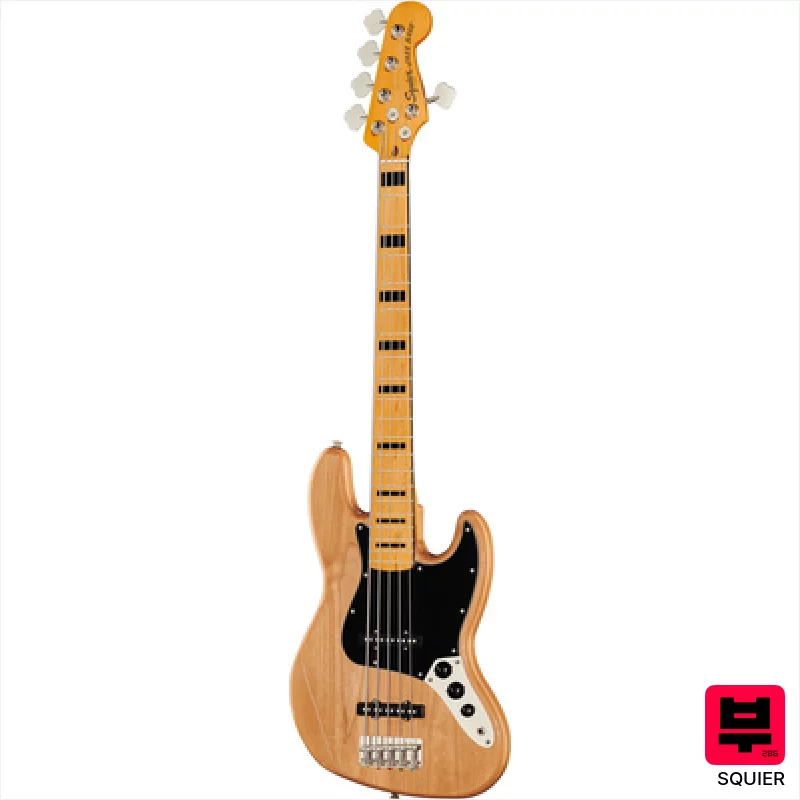
Squier CV 70s Jazz Bass V MN NAT
- • Maple body delivers a focused, articulate low-end tone
- • Bolt-on maple neck provides snappy response and comfortable playability
- • Fender-designed Alnico pickups offer a classic, warm Jazz Bass voice
- • Bone nut improves sustain and tuning stability compared to plastic
- • Maple fretboard can be a bit drier feeling compared to rosewood
- • Long scale length might be a stretch for smaller hands or beginners
- • Three-ply pickguard feels a little less premium than tortoiseshell or other options
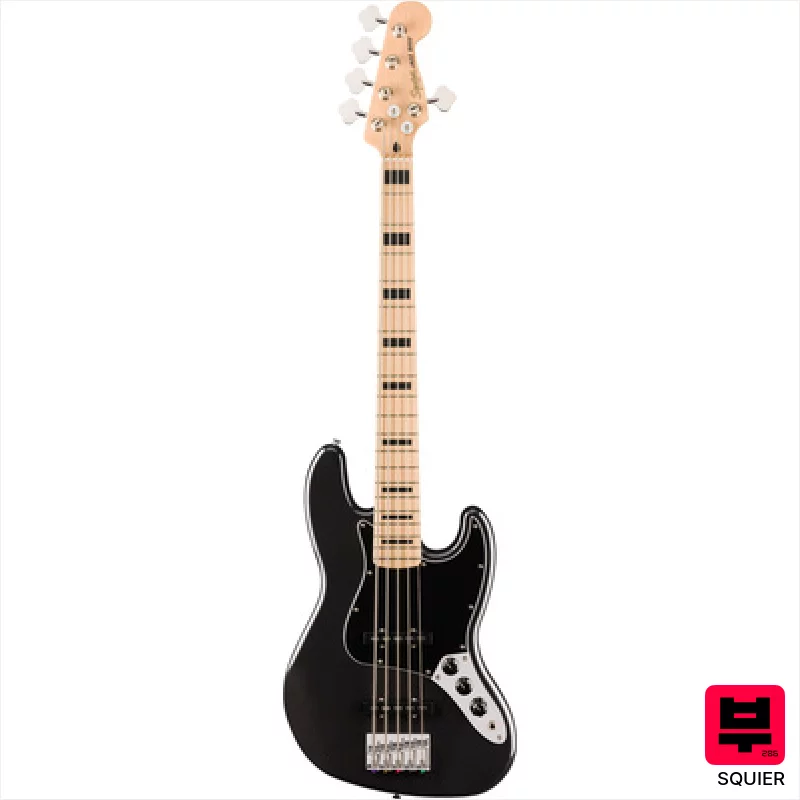
Squier Affinity ACT Jazz Bass V BKM
- • The noiseless ceramic pickups deliver a surprisingly punchy, modern tone.
- • Maple fingerboard and neck provide a snappy, responsive playing feel.
- • The active EQ offers welcome tonal shaping for versatility.
- • Solid poplar body provides decent resonance for its price point.
- • Bolt-on neck construction lacks the sustain of a set-neck design.
- • Synthetic bone nut is a cost-saving measure; genuine bone is preferable.
- • The lighter weight poplar body might feel a bit 'floaty' for some players.
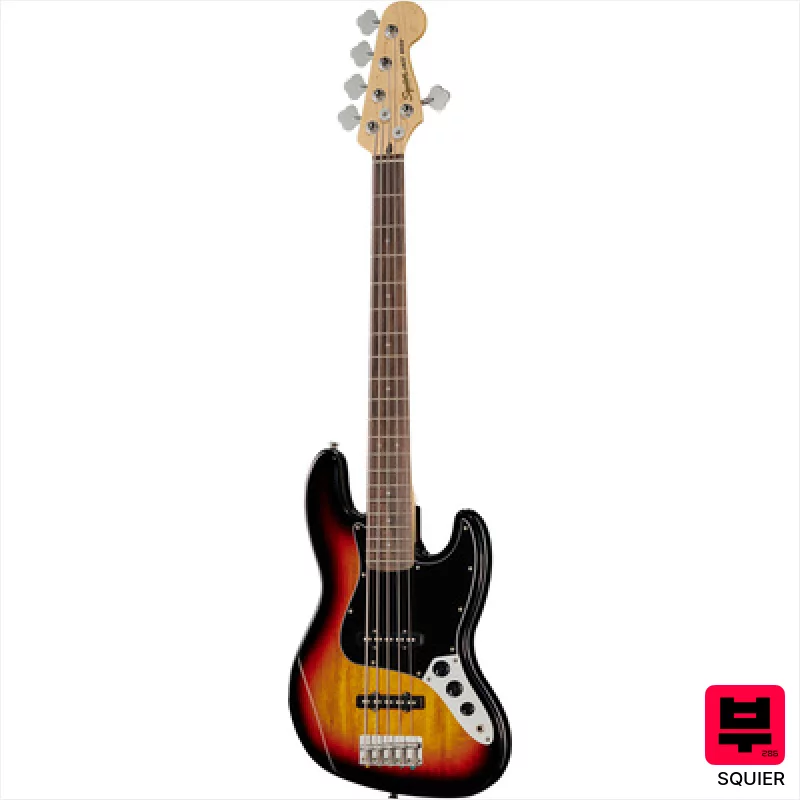
Squier Aff. Jazz Bass V 3-SB
- • Poplar body offers a balanced, resonant tone with good sustain
- • Maple neck with a comfortable 'C' profile promotes easy playability
- • Ceramic pickups deliver a punchy, articulate sound suitable for diverse genres
- • Laurel fingerboard provides a smoother feel compared to rosewood alternatives
- • Bolt-on neck construction limits upper fret access and sustain compared to set-neck designs
- • Synthetic bone nut can feel less premium and may affect sustain slightly
- • 3-color sunburst finish is a common aesthetic; lacks unique character
How to Choose the Best 5-String J-Basses
Neck Profile
Squier's neck profiles can vary - the 'C' shape is generally comfortable, but some of the earlier models had thicker, chunkier necks. Try before you buy if possible; a neck that feels good in your hand is paramount.
Pickup Voicing
The stock J-Bass pickups are... serviceable. They offer that classic scooped midrange honk, which is great for funk and rock, but they can be a little thin and lack serious warmth. Upgrading the pickups is a common and relatively inexpensive mod.
Hardware Quality
Let's be honest, the tuners and bridge are often the first things to go on a Squier. They'll get you by, but don't expect rock-solid tuning stability at lower tunings or under heavy gigging conditions. Consider a hardware upgrade down the line.
Body Wood & Construction
Most Squier 5-string J-Basses use poplar or basswood for the body. These woods are lightweight and offer a balanced tone, but they don't resonate as richly as alder or ash. Bolt-on neck construction is standard, which keeps costs down, but it does impact sustain compared to a neck-through design.
Low-End Response
The 5th string is where these basses can fall short. The stock pickups and electronics sometimes struggle to reproduce the lower frequencies cleanly, resulting in a muddy or indistinct low-end thump. Careful EQ and potentially pickup upgrades can help.
Buying Guide
Don't expect a Squier 5-string to be a boutique instrument. You're getting excellent value, but there will be compromises. Check the neck relief - a truss rod adjustment might be needed. Also, listen carefully to the low B string; if it sounds weak or muddy, be prepared to tweak your EQ or consider an upgrade. A higher-end Squier Classic Vibe model will be a significant step up in build quality and tone, but the standard models offer a lot of bang for your buck.
How This List Is Built
We don't play these instruments — we're a catalog, not a review desk, and we'd rather say so than pretend otherwise. This page ranks 6 5-string j-basses from the Thomann catalogue, which is the largest single source of specification data in this category.
Position is computed, not curated. Four signals, in order of weight: how completely the manufacturer documents the instrument (number of published specifications), where it sits in the price range, how specific the model designation is — which filters out generic accessories — and whether a product image exists. The same inputs always produce the same order, so nothing here is shuffled to look fresh.
What this list is good for: narrowing a category down to a shortlist by spec and budget. What it isn't: a substitute for hearing an instrument. Before you buy, read hands-on reviews and, where you can, play it. Full methodology.

