
Best 4-String J-Basses Under $500 2026
Alright, so you need a J-Bass, and you're smart enough to not blow your rent on it. Finding a decent 4-string J-Bass under $500 is totally doable, but you gotta know what to look for. We're not chasing boutique perfection here; we're hunting for that sweet spot of playability, tone, and reliability that'll get you through rehearsals, gigs, and laying down some tracks without breaking the bank.
Last updated: October 8, 2026

Harley Benton JB-75 SB Vintage Series Set 3
- • American ash body provides a resonant, balanced tone.
- • Roswell JBA pickups deliver authentic, vintage J-Bass articulation.
- • Canadian Hard Rock Maple neck offers excellent stability and playability.
- • Sung Il bridge with brass saddles enhances sustain and tuning stability.
- • Bolt-on neck construction lacks the sustain of a set-neck design.
- • Laurel fretboard may require more frequent oiling than rosewood.
- • 3-tone sunburst finish can be prone to fingerprints and blemishes.

Squier Affinity ACT Jazz Bass OWT
- • The noiseless ceramic pickups deliver a surprisingly clean, modern tone.
- • Maple fingerboard and neck provide a snappy, responsive feel for fast playing.
- • Active EQ offers useful tonal shaping, expanding sonic possibilities.
- • Bolt-on neck construction results in a bright, articulate, and punchy sound.
- • Poplar body can feel a bit lightweight and lacks inherent resonance.
- • Hardware, while functional, feels budget-oriented and may need upgrades.
- • The 'C' neck profile might be too thin for players preferring a thicker feel.

Harley Benton JB-75 SB Vintage Series Set 2
- • American ash body delivers a resonant, balanced tone.
- • Roswell JBA pickups offer a surprisingly authentic vintage J-Bass growl.
- • Canadian Hard Rock Maple neck provides comfortable playability and stability.
- • Solid Sung Il bridge enhances sustain and tuning stability.
- • Bolt-on neck construction lacks the sustain of a neck-through design.
- • Laurel fretboard may require more frequent oiling to prevent dryness.
- • 3-tone sunburst finish, while attractive, isn't the most unique.

Harley Benton JB-75 SB Vintage Series Set 1
- • American ash body delivers a warm, resonant foundation.
- • Roswell JBA pickups offer authentic, punchy vintage J-Bass tone.
- • Canadian Hard Rock Maple neck provides comfortable, stable playability.
- • Sung Il bridge with brass saddles enhances sustain and clarity.
- • Bolt-on neck construction limits high-end sustain compared to neck-through designs.
- • Laurel fretboard may require more frequent oiling to prevent dryness.
- • 3-Tone Sunburst finish can be prone to fingerprints and smudging.
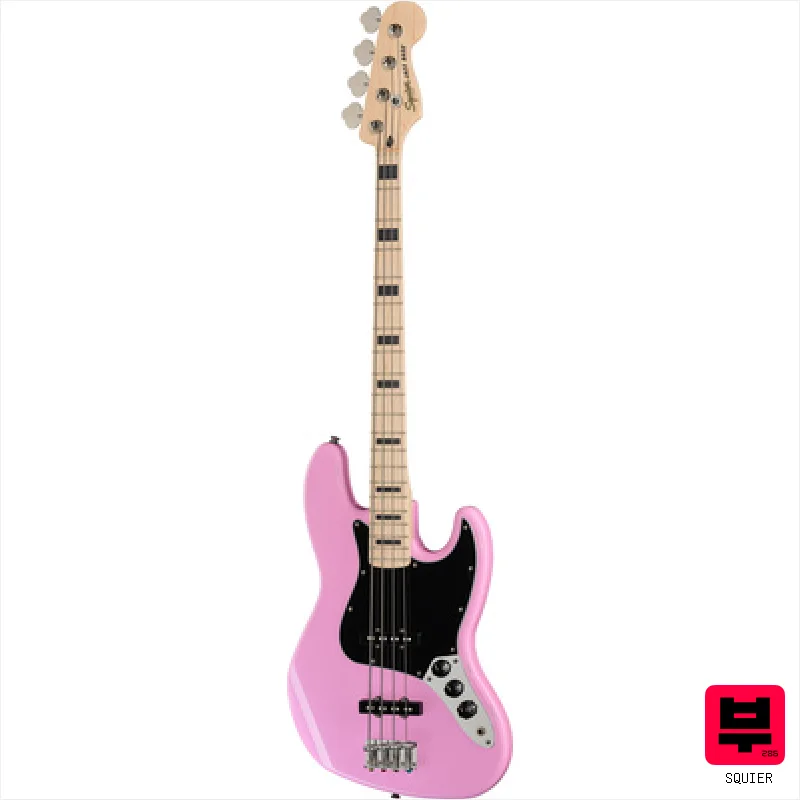
Squier Exclusive Affinity J Bass FPK
- • Poplar body offers light weight and fast response
- • Slim neck profile plays comfortably under fingers
- • Noiseless single coils cut through mix without hum
- • Vintage J Bass pickups deliver warm, mid-heavy tone
- • Stacked controls add complexity for simple use
- • Poplar body may lack the density of maple
- • Nickel strings feel stiff compared to coated options
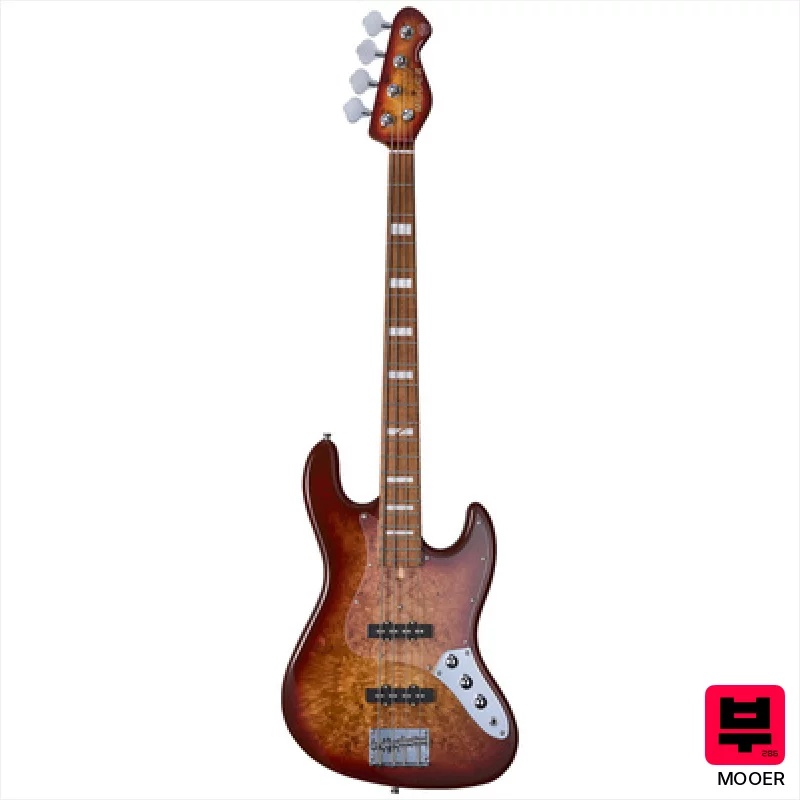
Mooer MBJ420 Bass Red Burst
- • Roasted maple neck and fretboard offer excellent stability and smooth playability.
- • The VBJ pickups deliver a surprisingly articulate and punchy vintage-inspired tone.
- • Poplar burl top adds a touch of visual flair and elevates the aesthetic.
- • The 34in scale length provides a familiar feel for most bassists.
- • Bolt-on neck construction, while reliable, lacks the resonance of a set-neck design.
- • The hardware, while functional, feels a bit budget-oriented compared to higher-end basses.
- • The Red Burst finish, while attractive, might be a bit too flashy for some players.
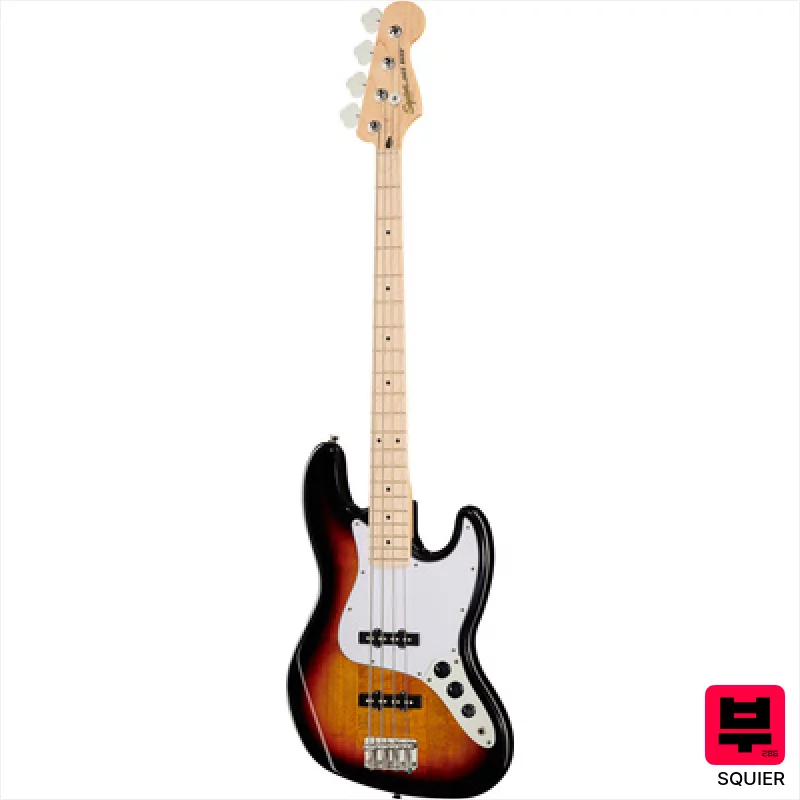
Squier Aff. Jazz Bass 3-SB
- • Poplar body provides a balanced, resonant tone with good sustain.
- • Maple neck offers a comfortable, familiar C-shape profile for easy playing.
- • Ceramic pickups deliver a punchy, articulate Jazz Bass tone, surprisingly versatile.
- • Solid hardware and tuners ensure reliable tuning stability and intonation.
- • Synthetic bone nut can feel a bit slippery compared to bone or graphite.
- • Maple fretboard may require occasional oiling to prevent dryness and cracking.
- • While versatile, the pickups lack the nuanced vintage warmth of higher-end Jazz Basses.
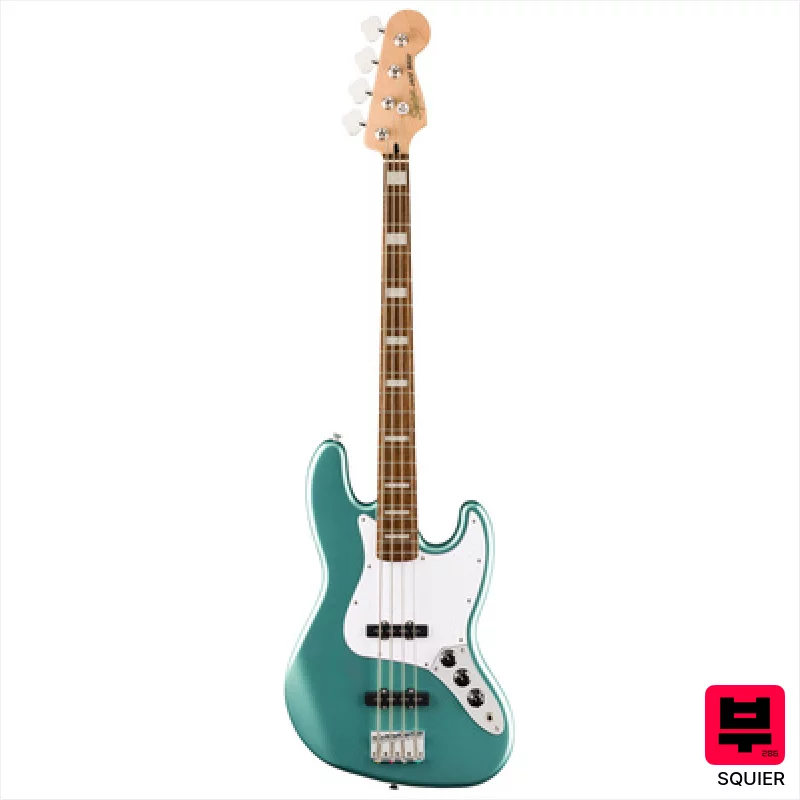
Squier Affinity ACT Jazz Bass MSF
- • The 'C' neck profile offers a comfortable, familiar feel for many players.
- • Squier's noiseless pickups deliver a clean, articulate tone with minimal hum.
- • The Indian laurel fingerboard provides a smooth playing experience and good sustain.
- • The active EQ allows for tonal shaping beyond a standard passive bass.
- • The poplar body, while lightweight, lacks the resonance of more premium woods.
- • The bolt-on neck construction slightly limits sustain compared to set-neck designs.
- • The hardware, while functional, feels a bit basic and may be a future upgrade.
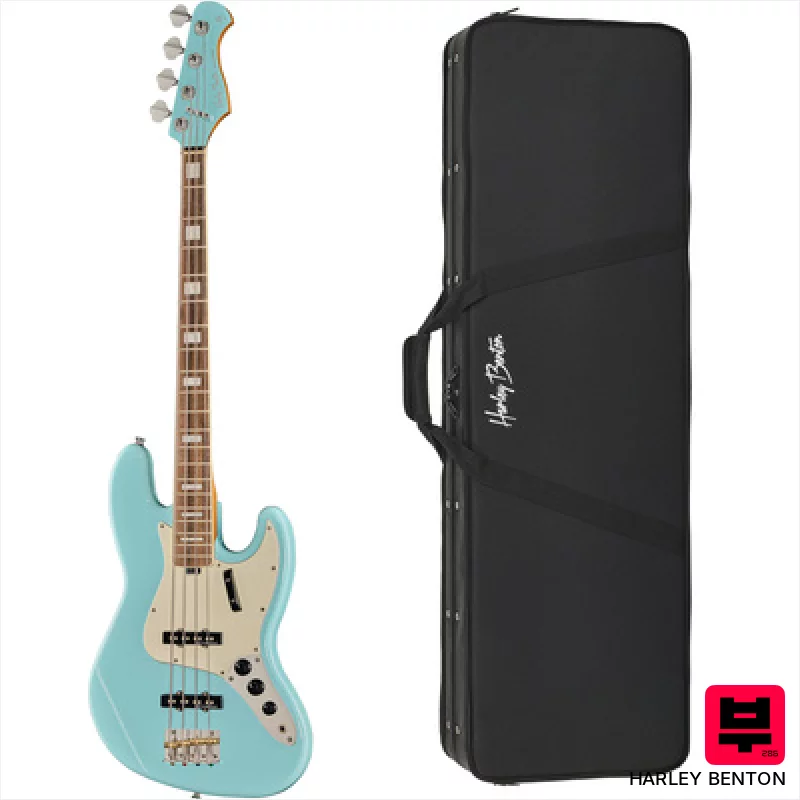
Harley Benton MV-4JB Daphne Blue w/Case
- • Alder body delivers a balanced, resonant tone with good sustain
- • Caramelized maple neck provides a smooth, fast playing experience
- • Custom VJB pickups offer a surprisingly articulate and punchy vintage tone
- • Excellent value; a lot of bass for the money, including a decent case
- • Bolt-on neck construction may lack the sustain of a neck-through design
- • Sung Il bridge, while functional, isn't a premium component
- • Daphne Blue finish may be prone to fingerprints and smudging
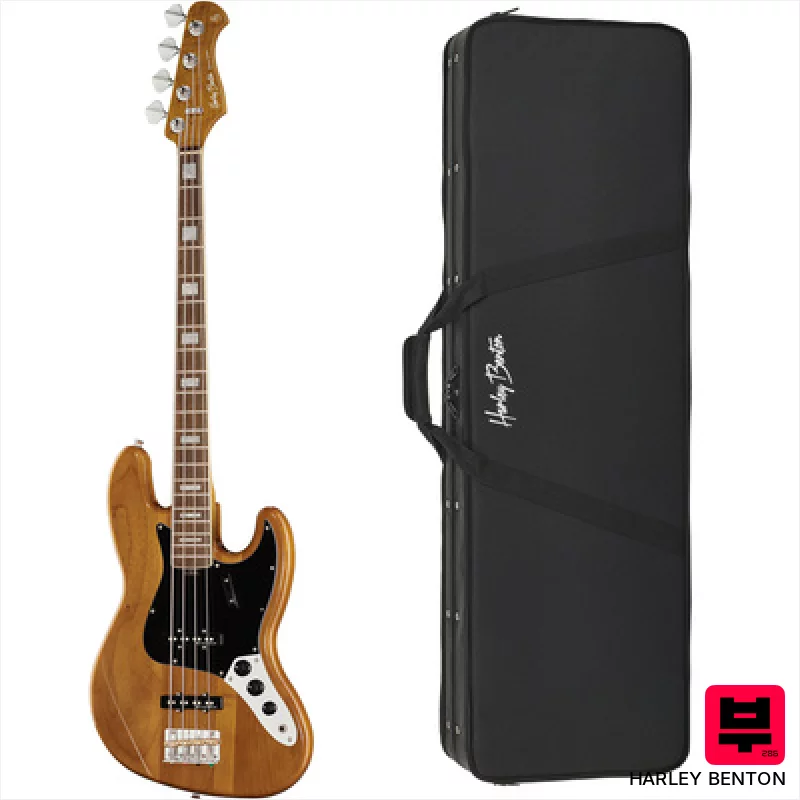
Harley Benton MV-4JB Natural w/Case
- • Alder body provides a balanced, resonant tone with good sustain
- • Caramelized maple neck offers a smooth, fast feel and unique aesthetic
- • Custom-wound VJB pickups deliver a surprisingly articulate and punchy vintage tone
- • Sung Il bridge with brass riders enhances tuning stability and string vibration
- • Bolt-on neck construction may lack the sustain of a neck-through design
- • Roseacer fretboard, while playable, might not offer the premium feel of ebony
- • Alder body can be prone to finish checking with temperature/humidity changes

Harley Benton MV-4JB Natural
- • Alder body provides a balanced, resonant tone with good sustain.
- • Custom VJB pickups deliver a surprisingly articulate and punchy vintage J-Bass voice.
- • Caramelized maple neck offers a smooth, fast feel with a pleasant warmth.
- • Sung Il bridge with brass riders improves sustain and tuning stability.
- • Bolt-on neck construction, while reliable, lacks the integrated resonance of a neck-through design.
- • Roseacer skunk stripe may not appeal to all players aesthetically.
- • While well-made, the hardware isn’t quite at the level of premium brands.
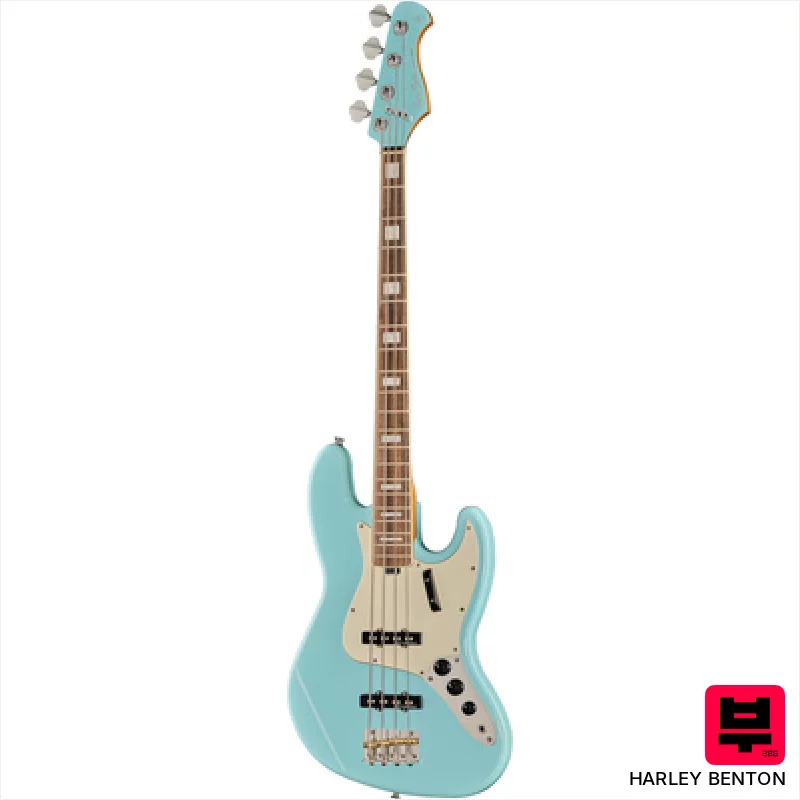
Harley Benton MV-4JB Daphne Blue
- • Alder body delivers a balanced, punchy low-end response.
- • Caramelized maple neck offers a surprisingly smooth, fast playing feel.
- • Custom-wound VJB pickups provide a sweet, articulate vintage tone.
- • Sung Il bridge with brass saddles enhances sustain and tuning stability.
- • Bolt-on neck construction limits high-end sustain compared to set-neck designs.
- • Roseacer fretboard might feel slightly less refined than ebony or maple.
- • Daphne Blue finish, while attractive, could be prone to swirl marks.

Harley Benton JB-75 SB Vintage Series w/Bag
- • American ash body provides a resonant, balanced tonal foundation.
- • Roswell JBA pickups deliver surprisingly authentic vintage J-Bass tones.
- • Canadian Hard Rock Maple neck offers comfortable playability and stability.
- • Solid hardware, including Sung Il bridge and HB machine heads, enhances tuning stability.
- • Laurel fretboard, while playable, lacks the premium feel of rosewood or ebony.
- • Bolt-on neck construction can slightly dampen sustain compared to a neck-through design.
- • 3-Tone Sunburst finish is a common aesthetic; lacks unique visual flair.
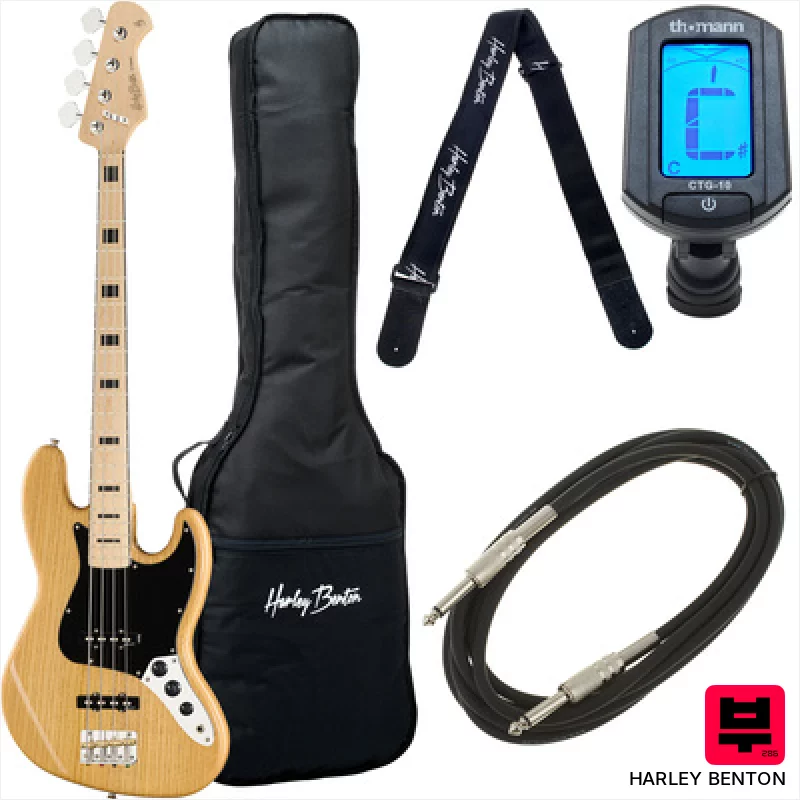
Harley Benton JB-75MN NA Vintage Seri Bundle
- • American ash body delivers a surprisingly resonant and articulate low-end.
- • Roswell JBA pickups offer a genuine vintage Jazz Bass tone, warm and punchy.
- • Canadian Hard Rock maple neck provides excellent stability and comfortable playability.
- • Sung Il WB401CR bridge with brass saddles enhances sustain and intonation stability.
- • High-gloss finish might be a bit too shiny for some players’ preferences.
- • Maple fretboard can be a bit drier feeling compared to rosewood alternatives.
- • The 'D' neck profile, while comfortable, may not suit all hand sizes.
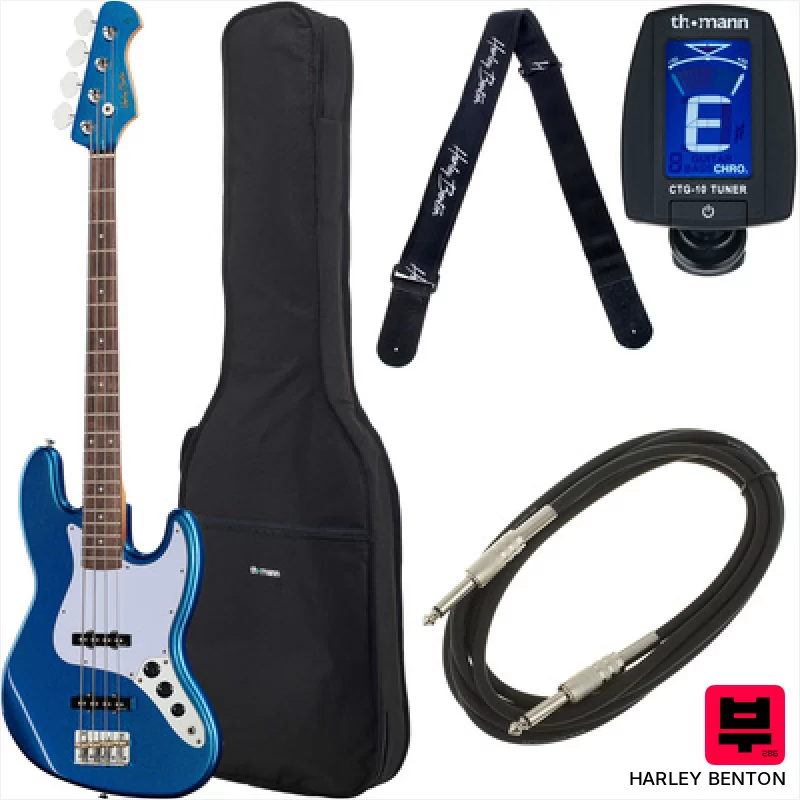
Harley Benton JB-62CC LPB Bundle
- • Basswood body provides a balanced, resonant tone suitable for many genres
- • Roswell pickups deliver a surprisingly authentic vintage J-Bass growl
- • Bolt-on neck with caramelised maple offers comfortable playability and stability
- • Accessory pack adds immediate value, useful for beginners or gigging
- • Basswood body can feel a bit 'soft' and prone to dents with rough handling
- • Laurel fretboard might require more frequent oiling to prevent dryness
- • Bolt-on neck design limits high-end sustain compared to neck-through construction
Every 4-string j-basses that matches
80 models match this page. The 15 above are covered in detail; the rest are listed here with their published specifications.
| # | Model | Specifications | Price |
|---|---|---|---|
| 16 | Harley Benton JB-75 SB Vintage Series | Nut width 38 mm (1.5") · Scale 864 mm (34.02") · Fingerboard radius 305 mm (12.01") · Neck profile D-shape neck · Body Ash body · Fingerboard Laurel fingerboard | $200 |
| 17 | Harley Benton JB-75MN NA Vintage Series | Nut width 38 mm (1.5") · Scale 864 mm (34.02") · Fingerboard radius 305 mm (12.01") · Neck profile D-shape neck · Body Ash body · Fingerboard Maple fingerboard | $200 |
| 18 | Harley Benton JB-62 SB Bundle | Nut width 38 mm (1.5") · Scale 864 mm (34.02") · Fingerboard radius 305 mm (12.01") · Neck profile D-shape neck · Body Basswood body · Fingerboard Laurel fingerboard | $200 |
| 19 | Harley Benton JB-62CC SFG Bundle | Nut width 38 mm (1.5") · Scale 864 mm (34.02") · Fingerboard radius 305 mm (12.01") · Neck profile D-shape neck · Body Poplar body · Fingerboard Laurel fingerboard | $200 |
| 20 | Harley Benton JB-62CC Mini SP | Nut width 38 mm (1.5") · Scale 584 mm (22.99") · Fingerboard radius 305 mm (12.01") · Neck profile C-shape neck · Body Basswood body · Fingerboard Maple fingerboard | $189 |
| 21 | Harley Benton JB-62CC Mini SFG | Nut width 38 mm (1.5") · Scale 584 mm (22.99") · Fingerboard radius 305 mm (12.01") · Neck profile D-shape neck · Body Basswood body · Fingerboard Maple fingerboard | $189 |
| 22 | Harley Benton JB-62CC LPB | Nut width 38 mm (1.5") · Scale 864 mm (34.02") · Fingerboard radius 305 mm (12.01") · Neck profile D-shape neck · Body Basswood body · Fingerboard Laurel fingerboard | $178 |
| 23 | Harley Benton JB-62CC SFG | Nut width 38 mm (1.5") · Scale 864 mm (34.02") · Fingerboard radius 305 mm (12.01") · Neck profile D-shape neck · Body Poplar body · Fingerboard Laurel fingerboard | $178 |
| 24 | Harley Benton JB-62SB | Nut width 38 mm (1.5") · Scale 864 mm (34.02") · Fingerboard radius 305 mm (12.01") · Neck profile D-shape neck · Body Basswood body · Fingerboard Laurel fingerboard | $178 |
| 25 | Mooer MBJ412 Bass Dark Blue | Scale 864 mm (34.02") · Frets 21 frets · Body Poplar body · Fingerboard Rosewood fingerboard · Weight 3.924 kg | $312 |
| 26 | Mooer MBJ412 Bass Dark Silver | Scale 864 mm (34.02") · Frets 21 frets · Body Poplar body · Fingerboard Rosewood fingerboard · Weight 3.924 kg | $312 |
| 27 | Harley Benton MV-4JB Burgundy Mist w/Case | Nut width 38 mm (1.5") · Scale 864 mm (34.02") · Fingerboard radius 305 mm (12.01") · Body Alder body · Fingerboard Laurel fingerboard | $289 |
| 28 | Harley Benton MV-4JB Seafoam Green w/Case | Nut width 38 mm (1.5") · Scale 864 mm (34.02") · Fingerboard radius 305 mm (12.01") · Body Alder body · Fingerboard Laurel fingerboard | $289 |
| 29 | Harley Benton MV-4JB Shell Pink w/Case | Nut width 38 mm (1.5") · Scale 864 mm (34.02") · Fingerboard radius 305 mm (12.01") · Body Alder body · Fingerboard Laurel fingerboard | $289 |
| 30 | Mooer MBJ410 Bass Metal Blue | Scale 864 mm (34.02") · Frets 21 frets · Body Poplar body · Fingerboard Maple fingerboard · Weight 3.924 kg | $289 |
| 31 | Harley Benton JB-62HA SB | Nut width 38 mm (1.5") · Scale 864 mm (34.02") · Fingerboard radius 305 mm (12.01") · Neck profile C-shape neck · Fingerboard Laurel fingerboard | $278 |
| 32 | Harley Benton JB-62LA SB | Nut width 38 mm (1.5") · Scale 864 mm (34.02") · Fingerboard radius 305 mm (12.01") · Neck profile C-shape neck · Fingerboard Laurel fingerboard | $278 |
| 33 | Harley Benton JB-62HA LPB over SB | Nut width 38 mm (1.5") · Scale 864 mm (34.02") · Fingerboard radius 305 mm (12.01") · Neck profile C-shape neck · Fingerboard Laurel fingerboard | $278 |
| 34 | Harley Benton JB-62LA LPB over SB | Nut width 38 mm (1.5") · Scale 864 mm (34.02") · Fingerboard radius 305 mm (12.01") · Neck profile C-shape neck · Fingerboard Laurel fingerboard | $278 |
| 35 | Harley Benton MV-4JB Shell Pink | Nut width 38 mm (1.5") · Scale 864 mm (34.02") · Fingerboard radius 305 mm (12.01") · Body Alder body · Fingerboard Laurel fingerboard | $256 |
| 36 | Harley Benton MV-4JB Seafoam Green | Nut width 38 mm (1.5") · Scale 864 mm (34.02") · Fingerboard radius 305 mm (12.01") · Body Alder body · Fingerboard Laurel fingerboard | $256 |
| 37 | Harley Benton MV-4JB Burgundy Mist | Nut width 38 mm (1.5") · Scale 864 mm (34.02") · Fingerboard radius 305 mm (12.01") · Body Alder body · Fingerboard Laurel fingerboard | $256 |
| 38 | Harley Benton JB-20 BM St. Series w/Bag | Nut width 38 mm (1.5") · Scale 864 mm (34.02") · Frets 20 frets · Body Poplar body · Fingerboard Laurel fingerboard | $151 |
| 39 | Harley Benton JB-20 BM St. Series Bundle | Nut width 38 mm (1.5") · Scale 864 mm (34.02") · Frets 20 frets · Body Poplar body · Fingerboard Laurel fingerboard | $144 |
| 40 | Harley Benton JB-20 BM Standard Series | Nut width 38 mm (1.5") · Scale 864 mm (34.02") · Frets 20 frets · Body Poplar body · Fingerboard Laurel fingerboard | $133 |
| 41 | Harley Benton JB-20 CA Standard Serie Bundle | Nut width 38 mm (1.5") · Scale 864 mm (34.02") · Frets 20 frets · Body Poplar body · Fingerboard Laurel fingerboard | $133 |
| 42 | Harley Benton JB-20 SB Standard Series | Nut width 38 mm (1.5") · Scale 864 mm (34.02") · Frets 20 frets · Body Poplar body · Fingerboard Laurel fingerboard | $122 |
| 43 | Harley Benton JB-20 CA Standard Series | Nut width 38 mm (1.5") · Scale 864 mm (34.02") · Frets 20 frets · Body Poplar body · Fingerboard Laurel fingerboard | $122 |
| 44 | Marcus Miller V5 Alder-4 TS | Nut width 38 mm (1.5") · Fingerboard radius 241 mm (9.49") · Neck profile C-shape neck · Body Alder body · Fingerboard Maple fingerboard | $493 |
| 45 | Marcus Miller V3P-4 ORG | Nut width 38 mm (1.5") · Scale 864 mm (34.02") · Neck profile C-shape neck · Body Mahogany body · Fingerboard Rosewood fingerboard | $412 |
| 46 | Markbass MB Yellow LITTLE | Nut width 36 mm (1.42") · Scale 762 mm (30") · Neck profile C-shape neck · Body Poplar body · Fingerboard Laurel fingerboard | $334 |
| 47 | Markbass MB Yellow JB | Nut width 36 mm (1.42") · Scale 864 mm (34.02") · Neck profile C-shape neck · Body Poplar body · Fingerboard Laurel fingerboard | $334 |
| 48 | Harley Benton JB-75MN Black V. Series w/Bag | Nut width 38 mm (1.5") · Fingerboard radius 305 mm (12.01") · Neck profile D-shape neck · Body Ash body · Fingerboard Maple fingerboard | $218 |
| 49 | Harley Benton JB-75MN Black V. Series Bundle | Nut width 38 mm (1.5") · Fingerboard radius 305 mm (12.01") · Neck profile D-shape neck · Body Ash body · Fingerboard Maple fingerboard | $211 |
| 50 | Harley Benton JB-62CC OW Bundle | Nut width 38 mm (1.5") · Scale 864 mm (34.02") · Neck profile D-shape neck · Body Basswood body · Fingerboard Laurel fingerboard | $200 |
| 51 | Harley Benton JB-62CC SP Bundle | Nut width 38 mm (1.5") · Scale 864 mm (34.02") · Neck profile D-shape neck · Body Basswood body · Fingerboard Laurel fingerboard | $200 |
| 52 | Harley Benton JB-75MN Black Vintage Series | Nut width 38 mm (1.5") · Fingerboard radius 305 mm (12.01") · Neck profile D-shape neck · Body Ash body · Fingerboard Maple fingerboard | $200 |
| 53 | Harley Benton JB-62CC BK Bundle | Nut width 38 mm (1.5") · Scale 864 mm (34.02") · Neck profile D-shape neck · Body Poplar body · Fingerboard Laurel fingerboard | $189 |
| 54 | Harley Benton JB-62CC SP | Nut width 38 mm (1.5") · Scale 864 mm (34.02") · Neck profile D-shape neck · Body Basswood body · Fingerboard Laurel fingerboard | $178 |
| 55 | Harley Benton JB-62CC OW | Nut width 38 mm (1.5") · Scale 864 mm (34.02") · Neck profile D-shape neck · Body Basswood body · Fingerboard Laurel fingerboard | $178 |
| 56 | Harley Benton JB-62CC BK | Nut width 38 mm (1.5") · Scale 864 mm (34.02") · Neck profile D-shape neck · Body Poplar body · Fingerboard Laurel fingerboard | $178 |
| 57 | Harley Benton HBZ-2004 Deluxe Series | Nut width 40 mm (1.57") · Scale 864 mm (34.02") · Frets 24 frets · Fingerboard Jatoba fingerboard | $334 |
| 58 | Harley Benton Bass Guitar Kit J-Style | Nut width 38 mm (1.5") · Scale 864 mm (34.02") · Frets 20 frets · Fingerboard Laurel fingerboard | $111 |
| 59 | Flight Mini JB Bass Blue | Nut width 38.1 mm (1.5") · Frets 20 frets · Body Poplar body · Fingerboard Maple fingerboard | $436 |
| 60 | Flight Mini JB Bass Moonburst | Nut width 38.1 mm (1.5") · Frets 20 frets · Body Poplar body · Fingerboard Maple fingerboard | $435 |
| 61 | Harley Benton MV-4JB BassTheWorld w/Bag | Nut width 38 mm (1.5") · Scale 864 mm (34.02") · Body Alder body · Fingerboard Laurel fingerboard | $424 |
| 62 | Marcus Miller V3P-4 BKS | Nut width 38 mm (1.5") · Scale 864 mm (34.02") · Neck profile C-shape neck · Fingerboard Rosewood fingerboard | $401 |
| 63 | Marcus Miller V3P-4 TS | Nut width 38 mm (1.5") · Scale 864 mm (34.02") · Neck profile C-shape neck · Fingerboard Rosewood fingerboard | $401 |
| 64 | Harley Benton MV-4JB BassTheWorld | Nut width 38 mm (1.5") · Scale 864 mm (34.02") · Body Alder body · Fingerboard Laurel fingerboard | $390 |
| 65 | Markbass MB BLUE SKY JB | Nut width 36 mm (1.42") · Scale 864 mm (34.02") · Body Poplar body · Fingerboard Laurel fingerboard | $334 |
| 66 | Marcus Miller V5R Alder-4 MLG | Nut width 38 mm (1.5") · Fingerboard radius 241 mm (9.49") · Neck profile C-shape neck | $468 |
| 67 | Marcus Miller V3 SB 2nd Gen | Nut width 38 mm (1.5") · Scale 864 mm (34.02") · Neck profile C-shape neck | $446 |
| 68 | Marcus Miller V3 TS 2nd Gen | Nut width 38 mm (1.5") · Scale 864 mm (34.02") · Neck profile C-shape neck | $430 |
| 69 | Marcus Miller V3 AWH 2nd Gen | Nut width 38 mm (1.5") · Scale 864 mm (34.02") · Neck profile C-shape neck | $416 |
| 70 | Marcus Miller V3 ORG 2nd Gen | Nut width 38 mm (1.5") · Scale 864 mm (34.02") · Neck profile C-shape neck | $401 |
| 71 | Squier CV 70s Jazz Bass MN NAT Bundle | Nut width 38.1 mm (1.5") · Neck profile C-shape neck · Body Maple body | $486 |
| 72 | Squier CV 60s Jazz Bass LRL DPB | Nut width 38.1 mm (1.5") · Neck profile C-shape neck · Body Poplar body | $479 |
| 73 | Squier CV 70s Jazz Bass MN 3TS | Nut width 38.1 mm (1.5") · Neck profile C-shape neck · Body Poplar body | $468 |
| 74 | Squier CV 70s Jazz Bass MN BK | Nut width 38.1 mm (1.5") · Neck profile C-shape neck · Body Poplar body | $468 |
| 75 | Squier CV 70s Jazz Bass MN NAT | Nut width 38.1 mm (1.5") · Neck profile C-shape neck · Body Maple body | $468 |
| 76 | Squier CV 60s Jazz Bass LRL 3TS | Nut width 38.1 mm (1.5") · Neck profile C-shape neck · Body Poplar body | $466 |
| 77 | Harley Benton Enhanced MJ-4MN Natural w/Bag | Nut width 39 mm (1.54") · Scale 864 mm (34.02") | $352 |
| 78 | Harley Benton Enhanced MJ-4MN Natural | Nut width 39 mm (1.54") · Scale 864 mm (34.02") | $334 |
| 79 | Marcus Miller V5 Alder-4 NT | Nut width 38 mm (1.5") · Body Alder body | $495 |
| 80 | Marcus Miller V5 Alder-4 VWH | Nut width 38 mm (1.5") · Neck profile C-shape neck | $491 |
4-String J-Basses by the numbers
Measured across all 80 models in this category, so «wide», «short» or «expensive» mean something you can check.
How to Choose the Best 4-String J-Basses
Neck Profile
This is huge. A chunky, slow neck will feel like wrestling a log, while a too-thin neck can feel flimsy. Ideally, you want something comfortable and consistent, allowing for decent reach without feeling like you're fighting the instrument.
Pickup Voicing
J-Bass pickups can range from muddy and indistinct to brittle and harsh. We're looking for a balance - a defined low-end thump that doesn't get lost in the mix, and enough upper-midrange clarity to articulate those walking basslines without sounding ice-picky.
Hardware Quality
Cheap tuners mean constant retuning, and a flimsy bridge will kill sustain and intonation. Pay attention to how the hardware feels. Does it feel solid and well-assembled, or like it's going to strip with a decent amount of tension?
Body Wood & Construction
You're not getting alder or ash at this price point. Expect basswood, mahogany, or sometimes a laminate. Solid wood is preferable to a hollow or semi-hollow body for sustain and resonance, but those are rare finds under $500.
Finish & Fretwork
A rough finish or poorly dressed frets will kill your playing experience. Look for a smooth, even finish (doesn't have to be fancy) and check the fret ends - are they sharp and digging into your hand? This often requires a setup, but it's a red flag if it's really bad from the factory.
Buying Guide
At this price point, compromises are inevitable. Expect some cheaper hardware, potentially a less-resonant body wood, and maybe a slightly rougher finish. Don't chase a perfectly bright, sparkly clean tone - these basses are going to be more about that warm, slightly gritty, vintage vibe. Focus on a comfortable neck, decent pickups, and a stable setup. A good setup by a tech will often improve the feel and playability more than anything else.
How This List Is Built
We don't play these instruments — we're a catalog, not a review desk, and we'd rather say so than pretend otherwise. This page covers 80 4-string j-basses from the Thomann catalogue, which is the largest single source of specification data in this category: 15 in detail, the rest listed with their specifications.
Position is computed, not curated. We parse the manufacturer's own description into actual values — nut width, scale, fret count, fingerboard radius, size, alloy — and rank on them: how many specifications a model has published, how many of them are measurable numbers, and how precisely it meets this page's criterion. A product image adds a little. Price is not a ranking signal: it tells you nothing about whether a neck fits your hand. The same inputs always produce the same order, so nothing here is shuffled to look fresh.
What this list is good for: narrowing a category down to a shortlist by spec and budget. What it isn't: a substitute for hearing an instrument. Before you buy, read hands-on reviews and, where you can, play it. Full methodology.

