
Best 3/4 Size Classical Guitars for Learning 2026
So, you're starting out on classical guitar? Awesome! A 3/4 size is often the sweet spot for younger players or those with smaller hands, but not all of them are created equal. Finding one that's comfortable, sounds decent, and won't have you fighting the instrument every step of the way is crucial - otherwise, you'll be quitting before you even get to learn 'Classical Gas'. Let's break down some solid options.
Last updated: July 22, 2026 • Next update: July 29, 2026
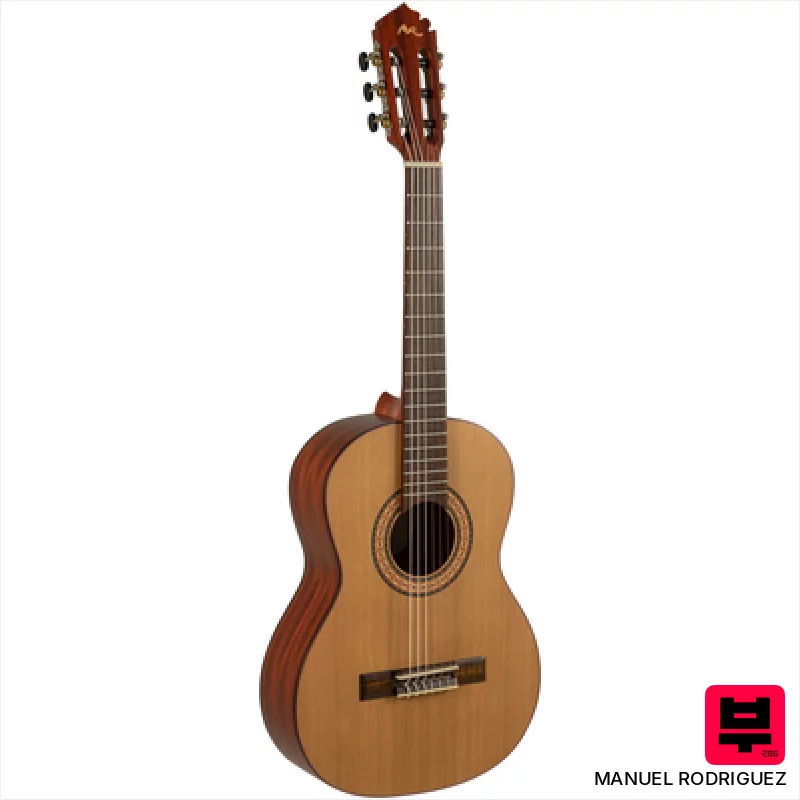
Manuel Rodriguez T-57
- • Solid cedar top delivers a warm, responsive tone with good projection.
- • Mahogany back and sides contribute to a balanced, mature sound.
- • Ovangkol fingerboard offers a smooth playing experience and durability.
- • 570mm scale and 47mm nut width are ideal for smaller hands and younger players.
- • Hannabach strings are decent, but an upgrade will significantly enhance the tone.
- • Mahogany construction can limit sustain compared to rosewood alternatives.
- • 3/4 size restricts volume and low-end response for experienced players.

Caballero by Manuel Rodriguez Principio CA-PM 3/4
- • Solid spruce top delivers a surprisingly resonant and clear tone.
- • Okoume neck with carbon reinforcement adds stability and reduces warping.
- • Hannabach 600HT strings provide a bright, modern sound and good projection.
- • Rosewood fingerboard offers a comfortable playing experience with good note definition.
- • Sapelli mahogany back and sides limit the overall tonal complexity and sustain.
- • ABS binding feels a bit cheap compared to traditional wood binding.
- • Matte finish, while environmentally friendly, can show fingerprints easily.
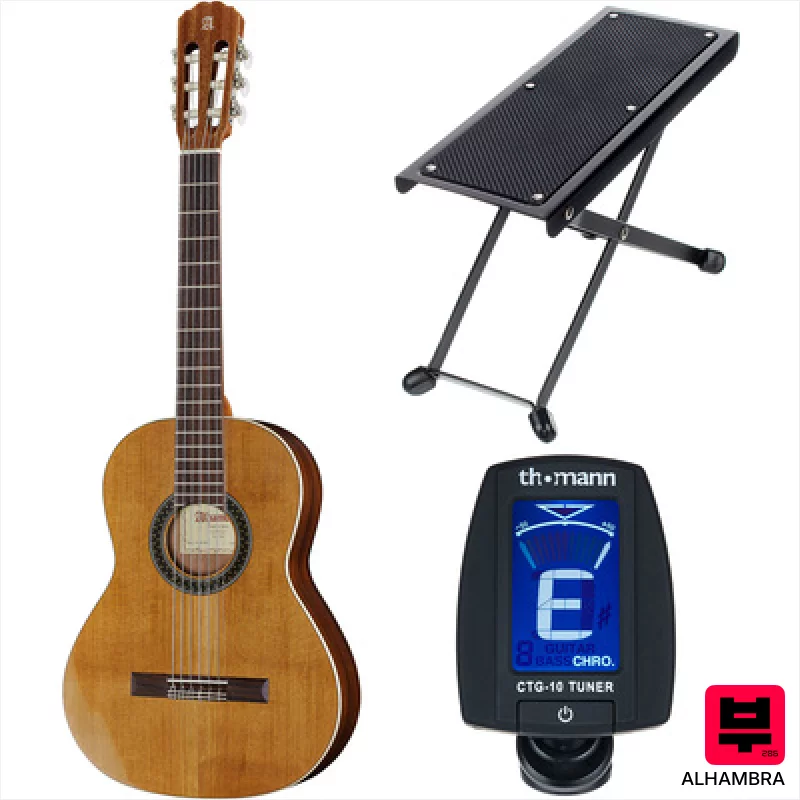
Alhambra 1C HT 3/4 incl. Gigbag Bundle
- • Solid cedar top delivers a warm, responsive, and nuanced tone.
- • Ergo neck profile promotes comfortable playing, especially for smaller hands.
- • Mahogany back and sides provide a balanced, pleasing resonance.
- • Included gig bag and footrest offer excellent value and immediate playability.
- • The 3/4 size limits projection and low-end response for larger players.
- • Open-pore body finish, while aesthetically pleasing, may require more careful maintenance.
- • Melamine nut and saddle are functional but not as premium as bone or ebony.

La Mancha Rubi S / 59
- • Solid German spruce top delivers a clear, responsive tone.
- • Toona Kalantas neck with carbon reinforcement enhances stability and sustain.
- • Ovangkol fretboard offers a smooth playing experience and warm tonal character.
- • Gold-plated machine heads provide precise tuning and a touch of elegance.
- • 3/4 size limits suitability for adult players with larger hands.
- • Mahogany back and sides might lack the projection of rosewood for some players.
- • High-tension strings can be challenging for beginners.
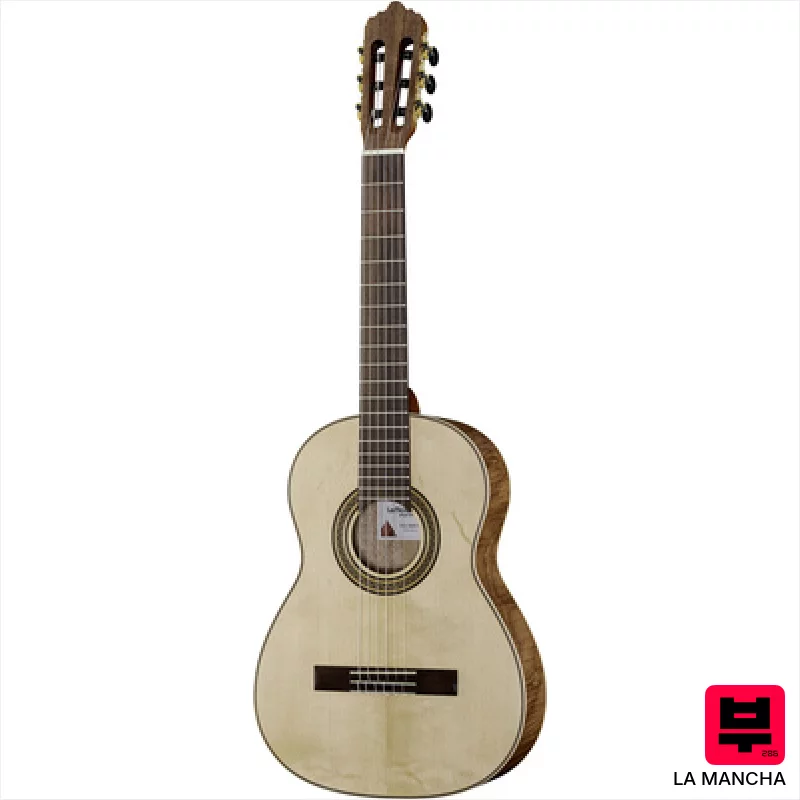
La Mancha Rubi SMX/59
- • Solid German spruce top delivers a clear, responsive tone.
- • Toona Kalantas neck provides excellent stability and a comfortable feel.
- • Carbon reinforcement enhances neck strength, preventing warping over time.
- • Ovangkol bridge and fretboard contribute to a warm, rich sustain.
- • The matte finish, while aesthetically pleasing, can be more prone to fingerprints.
- • 3/4 size limits its appeal for larger hands or experienced players.
- • While well-built, the exotic mahogany back and sides are not as tonally complex as all-solid woods.
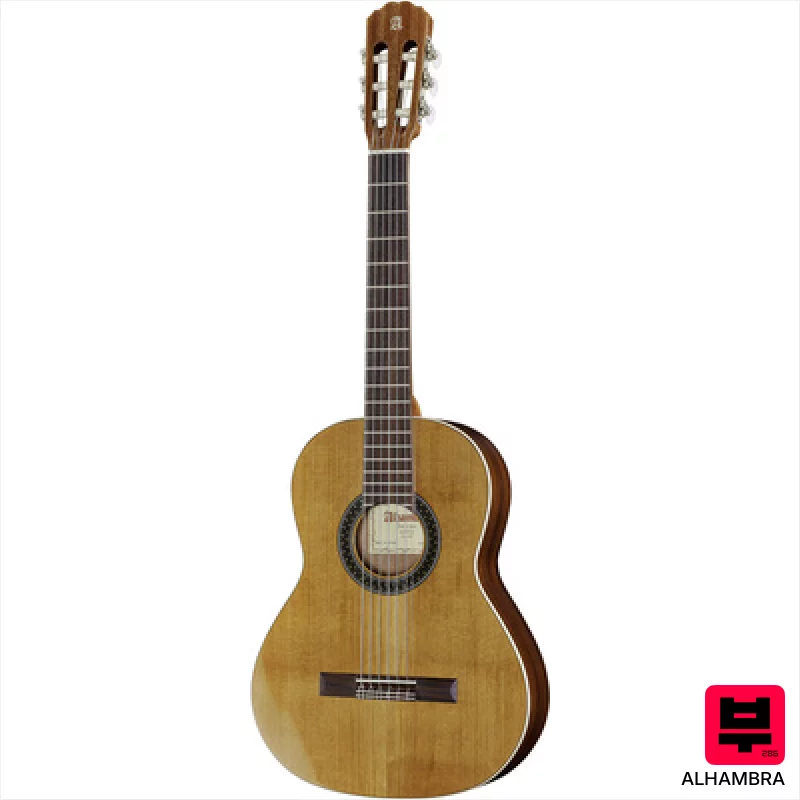
Alhambra 1C HT 3/4 incl. Gigbag
- • Solid cedar top delivers warm, responsive tone ideal for classical pieces.
- • Ergo neck profile enhances comfort, especially for smaller hands or beginners.
- • Mahogany back and sides provide a balanced, focused acoustic response.
- • Includes a gig bag, making it immediately playable and portable.
- • Cedar top can be susceptible to dings and scratches requiring careful handling.
- • 3/4 size limits projection and bass response compared to full-size models.
- • Rosewood fretboard, while standard, might feel slightly less polished than higher-end instruments.

Alhambra 3C 3/4 Cadete NT incl.Gig Bag
- • Solid cedar top delivers a warm, responsive, and pleasingly balanced tone.
- • Sapelli back and sides provide good projection and sustain for the price point.
- • Rosewood fingerboard and bridge offer a classic feel and contribute to tonal richness.
- • The included gig bag offers basic protection and portability for students or travel.
- • Sapelli back and sides, while good, won't match the tonal complexity of more premium woods like mahogany or rosewood.
- • The 3/4 size is ideal for younger players, limiting appeal for adults with larger hands.
- • Bone nut is a nice touch, but the overall hardware is functional rather than premium.
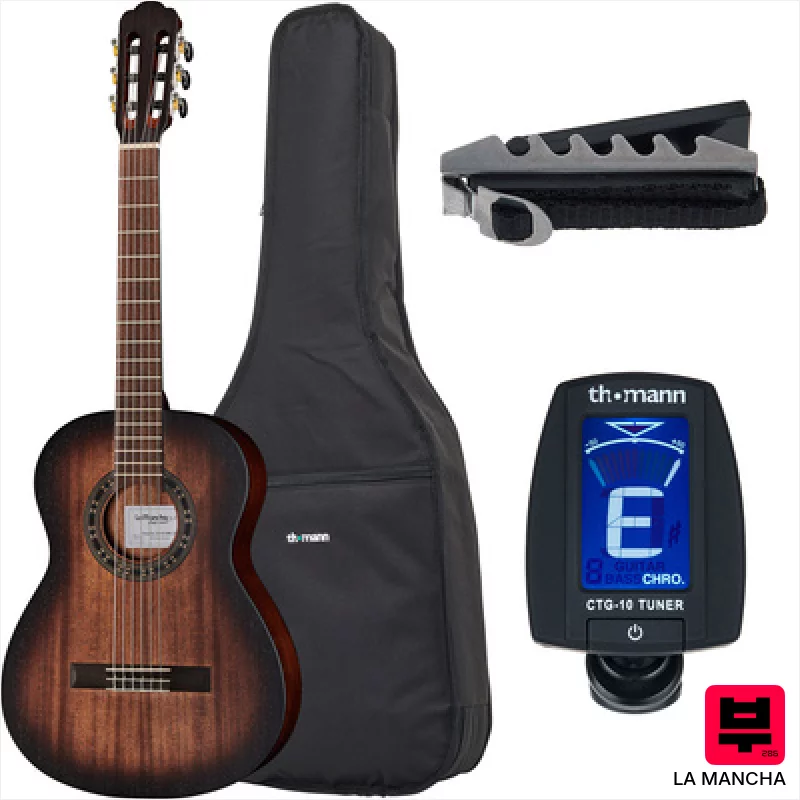
La Mancha Granito 33-N-MB-3/4 Bundle
- • Solid mahogany top delivers a warm, focused tone suitable for classical study.
- • Narrow neck profile eases the learning curve for smaller hands and younger players.
- • Ovangkol fingerboard offers a smooth playing experience and good durability.
- • Included accessory pack provides essentials for immediate play and practice.
- • Mahogany construction may lack the projection of more premium rosewood options.
- • Open pore matte finish, while aesthetically pleasing, is more prone to scuffs.
- • Savarez strings are decent, but a worthwhile upgrade for more nuanced tone.
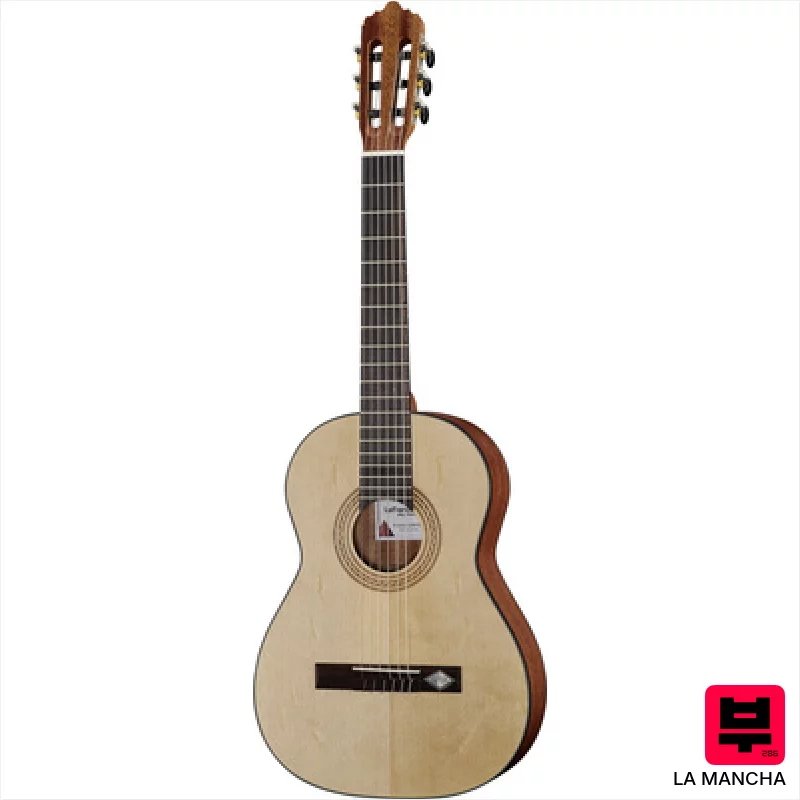
La Mancha Rubinito LSM/59-L 3/4
- • Spruce top delivers a surprisingly bright and responsive tone for the price.
- • Mahogany back & sides add warmth and a pleasant sustain.
- • Ovangkol fingerboard offers a smooth playing experience, surprisingly refined.
- • Compact 3/4 size is ideal for younger players or travel.
- • NuBone saddle, while decent, isn't a premium bone and may impact sustain slightly.
- • Matt natural finish can feel a little plain compared to glossier options.
- • Nato neck, while stable, lacks the premium feel of Spanish cedar.
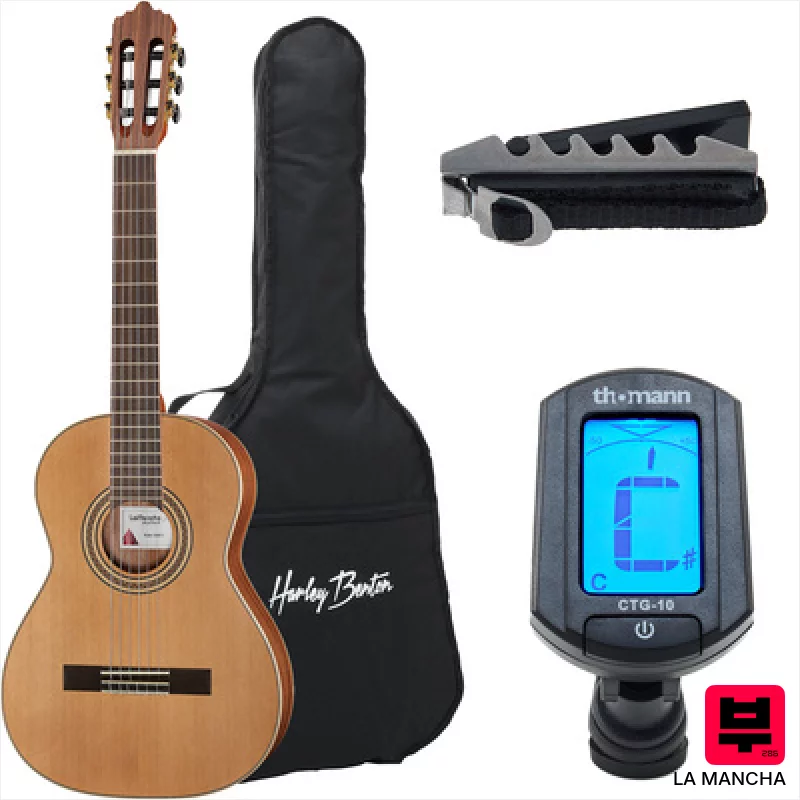
La Mancha Rubi CM/59 Bundle
- • Canadian cedar top delivers a warm, responsive tone suitable for student and intermediate players.
- • Toona Kalantas neck with carbon reinforcement ensures stability and resists unwanted warping.
- • Bone nut and saddle contribute to improved sustain and clearer note definition.
- • Gold-plated machine heads offer smooth tuning stability and a touch of visual refinement.
- • Mahogany back and sides, while pleasant, limit the guitar's overall projection and brilliance.
- • Matt open-pore finish, while aesthetically pleasing, may require more frequent cleaning and care.
- • 3/4 size restricts suitability for older or larger-handed players needing a full-size instrument.

Thomann Classic Guitar 3/4 BK Bundle
- • Spruce top provides a surprisingly bright and responsive tone for the price.
- • Maple back and sides offer a balanced warmth and projection.
- • The included gig bag, tuner, and capo offer excellent value.
- • 3/4 size makes it ideal for younger players or those preferring a smaller instrument.
- • Laminated construction limits the tonal complexity compared to solid wood guitars.
- • Maple fingerboard can feel a bit harder than rosewood, impacting playability.
- • Nickel machine heads might exhibit some slippage over time and require occasional tuning.
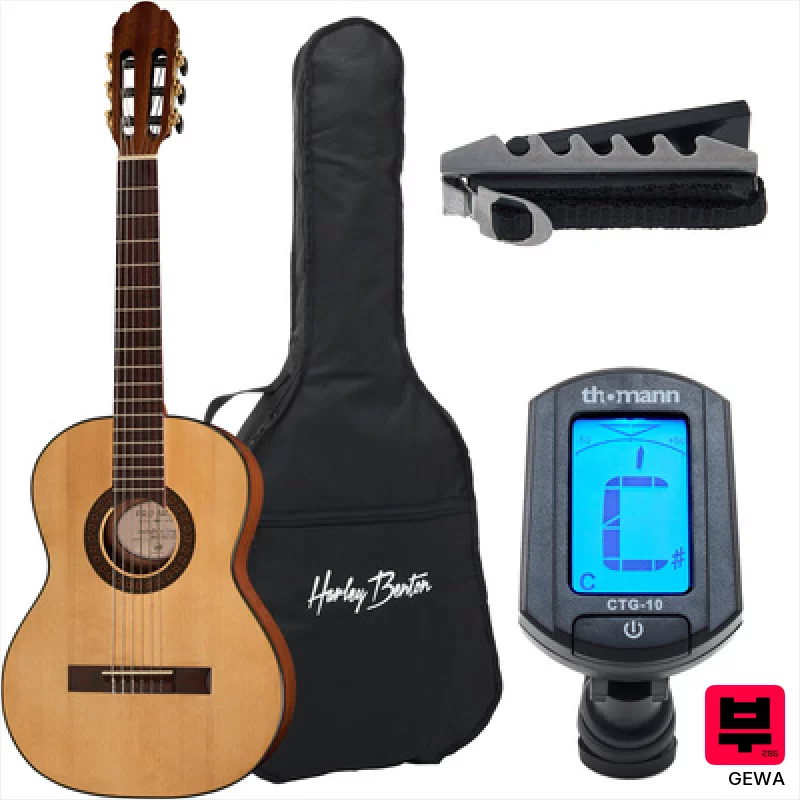
Gewa Pro Arte GC75A Bundle
- • Solid spruce top delivers a surprisingly bright and responsive tone for the price.
- • Mahogany back and sides add warmth and sustain, balancing the spruce's brightness.
- • European craftsmanship generally indicates good attention to detail and build quality.
- • The included accessory pack (gig bag, tuner, capo) adds immediate playability and value.
- • Acacia fingerboard can feel a bit harder than rosewood, impacting playability slightly.
- • Polyurethane finish, while durable, can feel less 'open' and resonant than a traditional lacquer.
- • 3/4 size is specifically for younger learners; full-size players will find it cramped.

Ortega RCE125-3/4
- • Mahogany back/sides provide a warm, focused tone ideal for classical and fingerstyle.
- • Spruce top offers good projection and responsiveness for a student-level instrument.
- • MagusX/G pickup system delivers a usable amplified sound with rechargeable battery.
- • Walnut fingerboard provides a smooth playing experience and a slightly darker tone.
- • Mahogany construction limits the top-end sparkle compared to rosewood alternatives.
- • 3/4 size may feel cramped for players with larger hands or longer arms.
- • ABS binding is functional but lacks the aesthetic appeal of wood binding.
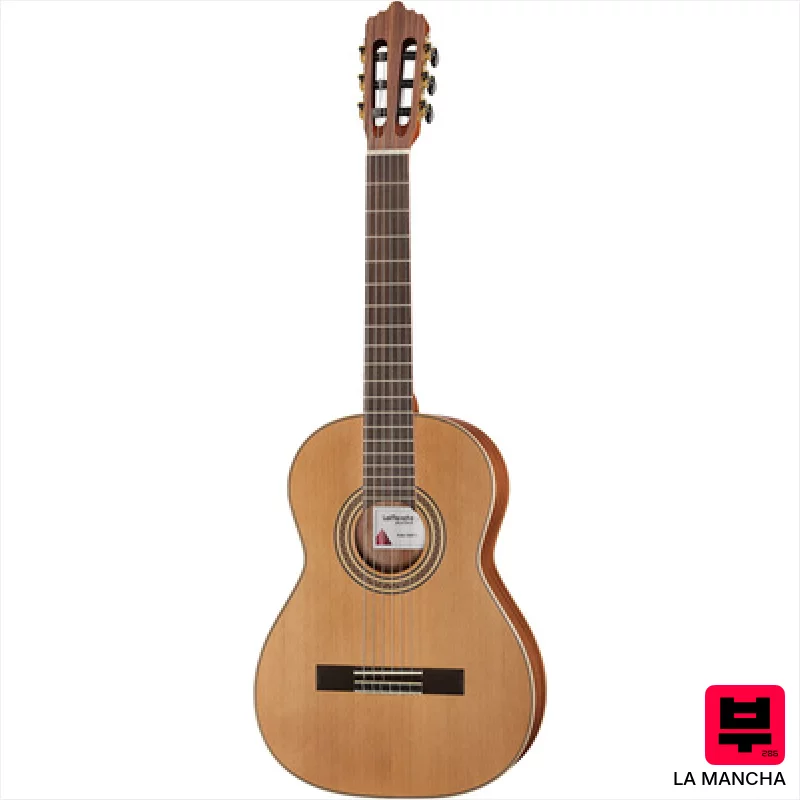
La Mancha Rubi CM/59
- • Canadian cedar top delivers a warm, responsive, and pleasingly mellow tone.
- • Toona Kalantas neck with carbon reinforcement provides excellent stability and playability.
- • Bone nut and saddles contribute to improved sustain and a cleaner tone.
- • Gold-plated machine heads offer smooth tuning and a touch of visual refinement.
- • Mahogany back and sides, while attractive, limit the guitar's potential for a brighter projection.
- • Matt open pore finish, while aesthetically pleasing, can be more susceptible to scuffs and marks.
- • 3/4 size restricts its suitability for adult players with larger hands or longer arms.
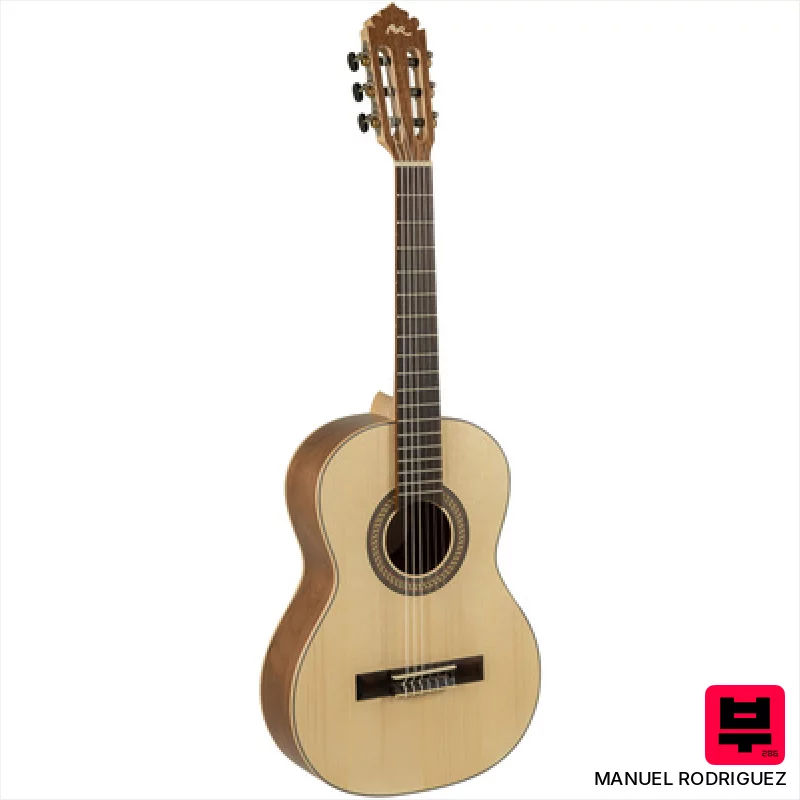
Manuel Rodriguez E-57
- • Solid spruce top delivers a surprisingly bright and responsive tone for the price.
- • Walnut back and sides add warmth and sustain, balancing the spruce's brightness.
- • Maple neck provides good stability and a comfortable feel, typical of European construction.
- • Acacia fingerboard offers a smooth playing experience and a pleasant feel under the fingers.
- • Acacia fingerboard can be prone to drying and minor fret sprout over time.
- • 3/4 size limits its appeal to smaller players or younger learners; projection is reduced.
- • While well-built, the overall finish lacks the refinement of higher-end instruments.
How to Choose the Best 3/4 Size Classical Guitars
Scale Length & Neck Profile
A shorter scale (usually around 23 inches) is easier on smaller hands, but a thick, unwieldy neck will still be a pain. Look for a comfortable 'C' or 'D' profile - something that doesn't feel like you're wrestling a telephone pole.
Action
This is huge. High action (string height) makes fretting difficult and tiring. Ideally, you want something manageable - not too low (buzzing) and not too high (straining). A little setup work from a tech can go a long way.
Tonal Response
Don't expect concert-hall sound, but a decent 3/4 size should have a balanced response. You want some warmth in the low-end, clarity in the midrange, and a touch of sparkle without being overly bright or ice-picky. Avoid guitars that sound muddy or thin.
Bracing Pattern
The bracing (the internal wooden structure) impacts sustain and tone. Newer, simpler bracing patterns are common on student instruments, and that's generally fine, but avoid anything that feels flimsy or excessively flexible. It'll impact projection.
Construction & Materials
Solid tops (usually spruce) generally sound better than laminate tops (like mahogany or sapele), even on a budget. Solid tops vibrate more freely, offering more sustain and a richer tonal palette. The back and sides are often laminate at this price point, and that's a reasonable trade-off.
Buying Guide
Don't chase the prettiest finish or the flashiest headstock. Focus on playability and tone. Student-grade instruments often cut corners on the nut and saddle - these are easily upgraded later, but a poorly cut nut can make a guitar unplayable from the start. A little bit more spent on a setup by a qualified luthier will make a far bigger difference than a fancy inlay.
Our Methodology
We're not basing this on spec sheets or marketing buzzwords. We've spent time with these guitars - in practice rooms, tracking demos, and even enduring a few less-than-ideal open mics. Our evaluations are about how these instruments feel under the fingers, how they respond to different playing styles, and whether they'll actually inspire you to keep practicing.

