
Best 19'' Rack Mixers Under $5,000 2026
Alright, so you need a rack mixer for gigs or tracking, but you're not looking to mortgage your apartment. Finding a solid 19-inch rack mixer under $5000 is totally doable, but you gotta know what to look for - and what compromises you're making. This isn't a 'best of' list; it's a practical guide to getting the most bang for your buck in this price bracket.
Last updated: April 11, 2026
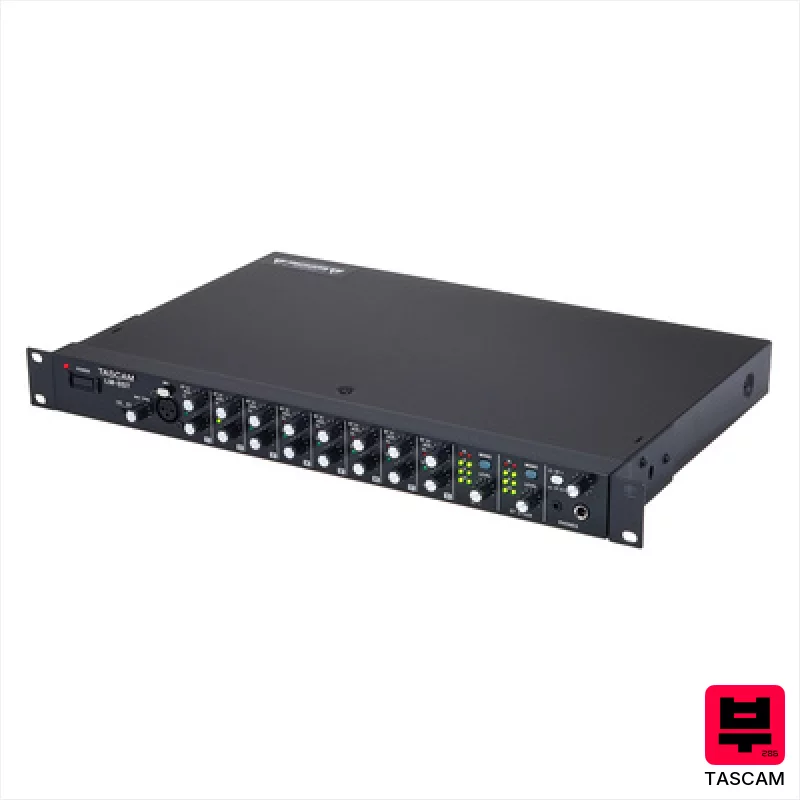
Tascam LM-8ST Line Mixer
- • Solid, compact build ideal for mobile rigs and small studios
- • Balanced XLR and TRS connections ensure clean, noise-free signal paths
- • Flexible routing options allow for independent stereo output control
- • Compact 19 in rackmount format maximizes space efficiency
- • Limited EQ capabilities; primarily for level adjustments only
- • No built-in effects processing; requires external units
- • Channel 1's mic/line input lacks gain control, limiting mic pre versatility
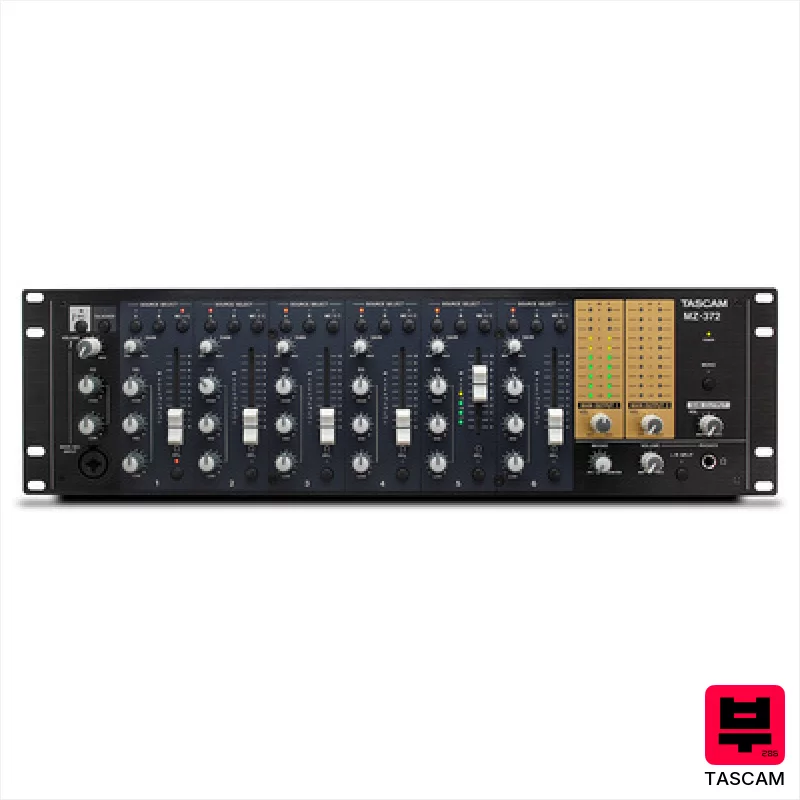
Tascam MZ-372 Mixer
- • Solid build quality for permanent installations, feels robust and reliable
- • Phono inputs offer flexibility for DJ or karaoke setups
- • Talkover function is genuinely useful for live announcements
- • Compact 3U rack height saves valuable rack space
- • Limited routing options compared to more modern mixers
- • EQ is basic; lacks the finesse of premium consoles
- • Front mic input lacks phantom power – requires external preamp
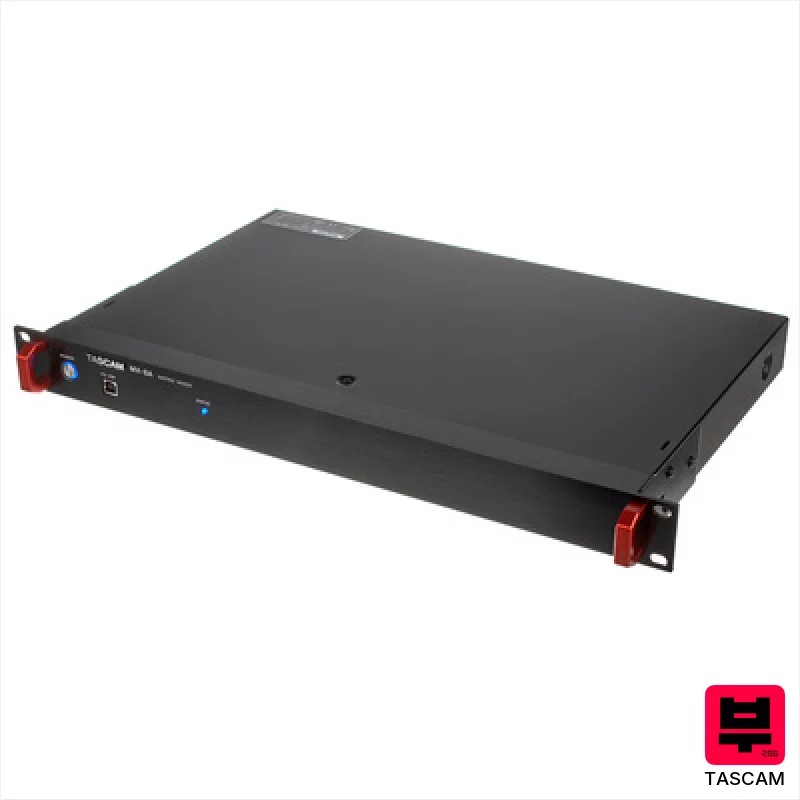
Tascam MX-8A
- • Robust Euroblock connectors ensure reliable, secure signal paths.
- • DSP processor offers flexible routing and processing options.
- • Compact 1U rackmount saves valuable rack space in tight setups.
- • Comprehensive remote control via Ethernet, RS-485, and RS-232C.
- • Limited channel count may restrict complex routing scenarios.
- • The single 1U height restricts headroom and cooling options.
- • Euroblock connectors may require specialized cables and adapters.
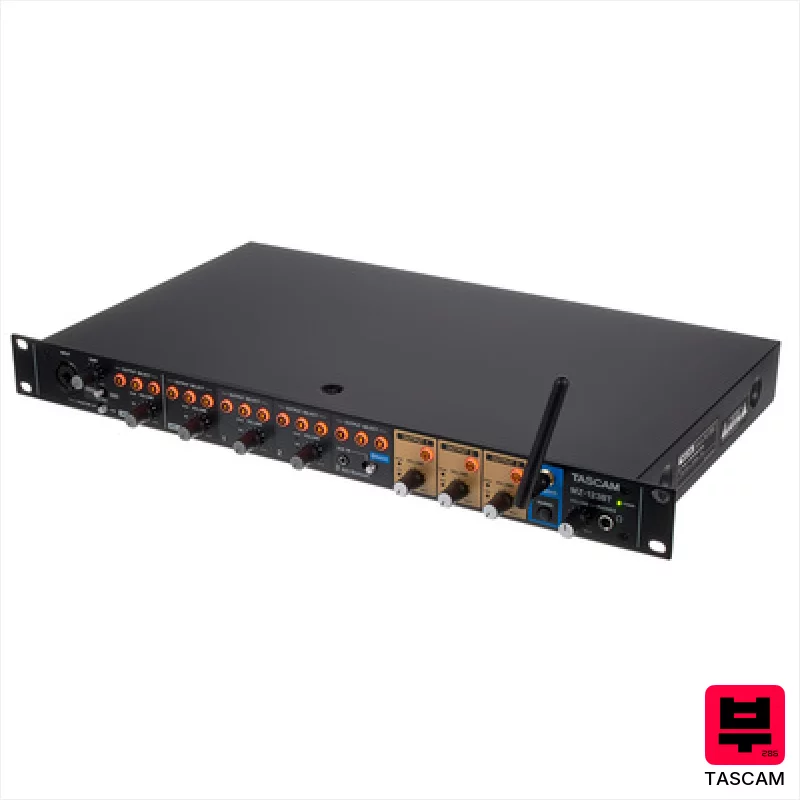
Tascam MZ-123 BT
- • Compact 1U rack format simplifies permanent installations.
- • Integrated Bluetooth offers convenient wireless audio streaming.
- • Talkover function provides seamless announcements and moderation.
- • Euroblock connectors ensure robust and secure signal connections.
- • Limited channel count restricts flexibility for complex setups.
- • Lack of individual channel EQ limits tonal shaping options.
- • Plastic enclosure feels less premium than all-metal competitors.
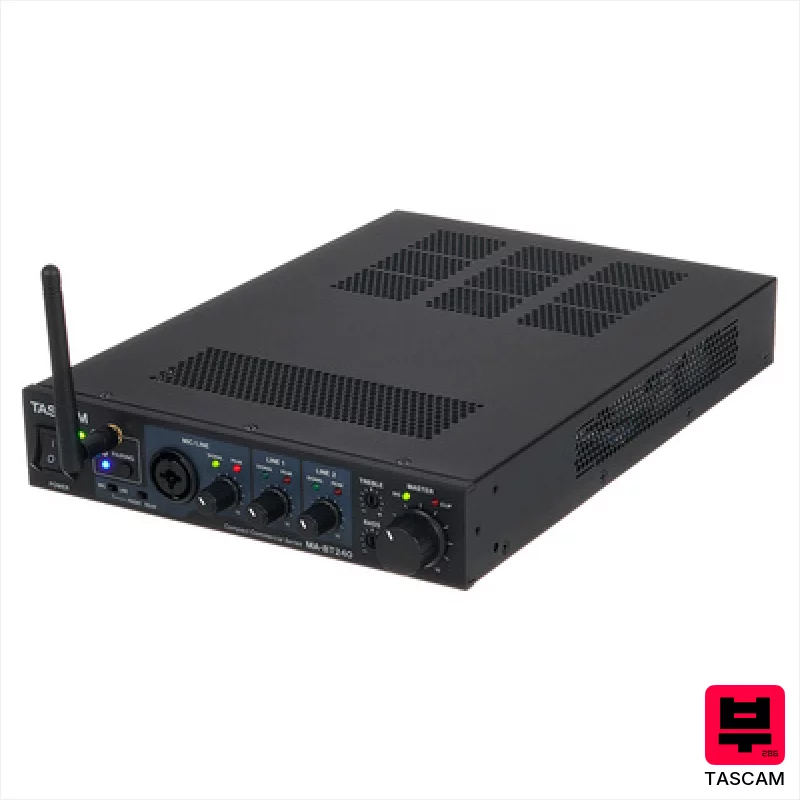
Tascam MA-BT240
- • Class D amplification delivers efficient power with surprisingly clean headroom.
- • 70V/100V capability expands installation options for distributed audio systems.
- • Built-in Bluetooth simplifies music playback for background ambience or demonstrations.
- • Ducking/paging feature is genuinely useful for announcements and live events.
- • External controller requirement adds to the overall system cost and complexity.
- • Limited EQ controls restrict fine-tuning for specific acoustic environments.
- • Rack space commitment might be restrictive for smaller, mobile setups.
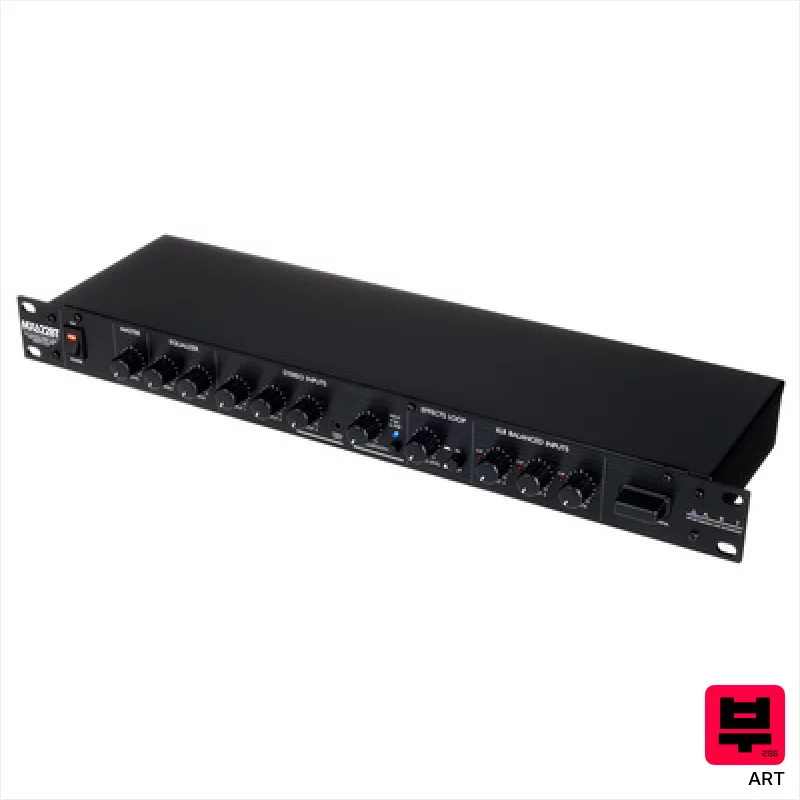
ART MX622BT
- • Solid metal chassis provides surprising road-worthiness for the price.
- • Bluetooth 5.0 offers stable connectivity and decent audio quality.
- • Flexible EQ allows for shaping tones beyond basic adjustments.
- • Balanced XLR inputs and outputs ensure clean, professional signal paths.
- • EQ is basic; lacks the finesse of more expensive mixer options.
- • Front panel 3.5mm input feels a little cheap and plasticky.
- • Limited routing options restrict its use in complex setups.
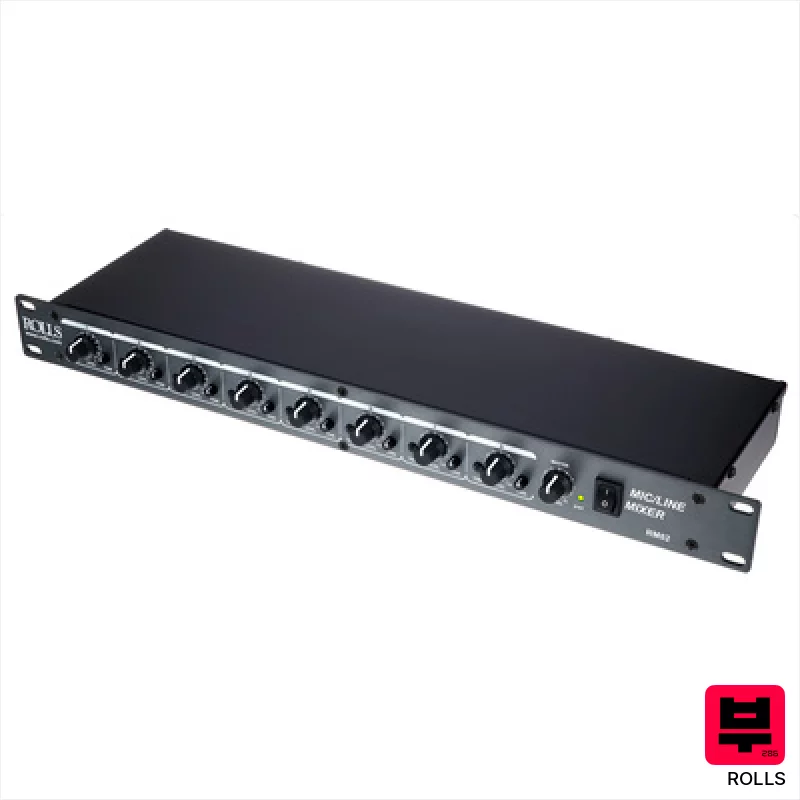
Rolls RM-82
- • Steel rack housing provides surprising rigidity for its size.
- • Individually switchable phantom power offers versatile mic options.
- • RCA prefade outputs simplify recording and monitoring workflows.
- • Compact 1U design saves valuable rack space in tight setups.
- • EQ is basic; only treble and bass controls are provided.
- • Limited channel processing beyond basic EQ.
- • Build quality, while robust, doesn't match high-end rack gear.
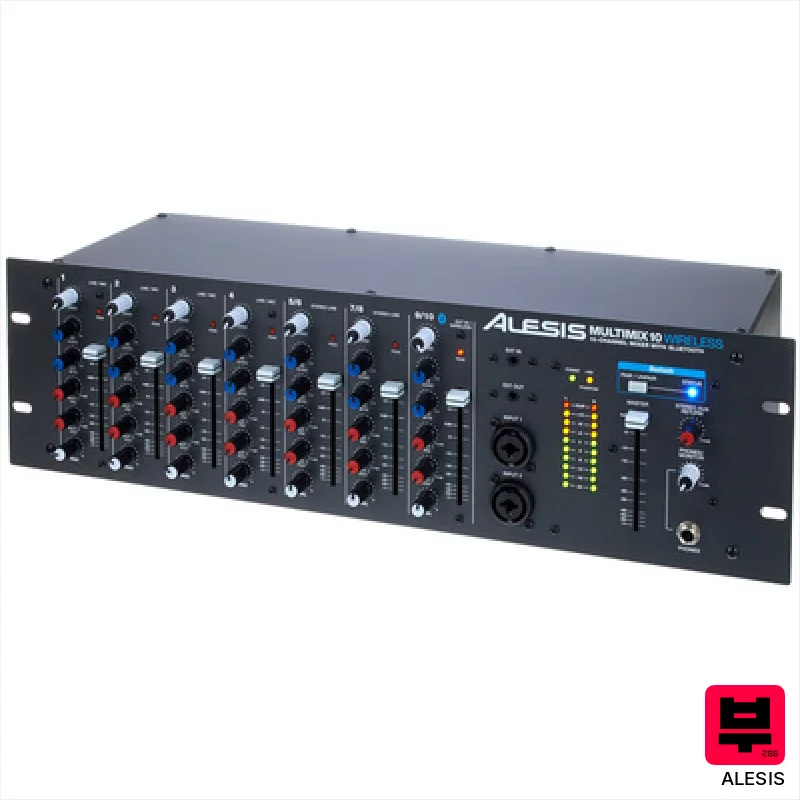
Alesis Multimix 10 Wireless
- • Compact 19” rack format ideal for mobile rigs and tight spaces
- • Bluetooth connectivity simplifies playback from various devices
- • Phantom power supports condenser microphones for higher quality recordings
- • Front panel inputs offer quick access for guest performers or aux signals
- • EQ is basic; lacks the finesse for detailed sound shaping
- • Construction feels budget-oriented; plastic casing not as robust as higher-end models
- • Limited channel count may restrict complex multi-mic setups

LD Systems MS 828
- • Compact 1U rack design maximizes space efficiency in tight rigs.
- • Versatile line splitter/mixer functionality expands routing options.
- • Solid internal power supply ensures reliable operation anywhere.
- • Acceptable headroom (+22 dBu) handles moderately loud signals.
- • Limited EQ capabilities restrict detailed sonic shaping.
- • Basic build quality reflects the budget-friendly price point.
- • Input gain range might be restrictive for very low-level signals.

Behringer RX1602 V2
- • Excellent headroom for clean monitoring at higher volumes
- • Solid build quality for a budget-friendly rack mixer
- • Balanced inputs and outputs ensure pristine signal transfer
- • Compact 1U rackmount saves valuable space in tight rigs
- • Limited EQ capabilities; only basic level adjustments are available
- • Plastic enclosure feels less robust than higher-end alternatives
- • Front panel headphone jack lacks dedicated level control
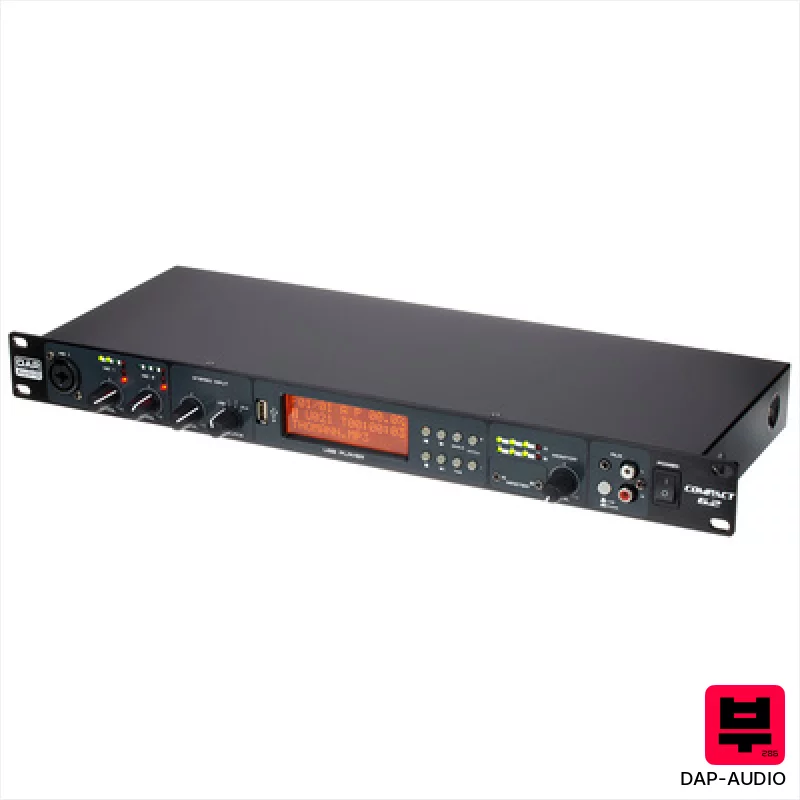
DAP-Audio Compact 6.2
- • Compact 1U rack format suits tight mobile setups.
- • Combined XLR/jack mic inputs offer flexibility for various sources.
- • Built-in USB player with ID3 display simplifies background music needs.
- • Dual zone outputs allow for independent audio routing to different areas.
- • EQ is likely a basic fixed-frequency design, limiting tonal shaping.
- • Construction feels budget-focused; expect plastic components.
- • Master B output's XLR connection may be unbalanced, limiting signal integrity.
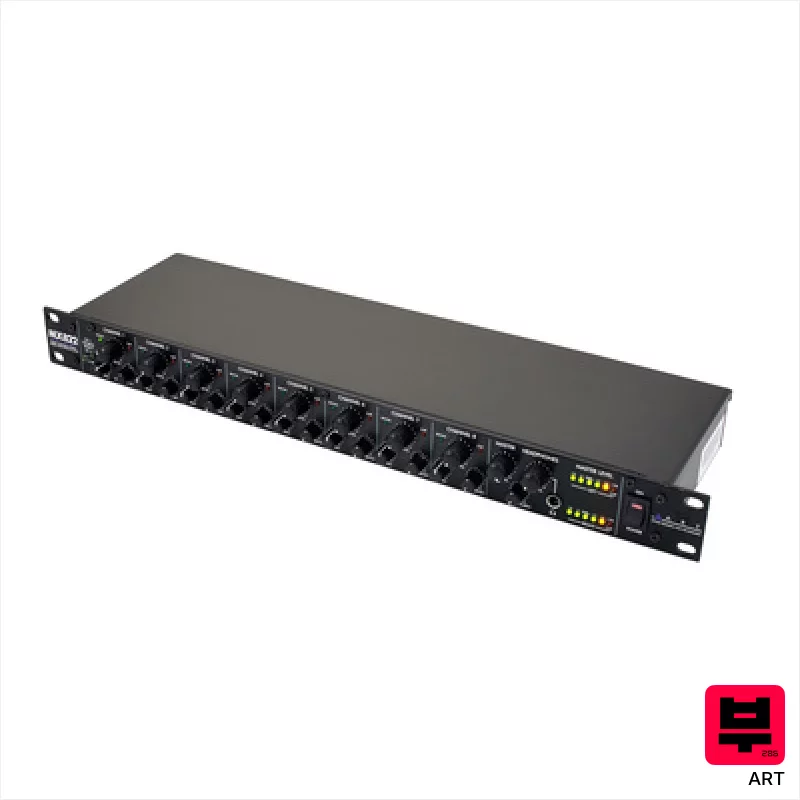
ART MX822
- • Compact 1U rack format maximizes space efficiency in mobile setups
- • Switchable XLR/jack inputs offer versatility for various signal sources
- • Built-in effects loop simplifies integrating external processors
- • Solid internal power supply provides reliable operation on the road
- • Limited EQ capabilities restrict detailed sound shaping potential
- • Construction feels budget-oriented, lacking premium component feel
- • Stereo channels can feel restrictive for complex routing needs

DAP-Audio IMIX-7.1
- • Compact 2U rack format ideal for space-constrained installations
- • Combined XLR/jack mic inputs offer flexibility for varied sources
- • Multiple RCA line and phono inputs cater to diverse audio inputs
- • Master EQ provides basic tonal shaping for overall sound control
- • Limited EQ control; only a master EQ is present, lacking channel-specific adjustments
- • Build quality likely reflects the budget price point; expect plastic components
- • Phono input quality may be a limiting factor for high-end turntables
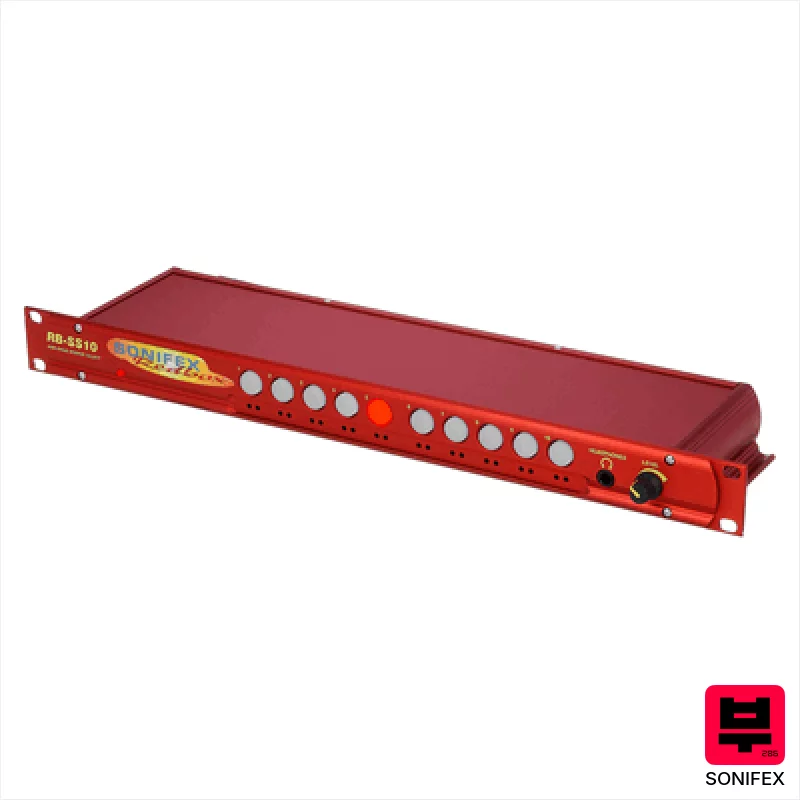
Sonifex Redbox RB-SS10
- • Solid build quality with Sonifex’s signature robust metal chassis
- • Flexible source selection via front panel buttons or remote control
- • Compact 1U rack design maximizes space efficiency in tight setups
- • Balanced XLR and Sub-D connections ensure clean, reliable signal transfer
- • Limited EQ capabilities; primarily a source selector, not a mixer
- • Price point places it in the premium-priced category for basic routing
- • Physical depth (10.8 cm) might be restrictive in shallow racks

Rolls RM-69
- • Compact 1U rack format maximizes space efficiency in mobile setups
- • Front-panel mic input offers convenient access for quick setups
- • Phantom power supports condenser mics, expanding input options
- • 2-band EQ provides basic tone shaping for line and mic signals
- • Limited channel count restricts complexity for larger productions
- • EQ is basic, lacking the precision of more advanced mixers
- • Build quality feels somewhat budget-oriented, mostly plastic construction
How to Choose the Best 19'' Rack Mixers
Preamps
At this price point, expect decent, but not stellar, preamps. Listen for noise floor and headroom - a clean preamp that can handle a hot signal is crucial, especially for drums. Don't expect the silky-smooth character of $3000 preamps, but a usable, punchy sound is achievable.
EQ
Look for at least a 3-band parametric EQ on each channel. This gives you some flexibility to shape the tone and deal with problematic frequencies. Swept mids can be a lifesaver for getting guitars to cut through a dense mix.
Routing/Aux Sends
Critical for monitors and effects sends. Multiple aux sends are a huge plus, allowing for complex monitor mixes or parallel processing. Check the routing options - are you able to create subgroups for drums or backing vocals?
Build Quality
Rackmount gear takes a beating. Solid construction, reliable faders, and robust knobs are essential for gigging. Cheap plastic feels like it'll fail after a few gigs; look for metal chassis and tactile controls.
Dynamic Processing (Compressors/Gates)
Don't expect high-end, transparent compression. If these are present, they'll likely be simpler, more aggressive algorithms. However, even a basic gate can be invaluable for controlling unruly drum mics.
Buying Guide
Realistically, you're trading off something. Maybe it's preamp quality, maybe it's the depth of the EQ, or maybe it's the overall build. Don't chase phantom features you won't use. Focus on core functionality: clean preamps, flexible routing, and a solid build. Spend a little extra for a good power supply - noisy power is the enemy of a good mix. And remember, a well-EQ'd mediocre mixer can often sound better than a pristine mixer used poorly.
How This List Is Built
We don't play these instruments — we're a catalog, not a review desk, and we'd rather say so than pretend otherwise. This page ranks 15 19'' rack mixers from the Thomann catalogue, which is the largest single source of specification data in this category.
Position is computed, not curated. Four signals, in order of weight: how completely the manufacturer documents the instrument (number of published specifications), where it sits in the price range, how specific the model designation is — which filters out generic accessories — and whether a product image exists. The same inputs always produce the same order, so nothing here is shuffled to look fresh.
What this list is good for: narrowing a category down to a shortlist by spec and budget. What it isn't: a substitute for hearing an instrument. Before you buy, read hands-on reviews and, where you can, play it. Full methodology.

