
Best 19'' Rack Mixers Under $200 2026
Alright, so you need a rack mixer, but your budget's tighter than a snare drum head. I get it. For years, I've seen folks trying to make do with gear that just doesn't cut it, and it's a frustrating experience. We're talking about 19-inch rack mixers under $200 - it's a challenge, but not impossible to find something that'll get the job done for band rehearsals, small gigs, or even basic recording.
Last updated: April 11, 2026

LD Systems MS 828
- • Compact 1U rack design maximizes space efficiency in tight rigs.
- • Versatile line splitter/mixer functionality expands routing options.
- • Solid internal power supply ensures reliable operation anywhere.
- • Acceptable headroom (+22 dBu) handles moderately loud signals.
- • Limited EQ capabilities restrict detailed sonic shaping.
- • Basic build quality reflects the budget-friendly price point.
- • Input gain range might be restrictive for very low-level signals.

Behringer RX1602 V2
- • Excellent headroom for clean monitoring at higher volumes
- • Solid build quality for a budget-friendly rack mixer
- • Balanced inputs and outputs ensure pristine signal transfer
- • Compact 1U rackmount saves valuable space in tight rigs
- • Limited EQ capabilities; only basic level adjustments are available
- • Plastic enclosure feels less robust than higher-end alternatives
- • Front panel headphone jack lacks dedicated level control
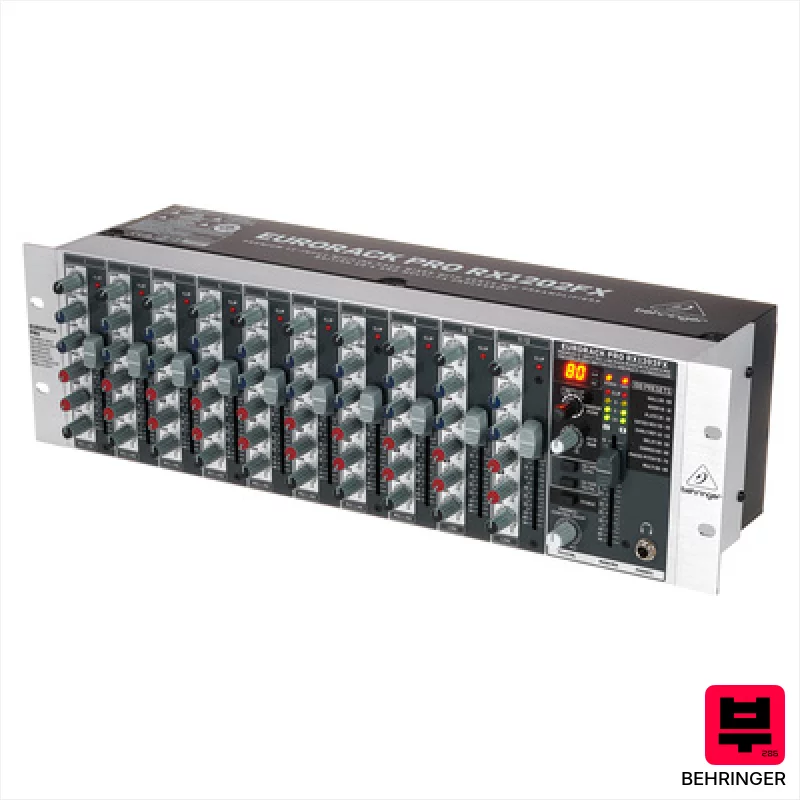
Behringer RX1202FX V2
- • Solid 60mm faders offer surprisingly precise channel level control.
- • The built-in effects are usable, adding depth to live vocals or instruments.
- • XLR inputs with 48V phantom power expand mic options significantly.
- • Compact rackmount design saves space in mobile setups and studios.
- • Plastic construction feels less robust than higher-end rack mixers.
- • EQ is basic, lacking the finesse for complex tonal shaping.
- • Limited headroom; can get noisy when pushing levels.
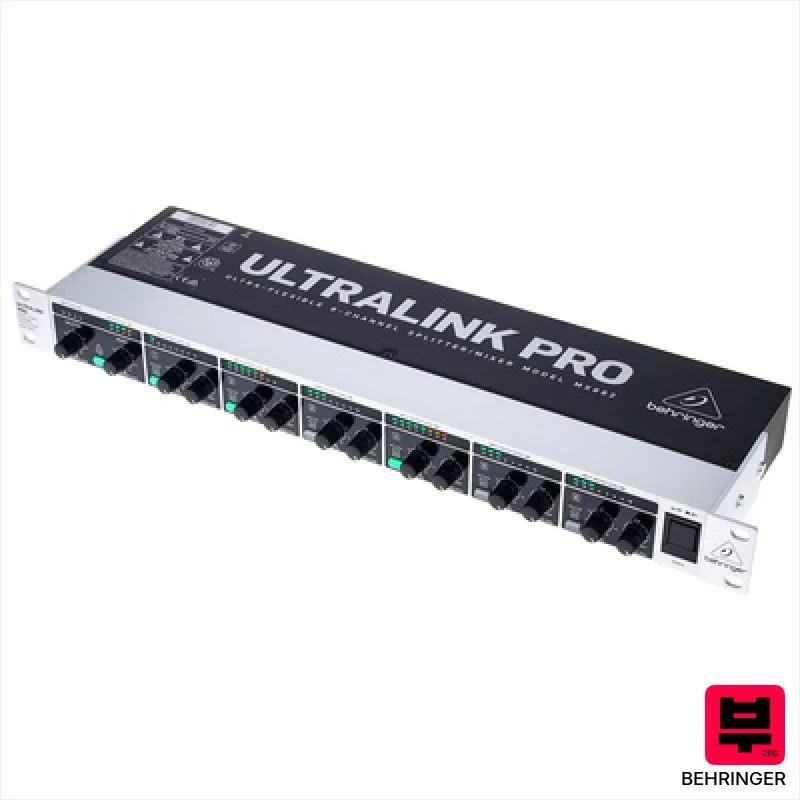
Behringer MX882 V2
- • Flexible routing options for complex signal chains.
- • Solid, if basic, 19-inch rackmount chassis for portability.
- • Provides a cost-effective DI box alternative for multiple sources.
- • Surprisingly clean signal path for its price point; minimal noise.
- • Plastic construction feels budget-oriented and potentially fragile.
- • Limited EQ capabilities; no per-channel EQ controls.
- • Smaller jack sockets feel a little flimsy; potential for connection issues.
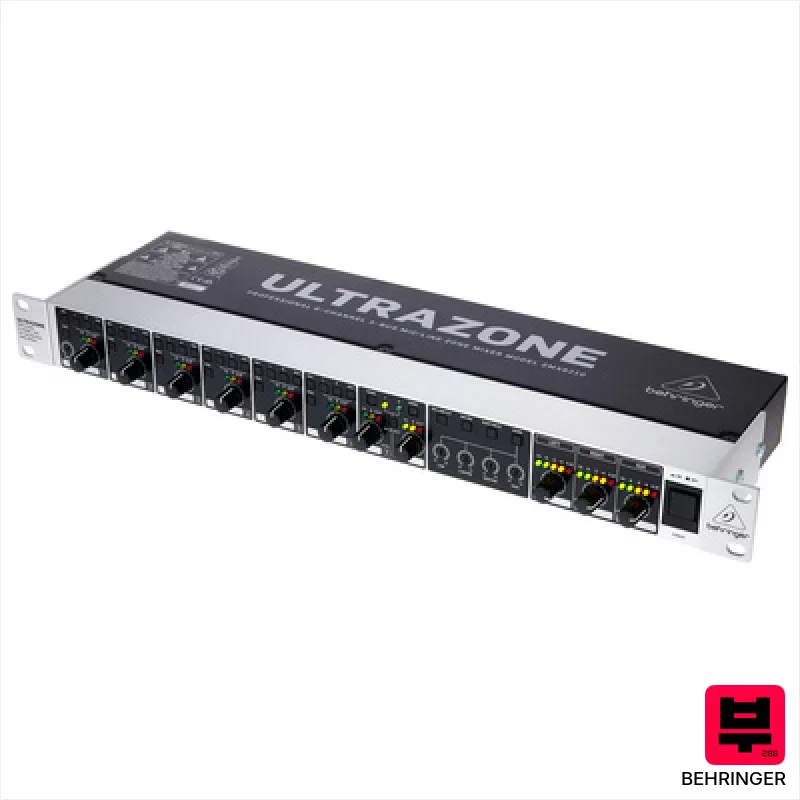
Behringer ZMX8210 V2 Ultrazone
- • Solid build for the price, feels surprisingly robust for a budget mixer.
- • The 3-bus routing provides flexible signal management options.
- • Ultra-low noise preamps deliver clean signals, minimizing unwanted hiss.
- • Compact 1U rackmount saves valuable space in tight setups.
- • EQ is basic, lacking the finesse of higher-end consoles.
- • Phantom power can be a bit noisy with certain microphones.
- • Plastic case feels a little cheap compared to metal alternatives.
How to Choose the Best 19'' Rack Mixers
EQ
Don't expect surgical precision. These mixers will likely have basic 3-band EQ. Listen for how it colors the sound - a slight mid-scoop can be usable, but harsh boosts are a red flag.
Preamp Noise
This is the big one. Cheap preamps can be noisy, especially when cranking the gain. A quiet preamp is worth its weight in gold, especially if you're miking acoustic instruments or vocals.
Headroom
How much can you push the mixer before it starts to distort unpleasantly? Limited headroom means you'll be fighting the mixer to get a decent level without clipping, which is a no-go for live sound.
Build Quality
Plastic cases and flimsy knobs are common at this price point. While it might not sound amazing, a mixer that can survive transport and a few bumps is more valuable than a sonic masterpiece that falls apart.
Aux Sends
These are crucial for effects loops and monitor mixes. The more aux sends you have, the more flexible your setup will be, especially for gigs with multiple musicians needing personalized monitor blends.
Buying Guide
Let's be real - at this price, you're making compromises. Expect some hiss, limited headroom, and EQ that's more about character than surgical correction. Don't chase features; focus on a clean signal path and decent EQ. If you're recording, a separate audio interface is always going to be better than relying on the mixer's preamps.
How This List Is Built
We don't play these instruments — we're a catalog, not a review desk, and we'd rather say so than pretend otherwise. This page ranks 5 19'' rack mixers from the Thomann catalogue, which is the largest single source of specification data in this category.
Position is computed, not curated. Four signals, in order of weight: how completely the manufacturer documents the instrument (number of published specifications), where it sits in the price range, how specific the model designation is — which filters out generic accessories — and whether a product image exists. The same inputs always produce the same order, so nothing here is shuffled to look fresh.
What this list is good for: narrowing a category down to a shortlist by spec and budget. What it isn't: a substitute for hearing an instrument. Before you buy, read hands-on reviews and, where you can, play it. Full methodology.

