AudioFu Chart · October 2026
Best 1/4, 1/8, 1/10 and 1/16 Cellos for Professional 2026
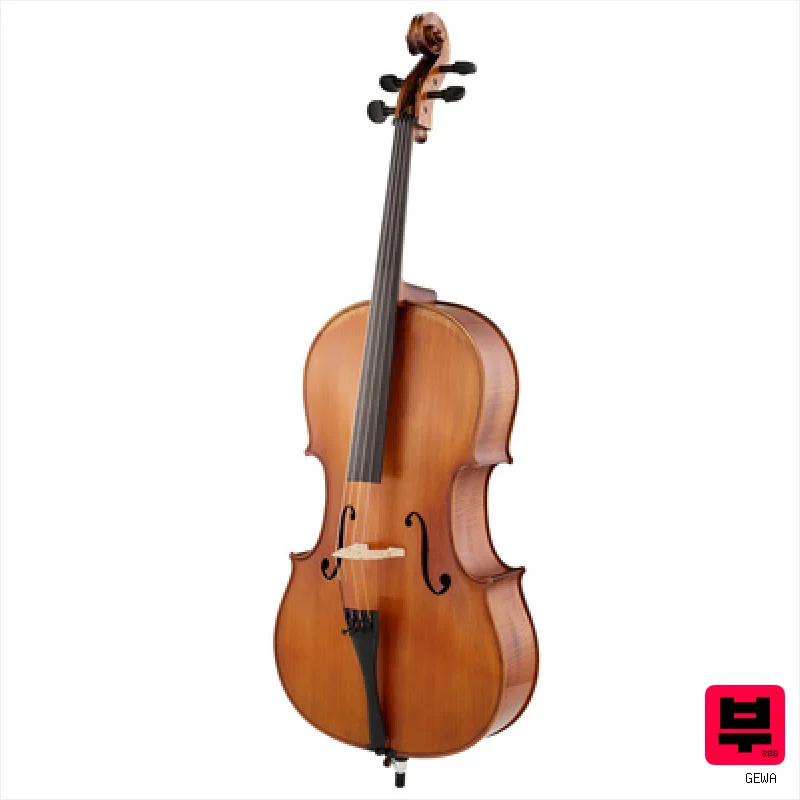
The top pick is Gewa Maestro 2 Cello Set 1/4 CB ($1,895). Gewa Allegro VC1 A Cello 1/4 CB gives you the most for the money at $1,255. Ranked by the AudioFu Index from 17 models across 7 brands, prices checked every night.
Last updated: October 21, 2026
Top 10
Full detail for the 10 highest AudioFu Index scores. Every other model is listed below.
-
- Size1/4 size
The Gewa Maestro 2 1/4 is a really solid starter cello, built with quality materials that will allow a young player to develop good tone and technique. The European tonewoods and solid construction give it a surprisingly mature sound for its price point, making it a great value for serious beginners or students transitioning from smaller sizes.
Pros
- European tonewood provides a warm, resonant, and mature tonal character.
- Solid maple back/sides contribute to projection and sustain.
- Ebony fittings offer excellent durability and a refined feel under the fingers.
Cons
- Hand-applied varnish means color variation is inevitable, potentially affecting aesthetic preference.
- Carbon fiber bow, while functional, lacks the nuance of a quality pernambuco bow.
45AudioFu
IndexStableno change since Aug 17Aug 17$1,895 now$1,895€1,690 at Thomann · in stockCheck price ↗ -
- Size1/4 size
This cello offers a bright, responsive voice thanks to its solid spruce top and maple body. The Milo Stamm bridge and Wittner tailpiece add professional touch for better resonance. It comes with a carbon bow and a full carrying case, making it ready to play. Ideal for young players seeking a sturdy, handcrafted instrument without needing extra gear.
Pros
- Solid European spruce top for bright projection
- Well flamed solid European maple back and ribs
- Milo Stamm bridge for superior resonance and sustain
Cons
- Hand-varnished finish may cause slight color variations
- Limited electronic features for modern recording setups
45AudioFu
IndexStableno change since Oct 14Oct 14$1,839 now$1,839€1,640 at Thomann · in stockCheck price ↗ -
- Size1/4 size
The Gewa Maestro 2 1/4 is a really solid option for younger cellists stepping up from smaller sizes. The quality of the tonewood and the careful construction make it sound much better than you'd expect for an instrument aimed at students – it’s a great foundation for developing technique and musicality.
Pros
- Solid European spruce top delivers a surprisingly resonant and mature tone for a student cello.
- Well-flamed maple back and sides contribute to warmth and projection, avoiding a boxy sound.
- Ebony fittings provide excellent response and a premium feel uncommon in this price range.
Cons
- Hand-applied varnish, while beautiful, can exhibit slight color variations – purely aesthetic, but some may prefer consistency.
- 1/4 size will quickly be outgrown by taller students; careful sizing is crucial.
42AudioFu
IndexStableno change since Aug 17Aug 17$1,792 now$1,792€1,598 at Thomann · in stockCheck price ↗ -
- FingerboardEbony fingerboard
- Size1/4 size
The Gewa Ideale VC2 is a fantastic entry point for serious young cellists. It's built entirely of solid wood, a real plus at this level, and the sound is surprisingly rich and full for a student instrument. This is a great choice for a motivated student who's ready to move beyond a fiberglass or composite instrument.
Pros
- Solid European spruce top delivers a surprisingly mature, resonant tone.
- Flamed maple back and sides add warmth and projection.
- Ebony fingerboard and pegs offer excellent playability and response.
Cons
- The Massaranduba bow, while included, won't replace a high-end pernambuco bow.
- The natural resin varnish can be a little thick initially, requiring some acclimation.
55AudioFu
IndexStableno change since Aug 17Aug 17$1,456 now$1,456€1,298 at Thomann · in stockCheck price ↗ -
- Size1/4 size
The Gewa Maestro 1 is a solid choice for a serious young cellist. The European tonewoods and hand-applied varnish give it a surprisingly mature voice for a student instrument, and the included accessories make it a complete package. It's a great starting point for a motivated student who's ready to move beyond a basic beginner cello.
Pros
- Solid European maple back/sides offer warmth and projection.
- Hand-applied varnish provides a mature, resonant tone.
- Ebony fittings enhance playability and tonal response.
Cons
- The carbon fiber bow is a budget compromise; upgrade for optimal response.
- Hand-applied varnish means color variation – consistency is a gamble.
45AudioFu
IndexStableno change since Aug 17Aug 17$1,737 now$1,737€1,549 at Thomann · in stockCheck price ↗ -
- Size1/4 size
The Gewa Allegro VC1 is a solid choice for young cellists building a foundation. The European tonewoods give it a surprisingly mature sound for an instrument in this category, and the included accessories make it a complete package. It's a great value for a student needing a reliable and well-made instrument.
Pros
- European spruce top delivers a bright, responsive, and focused tone.
- Solid maple back and sides provide warmth and a pleasing resonance.
- Aubert bridge and Wittner tailpiece enhance tuning stability and sound projection.
Cons
- The included carbon fiber bow, while functional, won’t offer the nuanced response of a higher-end pernambuco bow.
- The antique varnish finish can exhibit slight color variations, impacting aesthetic preference.
57AudioFu
IndexStableno change since Aug 17Aug 17$1,255 now$1,255€1,119 at Thomann · in stockCheck price ↗ -
- Size1/4 size
The Gewa Maestro 1 1/4 is a solid choice for younger, serious cello students. It offers a level of tonal maturity and build quality typically found in more expensive instruments, making it a fantastic value for the budding cellist. The European tonewoods really shine here, and the Larsen strings are a great touch.
Pros
- Solid European spruce top delivers a surprisingly mature, resonant tone.
- Well-flamed maple back & sides enhance projection and warmth.
- Ebony fittings offer excellent response and a refined feel.
Cons
- 1/4 size may feel cramped for older or larger children.
- Fine spirit varnish, while beautiful, can be delicate and requires careful handling.
42AudioFu
IndexStableno change since Aug 17Aug 17$1,671 now$1,671€1,490 at Thomann · in stockCheck price ↗ -
Alfred Stingl by Höfner AS-190-C Cello Set 1/
4 Not on Reverb yet2 finishes at Thomann
- Size1/4 size
This Alfred Stingl cello is a solid choice for young players who want real wood tones. It features a hand-made spruce top and maple body with ebony hardware. While the carbon bow and bag are included, there is no pickup mentioned for stage use. It is a great starting instrument that grows with a child's skill.
Pros
- Handcrafted solid spruce top for warm sound
- Lightly flamed maple back and sides
- Premium ebony fingerboard and pegs
Cons
- No pickup system mentioned for amplified use
- Limited description omits bridge wood type
39AudioFu
IndexStableno change since Aug 17Aug 17$1,568 now$1,568€1,398 at Thomann · in stockCheck price ↗ -
- Size1/4 size
The Yamaha VC 5S14 is a solid choice for young cellists or beginners. It offers a surprisingly good tone and feel for a student instrument, providing a reliable foundation for learning. It's a well-rounded package, making it ideal for students just starting their cello journey.
Pros
- Solid spruce top delivers a surprisingly resonant and warm tone.
- Hand-selected maple back provides excellent projection and clarity.
- Ebony fingerboard offers a smooth playing experience for developing technique.
Cons
- The included bow is serviceable but will likely need upgrading as skill progresses.
- The included gig bag offers basic protection, not ideal for frequent travel.
34AudioFu
IndexStableno change since Aug 17Aug 17$1,524 now$1,524€1,359 at Thomann · in stockCheck price ↗ -
- Size1/4 size
The Stentor 1586 Conservatoire is a solid step up for serious young cellists. The all-solid wood construction really makes a difference in tone compared to beginner models, and it’s a great value for the quality. It’s a well-built instrument perfect for motivated students looking to progress.
Pros
- Solid spruce top delivers a surprisingly resonant and warm tonal foundation.
- Flamed maple back provides excellent projection and a pleasing aesthetic.
- Ebony fingerboard offers a smooth playing surface, aiding intonation and comfort.
Cons
- The included bow, while functional, is a basic student-grade model.
- Solid wood construction can be susceptible to humidity changes; requires care.
34AudioFu
IndexStableno change since Aug 17Aug 17$1,559 now$1,559€1,390 at Thomann · in stockCheck price ↗
All 17 1/4, 1/8, 1/10 and 1/16 cellos
Same index, same nightly prices — compact. Colour options of one model share a row. Tap a photo to zoom.
- 11
Gewa 100th Anniversary Cello 1/4Gewa42Stable$1,119€998$1,119€998Check ↗
- 12
Gewa Pure Celloset EW 1/8Gewa41↑ 2.4%$975€869$975€869Check ↗
- 13
Thomann Classic Cello Set 1/8Thomann36Stable$481€429$481€429Check ↗
- 14
Thomann Classic Cello Set 1/4Thomann36Stable$481€429$481€429Check ↗
- 15
Roth & Junius RJC Cello Set 1/8Roth & Junius36Stable$559€498$559€498Check ↗
- 16
Roth & Junius RJC Cello Set 1/4Roth & Junius36Stable$616€549$616€549Check ↗
- 17
Hidersine Vivente Cello Set 1/4Hidersine34Stable$952€849$952€849Check ↗
1/4, 1/8, 1/10 and 1/16 Cellos by the numbers
Measured across all 35 models we track, not a sample.
Median $1,119 — half of all 1/4, 1/8, 1/10 and 1/16 cellos here cost less.
most common · 35 models
How to choose the best 1/4, 1/8, 1/10 and 1/16 cellos
Scale Length & Neck Profile
This is the biggest deal. A shorter scale means less tension, which can be easier on the hand, but also impacts the fundamental tone. The neck profile needs to be comfortable for a seasoned player's technique - a chunky neck on a smaller cello just won't cut it.
Wood Selection & Grading
Lower-size instruments often get the short end of the wood stick. You're looking for instruments utilizing seasoned spruce tops and maple backs/sides; avoid anything that feels overly dense or brittle, as it'll kill sustain and responsiveness.
Varnish & Finish Quality
A thick, plasticky varnish will strangle the instrument's voice. A thinner, more resonant varnish allows the wood to breathe. Listen for a clear, open tone, not a muffled one.
Bridge & Soundpost Placement
This is critical. A poorly fitted bridge or soundpost will negate any benefit from better wood. Expect more frequent adjustments with smaller instruments due to the altered resonance.
Overall Construction & Seam Integrity
Smaller instruments are often built with less attention to detail. Check for clean seams, solid bracing, and a stable setup. A sloppy build will translate to intonation problems and a generally underwhelming playing experience.
Buying guide
Look, needing a smaller-sized cello isn't a sign of weakness. Sometimes your frame just doesn't jive with a full-size. But stepping down to a 1/4, 1/8, 1/10, or 1/16 isn't a compromise if you're a pro who needs the right instrument. We're not talking about student models here; we're talking about instruments built to handle serious playing, recording, and even gigging - if that's your thing.
Don't be fooled by pretty pictures. A smaller cello still needs to sound like a cello, and that requires quality materials and craftsmanship. Be prepared to pay a premium for a smaller instrument that doesn't sound or feel like a toy; the compromises are significant.
Setup is absolutely essential - a professional setup by a luthier will often make more difference than the brand name itself.
How the AudioFu Index works
Five measured signals and nothing else — no stars from strangers, no “tested by experts” we didn’t do. The weights are fixed and public. We don’t play these instruments; we measure the market around them.
This chart covers 35 1/4, 1/8, 1/10 and 1/16 cellos from the Thomann catalogue. Before you buy, read hands-on reviews and, where you can, play it. Full methodology.
AudioFu earns a commission when you buy through our Thomann links. It never changes the order — the index does.
- Demand40%
How many of this exact model are for sale on Reverb right now — what musicians actually buy and resell.
- Lineup20%
How many finishes Thomann stocks — makers expand the models that sell.
- Price15%
Where the price has moved since we started tracking in August.
- Specs15%
How completely the maker documents it.
- Maker10%
How deep the brand’s range is in this category.
Questions
Can I really use a 1/16 cello professionally?
It's rare, but possible for very young or petite players. The tonal limitations are significant, and it's best suited for quiet practice or very specific, niche performance scenarios. Expect a very thin, reedy sound.
What's the difference between a 1/8 and a 1/10 cello?
The 1/10 offers a slightly more full sound than the 1/8, but the 1/8 is often easier to manage physically for some players. It's a feel thing, really - try both if you can.
Will a smaller cello sound as powerful as a full-size in a band rehearsal?
Not likely. It will struggle to cut through a louder ensemble. Careful mic placement and EQ are essential. A pickup system can help, but it's still a compromise.
Are smaller cellos inherently less resonant?
Yes, generally. The smaller body cavity means less air volume, which affects the instrument's ability to sustain notes and produce a full, rich tone. Skilled craftsmanship is crucial to mitigate this.
What about pickup systems for smaller cellos?
A quality piezo or magnetic pickup is almost a necessity for recording or gigging. Look for something with adjustable voicing - you'll likely need to tame some of the inherent brightness to avoid a harsh, brittle tone.