
Best Wired Intercom Systems for Fixed Installation 2026
Let's be honest, a chaotic band rehearsal or a club gig gone sideways isn't fun because of a bad guitar tone - it's often because nobody can hear each other. A good wired intercom system isn't a luxury for fixed installations like houses of worship, theaters, or even recording studios; it's essential for tight communication and a professional performance. Forget those cheesy, crackly systems you might remember from school plays - we're talking about reliable, clear comms that keep everyone on the same page.
Last updated: July 8, 2026 • Next update: July 15, 2026
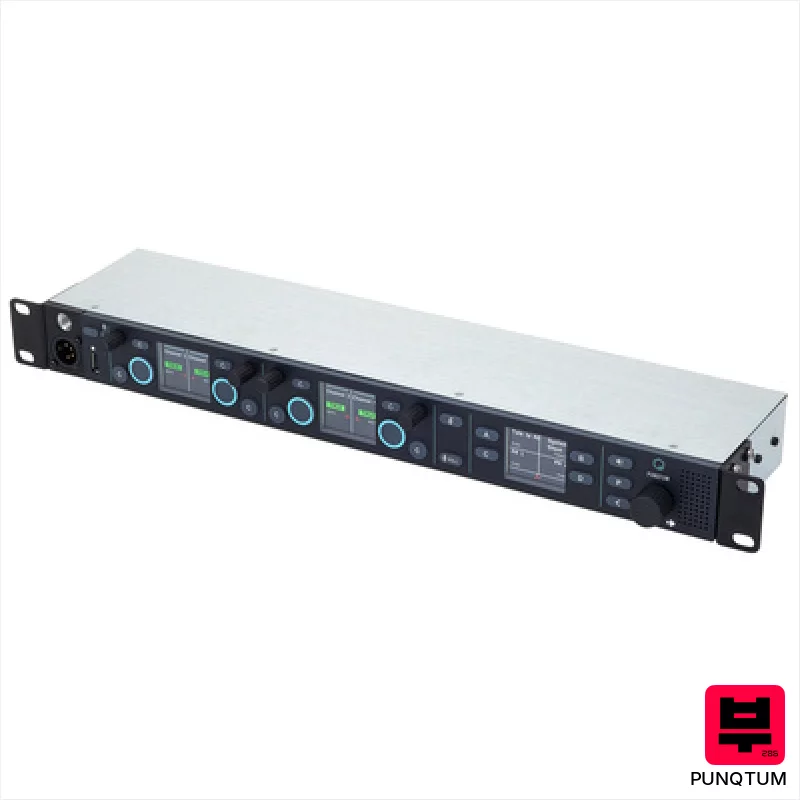
punQtum Q210 P
- • Robust Ethercom connectors ensure reliable, professional-grade connectivity.
- • Built-in PoE switch simplifies power distribution for multiple beltpacks.
- • Daylight-readable display offers excellent visibility in challenging environments.
- • Flexible configuration software provides granular control over system parameters.
- • The unit's dimensions, while compact, might limit placement options in tight spaces.
- • Premium-priced, representing a significant investment for smaller operations.
- • Limited channel count (32) might be restrictive for large, complex productions.

Axxent Intercom Tiny 2 Set
- • Robust CP100S main station offers excellent clarity and reliability
- • BP100 beltpack’s light/sound alarm is genuinely useful for stage monitoring
- • D800E headsets provide comfortable, secure one-ear listening experience
- • Rack kit availability allows for professional, organized system integration
- • Limited channel count restricts scalability for larger productions
- • System's wired nature lacks the flexibility of wireless alternatives
- • Price point places it firmly in the premium-priced category
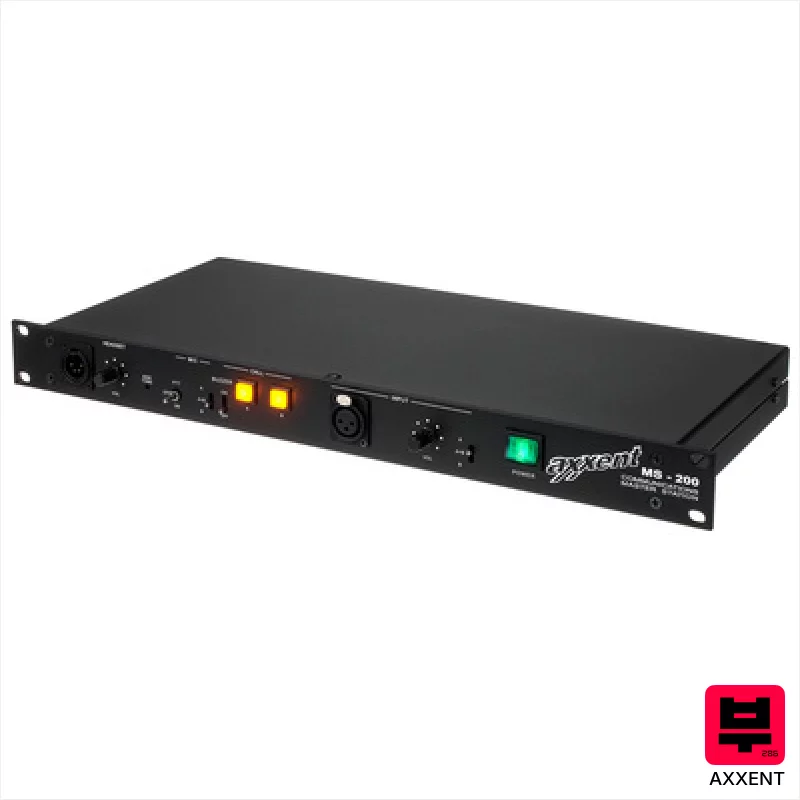
Axxent MS200 Master
- • Solid 1U rackmount construction feels robust and professional
- • Separate channel call functions enhance workflow efficiency on set
- • Multiple XLR outputs offer flexible routing and signal management
- • Front-panel mic input with LS simplifies quick vocal communication
- • Limited expandability compared to higher-end intercom systems
- • The 1U height might restrict installation in some tight spaces
- • Lacks advanced features like programmable buttons or scene recall
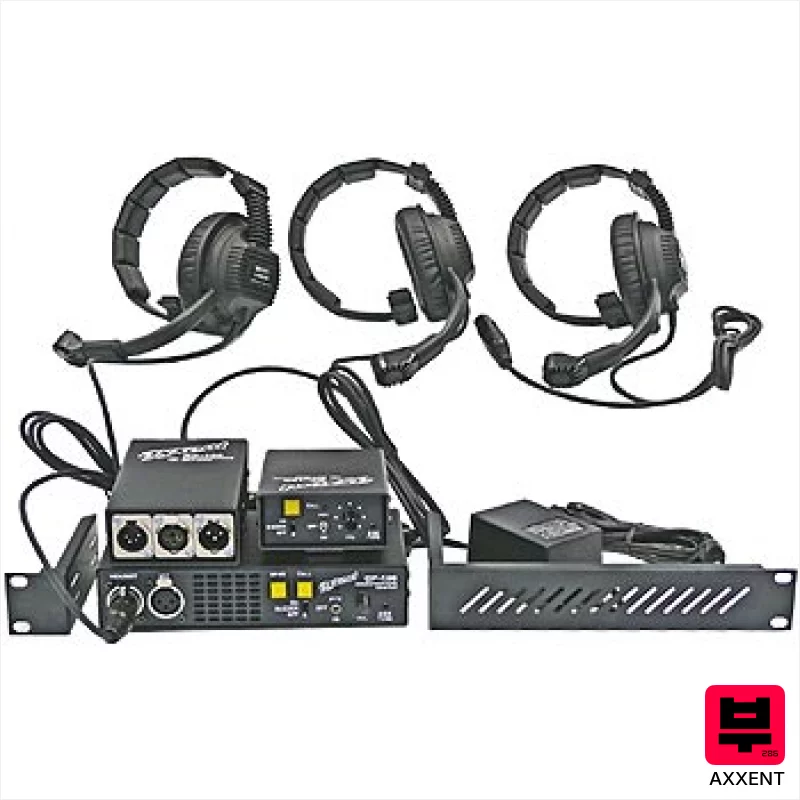
Axxent Intercom-Set 1
- • Compact CP-100S station offers surprisingly clear audio reproduction
- • BP-100 beltpacks provide comfortable, reliable hands-free operation
- • PS-65 power supply supports a substantial number of stations
- • D800E headsets offer decent noise isolation for stage environments
- • CP-100S station's 9.5in size can feel cramped in busy environments
- • D800E headsets are fairly basic – not audiophile quality
- • System's wired nature limits mobility compared to wireless alternatives
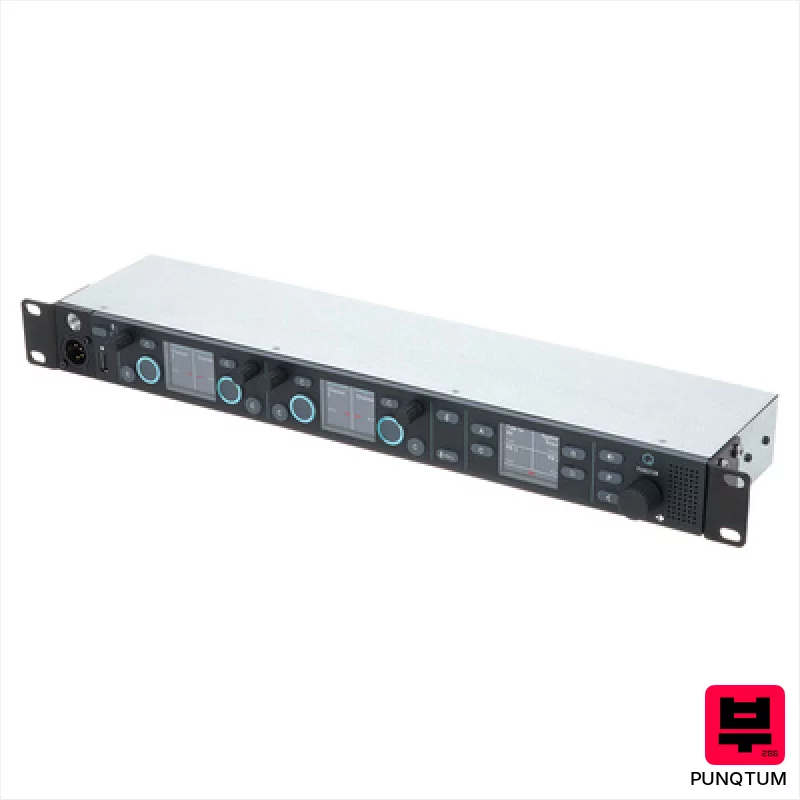
punQtum Q210 PW
- • Robust Ethercom connections ensure reliable, low-latency communication.
- • Built-in PoE switch simplifies power distribution for beltpacks.
- • Daylight-readable display is a genuine boon for outdoor use.
- • Configurable buttons offer versatile control for announcements and triggers.
- • Premium-priced, representing a significant investment for smaller operations.
- • 4-channel limit might feel restrictive for larger, complex productions.
- • Form factor, while compact, could be unwieldy in tight spaces.

Axxent Intercom Tiny Set
- • Robust CP100S main station offers reliable, clear communication.
- • BP100 beltpack’s light/sound alarm is genuinely useful for stage managers.
- • D800E headsets provide comfortable, secure one-ear monitoring.
- • Rack kit availability allows for professional, organized installation.
- • Limited channel count restricts scalability for larger productions.
- • System’s wired nature lacks the flexibility of wireless options.
- • Initial investment is premium-priced compared to simpler intercoms.
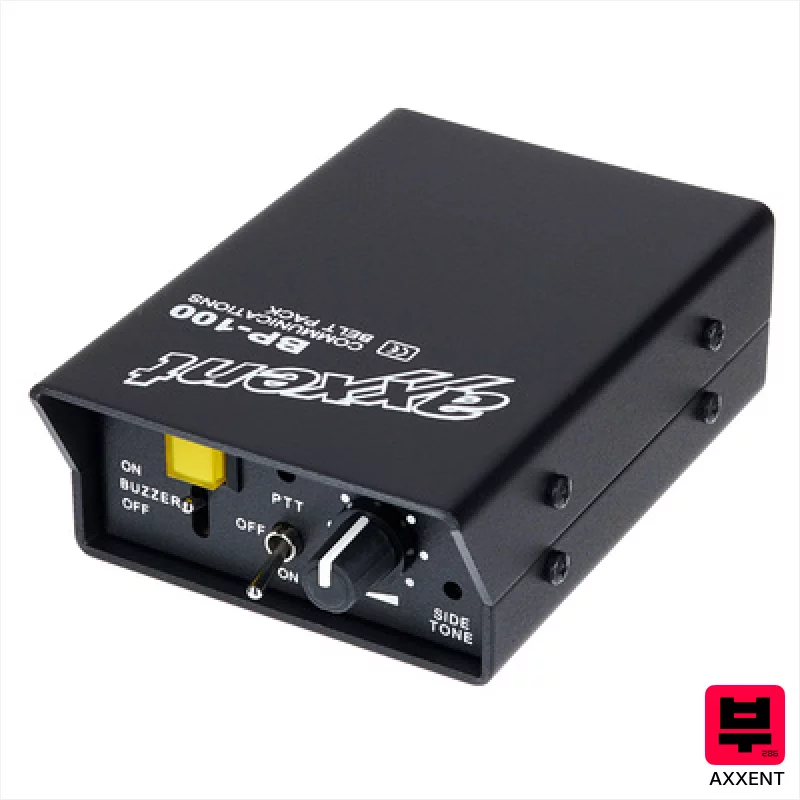
Axxent BP 100
- • Robust steel housing offers excellent durability on stage or in the studio
- • XLR connectivity ensures professional-grade audio signal transfer
- • Sound and light alerts provide clear, unambiguous communication during performances
- • Compact beltpack design allows for hands-free operation and mobility
- • Limited channel count restricts use in complex, multi-person intercom setups
- • 4-pin XLR connection restricts compatibility with some headset systems
- • Steel housing adds noticeable weight, potentially uncomfortable for extended wear
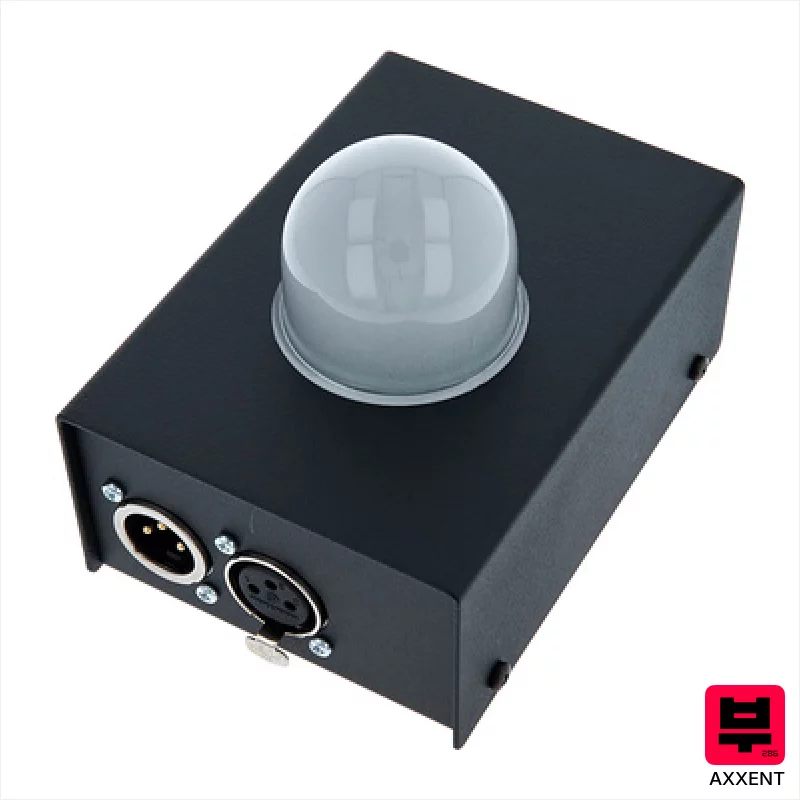
Axxent LP 100
- • Lightweight ABS plastic housing minimizes fatigue during extended use
- • Simple call signalling functionality streamlines basic communication needs
- • Robust construction ensures reliability in demanding environments
- • Compact design allows for easy integration into various setups
- • Limited channel capacity restricts use in complex, multi-party scenarios
- • Basic features lack advanced options like talkback or group calling
- • Wired connection limits mobility compared to wireless alternatives
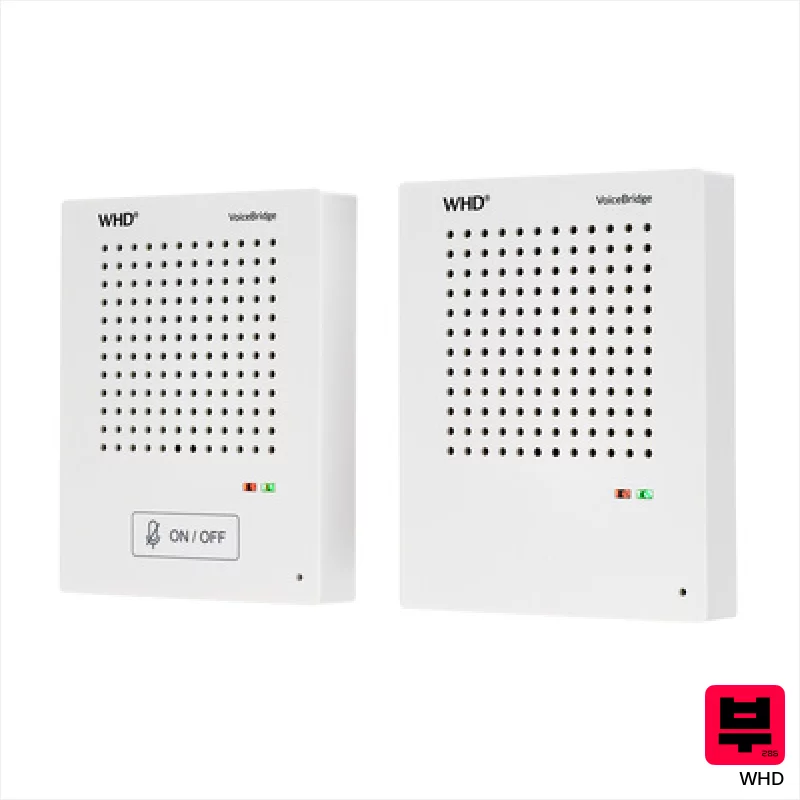
WHD VoiceBridge
- • Contactless operation ideal for hygiene-sensitive environments
- • AEC and NR mics improve speech clarity in noisy spaces
- • Compact size (86 x 111 x 18 mm) allows for flexible placement
- • Automatic operation simplifies setup, reducing user training
- • Limited channel count restricts use in complex communication scenarios
- • Battery not included, adding to overall system cost
- • White plastic construction feels somewhat budget-oriented
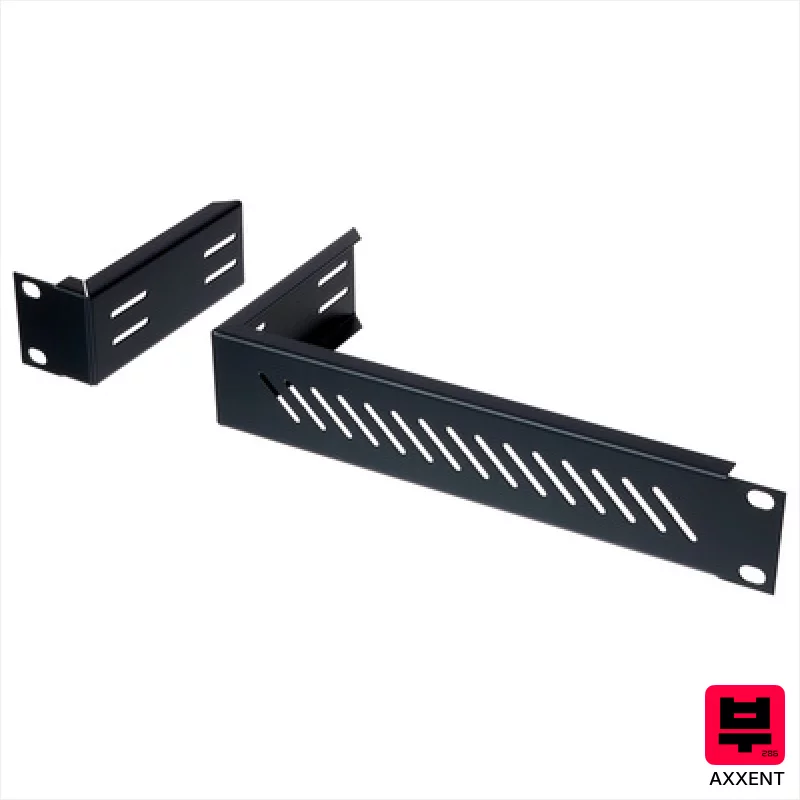
Axxent RME-100
- • Robust rackmount chassis provides solid protection during transport.
- • Designed for seamless integration with Axxent CP-100 speaker and PS-100 power supply.
- • Simple, straightforward design minimizes setup complexity and training time.
- • Provides a cost-effective solution for basic intercom needs in smaller venues.
- • Limited functionality compared to more advanced intercom systems.
- • Dependent on CP-100 speaker unit, increasing overall system cost.
- • Lacks advanced features like individual station monitoring or call queuing.
How to Choose the Best Wired Intercom Systems
Clarity & Noise Floor
This isn't about 'warmth' or 'sparkle' - it's about intelligibility. A system buried in hiss or static is useless. You need to hear the drummer's cues, the keyboard player's changes, without a distracting background rumble. Think of it like a clean preamp - the signal needs to be transparent.
Channel Count & Flexibility
A simple two-channel system might work for a duo, but a full band or theatrical production needs more. Look for systems that allow for expansion and the ability to route comms where they need to be - stage manager to front-of-house, monitor engineer to musicians, etc.
Durability & Build Quality
Fixed installations aren't gentle environments. These systems need to withstand regular use, cable pulls, and the occasional accidental stomp. Solid connectors, robust housings, and reliable components are crucial - you don't want to be replacing a unit mid-gig.
Latency & Echo Cancellation
Even a tiny bit of latency can make communication feel unnatural and frustrating. Good systems have echo cancellation built-in, preventing feedback loops and making it easier to understand what's being said. It's subtle, but it matters - like a well-tuned delay pedal.
Power Requirements & Cabling
Consider the power draw and the type of cabling required. Running long cable runs can introduce noise and signal loss, so a system with good noise rejection and options for shielded cables is a plus. Think about the practicalities of running cables in a permanent setup.
Buying Guide
Don't cheap out on an intercom system for a fixed installation - the frustration and downtime aren't worth the savings. Look beyond the price tag and focus on the build quality and features that matter for your specific needs. Often, paying a bit more for a system with better noise rejection and expandability will save you headaches down the line. And remember, proper cable termination and shielding are just as important as the intercom itself.
Our Methodology
We don't just look at spec sheets here at Audiofu. We've spent countless hours using these systems in real-world scenarios - from tracking drums in a studio to running sound for a local band. We've A/B'd different models, listened for noise floor, tested mic clarity, and generally put them through the paces a professional musician and engineer would. It's about how they feel to use, not just what the numbers say.

