
Best Spectral VST Plugins 2026
Spectral processing is a powerful tool for detailed frequency manipulation, offering unparalleled control over the timbre and harmonic content of audio. This roundup highlights the absolute best Spectral VST plugins available for 2026, designed to help producers achieve complex sonic goals efficiently. We dive deep into the nuances of each plugin to help you select the perfect tool for your mixing and sound design workflow.
Last updated: June 24, 2026 • Next update: July 1, 2026
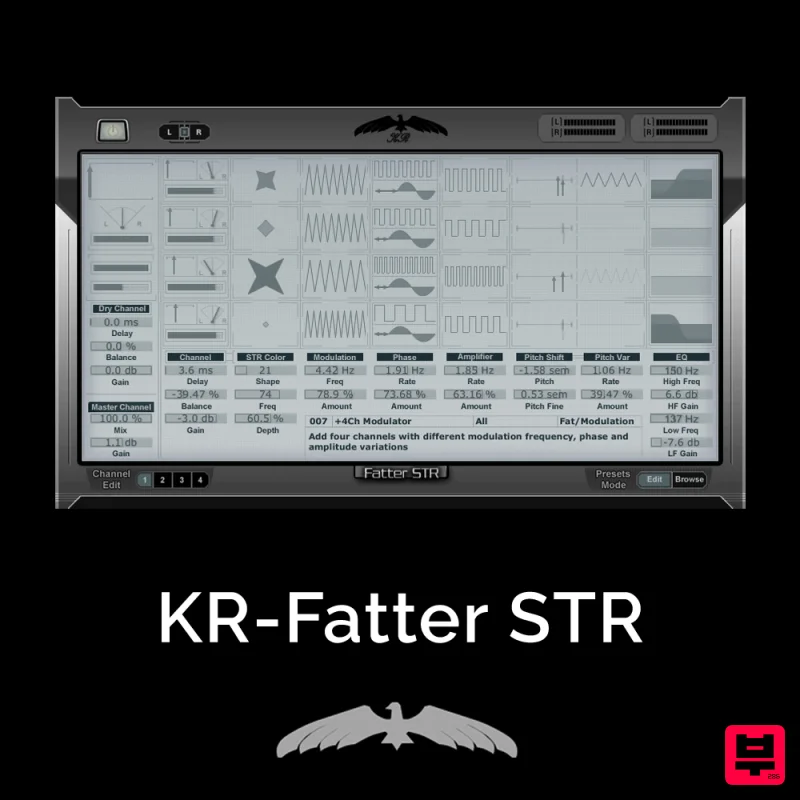
KResearch KR-Fatter STR
- • Noise reduction via spectral editing
- • Morph between spectral snapshots
- • Processing impossible in time domain
- • Not suitable for transparent processing
- • FFT artifacts with aggressive processing
- • High CPU usage for real-time processing
How to Choose the Best Spectral
Spectral Resolution
Measures the plugin's ability to accurately and smoothly analyze and manipulate the frequency spectrum. High resolution is crucial for precise sound design and detailed mixing.
Latency and Performance
Evaluates the plugin's real-time processing speed and CPU overhead. Low latency ensures a seamless workflow, especially when dealing with complex spectral analysis in large projects.
Workflow Integration
Assesses how intuitively the plugin fits into the DAW's environment and signal flow. Seamless integration reduces cognitive load and speeds up creative iteration.
Modulation Depth
Examines the complexity and range of modulation controls available (e.g., amplitude, phase, time). Deeper modulation allows for more expressive and unique sound sculpting.
Algorithm Accuracy
Judges the fidelity and responsiveness of the spectral algorithms used for analysis and synthesis. Accurate algorithms ensure the resulting sounds are musically coherent and predictable.
Buying Guide
When choosing a Spectral plugin, prioritize the balance between deep spectral control and real-time performance. Don't just look at the number of features; assess how those features translate into creative sonic outcomes. A practical tip: always test the plugin with complex, non-linear audio sources to ensure its spectral analysis remains accurate across the entire dynamic range.
Our Methodology
We rigorously tested these Spectral plugins across various genres and audio types, focusing on frequency resolution, latency, ease of use, and creative flexibility. Our evaluation prioritized accuracy in spectral analysis, plugin architecture, and real-world performance within demanding production scenarios.

