
Best Speaker Management Systems for Large Venue Systems 2026
So you're running a serious sound system - think concert halls, festivals, large clubs, the works. Just throwing a bunch of amps at the problem isn't gonna cut it; you need a Speaker Management System (SPMS) to properly integrate your mains, subs, and monitors. It's not just about volume; it's about getting clean, consistent coverage and avoiding feedback headaches. Let's dive into what you need to look for in a SPMS that won't leave you wishing you'd just thrown the money away.
Last updated: June 17, 2026 • Next update: June 24, 2026
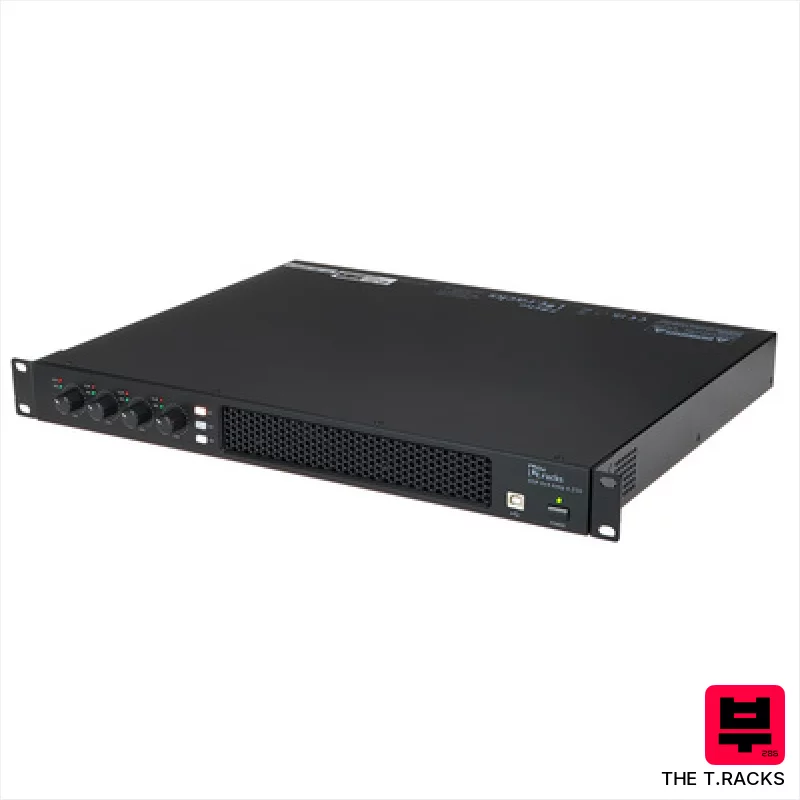
the t.racks DSP 4x4 Amp 4.250
- • Class D efficiency minimizes heat, crucial for rack-mounted installations
- • Robust 1U rackmount chassis allows for space-efficient integration
- • XLR and TRS pre-outs offer versatile routing options
- • Front panel presets simplify scene recall during live performances
- • Windows-only programming limits accessibility for Mac users
- • Limited EQ or dynamic processing compared to higher-end DSP amps
- • Rear contact preset switching isn't as convenient as front-panel buttons
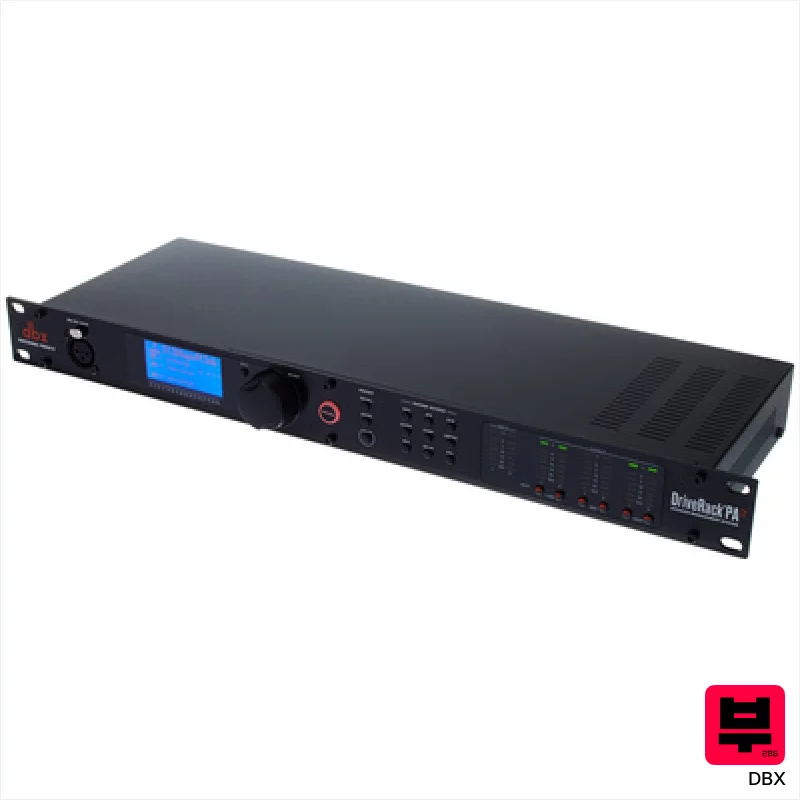
DBX DriveRack PA2
- • Excellent feedback suppression, noticeably quieter than previous models
- • Flexible routing allows complex system configurations with ease
- • The included measuring microphone simplifies room correction significantly
- • Robust 1U rackmount construction feels solid and dependable
- • The user interface, while improved, still has a learning curve
- • Limited dynamic range on some processing chains can introduce noise
- • The subharmonic synthesizer isn't a replacement for a dedicated sub.

the t.racks DSP 4x4 Mini Amp
- • Compact Class D design delivers efficient, clean power.
- • Integrated DSP offers flexible routing and processing options.
- • Binding post speaker connections ensure secure and reliable connections.
- • Lightweight (1.6 kg) for easy portability and installation.
- • Windows-only USB programming limits Mac users’ accessibility.
- • Signal-to-noise ratio, while decent, isn’t top-tier for critical listening.
- • Limited power output – best suited for smaller systems.

DBX Driverack Venu360
- • Excellent feedback elimination with the AFS system, remarkably effective.
- • AutoEQ feature simplifies complex room correction tasks significantly.
- • Flexible routing and processing options cater to diverse live sound scenarios.
- • Intuitive remote control via app streamlines workflow and system management.
- • The learning curve for advanced features can be steep for novice users.
- • The included RTA mic is optional, adding to the overall investment.
- • Physical size (1U) might be restrictive in space-constrained setups.
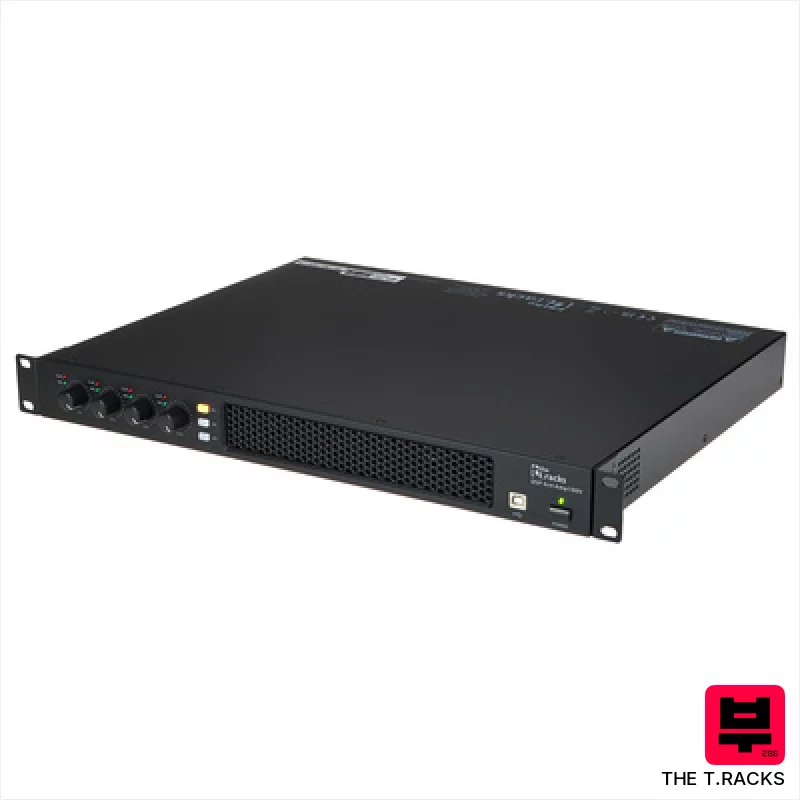
the t.racks DSP 4x4 Amp100V
- • Efficient Class D design minimizes heat and power consumption.
- • 1U rack height maximizes space in tight studio or live rigs.
- • Rear contact preset switching offers robust, reliable scene changes.
- • Unique 89V/100V operation caters to specific speaker line voltage needs.
- • Windows-only USB programming limits accessibility for Mac users.
- • Limited processing capabilities compared to dedicated DSP platforms.
- • Speaker Twist connectors are less common and may require adapters.

Behringer DCX2496LE Ultradrive
- • AKM converters deliver surprisingly clean, transparent audio processing.
- • Extremely flexible routing offers granular control over complex systems.
- • InZeroin limiter protects speakers with a fast, musical response.
- • Compact 1RU design maximizes rack space in tight environments.
- • Build quality feels somewhat plasticky, lacking the premium heft of higher-end units.
- • The interface can be intimidating initially, requiring a learning curve.
- • Limited analog input headroom might be a constraint for some pro applications.
How to Choose the Best Speaker Management Systems
DSP Power
Large venues demand serious processing horsepower. You're talking complex crossovers, EQ curves, multiple delays for comb filtering mitigation - cheap units will choke and introduce latency or distortion when pushed. Look for units with plenty of RAM and a powerful processor.
Routing Flexibility
A simple stereo-in, stereo-out setup won't cut it. You need multiple inputs and outputs, matrix mixing capabilities, and the ability to route signals to different zones. Think about handling a drum kit with individual mic feeds to different monitor mixes.
EQ Capabilities
This isn't about a little shelf EQ. You need parametric EQ with plenty of bands to surgically shape the sound and address acoustic issues. Being able to notch out resonant frequencies or subtly boost frequencies for clarity is crucial. The ability to create multiple EQ presets is a must too.
Protection Features
Overload protection, thermal protection, and limiting are non-negotiable. These features save your speakers from catastrophic failure, especially when you're pushing the system hard. A good SPMS will provide visual feedback on potential problems before they become expensive ones.
Latency
Any significant latency introduced by the SPMS will mess with monitor mixes and overall stage feel. You need a unit that processes signals quickly and transparently. Even a few milliseconds can be noticeable, especially for drummers and keyboard players.
Buying Guide
Don't fall for the 'more features' trap. A boatload of options you'll never use is just bloat. Focus on a unit that's powerful enough to handle your system's complexity, and that has a clear, intuitive interface. Cheaper SPMS units often skimp on the DSP processing power, leading to muddy low-end and a lack of detail in the highs - that's where you'll hear the compromise. Ultimately, a well-configured SPMS is an investment in your system's longevity and your sanity.
Our Methodology
We're not just looking at spec sheets here. We've put these units through the wringer: live gigs with full bands, complex monitor mixes, and A/B comparisons against reference systems. We're listening for how they shape the overall tonal balance, how they handle dynamic peaks, and whether they genuinely make a difference in the real-world chaos of a large venue.

