
Best Sound Modules for Rack Systems 2026
Alright, so you're building a rack rig - serious business. You're not just plopping a keyboard on a stand; you're crafting a sound. Sound modules are the heart of that system, and picking the wrong one can leave you with a thin, lifeless sound that disappears on stage or a muddy mess in the studio. Let's break down what makes a sound module truly shine in a rack setup.
Last updated: July 22, 2026 • Next update: July 29, 2026

Twisted Electrons TWISTfm
- • Dual YMF262 chips deliver authentic, complex FM tones.
- • Multimode filters add substantial warmth and character to FM sounds.
- • MPE support unlocks expressive, nuanced performance capabilities.
- • Polyphonic sequencer simplifies composing intricate FM sequences.
- • The learning curve for FM synthesis can be steep for newcomers.
- • Limited modulation options beyond the provided LFOs and envelope.
- • Desktop format restricts portability; requires dedicated space.

Supercritical Synthesizers Redshift 6
- • Demon Core oscillators deliver a raw, powerful analog warmth.
- • Neutron Flux filter provides a characteristic aggressive resonance.
- • Flexible voice modes unlock diverse sonic textures and layering options.
- • Compact desktop footprint maximizes studio space without compromise.
- • Limited modulation matrix compared to more complex modular systems.
- • USB-B port feels dated; a USB-C would be a modern improvement.
- • Build quality, while solid, relies on readily available components.
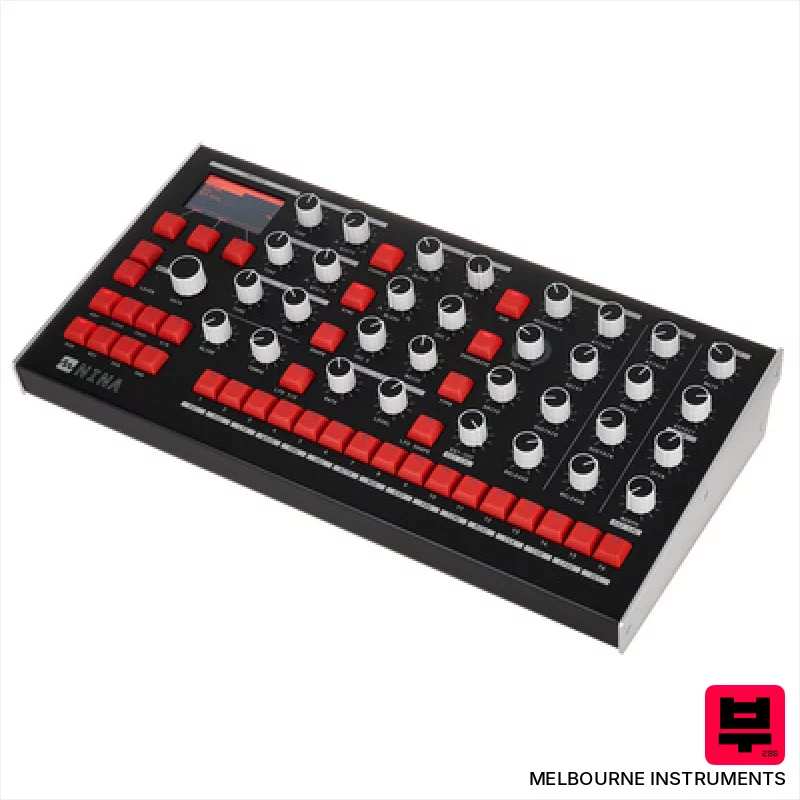
Melbourne Instruments Nina
- • Motorized controls offer uniquely fluid, organic parameter morphing.
- • Analogue signal path delivers rich, warm, and characterful tones.
- • Wavetable oscillator expands sonic possibilities beyond pure analogue.
- • Robust build quality hints at a durable, long-lasting instrument.
- • Premium-priced, making it a significant investment for many musicians.
- • Motorized controls, while innovative, could be complex for some users.
- • Limited onboard storage for user-created presets.
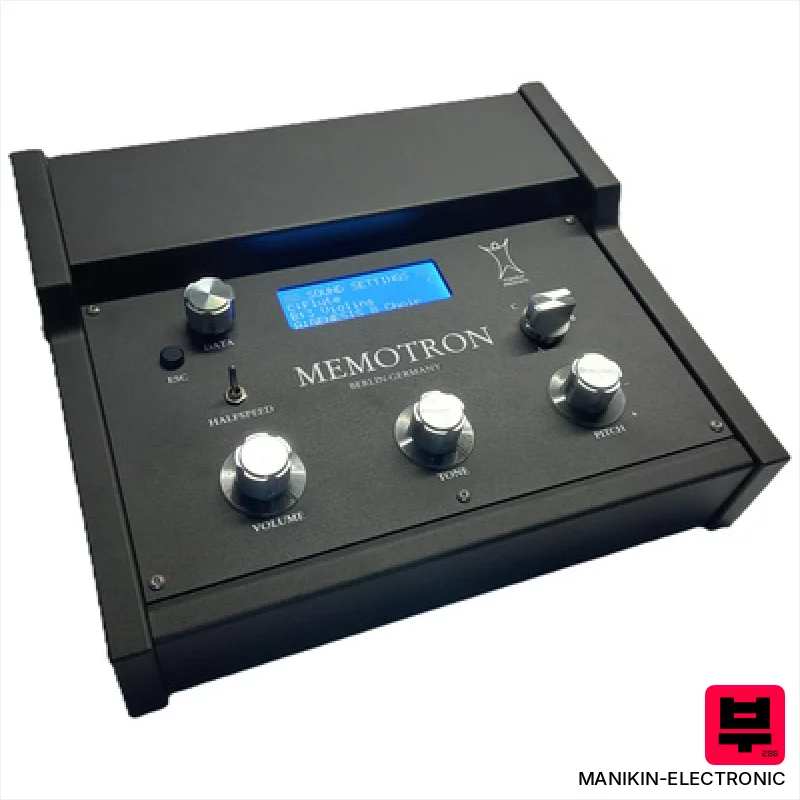
Manikin-Electronic Memotron M2D Black
- • Solid metal housing provides excellent durability and a reassuring heft.
- • Classic M400 control panel offers intuitive, hands-on sound shaping.
- • 111-voice polyphony unlocks complex layered textures and rich arrangements.
- • Pre-loaded Vintage 1 and Studio Collection sounds deliver immediate sonic inspiration.
- • Limited simultaneous sounds (3) restricts layering capabilities for some users.
- • LC display, while functional, lacks the clarity of a modern color screen.
- • The 'Frame' parameter, while unique, requires a learning curve to master.
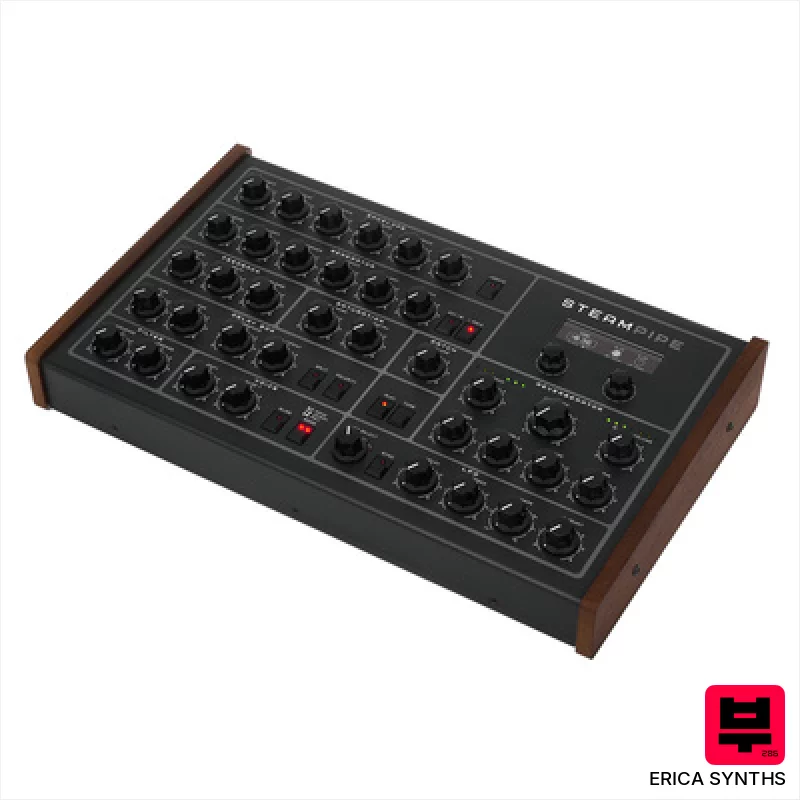
Erica Synths Steampipe
- • Physical modeling engine delivers uniquely complex and evolving tones.
- • Polyphony allows for lush, layered textures and convincing ensembles.
- • Assignable LFOs with sync provide intricate and dynamic modulation possibilities.
- • USB import/export streamlines preset management and sharing with other users.
- • Physical modeling can be computationally intensive, demanding a powerful host.
- • Steep learning curve; mastering the modulation matrix requires dedication.
- • Desktop format limits portability; best suited for studio or fixed location.
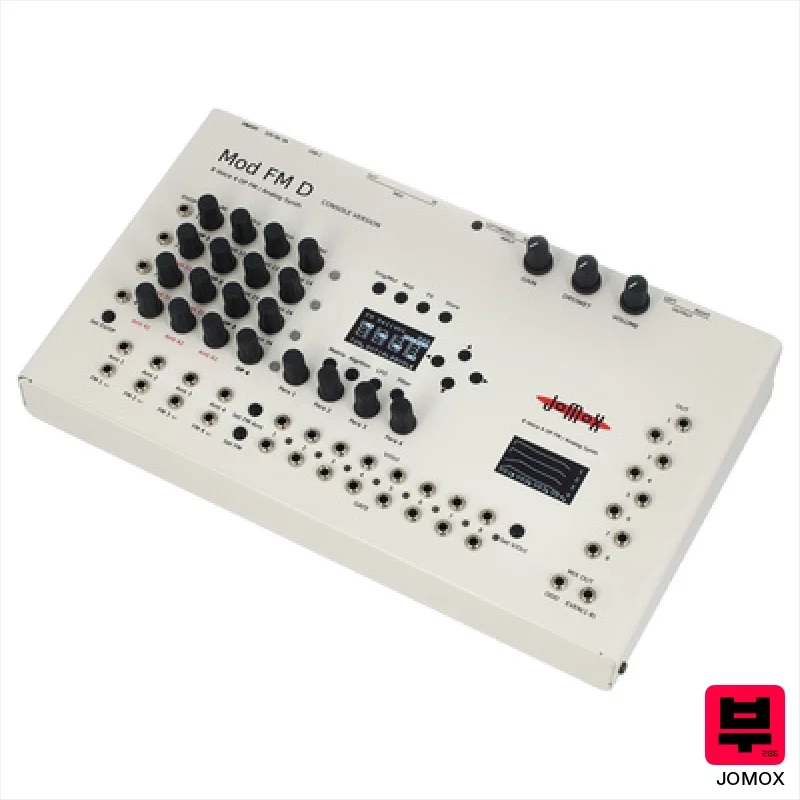
Jomox Mod FM D
- • Exceptional FM sound design with 4 operators/voice.
- • Dual-filter system offers incredibly versatile tonal shaping.
- • Abundant modulation options with 64 LFO waveforms.
- • Solid build quality; feels robust and well-engineered.
- • Learning curve is steep; FM synthesis takes dedication.
- • Limited polyphony compared to modern workstation synths.
- • Physical controls could benefit from more tactile feedback.
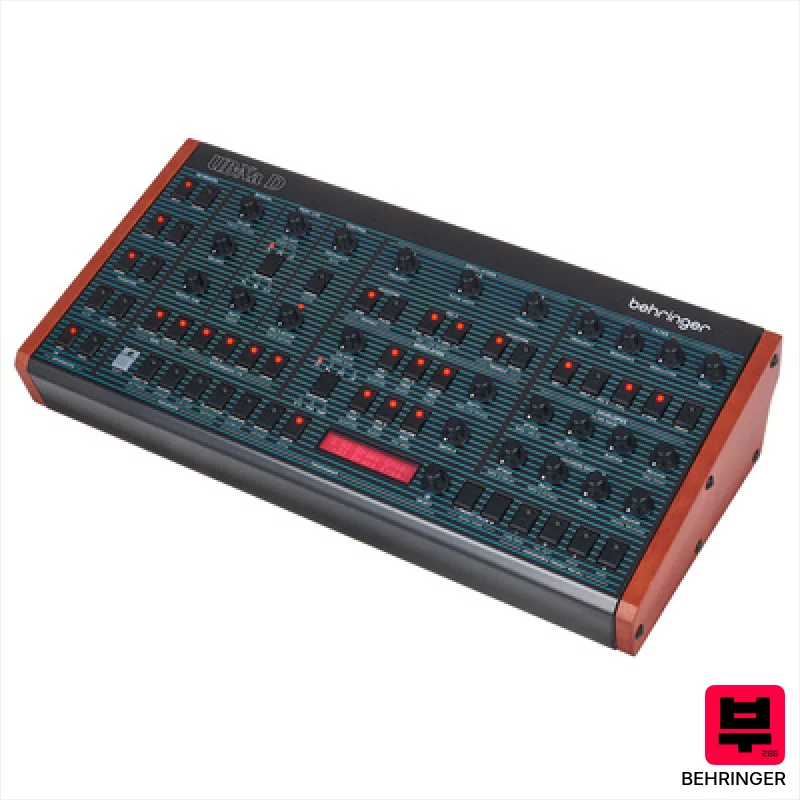
Behringer UB-Xa D
- • Faithful OB-Xa recreation delivers authentic 80s analog warmth.
- • Dual VCFs offer incredible sonic flexibility and complex filtering.
- • Extensive modulation matrix allows for deep, evolving sound design.
- • Comprehensive arpeggiator/sequencer unlocks creative composition possibilities.
- • Plastic case feels less premium than original OB-Xa's metal construction.
- • Limited oscillator waveforms (mostly saw/triangle/square) restrict sonic palette.
- • Large footprint and weight make it less ideal for portable setups.
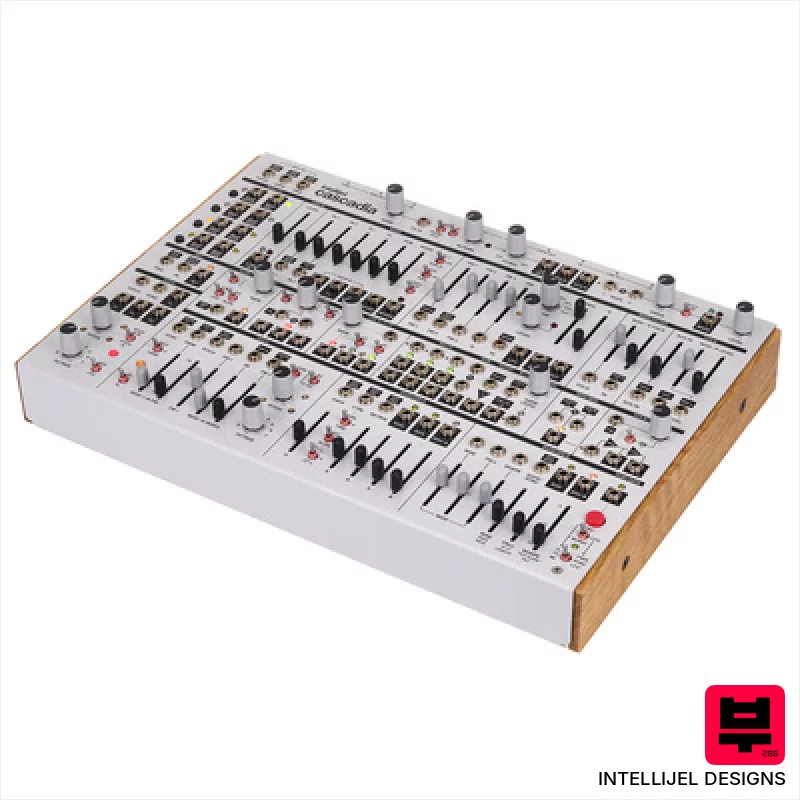
Intellijel Designs Cascadia White
- • Exceptional oscillator flexibility with Through-Zero FM capabilities.
- • The multimode filter offers a wide palette of sonic textures.
- • Solid build quality with a premium feel and robust panel design.
- • The normalized routing provides creative patching possibilities out of the box.
- • The semi-modular nature demands a learning curve for beginners.
- • Limited polyphony restricts complex chord progressions and layering.
- • The footprint is substantial, requiring dedicated space on a desktop.

Instruo Seashell
- • Analog oscillators deliver a warm, organic character lacking in purely digital synths.
- • The modulation matrix offers deep sound design possibilities for experienced users.
- • Compact size makes it ideal for studio or live performance portability.
- • Wavefolder adds pleasing harmonic complexity and subtle grit to the sound.
- • Limited polyphony restricts complex chord progressions and layered textures.
- • 3.5mm outputs feel flimsy and may require adapters for professional setups.
- • Steeper learning curve due to the semi-modular nature; not beginner-friendly.
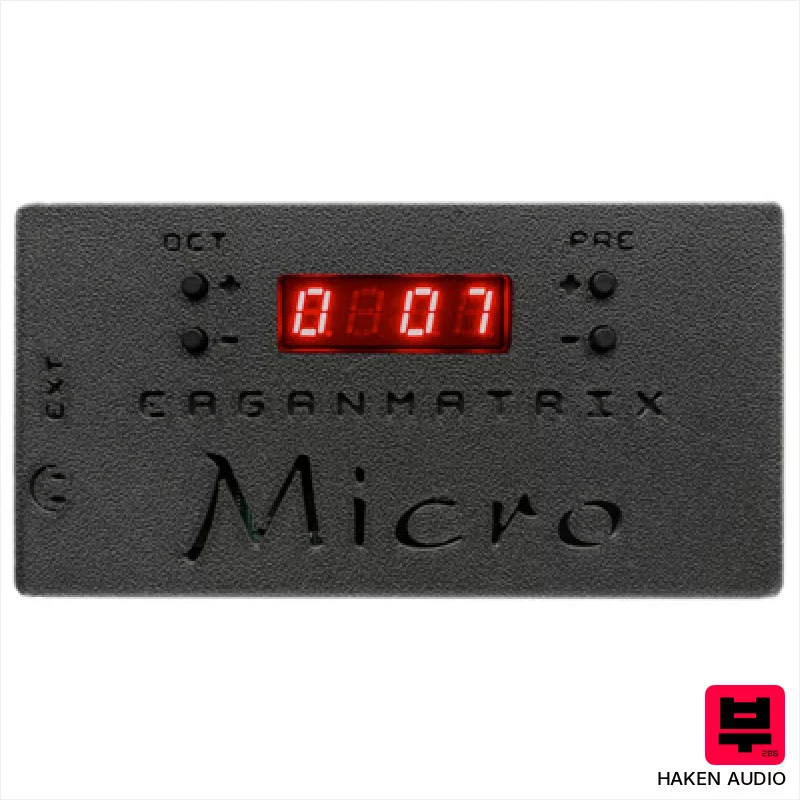
Haken Audio EaganMatrix Micro
- • Incredibly dense sound for its size; a truly modular experience.
- • Remarkable flexibility across synthesis methods – FM, additive, physical modeling.
- • Compact form factor allows for easy integration into diverse setups.
- • Hook editor offers deep control despite the limited physical interface.
- • Steep learning curve; modularity demands significant time investment.
- • Limited physical controls hinder immediate, hands-on manipulation.
- • Mini-jack connections are fragile and potentially limiting for some users.
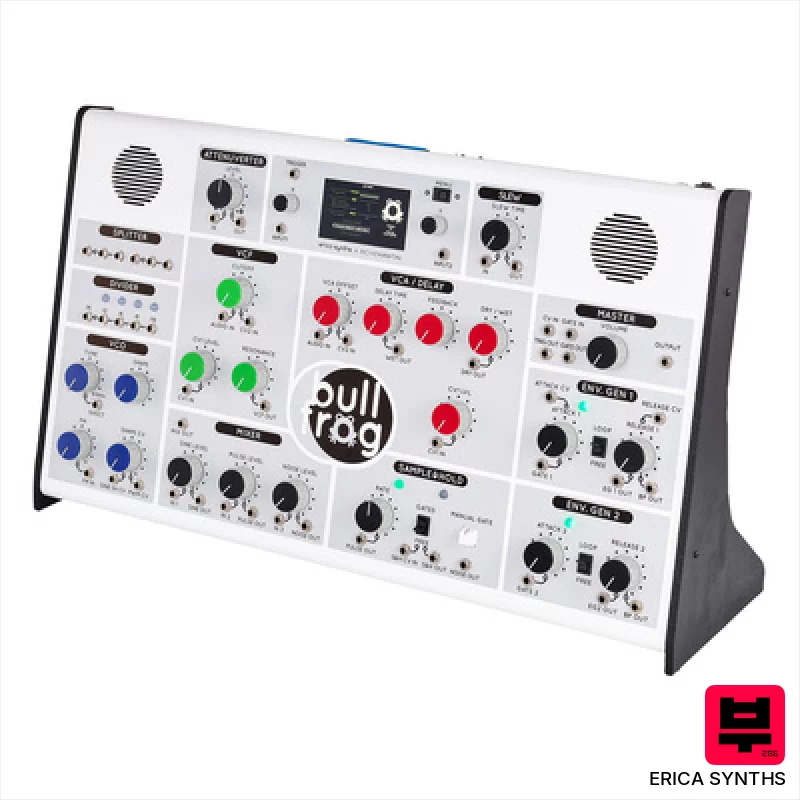
Erica Synths Bullfrog XL
- • Excellent VCO with precise tuning and satisfying FM capabilities.
- • Filter delivers a warm, resonant, and distinctly analogue character.
- • Envelope looping creates evolving textures and complex rhythmic patterns.
- • The integrated sample and hold adds unpredictable, experimental sonic possibilities.
- • Monophonic limitation restricts layering and complex chordal arrangements.
- • Steep learning curve for synthesis newcomers; requires dedicated study.
- • Limited modulation destinations compared to more expansive modular systems.
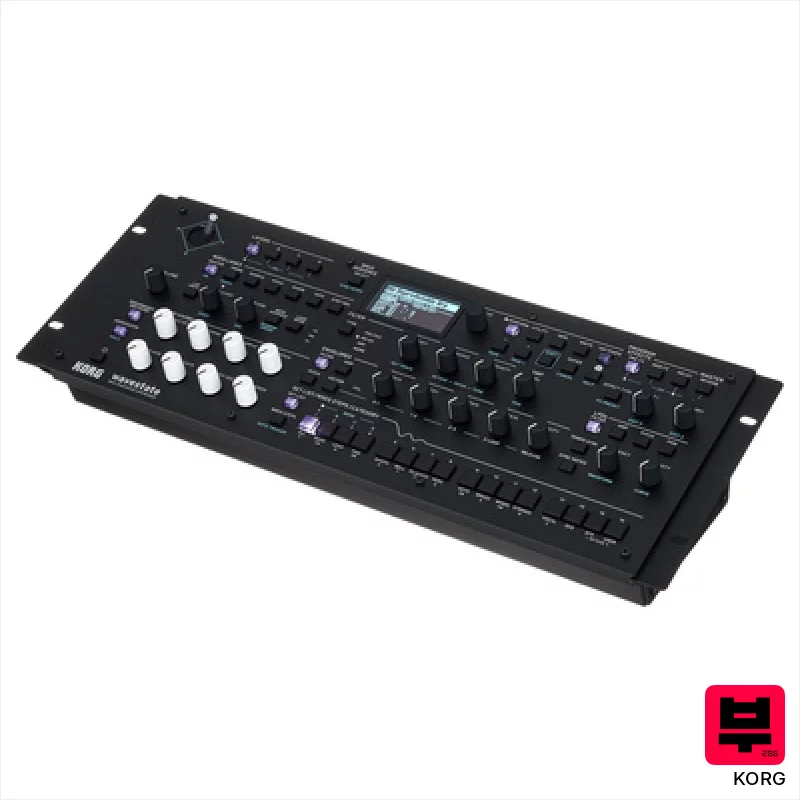
Korg Wavestate Module
- • Wave Sequencing 2.0 offers unparalleled sound design flexibility.
- • Vector joystick provides intuitive, real-time morphing capabilities.
- • Excellent polyphony supports complex layered performances.
- • Built-in effects are surprisingly high-quality and versatile.
- • The interface, while powerful, has a steep learning curve initially.
- • Desktop format lacks portability; rackmount is the ideal setup.
- • Limited physical controls compared to a full-sized keyboard.
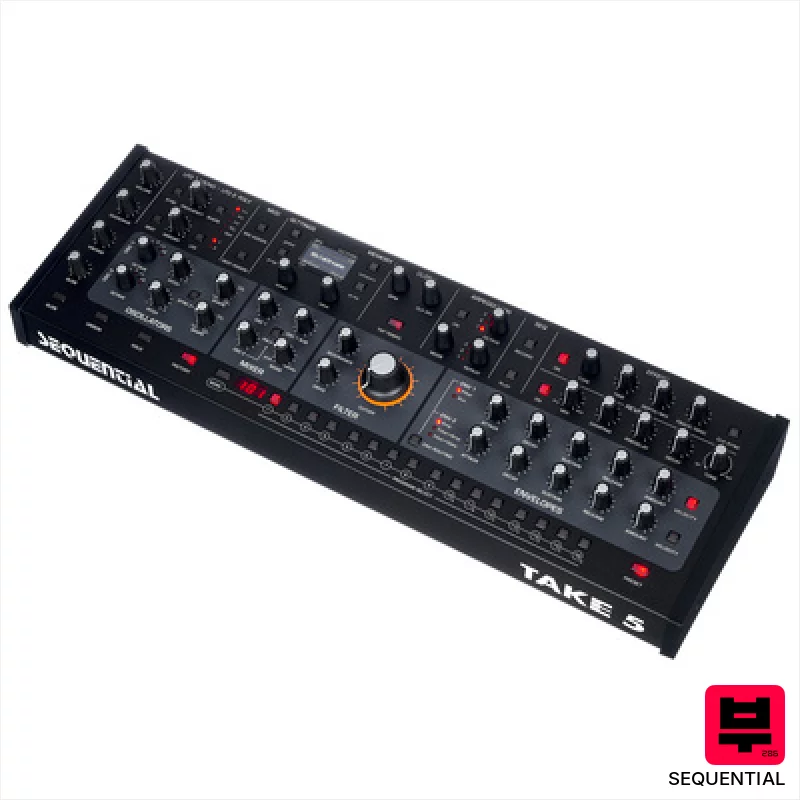
Sequential Take 5 Desktop Module
- • Dual VCOs offer incredible harmonic complexity and tonal layering.
- • Prophet 5 filter delivers that classic, creamy, instantly recognizable warmth.
- • Flexible modulation options with two LFOs and ADSR envelopes inspire experimentation.
- • Polyphonic sequencer is surprisingly deep, facilitating complex arrangements.
- • Desktop format limits portability; a rackmount or full-sized version might be preferred.
- • Limited modulation destinations compared to some modern synths.
- • The interface, while functional, can feel a bit cramped for extensive editing.

Modal Carbon8M
- • Aluminum and steel housing feels robust and premium.
- • The 56 cores per oscillator deliver surprisingly complex timbres.
- • Extensive modulation options create evolving, interesting sounds.
- • MODALapp offers comprehensive editing and plugin integration.
- • Limited physical controls can feel restrictive for live performance.
- • Small form factor may lack tactile feedback for some users.
- • The sound character leans digital, less organic than analog alternatives.

Befaco Oneiroi Pod
- • Unique oscillator pairings create truly otherworldly textures.
- • The looper’s five-second window encourages creative, instant sculpting.
- • Resonator adds unexpected character – not just a standard filter.
- • Compact size makes it surprisingly versatile for studio and live use.
- • Five-second looper limit can feel restrictive for longer phrases.
- • Limited polyphony restricts complex chordal arrangements.
- • The interface, while characterful, can be challenging to master.
How to Choose the Best Sound Modules
Tonal Character
Rack systems demand sounds that cut through the mix. We're looking for modules with a defined sonic signature - whether it's a warm, vintage analog vibe, a glassy digital precision, or something in between. That 'fat midrange honk' for pads or a crisp, defined attack for leads are critical.
Polyphony & Voice Architecture
Gigging musicians need polyphony. Don't get fooled by high numbers; the type of voice architecture matters too. Are we talking about true multi-timbrality, or just a bunch of stacked single-voice instruments? Layering sounds is a rack system staple, and you need headroom.
Connectivity & Routing
Rack modules live in a complex environment. Multiple MIDI inputs/outputs, assignable aux sends, and robust audio I/O (XLR, TRS, sometimes even AES/EBU) are non-negotiable. Think about how it'll integrate with your external effects and controllers.
Modulation & Expression
Static sounds are boring. Look for deep modulation options - LFOs, envelopes, effects - to add movement and character. Aftertouch, velocity sensitivity, and even ribbon controllers can transform a basic sound into something truly expressive.
Build Quality & Reliability
Rack gear gets banged around. A flimsy plastic case or questionable internal components will fail you when you need it most. Solid construction, reliable components, and a proven track record are essential for a gig-ready rack module.
Buying Guide
Rack modules are a significant investment, so don't chase specs. Listen critically - does the sound move you? Don't skimp on connectivity; future-proofing is key. Many cheaper modules cut corners on modulation depth or the quality of their effects, leaving you wanting more. Pay attention to the MIDI implementation too - some modules are clunky to program.
Our Methodology
We're not looking at spec sheets here. Our evaluations are based on hands-on playing, A/B comparisons against industry standards, and real-world testing-running these modules through live rigs, recording sessions, and band rehearsals. We're listening for the nuances, the subtle character that separates a good module from one that truly inspires.

