
Best Solid-State Bassheads for Modern Rock 2026
Alright, so you're chasing that modern rock bass tone - tight, punchy, and able to cut through a wall of guitars without getting lost in the mud. Solid-state heads have come a long way from the sterile sounds of yesteryear; they're now a legit option for serious tone. We're not talking about chasing vintage warmth here; we're looking for clean headroom, aggressive breakup when you need it, and enough thump to rattle the subs. Let's break down the best solid-state bassheads for nailing that modern rock vibe.
Last updated: July 15, 2026 • Next update: July 22, 2026

Eich Amplification TB250 Sub-Bass
- • Remarkably compact and lightweight for its power output.
- • Sub-bass control offers genuinely useful low-end extension.
- • Clean, modern transistor preamp delivers a defined, articulate tone.
- • Efficient Class D amplification minimizes heat and power consumption.
- • Limited EQ control restricts tonal shaping flexibility.
- • XLR/jack combo input lacks dedicated gain control per input.
- • Lack of effects loop limits integration with external processing.
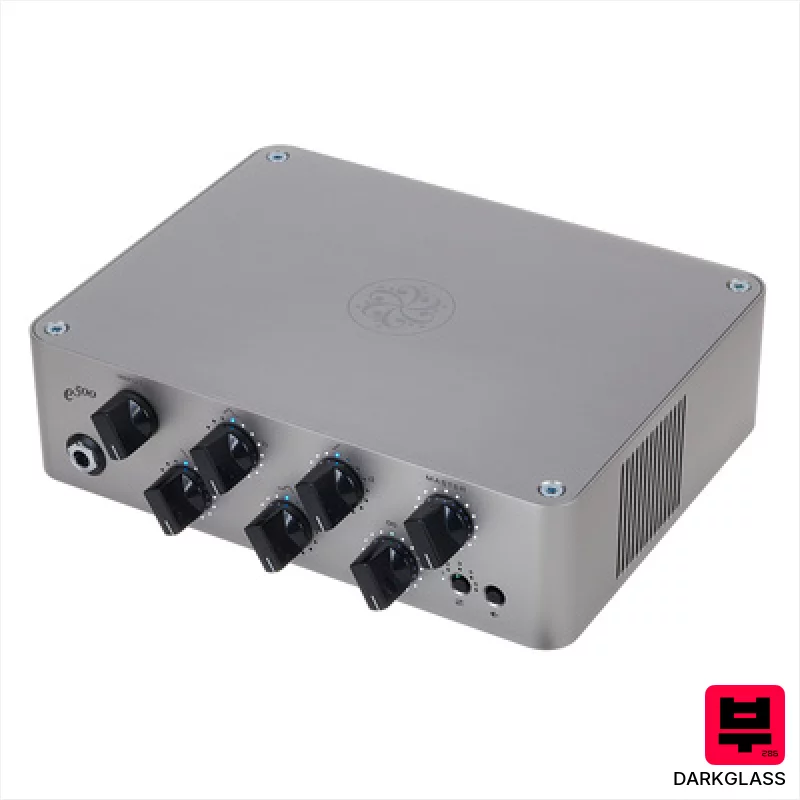
Darkglass The Exponent 500 Bass Head
- • Exceptional clean headroom, remarkably responsive to playing dynamics.
- • DSP effects offer genuinely usable, high-quality processing options.
- • Compact size and light weight (1.7kg) make it incredibly portable.
- • The 'Blend' knob provides a seamless transition between clean and driven tones.
- • The EQ, while functional, lacks the precision of a more complex design.
- • DSP processing adds latency, noticeable for certain effects or techniques.
- • Limited physical controls for the extensive DSP options require menu navigation.

Eich Amplification T500 Black Edition
- • Remarkably lightweight for its power, truly portable for a head.
- • German engineering ensures exceptional build quality and reliability.
- • Taste control offers nuanced tonal shaping beyond standard EQ.
- • Transformer-balanced DI delivers exceptionally clean and professional recordings.
- • Limited EQ bands might restrict extreme tonal sculpting needs.
- • Parallel effects loop is basic; more advanced routing is absent.
- • Black Edition's aesthetic might be too stark for some players.
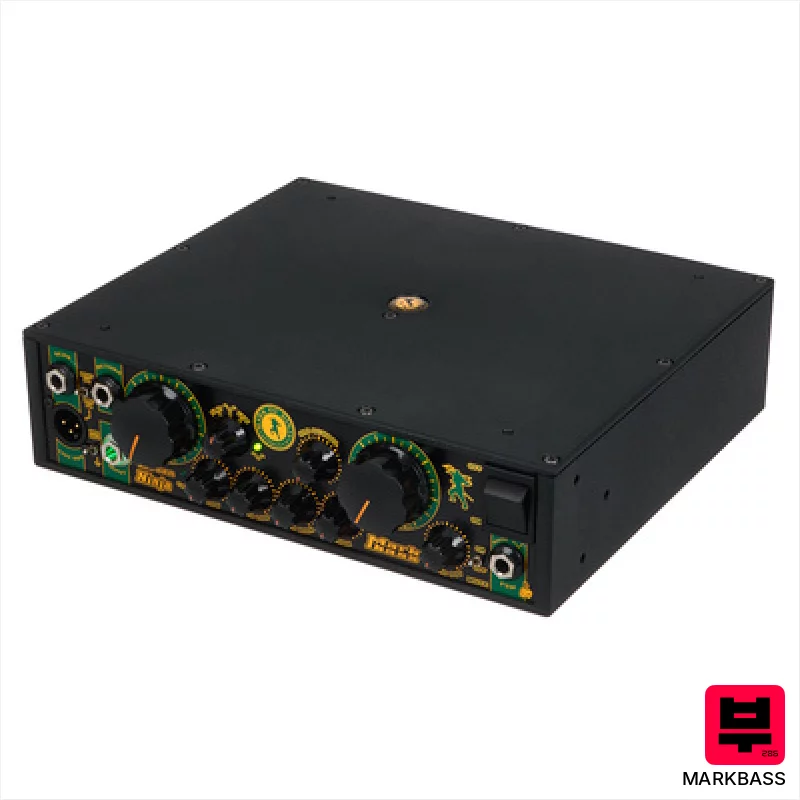
Markbass Little Mark Ninja 58R
- • Remarkably lightweight for its power – truly portable for gigging.
- • Markbass’s signature 'New Bass' EQ provides a uniquely modern low-end.
- • Bi-Band Limiter prevents unwanted distortion at high volumes effectively.
- • Biodegradable housing demonstrates a commitment to eco-conscious design.
- • The 'scooped mid' setting, while useful, can be overly aggressive for some styles.
- • Lacks the extensive EQ control found in larger Markbass heads; a bit limiting.
- • Rack mounting requires a separate purchase, adding to the overall cost.
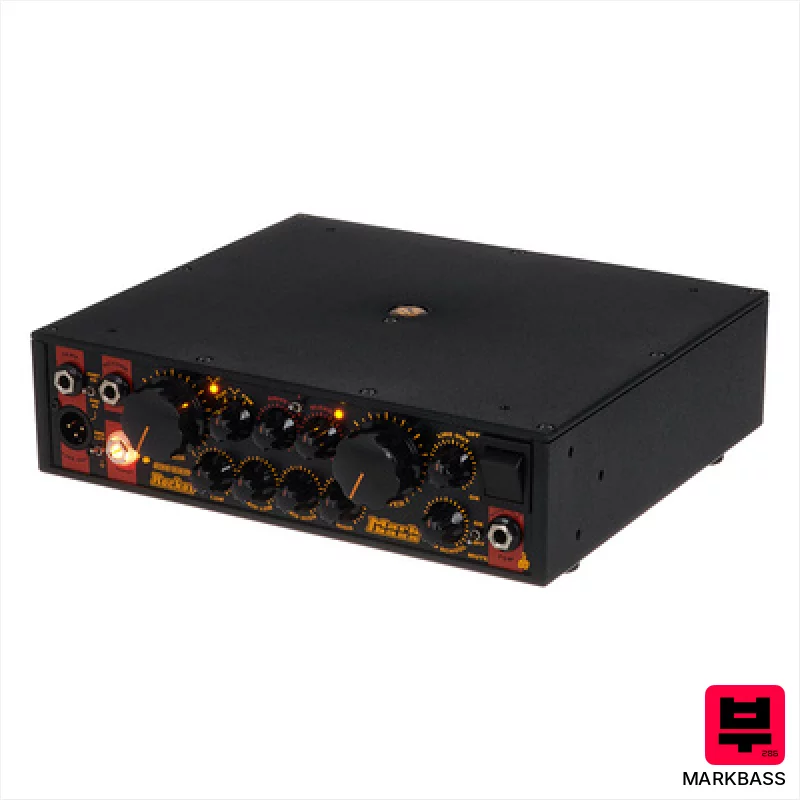
Markbass Little Mark Rocker 58R
- • Markbass's signature Art Tube emulation provides a surprisingly warm, vintage preamp tone.
- • The lightweight, biodegradable housing is genuinely impressive for a head of this power.
- • The EQ section offers precise tonal shaping, especially the 'Old School Filter'.
- • The DI output is excellent, providing a clean, usable signal for recording and live sound.
- • The 'cut' filter can be overly aggressive, limiting low-mid versatility.
- • While powerful, it’s designed for smaller venues; larger stages require a bigger setup.
- • The drive section, while decent, lacks the complexity of more expensive preamps.
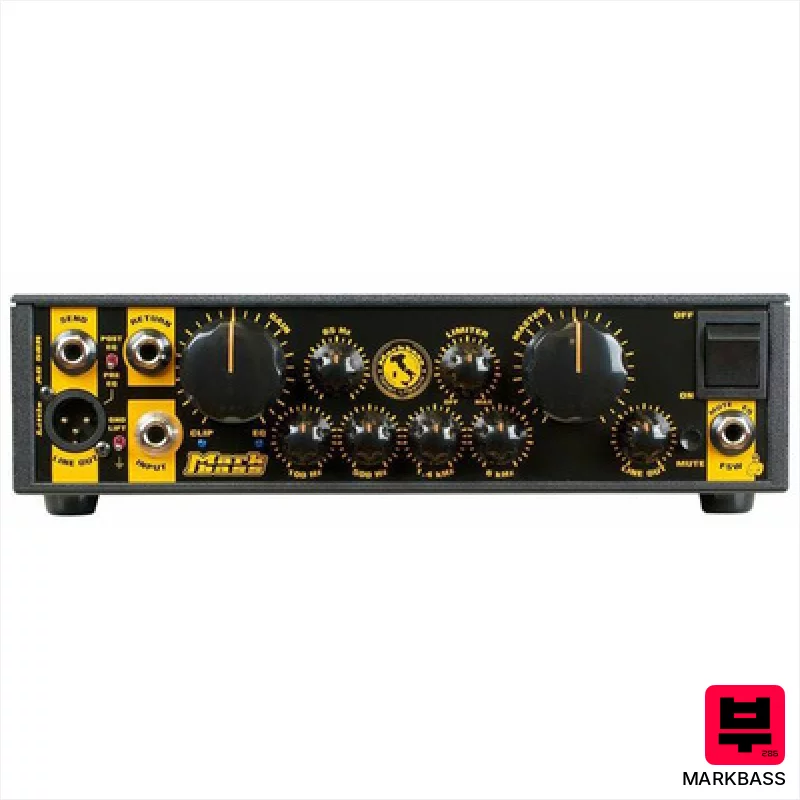
Markbass Little AG 58R
- • Andrew Gouchè signature voicing delivers a warm, gospel-infused tone.
- • Biodegradable housing is a genuinely unique and commendable sustainability feature.
- • Lightweight design (under 5 lbs) makes transport incredibly easy for gigging bassists.
- • Excellent EQ flexibility allows for precise tonal shaping across the spectrum.
- • The 500W output is sufficient, but might feel limiting for larger stages.
- • Limited connectivity compared to more feature-rich Markbass heads.
- • The 'little' size means fewer physical controls – some prefer tactile knobs.
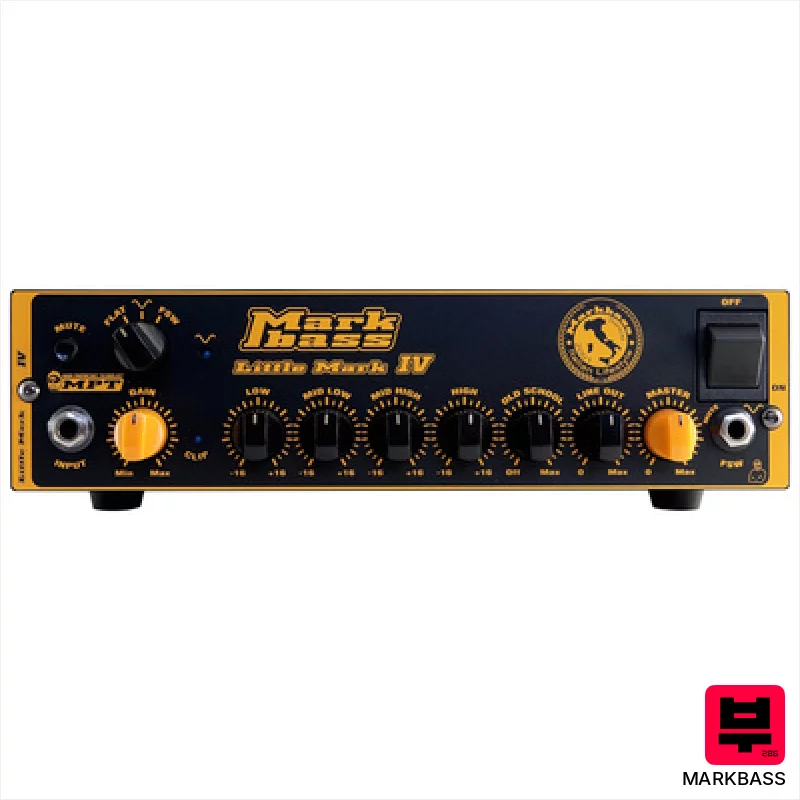
Markbass Little Mark IV
- • Excellent Markbass signature sound in a compact, lightweight design.
- • The 'Old School' mode delivers a warm, vintage tube-like distortion.
- • Flexible EQ with a wide frequency range for tonal sculpting.
- • XLR DI output provides a clean, professional signal for recording or live sound.
- • Limited power for very large venues or loud band situations.
- • EQ can be slightly overwhelming for beginners to dial in consistently.
- • No built-in reverb or other effects beyond send/return loop.
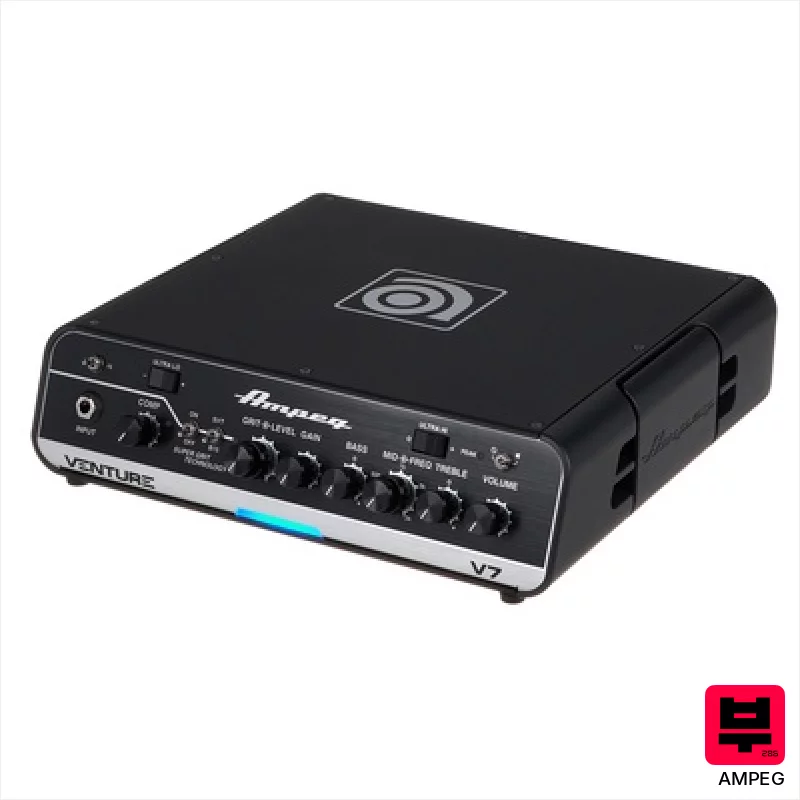
Ampeg Venture V7
- • Ampeg's signature growl delivers authentic SVT tone.
- • 700 watts provide serious headroom for loud stages.
- • Flexible EQ and voicing switches adapt to various genres.
- • Balanced XLR DI output facilitates easy recording and live sound.
- • Solid-state design lacks the organic warmth of a tube amp.
- • Weight makes it less ideal for frequent transport.
- • Effects loop is basic, lacking advanced routing options.

Quilter Bass Block V803 Bass Head
- • Exceptional clean headroom, handling complex bass lines with ease.
- • Qtube voicing convincingly emulates vintage tube amp saturation.
- • Surprisingly compact and lightweight for its power output.
- • Flexible input options (Passive/Active/Mute) cater to diverse basses.
- • Voice options, while good, lack extreme tonal versatility compared to multi-channel amps.
- • Effects loop is serviceable but not designed for complex, high-end effects chains.
- • Master control can feel a bit sensitive, requiring careful adjustment.
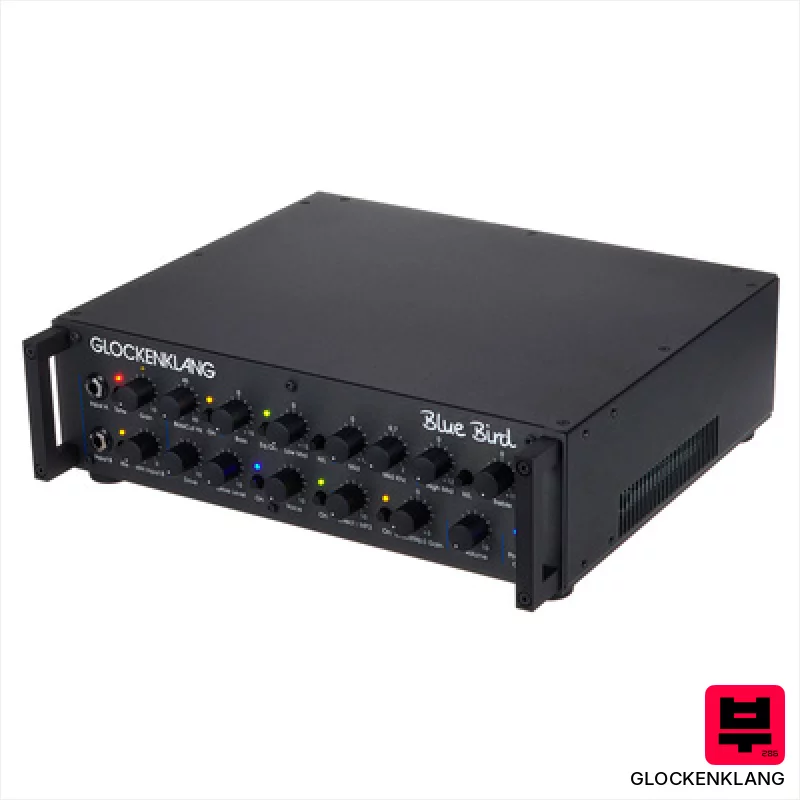
Glockenklang Blue Bird
- • Class A input stage delivers a surprisingly warm, organic tone.
- • Flexible EQ with adjustable mid frequencies allows precise tonal sculpting.
- • Parallel effects loop maintains signal integrity, preserving low-end punch.
- • Dual inputs handle both standard and high-output basses with ease.
- • The sheer power (900W) makes it overkill for smaller gigs or practice.
- • Premium-priced, putting it out of reach for many gigging bassists.
- • The complex feature set might be overwhelming for beginners.
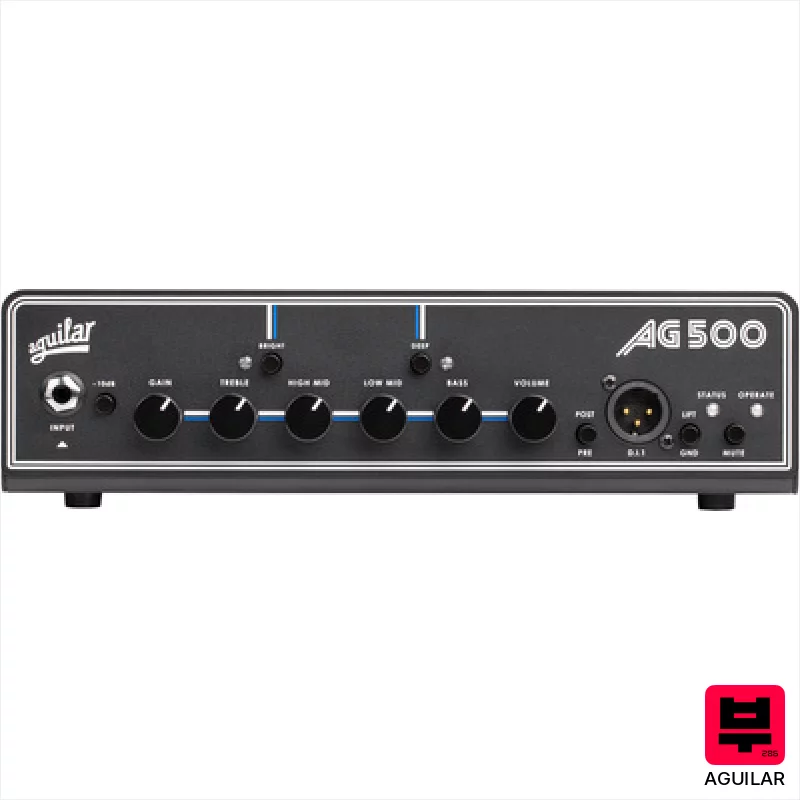
Aguilar AG 500 V2 Bass Head
- • Robust Class D power section delivers clean, powerful low-end tones.
- • Excellent EQ range allows for precise tonal shaping across the spectrum.
- • Switched-mode power supply ensures efficient operation and global voltage compatibility.
- • High-quality Neutrik speaker outputs guarantee secure and reliable connections.
- • The weight, typical of a high-powered head, makes portability a challenge.
- • Serial effects loop adds gain, potentially muddying certain effect chains.
- • Premium-priced, placing it outside the budget of many gigging bassists.

Seymour Duncan PowerStage 700 Bass
- • Powerful 700W output handles any venue with ease.
- • Tunable mid control provides exceptional tonal sculpting flexibility.
- • Solid-state design ensures consistent performance and reliability.
- • Comprehensive feature set including FX loop and DI output boosts versatility.
- • Solid-state character may lack the organic warmth of a tube amp.
- • Considerable weight makes it less portable for frequent gigging.
- • Overdrive, while usable, isn’t the most nuanced or inspiring.

Warwick Gnome i Pro 600W V2
- • Excellent power-to-size ratio for portable, gig-ready performance.
- • Warwick's transistor circuit delivers a surprisingly musical, warm tone.
- • Integrated USB interface simplifies recording and silent practice immensely.
- • The +/- 15dB EQ provides significant tonal shaping flexibility.
- • Class D amps can sometimes lack the 'organic' feel of tube amps.
- • The 4-band EQ, while versatile, isn’t as detailed as more complex systems.
- • Build quality, while decent, uses primarily stamped metal – not premium alloys.
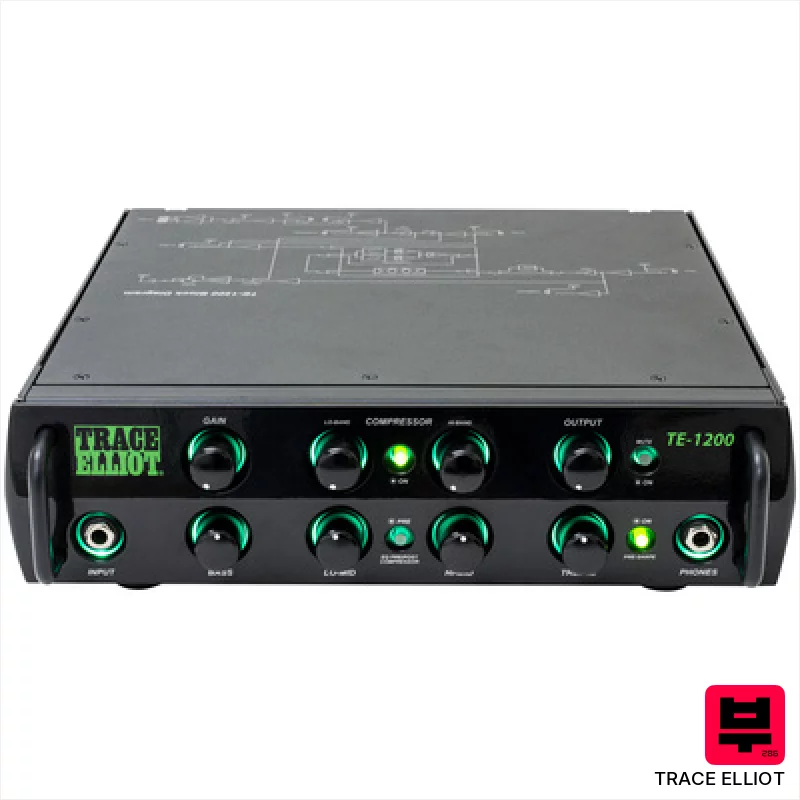
Trace Elliot TE-1200 Bass Amp Head
- • Robust build quality with Trace Elliot’s signature industrial aesthetic.
- • The Pre-Shape switch delivers that classic, scooped Trace Elliot sound.
- • Excellent clean headroom – handles high volumes without significant distortion.
- • Versatile EQ with switchable pre/post compressor placement offers tonal shaping.
- • The weight makes it less than ideal for frequent gigging or transport.
- • Limited tonal palette compared to more flexible modeling or hybrid amps.
- • FX loop is buffered, which might color certain pedal types negatively.
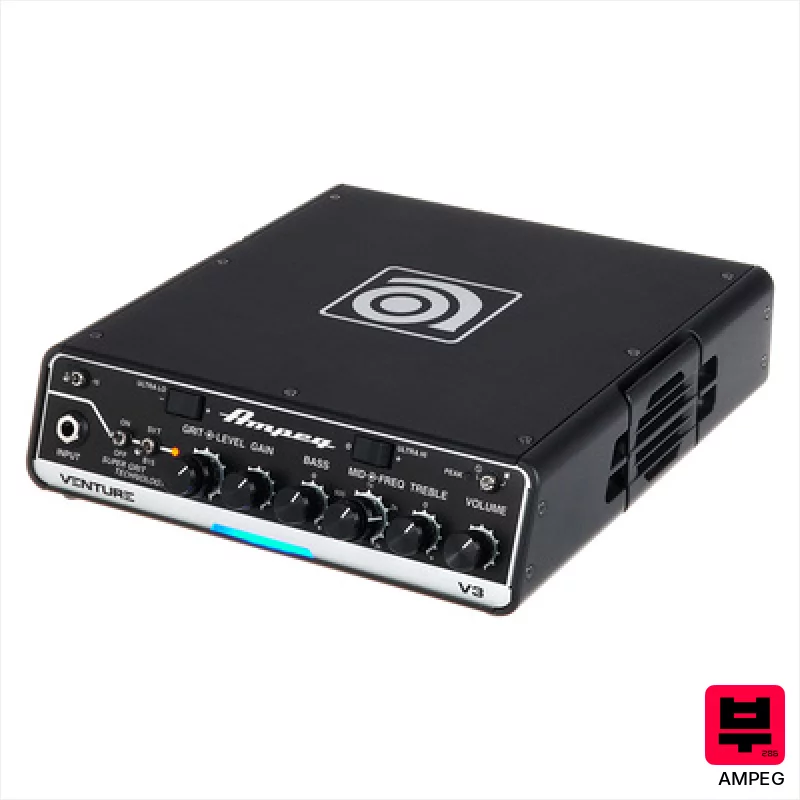
Ampeg Venture V3
- • Ampeg's signature SVT voicing delivers classic, warm bass tones.
- • 300 Watts provides ample headroom for rehearsals and smaller gigs.
- • Flexible 3-band EQ allows for shaping your bass's character.
- • Balanced XLR DI output with pre/post EQ options is gig-ready.
- • Solid-state design lacks the organic warmth of a tube amp.
- • Ultra Lo switch's impact is subtle, not a true sub-bass powerhouse.
- • The compact size means limited internal space, potentially affecting heat dissipation.
How to Choose the Best Solid-State Bassheads
Headroom & Clean Breakup
Modern rock often demands a clean foundation before pushing into distortion. You need enough headroom to handle a loud band without immediately breaking up, but the ability to overdrive naturally when you want that gritty edge.
Low-End Response & Articulation
That low-end thump is crucial, but it can't be a blurry mess. We're looking for amps that deliver a tight, defined low end with excellent articulation - each note needs to be clear and present, even when playing complex lines.
EQ Flexibility
Modern rock isn't one-size-fits-all. A versatile EQ section with enough control to shape your tone - particularly in the midrange where a lot of the 'cut' lives - is essential.
Portability & Power
Gigging bassists need something manageable. We considered weight, size, and wattage - balancing power with portability.
Noise Floor
Solid-state amps should be quiet. A noisy amp, even a powerful one, is a pain to deal with onstage and in the studio, especially when trying to dial in subtle nuances.
Buying Guide
Don't expect the same 'magic' you get with a tube amp. Solid-state is about precision and consistency, and that comes with trade-offs. Cheaper heads often cut corners on power supply design, leading to noise and inconsistent performance when pushed hard. Spending a bit more often gets you a better power section, more versatile EQ, and a more refined overall feel - it's not always about more wattage, but about how that wattage is delivered.
Our Methodology
We've spent the last few months putting these heads through the wringer - live gigs, tracking sessions, and countless hours in the rehearsal room. Our evaluations aren't based on spec sheets; we're listening for how these amps feel and how they translate in a band context. We A/B'd them against everything from tube behemoths to other solid-state contenders to see where they truly shine.

