AudioFu Chart · October 2026
Best ESP Signature Guitars 2026
The top pick is ESP LTD Snakebyte James Hetfield Signature ($6,376). ESP LTD SCT-607B Stephen Carpenter Signature 7-String Baritone gives you the most for the money at $2,081. Ranked by the AudioFu Index from 7 models, prices checked every night.
Last updated: October 19, 2026
Top 7
Full detail for the 7 highest AudioFu Index scores. Every other model is listed below.
-
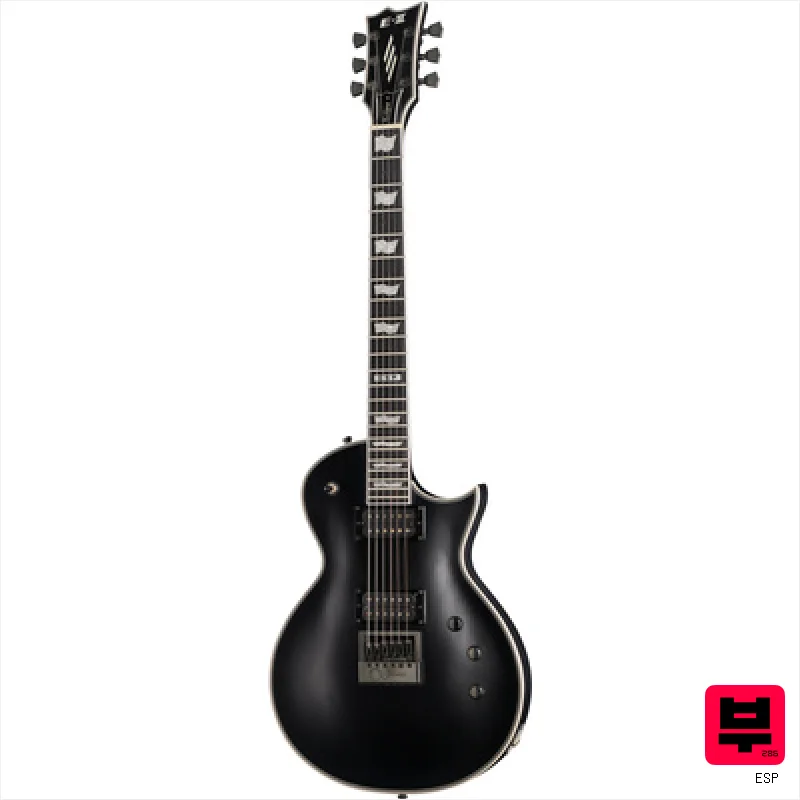
ESP LTD Snakebyte James Hetfield Signature
Snakebyte BLKS James Hetfield · ESP
64 for sale on Reverb1 finish at Thomann
- Nut width42 mm (1.65")
- Scale628 mm (24.72")
- Fingerboard radius305 mm (12.01")
- BodyMahogany body
- FingerboardEbony fingerboard
This Snakebyte is a serious instrument built to deliver that Metallica crunch. The mahogany construction and EMG JH pickups nail Hetfield's signature tone perfectly, and the Japanese build is top-notch. It's a premium-priced axe, ideal for experienced players seeking a high-performance metal machine with a focused sonic character.
Pros
- Mahogany body delivers thick, warm, and powerful low-end response
- One-piece mahogany neck provides exceptional stability and sustain
- EMG JH pickups offer Hetfield's signature aggressive, scooped-mid tone
Cons
- The active pickups demand a quality power supply to avoid noise issues
- The ebony fretboard can feel quite slick for some players
70AudioFu
Index↓ 3.9%since Aug 17 · lowest so far$6,638 · Aug 17$6,376 now$6,376€5,666 at Thomann · in stockCheck price ↗ -
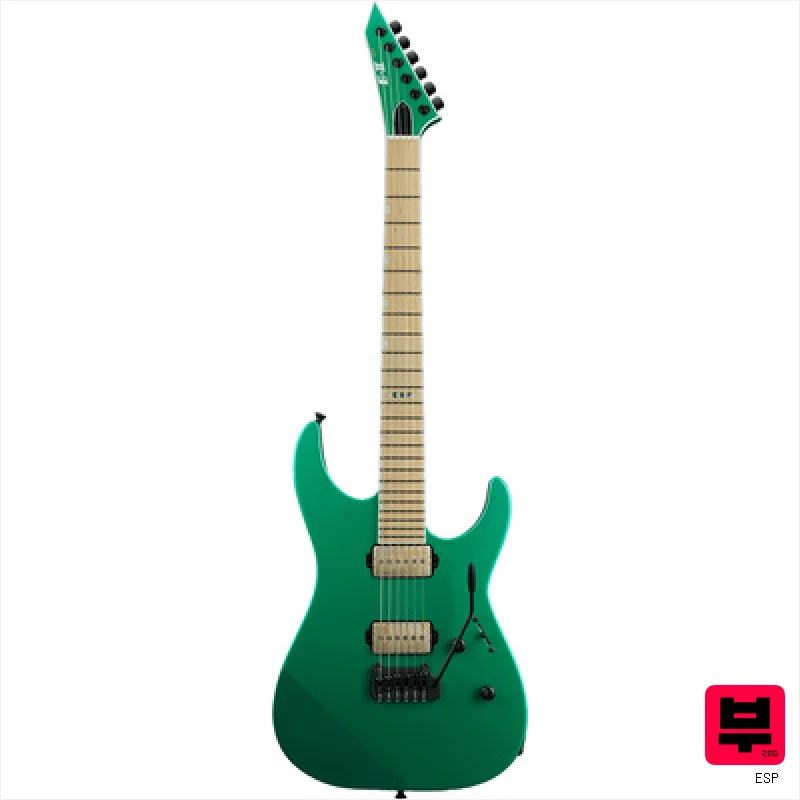
ESP LTD SCT-607B Stephen Carpenter Signature 7-String Baritone
LTD SCT607 Baritone Black · ESP
9 for sale on Reverb1 finish at Thomann
- Nut width48 mm (1.89")
- Scale686 mm (27.01")
- Fingerboard radius350 mm (13.78")
- Strings7-string
- BodyAlder body
This SCT607 Baritone is a seriously well-built instrument. The Fishman pickups provide a modern, aggressive tone that really cuts through, and the neck-through construction adds serious sustain. It's perfect for metalheads and progressive players who want a baritone with a premium feel and high-end components.
Pros
- Alder body provides a balanced, resonant tone with excellent sustain.
- Fishman Fluence pickups deliver high-output, articulate tones with great clarity.
- Thin 'U' neck profile offers comfortable playability for a wide range of players.
Cons
- Baritone scale limits versatility; not ideal for all genres or playing styles.
- Ebony fretboard can be prone to dryness if not properly maintained with regular conditioning.
54AudioFu
IndexStableno change since Aug 17Aug 17$2,081 now$2,081€1,849 at Thomann · in stockCheck price ↗ -
- Nut width54 mm (2.13")
- Scale686 mm (27.01")
- Fingerboard radius350 mm (13.78")
- Strings8-string
- BodyMahogany body
Stephen Carpenter's SC-608 is a serious baritone machine built for crushing riffs. The mahogany body and Fluence pickups deliver that Deftones-esque low-end growl, while the ebony board keeps things fast. This is ideal for players seeking a focused, high-performance 8-string with a signature vibe.
Pros
- Mahogany body provides warmth and sustain, a signature Carpenter tone.
- Fishman Fluence pickups offer incredible clarity and aggressive high-gain response.
- Ebony fretboard delivers a smooth, fast playing experience with excellent note definition.
Cons
- The extended scale length requires heavier gauge strings and may feel unwieldy for smaller hands.
- Mahogany body contributes to a relatively hefty weight, potentially fatiguing during long gigs.
44AudioFu
IndexStableno change since Aug 17Aug 17$2,227 now$2,227€1,979 at Thomann · in stockCheck price ↗ -
- Nut width42 mm (1.65")
- Scale648 mm (25.51")
- Frets24 frets
- BodyAlder body
- FingerboardEbony fingerboard
This guitar sounds like Alexi Laiho's main axe but with a thin maple neck. It has EMG pickups for a tight sound and a Floyd Rose bridge for big bends. The black finish with white stripes looks sharp. It suits players who want that classic metal tone without guessing about weight.
Pros
- Alexi Laiho signature design for familiar feel
- Alder body paired with maple through-neck construction
- EMG FH2 humbuckers for tight, aggressive tone
Cons
- No weight listed makes heft unknown
- Ebony fingerboard may feel very hard on fingers
42AudioFu
IndexStableno change since Aug 17Aug 17$2,249 now$2,249€1,999 at Thomann · in stockCheck price ↗ -
- Nut width43 mm (1.69")
- Scale648 mm (25.51")
- Fingerboard radius350 mm (13.78")
- BodyMahogany body
- FingerboardEbony fingerboard
This guitar feels solid thanks to the roasted maple neck and mahogany body. The stainless steel frets stay bright longer than standard nickel ones. It's great for rock players who want a tight, mid-heavy sound without breaking the bank.
Pros
- Roasted maple neck adds stiffness and playability
- Stainless steel frets last longer than nickel
- Mahogany body gives warm, mid-focused tone
Cons
- No neck-through construction for some players
- Single volume control limits tone shaping
42AudioFu
IndexStableno change since Aug 17Aug 17$2,587 now$2,587€2,299 at Thomann · in stockCheck price ↗ -
- Scale648 mm (25.51")
- Fingerboard radius305 mm (12.01")
- BodyAlder body
- FingerboardRosewood fingerboard
This RZK-II is a serious statement piece built for high-octane performance. The neck-thru design and aggressive pickups deliver the signature Rammstein crunch, while the Japanese build ensures it'll withstand a beating. It's perfect for players seeking a high-end, distortion-focused instrument with a unique look and feel.
Pros
- Exceptional build quality with Japanese craftsmanship and premium materials.
- EMG 81 pickups deliver aggressive, high-output distortion and searing leads.
- Maple/Ebony neck provides fast playability and a snappy, articulate tone.
Cons
- The extended scale length (25.5") may feel unwieldy for players with smaller hands.
- High-end price point puts it out of reach for many players.
40AudioFu
IndexStableno change since Aug 17Aug 17$9,001 now$9,001€7,999 at Thomann · in stockCheck price ↗ -
- Nut width42 mm (1.65")
- Scale648 mm (25.51")
- BodyAlder body
This guitar feels solid thanks to its maple neck and alder body. The EMG pickups and Floyd Rose bridge give you full control over your sound. It is a serious instrument for players who want heavy duty power and locking tuners.
Pros
- Solid 3-piece neck-through-body construction for stability
- EMG HZ-FH2 humbuckers deliver tight, modern tone
- Floyd Rose bridge allows precise tuning control
Cons
- Heavy build weight may be difficult for some players
- No weight relief carved out of the body
38AudioFu
IndexStableno change since Aug 17Aug 17$14,628 now$14,628€12,999 at Thomann · in stockCheck price ↗
Signature Guitars by the numbers
Measured across all 137 models we track, not a sample.
median of 117 models · 41.3 mm (1.63")–47.6 mm (1.87")
median of 125 models · 628 mm (24.72")–667 mm (26.26")
most common · 124 models
most common · 98 models
How to choose the best signature guitars
Heritage & Design Philosophy
ESP's roots are in hard rock and metal, and their signature models reflect that. Expect aggressive neck profiles, thin finishes allowing for fast playing, and a focus on sustain and articulation - not warm, vintage tones. They're built for aggression.
Construction & Hardware
Generally, ESP Signature guitars feature solid bodies (often mahogany, basswood, or a combination) and maple necks, contributing to that tight, focused low-end response you want for cutting through a wall of amps. The hardware - often Edwards or Grover - is typically a step above what you find on standard ESP models, offering better tuning stability and a smoother feel.
Pickup Voicing & Tone Characteristics
This is where the signature aspect really shines. Each model is tailored to the artist's specific sound - Kirk Hammett's models lean towards a slightly scooped, aggressive tone perfect for wah-drenched leads, while James Hetfield's are known for their thick, percussive rhythm tones and searing high-gain output. It's not just about high output; it's about the specific flavor of distortion.
Neck Profile & Playability
ESP's signature necks are frequently thin and fast, designed for effortless shredding. While this can be a dream for some, it might feel a little too thin for players accustomed to chunkier profiles. Getting your hands on one before buying is ideal - neck feel is intensely personal.
Value Proposition
While not cheap, ESP Signature models represent a sweet spot in terms of quality and performance. You're getting a level of craftsmanship and attention to detail that's often missing in guitars at this price point, and the association with a respected artist adds a certain cachet - though that's secondary to the actual playing experience.
Buying guide
So, you're looking at ESP Signature guitars? Smart move. These aren't your dime-a-dozen import guitars; they're built for players who demand serious performance and a specific voice - often the voice of a legendary shredder. We're talking about instruments born from the needs of players who live and breathe the stage, and that translates to something genuinely special, even if you're just shredding in your bedroom.
ESP Signature guitars are an investment. Be realistic about your playing style - a Hetfield model might be overkill if you're mostly playing blues. Pay close attention to the neck profile; a super-thin neck isn't for everyone.
Also, be aware that finishes can be a bit fragile; that thin nitro finish looks amazing, but it's not as resilient as a thick poly coat - handle with care.
How the AudioFu Index works
Five measured signals and nothing else — no stars from strangers, no “tested by experts” we didn’t do. The weights are fixed and public. We don’t play these instruments; we measure the market around them.
This chart covers 7 signature guitars from the Thomann catalogue (of 137 in the category). Before you buy, read hands-on reviews and, where you can, play it. Full methodology.
AudioFu earns a commission when you buy through our Thomann links. It never changes the order — the index does.
- Demand40%
How many of this exact model are for sale on Reverb right now — what musicians actually buy and resell.
- Lineup20%
How many finishes Thomann stocks — makers expand the models that sell.
- Price15%
Where the price has moved since we started tracking in August.
- Specs15%
How completely the maker documents it.
- Maker10%
How deep the brand’s range is in this category.
Questions
Are ESP Signature guitars worth the money?
That depends on your needs and budget. If you want a high-performance instrument with a specific, signature tone and are willing to pay for it, absolutely. If you're just starting out, there are more affordable options that will still get you in the ballpark.
What's the difference between an ESP Signature and a standard ESP model?
Signature models generally feature higher-grade materials, upgraded hardware, and more detailed construction. They're also designed to more closely replicate the artist's actual instruments.
Are ESP Signature guitars difficult to play?
Most signature models have thin, fast necks, which can be great for shredders but might feel a bit awkward for players used to thicker necks. It's best to try one out if possible.
Can I get these guitars repaired if something breaks?
ESP has a global network of authorized service centers. While repairs can be costly, the quality of the build generally means you won't be needing them often.
Do I need to be a virtuoso to play an ESP Signature guitar?
Absolutely not! These guitars are built for players, not just shredders. While they excel at high-gain playing, they're versatile enough for a wide range of genres - as long as you appreciate a focused, aggressive tone.