
Best Risers VST Plugins 2026
The art of musical build-up relies heavily on expertly crafted risers to create tension and anticipation in tracks. This roundup explores the absolute best VST and AU plugins available for creating dynamic, professional risers in 2026. We dive deep into the nuances of different designs to help you select the perfect tool for your mixing workflow.
Last updated: July 15, 2026 • Next update: July 22, 2026
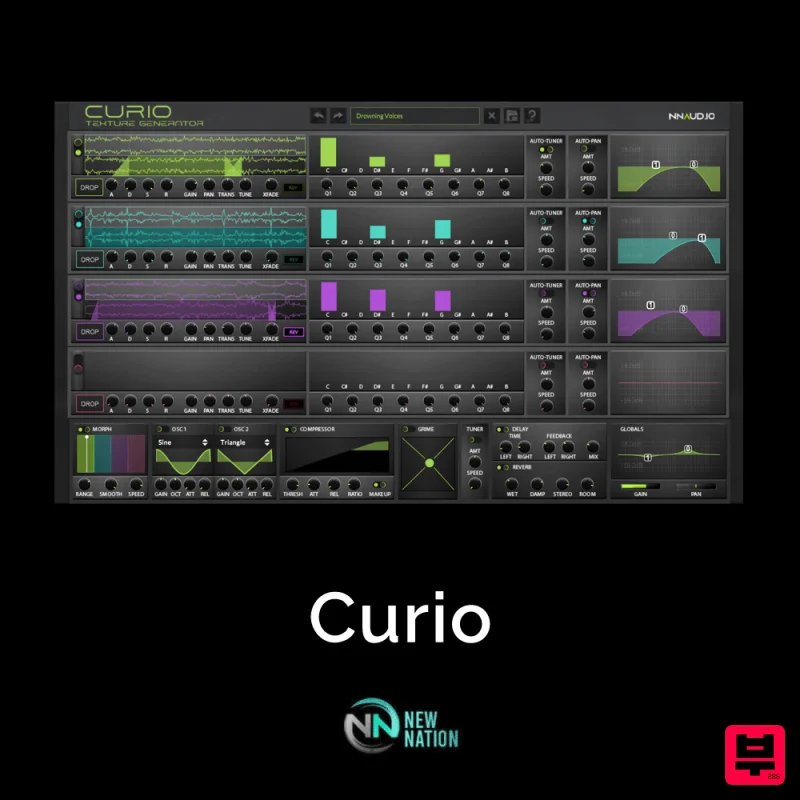
New Nation Software Curio
- • Quick drag-and-drop workflow
- • Saves time designing builds from scratch
- • Multiple riser types and lengths
- • Same risers heard across many productions
- • Limited creative customization
- • Very genre-specific application
How to Choose the Best Risers
Sound Design Fidelity
This assesses the quality and depth of the riser sound itself, ensuring it is rich, musical, and free from harsh artifacts. A great riser must sound organic and professional, not synthetic or buzzy.
Modulation Depth & Control
This refers to the range and precision with which you can control the pitch sweep, speed, and envelope of the riser. Fine-grained control is essential for precise musical timing and dynamic layering.
Sonic Versatility
This evaluates the plugin's ability to generate a wide variety of riser sounds, from classic sweeps to complex, evolving textures. Versatility ensures the plugin fits diverse musical genres.
DAW Integration & Workflow
This looks at how seamlessly the plugin integrates with major DAWs (Ableton, Logic, Cubase) and the efficiency of the control interface. Smooth integration saves time and enhances the production flow.
Latency & CPU Efficiency
This measures the plugin's performance overhead during real-time use. Low latency and efficient CPU usage are critical for professional, unhindered mixing sessions.
Buying Guide
When selecting a riser, prioritize plugins that offer deep modulation controls and excellent sound design fidelity over simple one-shot effects. Don't just look at the sweep; examine the envelope shapes and modulation sources to ensure you can sculpt the build-up precisely. A practical tip: Always test a riser against your specific synth or pad sounds to ensure the riser complements, rather than clashes with, your existing sonic palette.
Our Methodology
We tested a curated selection of top-rated riser plugins across various DAWs and mixing environments. Evaluation focused on sound quality, modulation flexibility, ease of use, and sonic versatility to determine the overall quality and utility of each plugin.

