
Best Rehearsal and Monitoring PA Sets for Advanced 2026
Look, you're not messing around anymore. You're past the bedroom practice amp and the 'good enough' PA. You need a rehearsal and monitoring system that lets you dial in your tone, hear your bandmates clearly, and actually play better. This isn't about loudness; it's about precision, headroom, and the ability to articulate your parts without getting buried in a muddy mess - let's talk about what you really need.
Last updated: August 25, 2026
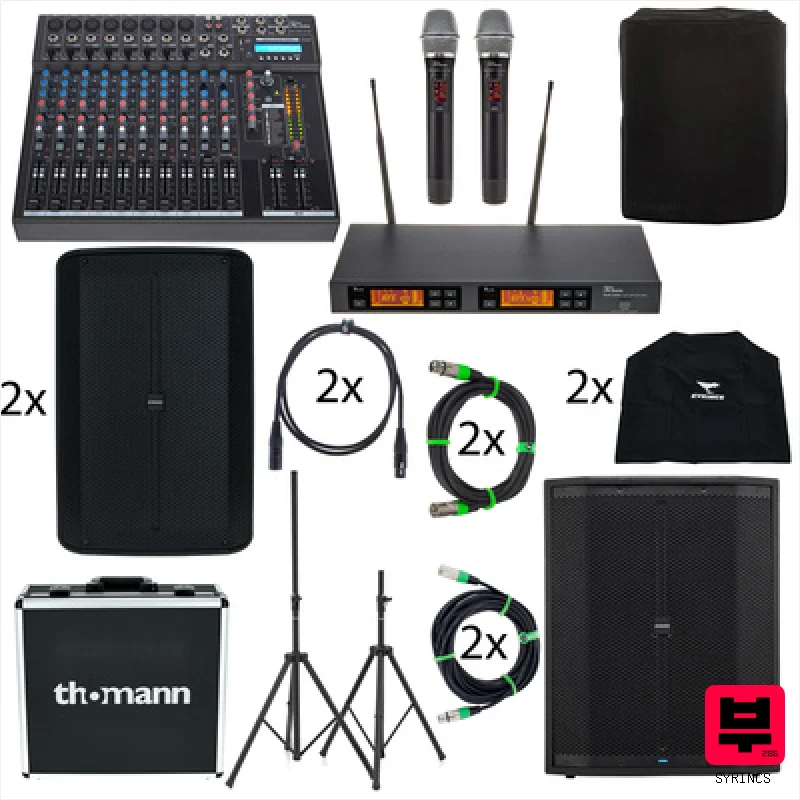
Syrincs School Bundle L
- • Solid multiplex housing protects against bumps on stage.
- • Heavy 41 kg build stays stable during loud performances.
- • Built-in crossover lets you switch between 90 Hz or 120 Hz.
- • Two line and mic inputs handle multiple sources easily.
- • No castors included means you must buy wheels separately.
- • Heavy weight makes single-person carrying difficult.
- • No frequency range detail for the wireless system.
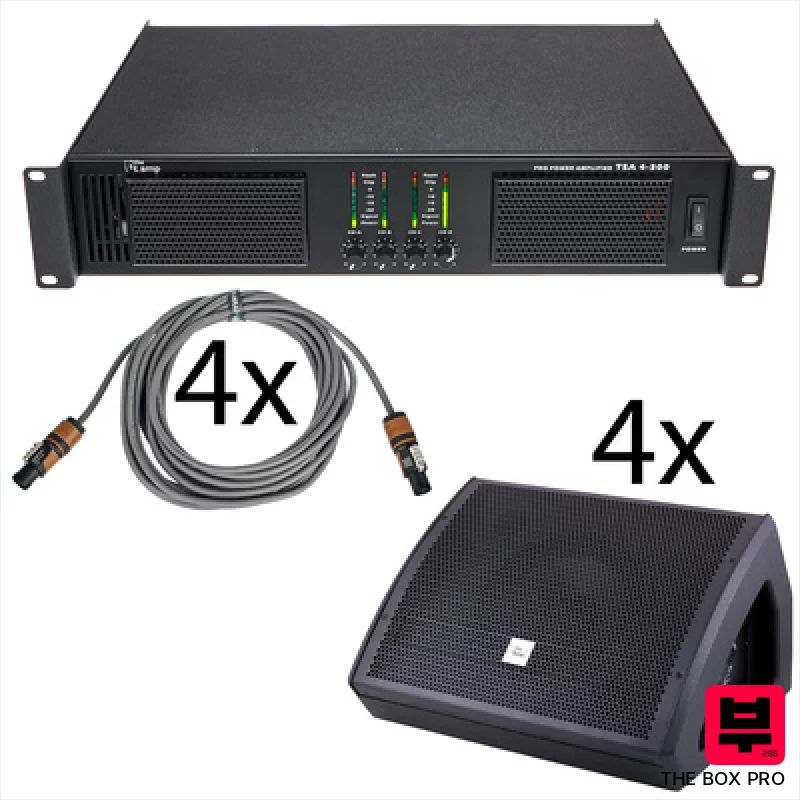
the box pro Mon P10 Wedge Bundle
- • Solid TSA 4-300 amp provides ample clean power for monitoring.
- • Mon P10 wedges offer surprisingly even coverage for their size.
- • Sssnake cables are a nice, reliable inclusion – quality connectors.
- • Compact 2RU amp rack saves valuable space in tight setups.
- • The 10” drivers limit low-end extension for larger venues.
- • While adequate, the amp’s cooling might struggle in prolonged high-volume use.
- • The wedge design isn’t ideal for front-of-house applications.
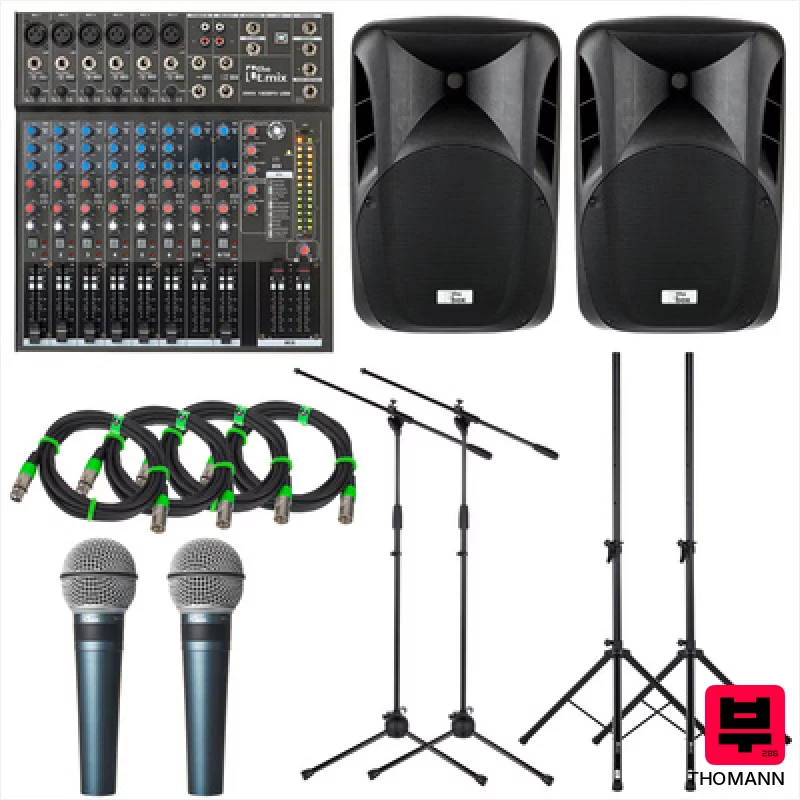
Thomann Practice Room Bundle 2
- • DSP presets offer quick, usable EQ for various instruments.
- • 15-inch drivers deliver surprising low-end punch for a practice setup.
- • Robust build quality; these speakers feel significantly more durable than their price suggests.
- • The t.mix mixer provides ample connectivity and basic effects for rehearsal needs.
- • Limited headroom at higher volumes; not ideal for loud, energetic gigs.
- • Speaker dispersion, while adequate, isn't the widest for larger rehearsal spaces.
- • The t.mix mixer's effects are basic, not a substitute for a dedicated effects chain.

Soundcraft Ui12 +Syrincs D110SP Set
- • Excellent Soundcraft preamps deliver clean, musical gain staging.
- • Remote control via tablet/phone simplifies complex mixer adjustments.
- • Lexicon effects add professional polish to vocals and instruments.
- • Integrated stagebox expands connectivity for larger setups.
- • Ui12’s compact size limits headroom for very loud, demanding applications.
- • Wi-Fi reliability can be impacted by venue interference – Ethernet preferred.
- • Learning curve exists to fully leverage the DSP and routing capabilities.

LD Systems Maui 5 Bundle
- • Compact design minimizes footprint for tight spaces.
- • Integrated DSP provides useful EQ and limiting for live use.
- • Bluetooth connectivity offers convenient music playback and streaming.
- • Neodymium tweeters deliver crisp highs with reasonable efficiency.
- • Limited channel count restricts complex mixing scenarios.
- • 8in subwoofer might struggle with truly low-frequency demands.
- • Plastic construction feels less robust than all-metal alternatives.
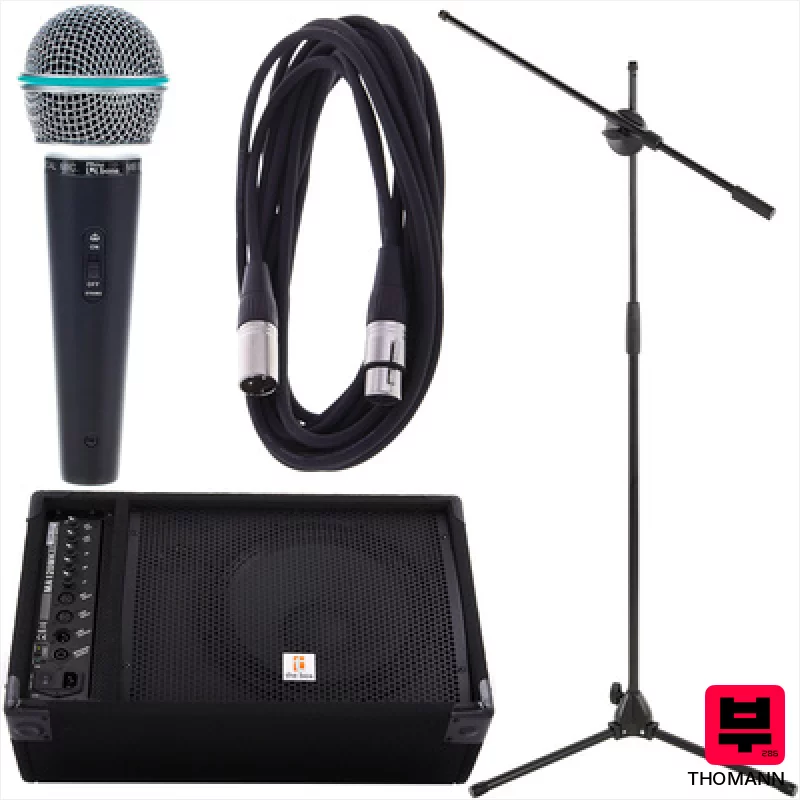
Thomann SingSang Bundle 12
- • Box MA120 MKII delivers surprising punch for its size.
- • t.bone MB 85 is a surprisingly capable all-rounder mic.
- • Compact design makes it ideal for small gigs and rehearsals.
- • Excellent value proposition for budget-conscious musicians.
- • Limited EQ controls restrict fine-tuning sound shaping.
- • The MB 85's cardioid pattern isn't ideal for all situations.
- • Lacks phantom power for condenser microphones.

Bose S1 Pro Plus +Sennheiser E 945
- • Bose's ToneMatch technology delivers surprisingly accurate and pleasing vocal reproduction.
- • The integrated battery pack provides genuine portability for rehearsals and outdoor gigs.
- • The Sennheiser E 945 delivers robust, feedback-resistant performance for live vocals.
- • Multiple positioning options (wedge, upright, inverted) offer adaptable monitoring solutions.
- • The 6” woofer limits deep bass response compared to larger PA systems.
- • While versatile, it's not a powerhouse for large venues or loud bands.
- • The OLED display, while functional, is a bit small and can be hard to read in bright light.
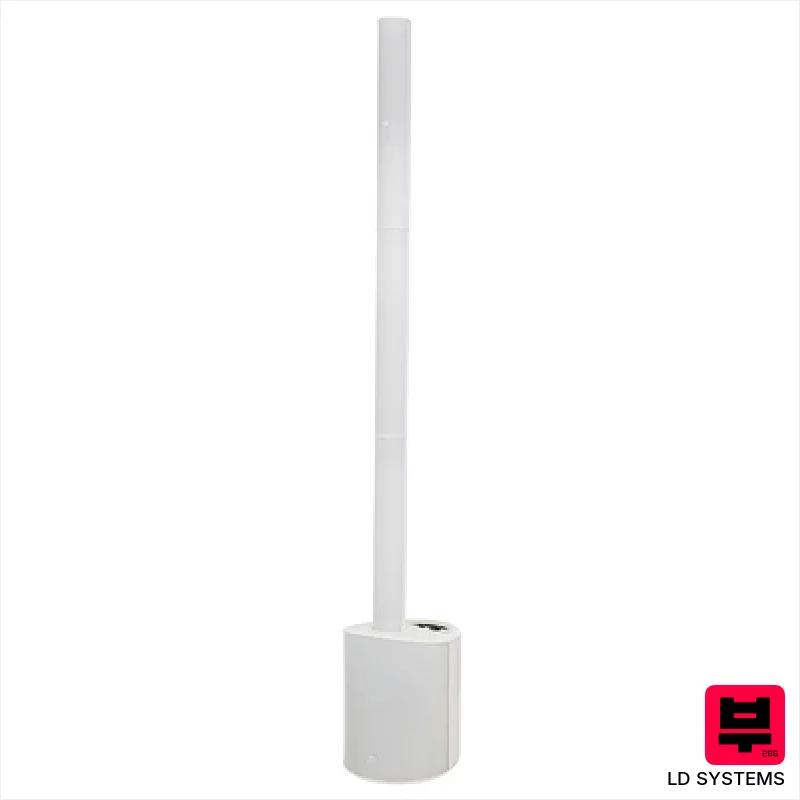
LD Systems Maui 5 White
- • Neodymium tweeters offer surprisingly clear highs with minimal distortion.
- • The integrated DSP provides useful EQ and limiting for various venues.
- • Compact design and integrated mixer simplify setup and transport.
- • Bass reflex subwoofer delivers a decent low-end punch for its size.
- • Limited channel flexibility restricts complex mixing scenarios.
- • While portable, the weight makes extended transport a bit cumbersome.
- • The 4-ohm impedance might challenge some higher-powered amplifiers.
Rehearsal and Monitoring PA Sets by the numbers
Measured across all 8 models in this category, so «wide», «short» or «expensive» mean something you can check.
How to Choose the Best Rehearsal and Monitoring PA Sets
Frequency Response & Clarity
It's not just about 'fullness'; it's about a balanced response that doesn't exaggerate anything. We're looking for a system that lets your guitar's sustain ring true, your bass's low-end thump articulate without getting boomy, and your vocals cut through without sounding harsh. A muddy low-midrange is a killer.
Headroom & Dynamic Range
Can it handle a sudden swell in volume without clipping and distorting? Advanced players rely on dynamics - subtle shifts in volume and tone - to convey emotion. A system with limited headroom will compress your performance, flattening everything out.
Feedback Rejection & Phase Alignment
Feedback is inevitable, but a good system minimizes it and allows for precise EQ adjustments to tame it. Phase alignment is crucial for a coherent soundstage; when speakers are out of phase, frequencies cancel out, leaving you with a thin, lifeless sound.
Routing Flexibility & Processing
Direct outs, aux sends, multiple zones - you need options. Being able to send your signal to a recording interface, create monitor mixes for individual band members, or zone the PA for different areas is essential for serious rehearsals and live performance.
Build Quality & Reliability
Cheap components fail. Period. A system that falls apart mid-gig isn't a bargain; it's a headache. Look for robust construction, quality transducers, and reliable power supplies - this is an investment, not a disposable item.
Buying Guide
Don't chase wattage; chase clarity and headroom. Smaller, well-designed systems often outperform larger, poorly engineered ones. Beware of systems that promise 'massive bass' - it's usually just a hyped low-midrange that masks other frequencies. Paying more often gets you better components and more flexible routing options, but research the specific models - not all expensive gear is created equal.
How This List Is Built
We don't play these instruments — we're a catalog, not a review desk, and we'd rather say so than pretend otherwise. This page covers 8 rehearsal and monitoring pa sets from the Thomann catalogue, which is the largest single source of specification data in this category: 8 in detail, the rest listed with their specifications.
Position is computed, not curated. We parse the manufacturer's own description into actual values — nut width, scale, fret count, fingerboard radius, size, alloy — and rank on them: how many specifications a model has published, how many of them are measurable numbers, and how precisely it meets this page's criterion. A product image adds a little. Price is not a ranking signal: it tells you nothing about whether a neck fits your hand. The same inputs always produce the same order, so nothing here is shuffled to look fresh.
What this list is good for: narrowing a category down to a shortlist by spec and budget. What it isn't: a substitute for hearing an instrument. Before you buy, read hands-on reviews and, where you can, play it. Full methodology.

