
Best Pickups for 6-String Basses for Beginner 2026
Alright, so you're diving into the 6-string bass world - awesome choice! It's a whole different beast than a 4-string, and pickups are gonna be a huge part of getting a sound you like. A lot of beginners get overwhelmed, thinking they need boutique pickups right away, but that's just not true. Let's break down some solid options that won't break the bank and will actually let you focus on learning the instrument.
Last updated: April 11, 2026
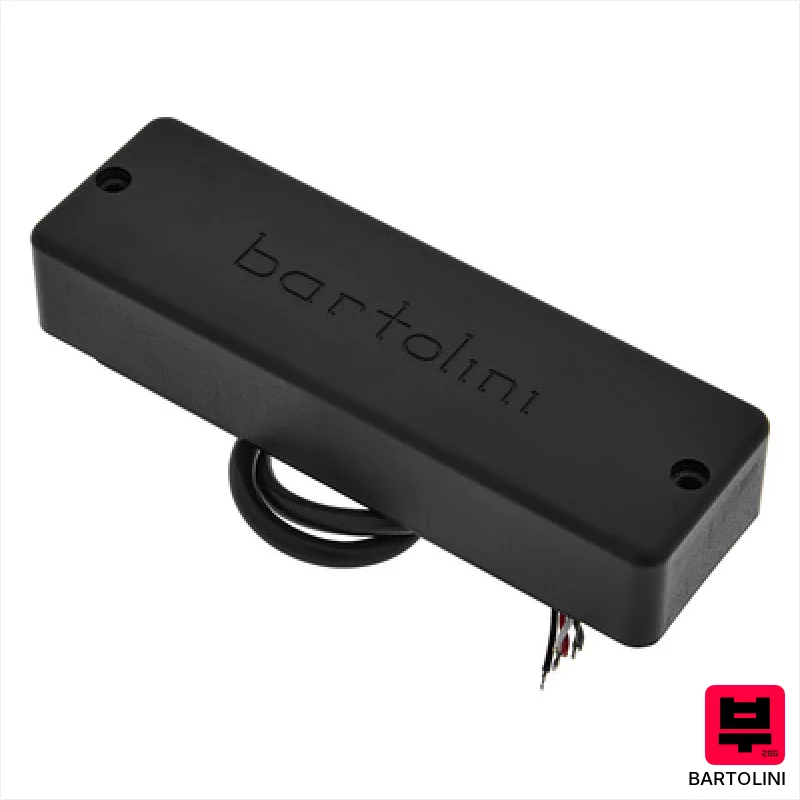
Bartolini 6-string Bass MK Soapbar BB
- • Unique magnet blend delivers a complex, articulate low-end.
- • Soapbar design minimizes hum, crucial for a 6-string bass.
- • 4.5kHz resonance provides a surprisingly modern, cutting tone.
- • Excellent value for a Bartolini pickup – professional sound at a reasonable price.
- • Limited to bridge positions, restricting placement flexibility.
- • Plastic housing, while typical for Bartolini, isn't the most premium feel.
- • Requires careful installation due to 4-wire cable and specific mounting.

Bartolini 6-Str P4 Soapbar Bridge BK
- • Carbon/brass/ceramic magnet blend delivers a unique, balanced tonal character.
- • Parallel coil design effectively cancels hum for a clean, quiet signal.
- • Focused detection area provides clarity and articulation, even with complex 6-string lines.
- • 4-conductor wiring allows for flexible pickup blending and custom installations.
- • The plastic housing, while functional, might not feel as premium as metal alternatives.
- • 5.7kΩ DC resistance might require tweaking EQ for some bass setups.
- • The fixed design lacks adjustability for fine-tuning string-to-pickup spacing.
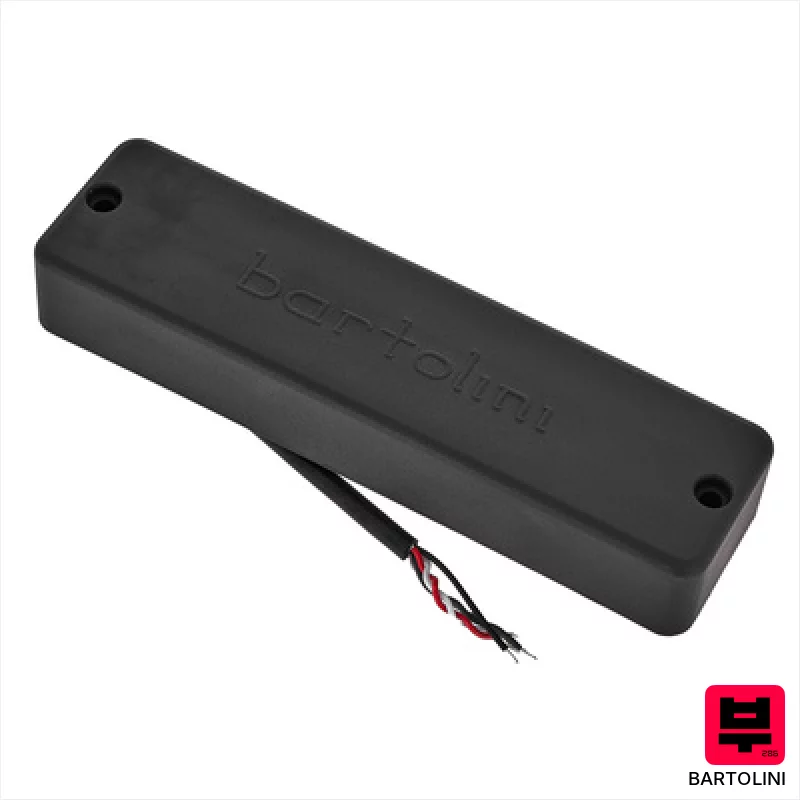
Bartolini 6-Str P4 Soapbar Neck BK
- • Carbon/brass/ceramic magnet blend delivers a uniquely balanced, articulate tone.
- • P4 soapbar design provides a classic, vintage-inspired humbucker warmth.
- • 4-conductor wiring allows for flexible pickup tapping and series/parallel configurations.
- • Focused detection area enhances note clarity and string separation on a 6-string.
- • Plastic housing can feel less premium than metal options, though structurally sound.
- • DC resistance indicates a lower output, might require preamp for certain styles.
- • Limited versatility compared to active pickups; best suited for classic tones.

EMG 45Hz BassPickup
- • Passive design retains natural wood resonance and feel
- • Warm tone excels for funk, jazz, and mellow rock styles
- • Included potentiometers and wiring simplify installation for many
- • Solid construction and EMG quality inspire confidence and longevity
- • Limited tonal versatility compared to active pickups
- • 95.25 mm spacing may require modification for wider string spacing
- • Passive nature means less output and less ability to drive amp
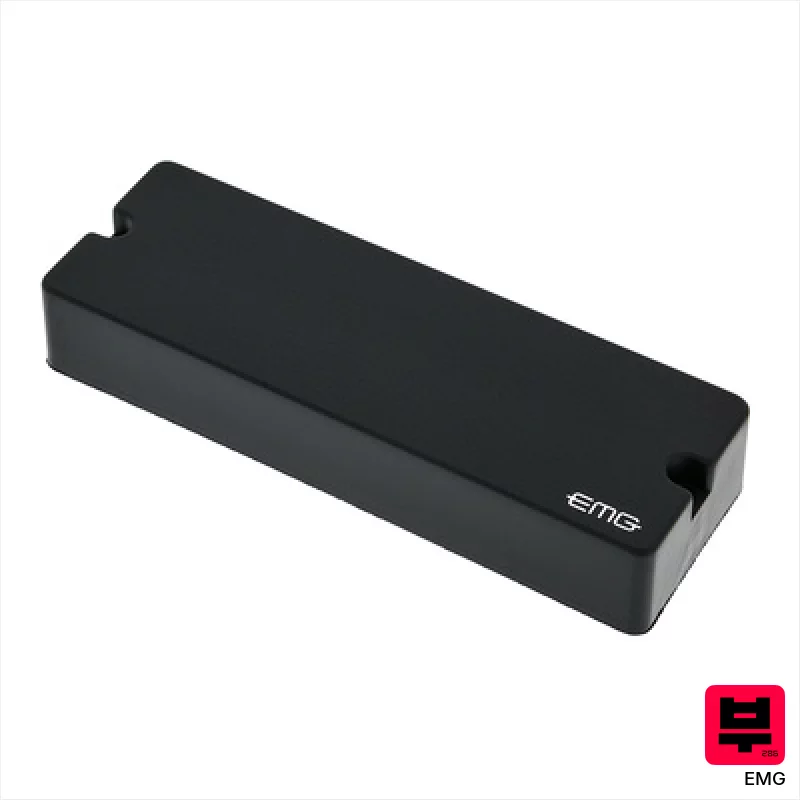
EMG 45DC Bass Pickup
- • Delivers aggressive, modern tone ideal for rock and metal genres
- • Active design provides high output and low noise performance
- • Included solderless wiring simplifies installation for most users
- • Robust construction with a durable black housing for long-term reliability
- • Limited versatility; not suited for vintage or mellow bass tones
- • Active pickups require a power source, adding complexity and potential failure point
- • String spacing limitation restricts compatibility with wider-spaced instruments
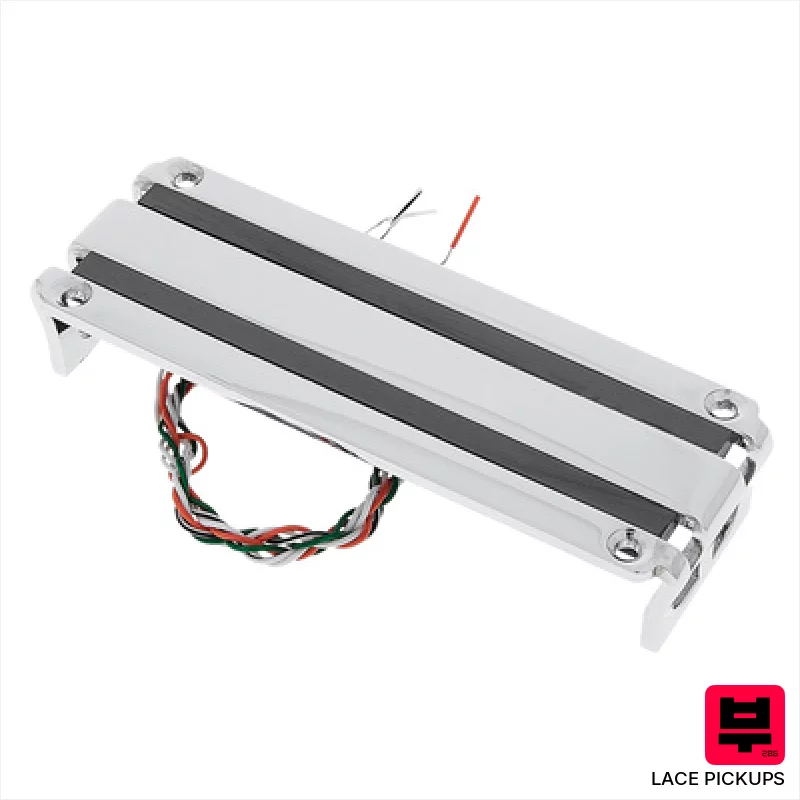
Lace Pickups Aluma Bass Bar 4.5 CH
- • Lace’s Alnico 5 magnets deliver articulate, balanced tone.
- • The Aluma Bass Bar design enhances sustain and resonance.
- • Chrome cover offers a premium aesthetic and shielding.
- • Wide frequency response handles diverse musical styles effectively.
- • The 38mm width might require slight routing on some basses.
- • Alnico 5 pickups can be slightly noisier than Ceramic alternatives.
- • High output may require adjustments to amplifier settings.
How to Choose the Best Pickups for 6-String Basses
Articulated Low-End
6-string basses need serious low-end thump to avoid sounding thin. Beginner pickups need to deliver that fundamental without getting muddy or losing definition. You want to feel the notes, not just hear a rumble.
Balanced Voicing
A lot of cheaper pickups have a scooped midrange - sounds cool in theory, but makes it tough to cut through the mix with a band. We're looking for a voicing that has some 'meat' in the mids, so your bass isn't getting buried.
Noise Floor
Single-coil pickups, especially in a 6-string, can be noisy. Hum and buzz can be super distracting when you're learning, and it's hard to troubleshoot later. Lower noise is a huge win for beginners.
Ease of Adjustment
Simple controls are your friend. Don't get bogged down tweaking complex EQ or coil-splitting options when you're just trying to learn the basics. Straightforward tone controls are key.
Output Level
A hotter output isn't always better, but for a beginner, a little extra headroom can be useful. It gives you some wiggle room before the amp starts to breakup in a harsh way, allowing for more dynamic playing.
Buying Guide
Don't fall for the hype. A lot of 'budget' pickups sacrifice clarity for 'punch' - which often just means a harsh high-midrange honk. Look for sets that offer a good balance, and be realistic about your amp's limitations. A cheap pickup in a great amp can sound decent, but a great pickup in a cheap amp... well, it'll still be a cheap amp. Prioritize playability over 'tone' until you're comfortable with the instrument itself.
How This List Is Built
We don't play these instruments — we're a catalog, not a review desk, and we'd rather say so than pretend otherwise. This page ranks 6 pickups for 6-string basses from the Thomann catalogue, which is the largest single source of specification data in this category.
Position is computed, not curated. Four signals, in order of weight: how completely the manufacturer documents the instrument (number of published specifications), where it sits in the price range, how specific the model designation is — which filters out generic accessories — and whether a product image exists. The same inputs always produce the same order, so nothing here is shuffled to look fresh.
What this list is good for: narrowing a category down to a shortlist by spec and budget. What it isn't: a substitute for hearing an instrument. Before you buy, read hands-on reviews and, where you can, play it. Full methodology.

