
Best Pedalboard Amps for Beginner 2026
So, you're getting into guitar and thinking about a pedalboard amp? Smart move - it's a flexible way to get tones beyond a basic practice amp. But choosing your first one can be overwhelming. This isn't about chasing boutique mojo; it's about finding something that'll let you learn, experiment, and actually hear what you're doing without breaking the bank or getting lost in a menu system.
Last updated: September 29, 2026
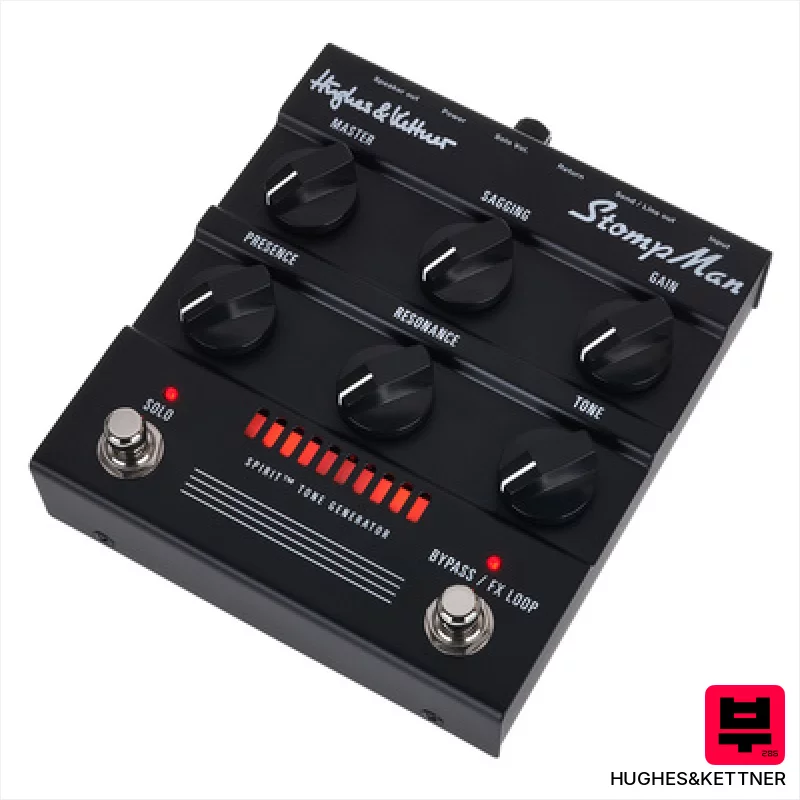
Hughes&Kettner StompMan
- • Analog Spirit Tone Generator delivers surprisingly warm, responsive tones.
- • Compact size makes it ideal for pedalboard integration and travel.
- • Adjustable 'Sagging' control adds dynamic response and feel.
- • Serial FX loop allows for easy integration of external effects.
- • Limited to a single channel, restricting tonal versatility.
- • Lacks a speaker output, requiring an external speaker or cabinet.
- • Small size means fewer physical controls, potentially less intuitive.

Hughes&Kettner Spirit AmpMan Modern
- • Spirit Tone Generator delivers surprisingly authentic amp tones for its size
- • Dual channels offer excellent versatility, from clean blues to modern high-gain
- • Integrated RED BOX AE+ provides convenient recording options with diverse speaker emulations
- • IDB noise gate effectively tames high-gain sounds without overly squashing dynamics
- • Physical size might be limiting for some pedalboard configurations
- • While versatile, channel sculpting lacks the depth of a full-sized amp
- • Build quality feels adequate for the price point, but not premium
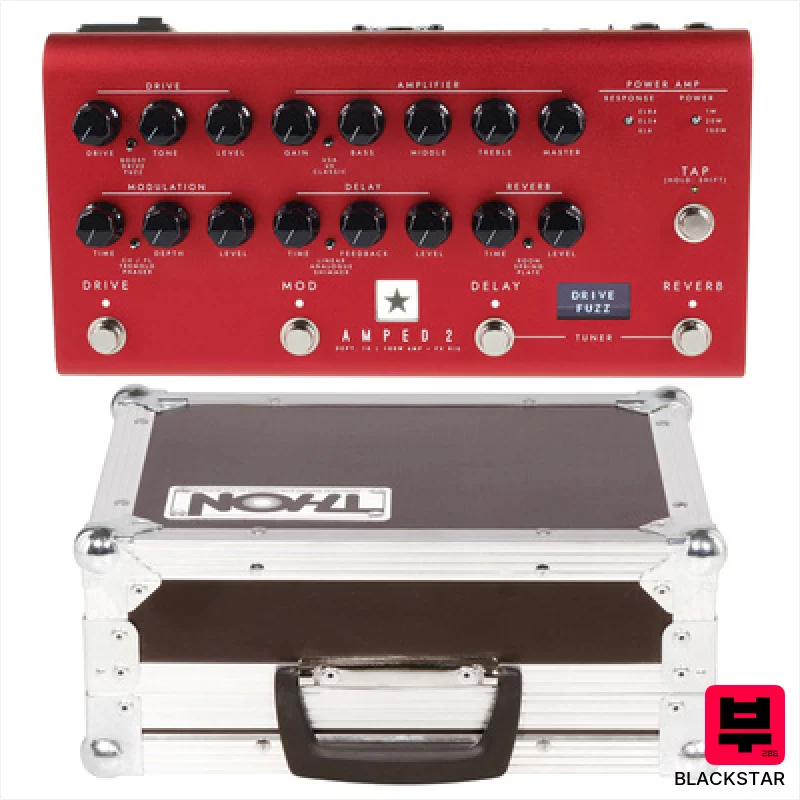
Blackstar Dept. 10 Amped 2 Bundle
- • Versatile preamp voicings (USA, UK, Classic) offer broad tonal palette.
- • Excellent built-in effects – shimmer delay and modulation are surprisingly good.
- • Multiple power reduction options (100W, 20W, 1W) suit various playing environments.
- • Footswitchable effects and 'Emphasis' mode provide gig-ready control.
- • The compact size might limit low-end response at higher volumes.
- • Effect routing can feel a bit complex initially, requiring some menu diving.
- • While versatile, the preamp voicings are emulations, not true vintage circuits.

Blackstar Dept. 10 Amped 2
- • Excellent preamp voicings offer surprising tonal flexibility.
- • The integrated effects are genuinely usable and well-voiced.
- • Multiple power reduction options cater to practice and stage use.
- • Compact footprint makes it ideal for pedalboards and small spaces.
- • The EQ, while functional, lacks finesse for precise tone shaping.
- • Build quality, while decent, doesn't feel quite as premium as some competitors.
- • The user interface can feel a little overwhelming initially.

Blackstar Dept. 10 Amped 3
- • Versatile preamp channels offer surprising tonal range for a compact unit
- • Switchable power amp responses dramatically alter the amp's character
- • Architect software provides deep customization of effects and routing
- • Lightweight aluminum housing makes it highly portable for pedalboard use
- • Limited physical controls can make tweaking mid-performance a bit cumbersome
- • Reverb, while present, is fairly basic and lacks depth compared to dedicated units
- • 100W output might be excessive for some home or studio applications

Blackstar Dept. 10 Amped 1
- • Versatile preamp voices cover a wide range of amp tones.
- • Cab Rig DSP convincingly emulates various speaker cabinets.
- • Power reduction options offer flexibility for practice and gigging.
- • Integrated effects loop expands tonal possibilities with external pedals.
- • The 100W output might be overkill for quiet home practice.
- • Smaller size can feel cramped for complex pedalboard setups.
- • Limited physical controls require software tweaking for full functionality.
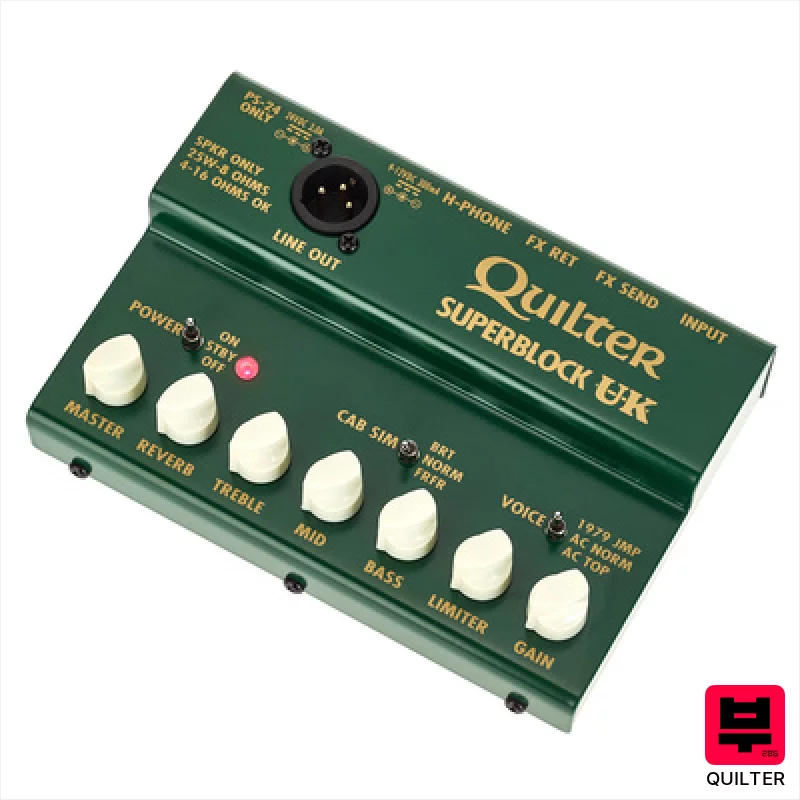
Quilter Superblock UK
- • UK voicings convincingly nail classic amp tones
- • Extremely portable – ideal for gigging and travel
- • PS-24 power supply provides authentic tube amp feel
- • Versatile connectivity with XLR, headphone, and FX loop
- • Single channel limits tonal sculpting flexibility
- • Cab sims, while decent, won't fool a seasoned engineer
- • Limited headroom at higher volume levels

Quilter Superblock US
- • Excellent amp modeling – surprisingly accurate Tweed, Blonde, and Black tones
- • Incredibly lightweight and portable for a 25W amp – gig-ready convenience
- • Versatile connectivity with XLR, headphone, and FX loop options
- • PS-24 power supply provides consistent, reliable performance – no tube quirks
- • Cab simulations, while decent, won't fool anyone into thinking it's a real speaker cab
- • Single channel limits versatility for complex tones or dynamic playing
- • Reverb, while usable, lacks the depth and complexity of dedicated reverb units
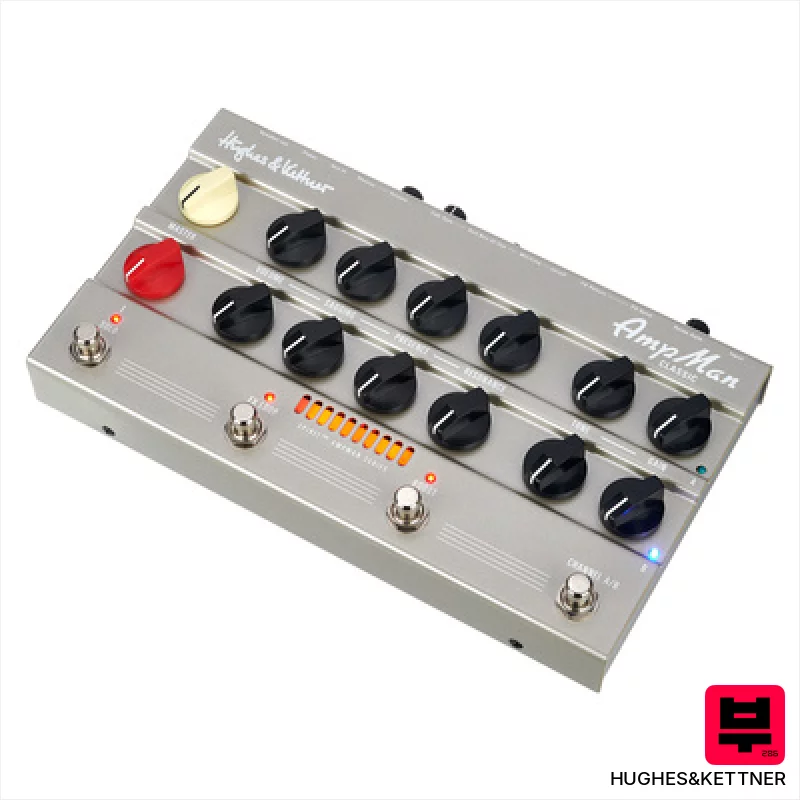
Hughes&Kettner Spirit AmpMan Classic
- • Spirit Tone Generator delivers surprisingly authentic vintage amp tones
- • Red Box AE+ provides excellent speaker emulations for recording or direct use
- • Independent channels offer versatility for clean and distorted sounds
- • Compact size and headphone output suit practice and quiet recording
- • Build quality feels a little plasticky given the feature set
- • Limited wattage might struggle for louder band rehearsals or gigs
- • Tone shaping options, while decent, aren't as extensive as a full-sized amp
Pedalboard Amps by the numbers
Measured across all 9 models in this category, so «wide», «short» or «expensive» mean something you can check.
How to Choose the Best Pedalboard Amps
Playability
This is paramount. A pedalboard amp needs to respond well to your picking dynamics. A stiff or unresponsive amp will make everything sound muddy and lifeless, hindering your development. We're looking for something that can handle a light touch as well as a more aggressive attack.
Feature Complexity
Too many knobs and menus are a beginner's nightmare. Simplicity is key. You want to be focused on learning the instrument, not deciphering how to program a reverb algorithm. Basic EQ controls and a few amp models are ideal.
Headroom & Clean Tone
A beginner needs a clean platform to work with. You need to be able to dial in a usable clean tone before you start pushing it into breakup. Headroom-the ability to get loud without distortion-is crucial for band rehearsals and gigs.
Speaker Size & Quality
Don't be fooled by big numbers. A poorly made 8" speaker will sound worse than a well-designed 6". The speaker's character significantly impacts the overall tone - affecting articulation and low-end response. A speaker that can handle a bit of grit is a plus.
Portability & Power
Pedalboard amps are often about convenience. Consider the weight and size for easy transport to lessons, rehearsals, or even just moving it around your apartment. A built-in power supply is a major convenience - fewer cables to deal with.
Buying Guide
Look, you're not going to find a pedalboard amp that does everything perfectly. Budget models often cut corners on speaker quality or limit the amp models. Don't chase 'vintage' sounds just yet - focus on finding a reliable, responsive platform that lets you experiment. Spend a little more for a decent speaker - it'll make a world of difference. And honestly, a used amp in good condition is often a smarter buy than new.
How This List Is Built
We don't play these instruments — we're a catalog, not a review desk, and we'd rather say so than pretend otherwise. This page covers 9 pedalboard amps from the Thomann catalogue, which is the largest single source of specification data in this category: 9 in detail, the rest listed with their specifications.
Position is computed, not curated. We parse the manufacturer's own description into actual values — nut width, scale, fret count, fingerboard radius, size, alloy — and rank on them: how many specifications a model has published, how many of them are measurable numbers, and how precisely it meets this page's criterion. A product image adds a little. Price is not a ranking signal: it tells you nothing about whether a neck fits your hand. The same inputs always produce the same order, so nothing here is shuffled to look fresh.
What this list is good for: narrowing a category down to a shortlist by spec and budget. What it isn't: a substitute for hearing an instrument. Before you buy, read hands-on reviews and, where you can, play it. Full methodology.

