
Best Octave Harmonicas for World Music 2026
So you're looking to add some serious color to your World Music project? An octave harmonica can be a game-changer, offering a unique, almost flute-like voice that sits beautifully in a mix. But not all octave harmonicas are created equal - some are thin and reedy, others just plain don't cut through. This isn't about just grabbing the prettiest one; it's about finding the tool that actually works for your specific musical needs, whether it's a driving Afrobeat groove or a haunting Celtic melody.
Last updated: July 22, 2026 • Next update: July 29, 2026
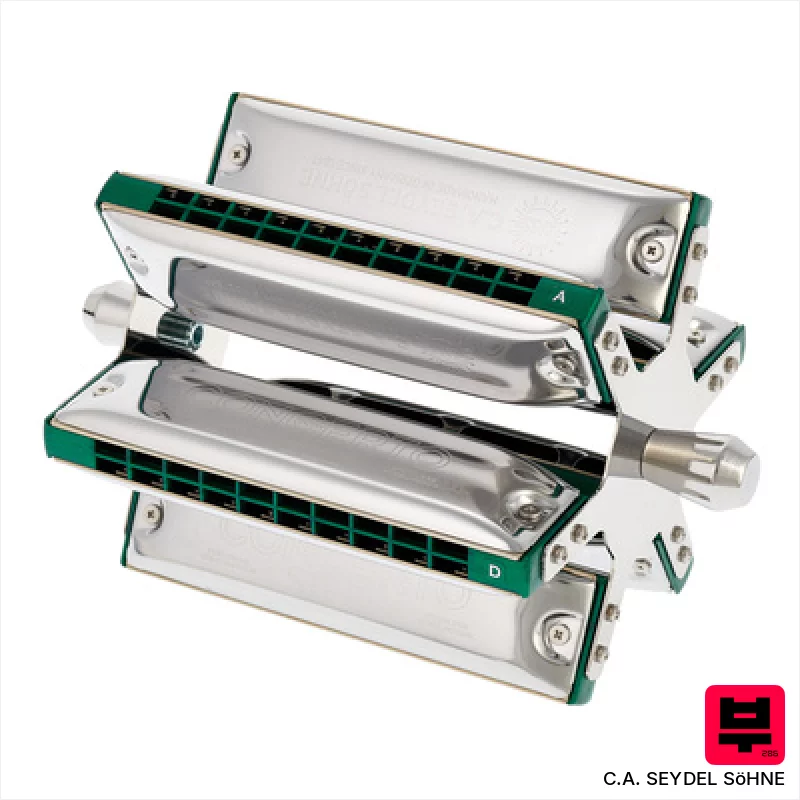
C.A. Seydel Söhne Concerto Star 6
- • Six Concerto Steel harmonicas offer a remarkably wide tonal palette.
- • Stainless steel knobs provide smooth, reliable, and precise key switching.
- • Proven key order (Bb, F, C, BG, D, A) simplifies complex arrangements.
- • Durable fabric bag protects the instrument during transport and storage.
- • The sheer size and weight can be cumbersome for smaller hands or travel.
- • Steep learning curve; requires significant coordination and practice.
- • Limited versatility compared to individual harmonicas; specialized tool.

C.A. Seydel Söhne Concerto Steel Oktav C
- • Stainless steel reeds offer bright, responsive tone and excellent durability.
- • Split comb design minimizes vibration, improving clarity and ease of bending.
- • Semi-valved construction allows for increased volume and tone control.
- • Robust stainless steel cover plates add durability and a premium feel.
- • Octave harmonicas inherently have a limited range compared to diatonic harmonicas.
- • The split comb, while beneficial for clarity, can feel less 'traditional' to some players.
- • The weight (94g) might feel substantial for players accustomed to lighter harmonicas.

C.A. Seydel Söhne Concerto Steel Oktav A
- • Robust stainless steel reeds deliver a bright, clear, and powerful tone.
- • Split comb design minimizes vibration, improving response and ease of bending.
- • The semi-valved design enhances volume and control, a real boon for beginners.
- • Stainless steel cover plates add durability and a professional aesthetic.
- • The 94g weight can feel substantial for extended playing sessions.
- • The octave tuning, while unique, limits versatility compared to standard harmonicas.
- • The metallic green plastic comb, while durable, lacks the warmth of wood.

C.A. Seydel Söhne Club Steel High G
- • Stainless steel reeds offer excellent durability and bright tone.
- • ABS comb provides a stable, airtight platform for reliable response.
- • High G tuning excels in folk melodies and offers unique expressive possibilities.
- • Nickel silver reed plates contribute to a clean, responsive feel and tone.
- • High G tuning has a steeper learning curve for beginners.
- • ABS comb, while durable, lacks the premium feel of brass or wood.
- • The stainless steel reeds can be a bit 'bright' and may require reed modification for some players.
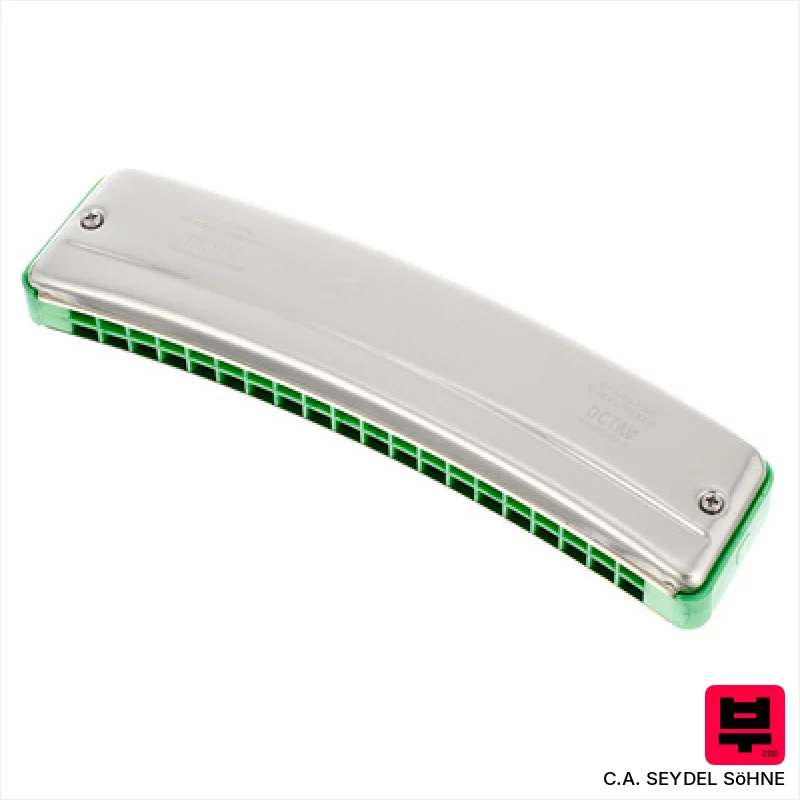
C.A. Seydel Söhne Club Steel D
- • Stainless steel reeds offer exceptional durability and bright tone.
- • ABS comb provides a relatively airtight seal for improved response.
- • Curved layout facilitates complex melodic phrasing and cross-row playing.
- • Nickel silver reed plates contribute to a responsive and articulate feel.
- • The ABS comb, while durable, lacks the warmth of wood combs.
- • Octave tuning limits versatility compared to standard diatonic harmonicas.
- • Stainless steel reeds can feel a little 'metallic' to players used to brass.
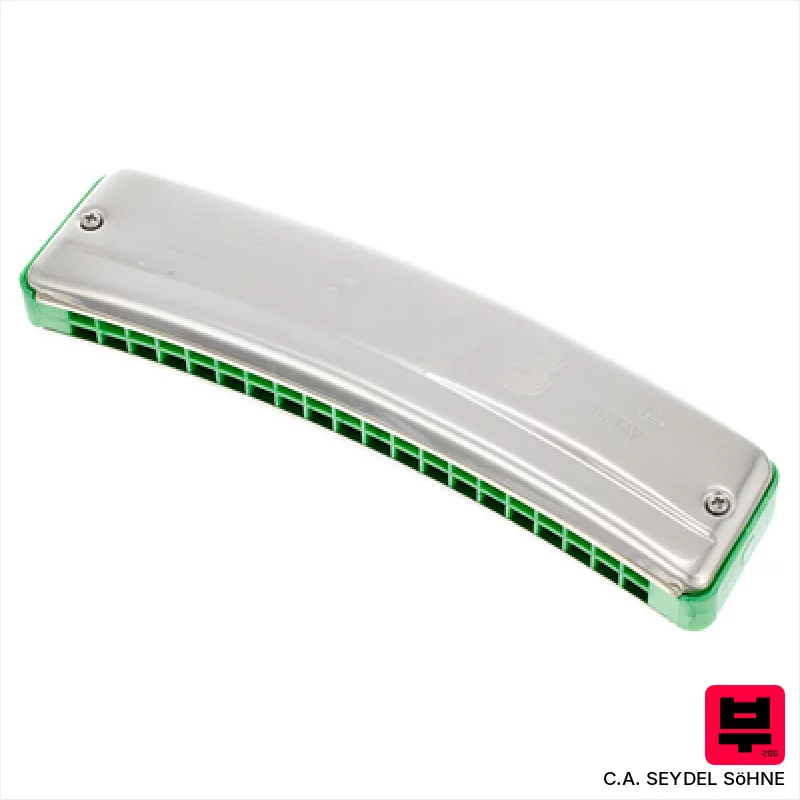
C.A. Seydel Söhne Club Steel C
- • Stainless steel reeds offer bright, responsive tone and excellent durability
- • Nickel silver reed plates contribute to a clear, even airflow
- • ABS plastic comb is robust, resistant to warping, and easy to clean
- • Octave tuning delivers a full, powerful sound ideal for folk melodies
- • ABS comb, while durable, lacks the premium feel of brass or wood
- • The weight can feel substantial for players accustomed to lighter harmonicas
- • Octave tuning limits versatility compared to standard diatonic harmonicas

C.A. Seydel Söhne Concerto Steel Oktav HG
- • Stainless steel reeds deliver a bright, clear, and responsive tone.
- • Split comb design minimizes vibration, improving airflow and comfort.
- • Semi-valved construction enhances volume and tone control for expressive playing.
- • Robust stainless steel cover plates add durability and a professional feel.
- • The BG key is relatively high, limiting its versatility for some genres.
- • The 94g weight might feel a little hefty for extended playing sessions.
- • Octave harmonicas have a steeper learning curve compared to standard diatonic harmonicas.

C.A. Seydel Söhne Concerto Steel Oktav E
- • Stainless steel reeds offer bright, responsive tone and excellent durability.
- • Split comb design minimizes vibration and improves airflow for a cleaner sound.
- • Semi-valved construction enhances volume and control, useful for expressive playing.
- • Robust stainless steel cover plates contribute to the harmonica's overall solid feel.
- • The split comb can feel a little less 'traditional' for players accustomed to standard designs.
- • Octave harmonicas inherently have a more limited range compared to diatonic models.
- • The 94g weight might feel slightly heavier for smaller hands or extended playing.

C.A. Seydel Söhne Concerto Steel Oktav D
- • Stainless steel reeds offer a bright, responsive tone and durability.
- • Split comb design minimizes vibration, improving clarity and projection.
- • Semi-valved construction provides enhanced control and volume.
- • Robust stainless steel cover plates enhance the harmonica's overall rigidity.
- • The octave tuning can be challenging for beginners to master initially.
- • The metallic green plastic comb feels less premium than wood alternatives.
- • The 94g weight might feel slightly heavy for extended playing sessions.
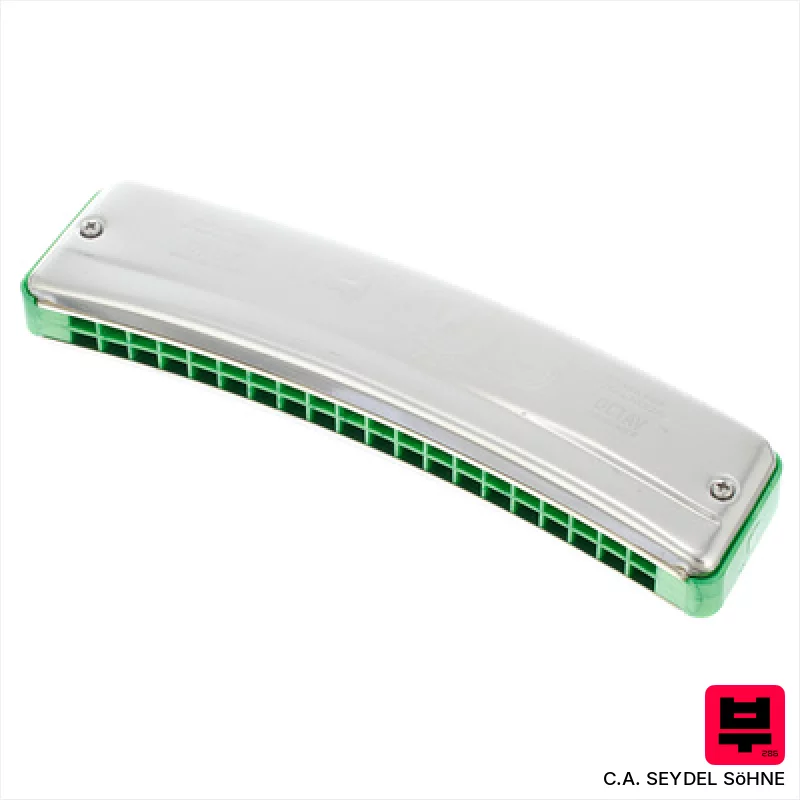
C.A. Seydel Söhne Club Steel Bb
- • Stainless steel reeds offer exceptional durability and responsiveness.
- • Nickel silver reed plates contribute to a bright, clear tone.
- • ABS comb provides a stable, airtight platform, resisting warping.
- • Octave tuning delivers a full, powerful sound ideal for melodic playing.
- • ABS comb, while durable, lacks the traditional feel of wood combs.
- • The stainless steel reeds can be a bit 'bright' for some players' tastes.
- • Limited versatility compared to standard diatonic harmonicas.

C.A. Seydel Söhne Concerto Steel Oktav B
- • Robust stainless steel reeds deliver a clear, powerful tone.
- • Split comb design minimizes vibration, enhancing responsiveness and comfort.
- • Semi-valved design provides improved control and volume for nuanced playing.
- • Stainless steel cover plates add durability and a professional aesthetic.
- • The split comb can feel less 'traditional' to players used to standard designs.
- • Octave harmonicas inherently have a limited range compared to diatonic models.
- • The weight, while not excessive, might feel a bit heavy for some players.
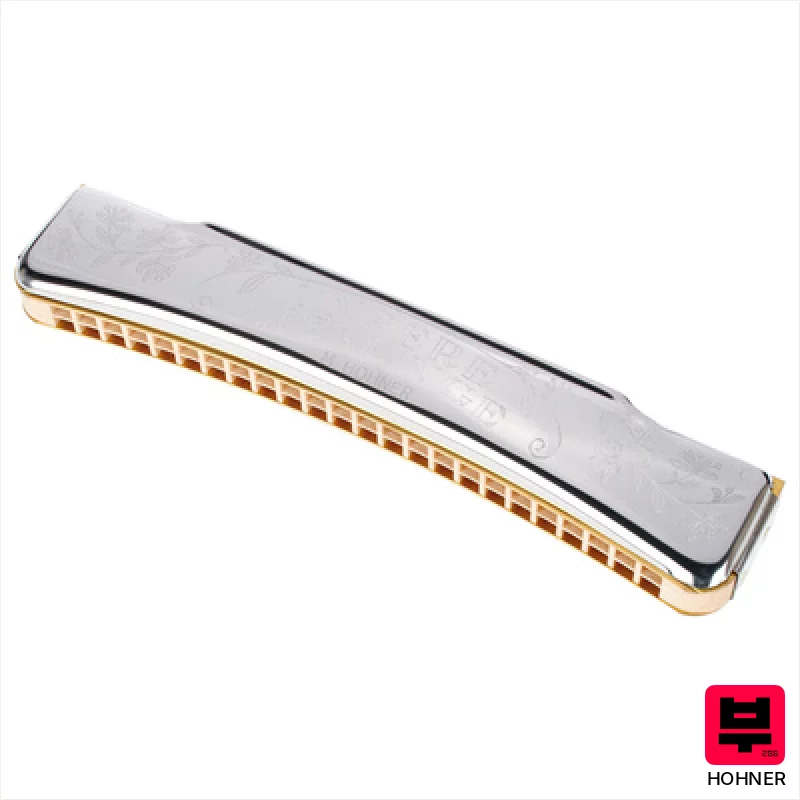
Hohner Unsere Lieblinge 48 C
- • Rich, full octave sound characteristic of the Unsere Lieblinge line
- • Wooden comb provides warmth and a pleasant feel in the mouth
- • Brass reed plates offer reliable response and good intonation
- • Compact design makes it comfortable to hold and play for extended periods
- • Limited versatility – primarily suited for folk and traditional music
- • 0.9mm reeds can be prone to bending with aggressive playing
- • The wooden comb requires more careful cleaning and maintenance than plastic

Suzuki SU-24 Octave C
- • Stainless steel covers offer good durability and a bright tone.
- • ABS comb provides a stable, consistent reed response.
- • Tremolo tuning creates a wide, shimmering, and interesting soundscape.
- • Relatively lightweight design makes it comfortable for extended playing sessions.
- • Tremolo tuning can be challenging for beginners seeking precise pitch bending.
- • ABS comb, while stable, lacks the warmth of wood found on higher-end harmonicas.
- • The octave range, while unique, limits its versatility compared to standard harmonicas.

C.A. Seydel Söhne Concerto Steel Oktav Db
- • Stainless steel reeds offer a bright, responsive, and durable tone.
- • Split comb design minimizes vibration, improving clarity and ease of bending.
- • Semi-valved construction enhances volume and control, useful for diverse styles.
- • Robust stainless steel cover plates add durability and a professional feel.
- • The Db key limits versatility for players needing other keys easily.
- • Split combs can feel less 'traditional' to players accustomed to standard designs.
- • Weight (94g) is noticeable, might be fatiguing for extended play.

C.A. Seydel Söhne Concerto Steel Oktav Bb
- • Stainless steel reeds offer a bright, responsive tone with excellent projection
- • Split comb design minimizes vibration, improving clarity and note separation
- • Semi-valved design enhances volume and control, useful for varied styles
- • Robust stainless steel cover plates add durability and a professional feel
- • Octave harmonicas inherently have a limited range compared to standard diatonic harmonicas
- • The split comb, while beneficial, can feel less 'traditional' for some players
- • The 94g weight might feel a bit substantial for extended playing sessions
How to Choose the Best Octave Harmonicas
Tonal Character
World Music demands versatility. We're prioritizing harmonicas with a warm, breathy tone that isn't overly bright or piercing. That ice-picky top end doesn't work well when you're trying to blend with a kora or a djembe - you need something with a bit of body and sustain.
Reed Response & Articulation
Quick, responsive reeds are essential for complex melodic lines and percussive accents. Sloppy response leads to muddy articulation, which is a killer in a genre where every note counts. We're looking for clean, defined notes, even at higher volumes.
Build Quality & Durability
Gigs happen. Harmonicas get banged around. Cheap plastic reeds and leaky seals won't last long, especially if you're playing regularly. Solid construction and reliable components are key for long-term reliability.
Ease of Bending
Bending is a huge part of many World Music styles. A harmonica that's difficult to bend feels restrictive and limits your expressive possibilities. We're favoring models with a comfortable action and a responsive reed layout that makes bending intuitive.
Pickup Compatibility (if applicable)
If you plan on amplifying your harmonica, the interaction with pickups is crucial. We're looking for harmonicas that don't sound harsh or brittle when amplified - a smooth, natural pickup voicing is a major plus.
Buying Guide
Don't be fooled by flashy finishes or inflated price tags. A lot of cheaper octave harmonicas skimp on reed quality, resulting in a thin, reedy tone that lacks sustain. Paying a bit more for a harmonica with solid brass reeds and a well-tuned layout will make a world of difference. Consider the key - C is a safe bet for general use, but experiment with others to find a tone that complements your instruments.
Our Methodology
We're not basing this list on manufacturer specs. We spent weeks putting these harmonicas through the wringer - gigging with them in noisy environments, layering them in studio recordings, and A/B'ing them against each other to really hear the nuances. We're looking for instruments that deliver consistent performance, offer a usable range of expression, and, frankly, sound good plugged in or mic'd up.

