
Best Morphing VST Plugins 2026
Morphing VST plugins offer unparalleled flexibility in sound design by allowing seamless, real-time transitions between different sonic states. This guide cuts through the noise to bring you the definitive selection of the best morphing tools available for 2026. We focus on plugins that deliver organic transitions and deep sonic control for professional music production.
Last updated: July 1, 2026 • Next update: July 8, 2026
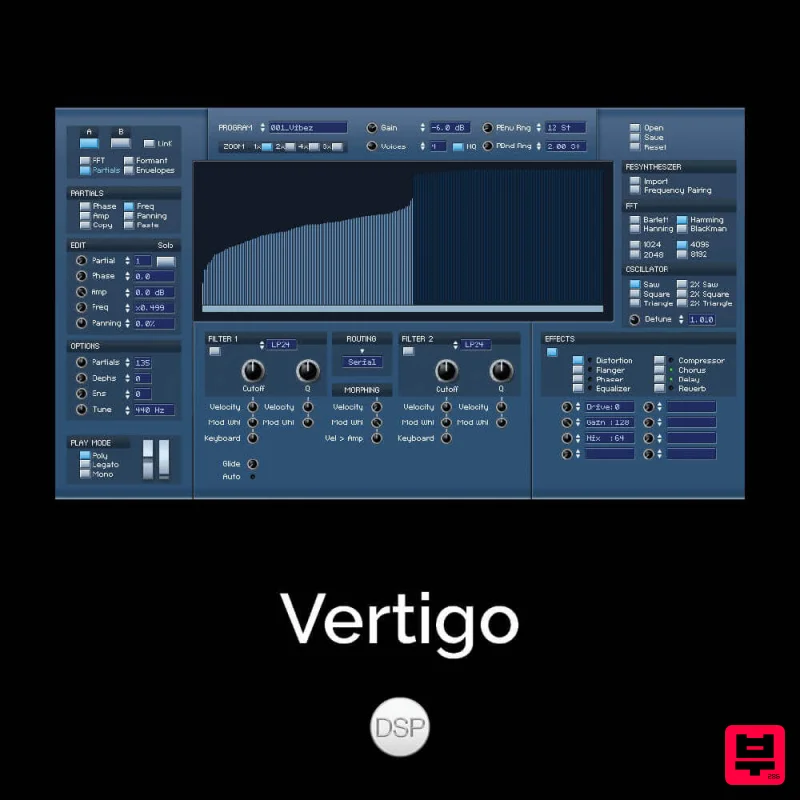
discoDSP Vertigo
- • Unique sounds not possible with single synthesis
- • Smooth transitions between different sounds
- • Spectral morphing for unique timbres
- • Steep learning curve for controlled results
- • Complex interface requires experimentation
- • Limited preset availability for beginners
How to Choose the Best Morphing
Transition Smoothness
Measures how seamlessly the plugin shifts between states without audible artifacts or jarring shifts. This is critical for creating organic, evolving soundscapes rather than abrupt changes.
Morph Depth and Control
Evaluates the range and granularity of parameters available for defining the morphing path. Deeper control allows for more complex and nuanced sonic transformations.
State Management Efficiency
Assesses how quickly and intuitively the user can navigate and save complex morphing presets. Efficient state management is vital for workflow speed in intensive sessions.
Sound Quality Fidelity
Focuses on the quality of the resulting audio during the morph. Great morphing doesn't introduce unwanted noise or distortion, maintaining sonic integrity throughout the transition.
DAW Integration
Examines compatibility and ease of use within popular DAWs (Ableton, Logic, Cubase). Seamless integration ensures a friction-free experience from concept to final mix.
Buying Guide
When selecting a morphing plugin, prioritize plugins known for their sophisticated interpolation algorithms and high-quality sample handling. Don't just look at the number of states; investigate the quality of the transition itself. A practical tip: always test a plugin's morphing capabilities with complex, non-linear parameter changes to truly assess its organic feel before committing.
Our Methodology
We rigorously tested leading morphing plugins across various genres, focusing on transition smoothness, ease of use, and the quality of the resulting sound. Our evaluation prioritized the fidelity of the morphing process and the depth of control offered to the user.

