
Best Midfield Monitors for Large Studio 2026
So, you've got a real studio now - not a bedroom tricked out with acoustic panels. That means you need midfield monitors that can handle the space and give you honest feedback, not just a hyped low-end that sounds good at 2 AM. Forget the impulse buys; we're talking about monitors that can reveal the subtle nuances of a complex orchestral arrangement or the grit in a distorted guitar tone. Let's cut through the marketing and find some midfield monitors that'll actually help you make better records.
Last updated: July 22, 2026 • Next update: July 29, 2026
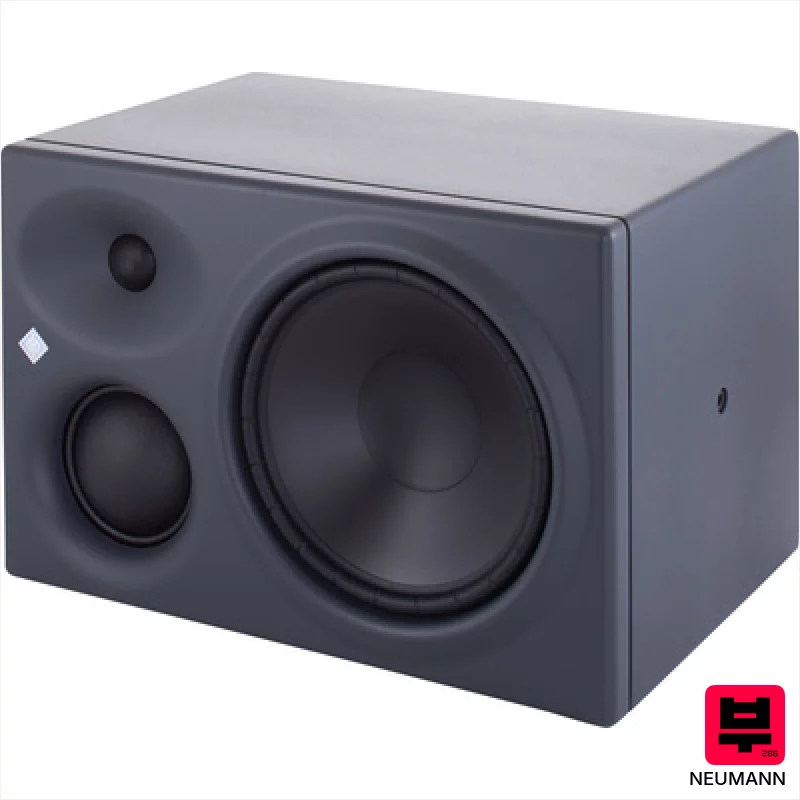
Neumann KH 310 A left
- • Exceptional transient response reveals subtle sonic details.
- • Neutral frequency response provides a truly accurate monitoring experience.
- • Precise bass reproduction extends surprisingly low for a midfield monitor.
- • Magnetically shielded design minimizes interference in recording environments.
- • Price point places it in a premium-priced category for home studios.
- • Requires careful room treatment to fully realize its potential.
- • Limited connectivity options compared to some competitor models.

KS Digital A100 Cherry
- • Cherry veneer adds a touch of class and visual warmth.
- • FIRTEC DSP truly minimizes phase shift for accurate imaging.
- • 8in woofer delivers surprisingly deep, controlled low-end response.
- • Electronic limiters protect drivers, ensuring long-term reliability.
- • Lack of EQ beyond the FIRTEC filters limits extensive room correction.
- • Remote control is optional, adding to the overall investment.
- • Cherry finish might not suit all studio aesthetics or preferences.

Neumann KH 420
- • Exceptional transient response thanks to the Class AB amplification.
- • Detailed midrange clarity from the dedicated 3in driver.
- • Precise imaging and soundstage due to Neumann’s waveguide design.
- • Robust construction; the 36kg weight speaks to quality materials.
- • High-end price point limits accessibility for many smaller studios.
- • Requires careful room treatment to fully realize its potential.
- • Limited digital input options compared to some competitors.

HEDD Type 20 MK2 Left White
- • Exceptional transient response thanks to the AMT tweeter.
- • The waveguide design delivers a remarkably wide and stable sweet spot.
- • 3-way design offers incredible detail and separation across the spectrum.
- • Robust build quality with high-grade cabinet resonance dampening.
- • Significant investment; a serious commitment to accurate monitoring.
- • Size and weight make placement and transport challenging.
- • DSP linearization, while beneficial, can subtly alter the natural sound.

ADAM Audio S3H
- • Exceptional transient response thanks to the S-ART tweeter.
- • The HPS waveguide provides a remarkably wide and stable sweet spot.
- • Deep, controlled bass from the 7in woofer, avoiding muddiness.
- • DSP offers genuinely useful room correction and flexible adjustments.
- • Size and weight make placement a significant consideration in smaller rooms.
- • The high-frequency detail might be fatiguing for some listeners long-term.
- • Limited color control compared to some more 'characterful' monitors.

KS Digital A100 Black
- • Exceptional transient response thanks to FIRTEC DSP processing
- • Detailed imaging and soundstage for critical mixing decisions
- • Robust 8in woofer delivers surprising low-end extension
- • Effective peak filters mitigate common room acoustic issues
- • Limited connectivity compared to some competitors – lacks AES/EBU
- • Relatively heavy for studio monitors, potentially challenging for smaller setups
- • KSD-RC remote is optional, adding to overall investment
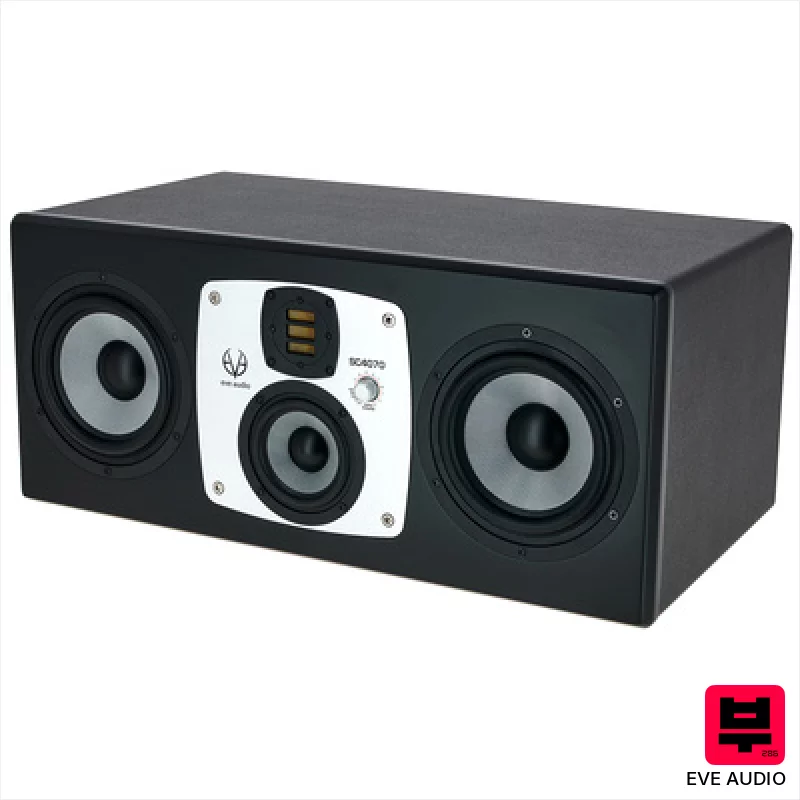
EVE Audio SC4070
- • SilverCone woofers deliver tight, controlled low-end response with minimal distortion.
- • AMT RS3.1 tweeter provides exceptional clarity and detail in the high frequencies.
- • Rotating drivers allow for precise acoustic alignment in various room environments.
- • Robust amplifier power (250W per driver) ensures headroom and accurate reproduction at high SPLs.
- • The substantial weight (18kg each) makes placement and repositioning a two-person job.
- • Limited EQ options compared to some competitors might require more careful room treatment.
- • The unique design, while functional, may not appeal to all aesthetic preferences.

Dynaudio Core 47 Right
- • Exceptional transient response thanks to the beryllium tweeter.
- • Dynaudio's DSP provides remarkable room correction capabilities.
- • The 7-inch woofer delivers controlled, powerful low-end extension.
- • Robust cabinet construction minimizes unwanted resonances and vibrations.
- • High-end price point makes it a significant investment.
- • Right-hand configuration requires a matching left speaker for stereo use.
- • The DSP, while beneficial, may require careful calibration for optimal results.
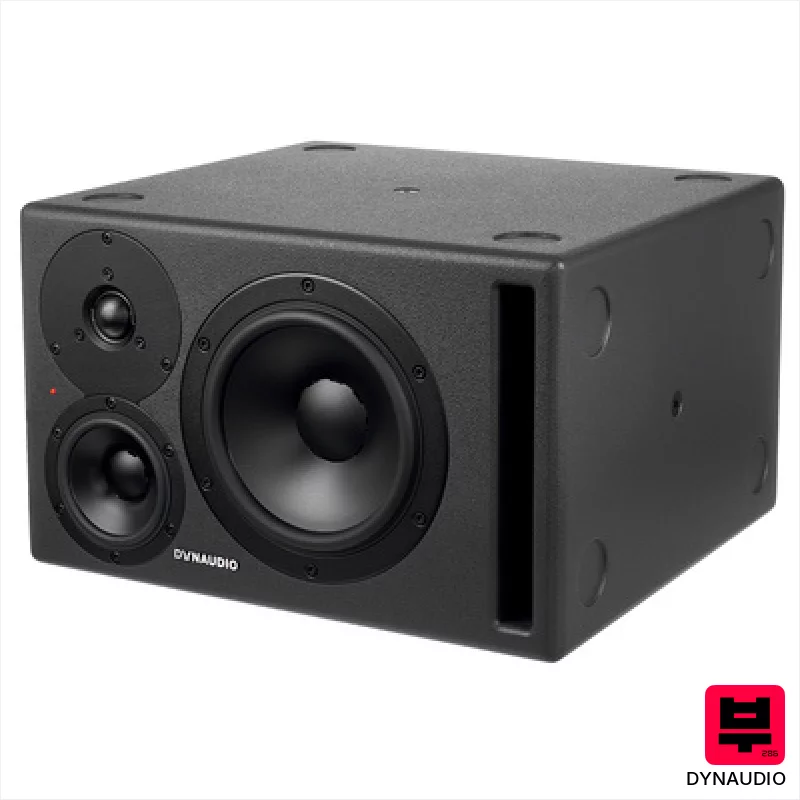
Dynaudio Core 47 Left
- • Exceptional transient response due to Dynaudio's Esotar SolTweeter.
- • Robust birch plywood cabinet minimizes unwanted resonances.
- • Powerful amplifier section delivers clean headroom at high SPLs.
- • DSP offers genuinely useful room correction and EQ options.
- • Significant size and weight make placement challenging in smaller rooms.
- • Limited connectivity compared to some competitors; lacks analog inputs on the right speaker.
- • Premium-priced, representing a substantial investment for most studios.

HEDD Type 20 MK2 left
- • Exceptional transient response thanks to the AMT tweeter.
- • The 7-inch woofer delivers surprising depth and control.
- • DSP linearisation significantly reduces distortion at higher volumes.
- • Robust build quality with a solid, dampened enclosure.
- • The size and weight make placement and transport challenging.
- • The high-end AMT tweeter can be fatiguing in overly bright rooms.
- • Limited connectivity beyond AES – no USB or SPDIF.

Quested V3110
- • Exceptional transient response thanks to the soft dome drivers
- • Remarkable imaging and soundstage width for a midfield monitor
- • Robust build quality; feels incredibly solid and well-damped
- • The midrange clarity is stunning; vocals sit beautifully
- • Limited low-end extension compared to larger monitors; sub recommended
- • Premium-priced, a significant investment for smaller studios
- • Relatively large footprint; requires ample space for optimal placement

KS Digital C88-Reference R
- • Carbon woofer delivers tight, controlled low-end response.
- • Coaxial design offers excellent imaging and a wide sweet spot.
- • FIRTEC filters provide precise and transparent frequency shaping.
- • Electronic limiting protects drivers from overload and distortion.
- • Relatively heavy, requiring sturdy stands and careful placement.
- • Requires optional remote for full filter customization, adding to the cost.
- • Coaxial design might not be ideal for all room acoustics or listening preferences.
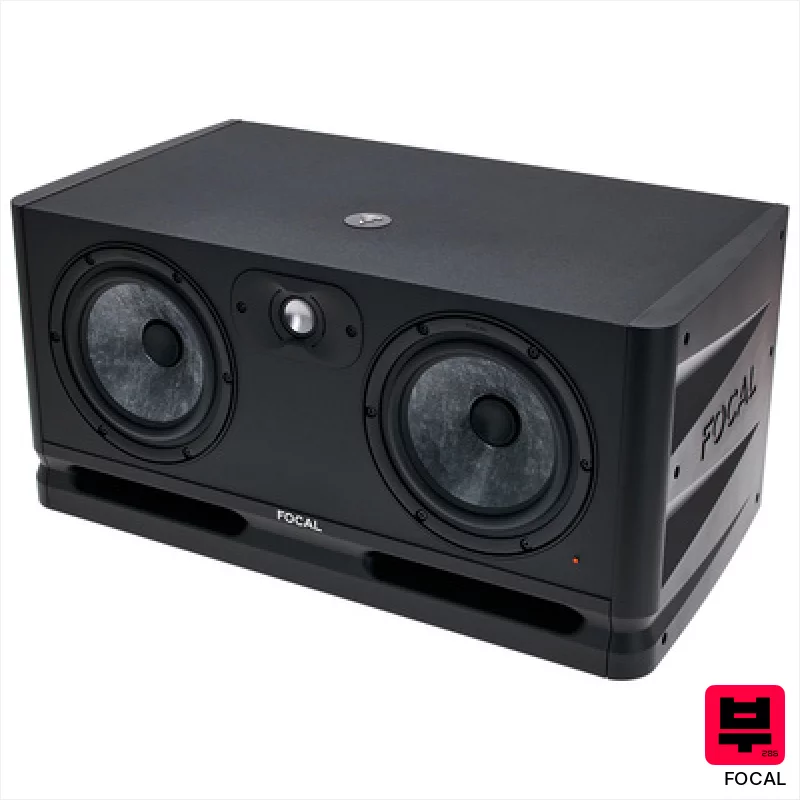
Focal Alpha Twin Evo
- • Carbon fiber woofers deliver tight, controlled low-end response.
- • Inverted dome tweeter provides detailed, accurate high-frequency reproduction.
- • Balanced XLR and TRS inputs offer clean, noise-free signal paths.
- • Auto standby feature saves energy and simplifies studio setup.
- • Limited input options compared to higher-end monitors; lacks AES/EBU.
- • While compact, 12.2kg each makes placement a bit cumbersome.
- • Low-frequency extension, while decent, might be lacking for true bass-heavy genres.

HEDD Type 20 MK2 right
- • AMT tweeter delivers exceptional detail and transient response.
- • DSP linearisation dramatically improves imaging and reduces distortion.
- • 7-inch woofer provides a remarkably tight and controlled low-end.
- • Robust cabinet construction ensures minimal resonance and coloration.
- • Relatively large footprint demands ample desk space for optimal placement.
- • Limited connectivity compared to some competitors; lacks RCA inputs.
- • Premium-priced, making it a significant investment for smaller studios.
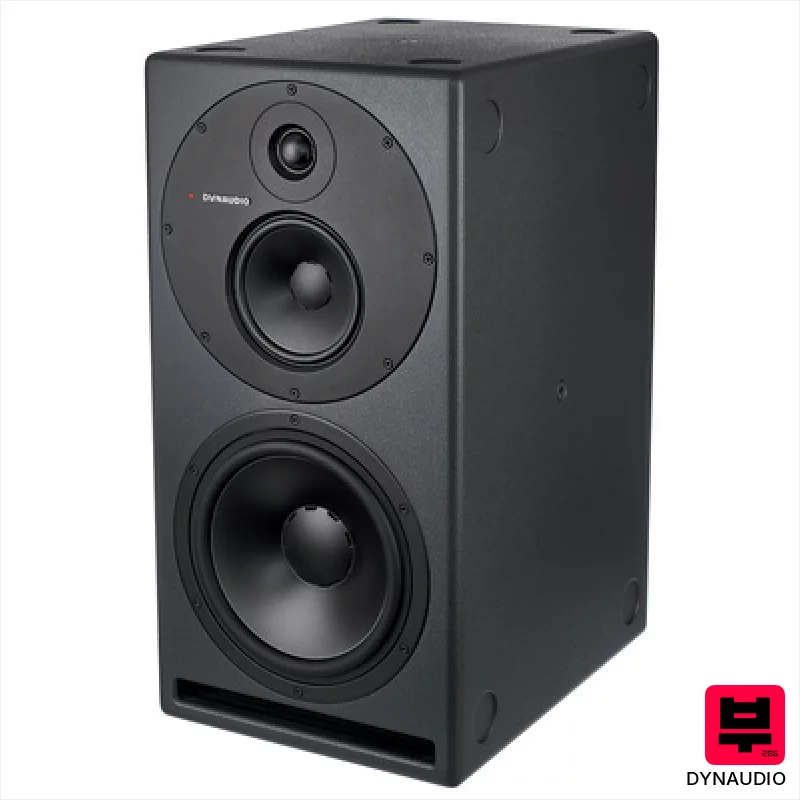
Dynaudio Core 59
- • Exceptional transient response thanks to the DSP and robust amp section
- • Dynaudio’s signature neutral and detailed sound signature shines through
- • Rotating mid/tweeter module offers excellent flexibility for room optimization
- • Solid build quality; the MDF enclosure feels substantial and well-damped
- • Significant investment; these are premium-priced studio monitors
- • Size and weight make placement challenging in smaller or cramped spaces
- • USB connection is solely for service, limiting broader functionality
How to Choose the Best Midfield Monitors
Frequency Response & Accuracy
A large studio demands flat, honest response. We're not looking for bass boost; we're looking for accurate representation of the low-end so you can make informed EQ decisions. A slight lift in the upper mids can be useful for vocal clarity, but avoid anything overly hyped.
Stereo Imaging & Soundstage
Large rooms can swallow detail. Good midfield monitors will present a wide, stable stereo image with excellent instrument separation, allowing you to accurately place elements in the mix. This is vital for creating a sense of space and depth.
Headroom & Transient Response
You'll be tracking loud sources - drums, amps, horns. Monitors need headroom to handle the peaks without compression or distortion, and fast transient response to accurately reproduce the attack of drums and percussion. Lack of headroom means muddy mixes.
Low-End Extension & Control
Accurate low-end reproduction is critical. Cheap monitors often have a boomy, undefined low-end that masks problems. We want monitors that reveal muddiness, not mask it, allowing for surgical EQ adjustments.
Off-Axis Response
How do they sound when you're not dead center? Large studios often have multiple listening positions. Consistent tonal balance across a wider listening area is essential for collaborative work and critical evaluation.
Buying Guide
Don't chase the cheapest option; you'll end up spending more fixing the problems they create. Spend the money on a pair with a well-designed waveguide for consistent off-axis response and a robust amplifier section. Be wary of monitors claiming 'studio quality' at a ridiculously low price - those corners will be cut somewhere, usually in the drivers or the crossover. Consider the room acoustics - no monitor, no matter how good, can compensate for a poorly treated space.
Our Methodology
We don't just look at spec sheets here. These monitors spent weeks in our studio, A/B'd against known references, used for tracking vocals, mixing drums, and mastering electronic music. We're listening for that fat midrange honk, that sparkle in the highs, and how they hold up when pushed hard - because a studio isn't just about quiet listening, it's about making decisions that translate.

