
Best Master Keyboards (up to 61 Keys) Under $2,000 2026
Alright, so you're in the market for a master keyboard - a serious controller - but you're not looking to drop five grand. Totally get it. We've all been there, needing that extra layer of control for recording, live performance, or just fleshing out your sound without breaking the bank. This list is about finding the sweet spot - the best bang-for-your-buck master keys under $2000 that'll actually inspire you to play.
Last updated: April 11, 2026
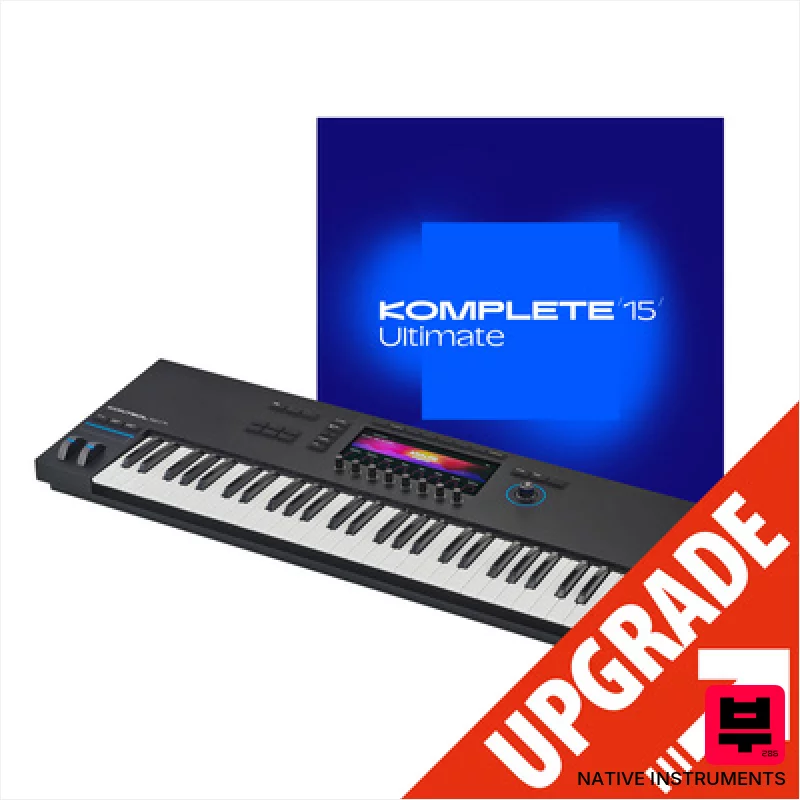
Native Instruments Kontrol S61 MK3 Kompl. 15 Ult.
- • Excellent Fatar keybed with polyphonic aftertouch feels incredibly responsive.
- • High-resolution color screen vastly improves workflow and visual feedback.
- • Preconfigured mappings accelerate workflow with Komplete and third-party instruments.
- • 4D controller offers intuitive and expressive parameter manipulation.
- • The semi-weighted action won't satisfy pianists seeking a full 88-key piano feel.
- • Bundled software, while extensive, can feel overwhelming for newcomers.
- • Premium-priced, making it a significant investment for hobbyists.

Arturia AstroLab Wooden Legs Set
- • Solid wood legs dramatically improve AstroLab's stability and feel.
- • The bundled sounds offer incredible sonic versatility across genres.
- • Intuitive navigation wheel simplifies complex synthesis workflows.
- • Macro controls enable deep, immediate sound shaping and performance.
- • Semi-weighted action may not satisfy serious pianists or keyboardists.
- • The sheer number of sound engines can feel overwhelming to beginners.
- • Premium-priced, representing a significant investment for many musicians.

Native Instruments Kontrol S61 MK3 Komplete 15
- • Excellent Fatar keybed with polyphonic aftertouch feels responsive and expressive.
- • High-resolution color screen significantly improves workflow and visual feedback.
- • Seamless integration with Komplete instruments simplifies sound design and recall.
- • 4D controller offers intuitive manipulation of parameters and effects.
- • Semi-weighted action isn't ideal for pianists seeking true grand piano feel.
- • The Komplete 15 bundle, while extensive, can be overwhelming for beginners.
- • Size and weight make it less portable than smaller, more compact controllers.

Arturia AstroLab Stand Set
- • Solid, stable steel stand provides excellent keyboard support.
- • Ten distinct sound engines offer incredible sonic versatility and depth.
- • Intuitive navigation wheel simplifies complex sound manipulation on the fly.
- • Macro controls allow for immediate, impactful parameter adjustments during performance.
- • Semi-weighted keys lack the feel of fully weighted piano action.
- • The sheer number of sounds can feel overwhelming for newer users.
- • Bluetooth audio functionality is more of a novelty than a core feature.

Arturia KeyLab Essential 61 Mk3 Alpine
- • Solid build quality with a surprisingly robust, plastic chassis.
- • The stepped encoder offers precise, tactile control for parameter adjustments.
- • Analog Lab integration provides instant access to a massive sound library.
- • Comprehensive Mackie/HUI compatibility simplifies DAW integration.
- • The plastic chassis, while sturdy, lacks the premium feel of metal alternatives.
- • The keybed, while velocity-sensitive, isn't a fully weighted action.
- • Limited keybed travel may not satisfy advanced pianists or keyboardists.
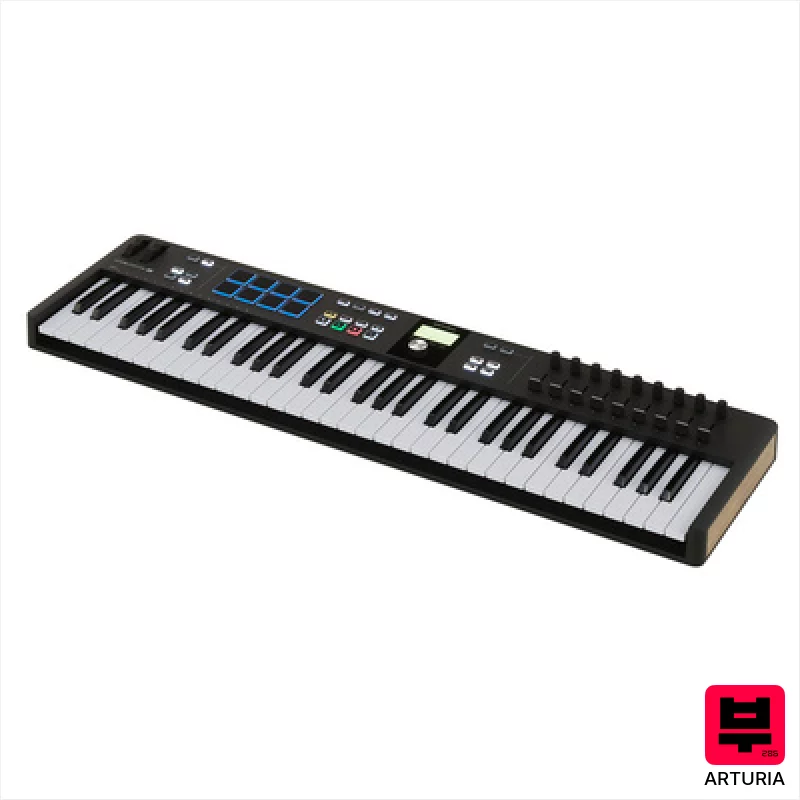
Arturia KeyLab Essential 61 Mk3 Black
- • Solid plastic chassis feels surprisingly robust for the price.
- • The Analog Lab integration offers a massive library of sounds out of the box.
- • Detented encoders provide tactile feedback for precise mixing adjustments.
- • Well-spaced, velocity-sensitive keys offer decent playability for a budget keyboard.
- • Keys are plastic, lacking the feel and responsiveness of weighted action.
- • The included Analog Lab software can feel overwhelming for beginners.
- • The large size makes it less ideal for smaller studio setups or travel.
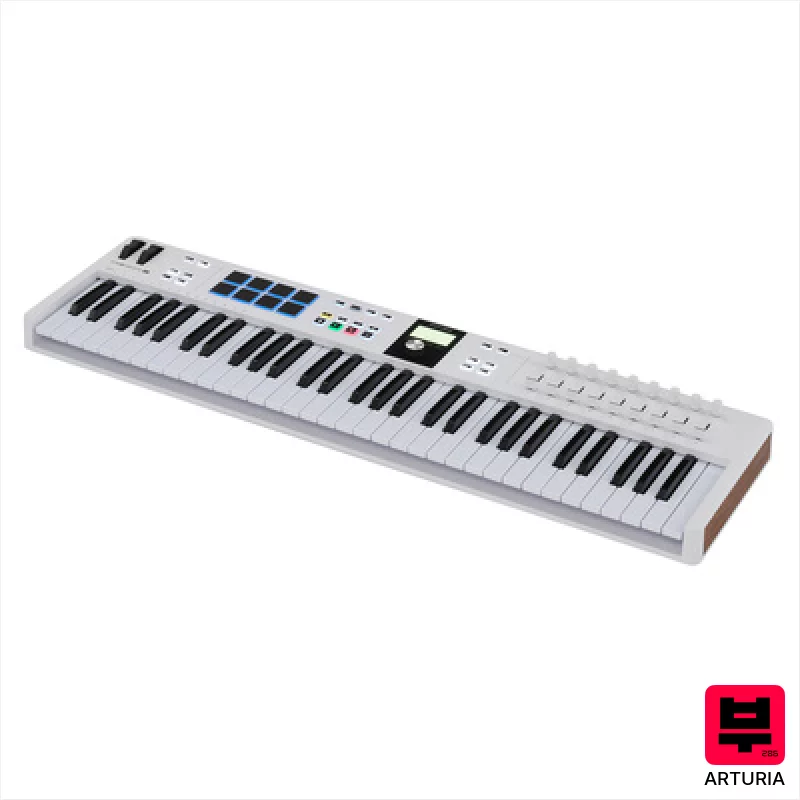
Arturia KeyLab Essential 61 Mk3 White
- • Solid, matte white finish feels premium and resists fingerprints.
- • Velocity-sensitive keys offer a surprisingly responsive and playable feel for the price.
- • Comprehensive control surface—faders, encoders, pads—great for DAW control.
- • Analog Lab integration provides immediate access to a massive library of sounds.
- • Keys, while decent, lack the escapement of higher-end, fully weighted actions.
- • The plastic chassis, while sturdy, can feel a bit flexy under heavy use.
- • Limited key travel might not satisfy seasoned piano players accustomed to deeper action.
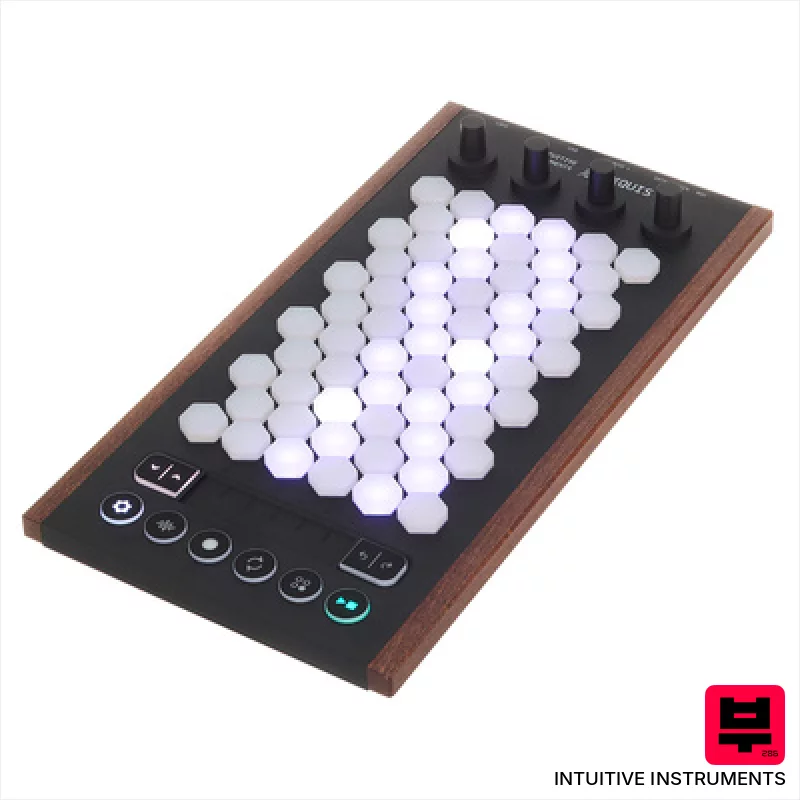
Intuitive Instruments Exquis Deluxe Dark Wood
- • Wooden side panels add a premium aesthetic and tactile feel.
- • Hexagonal keys offer a unique, expressive playing surface.
- • Comprehensive MPE support unlocks nuanced, polyphonic control.
- • The Exquis app provides a surprisingly useful compositional environment.
- • 61 keys limit range for pianists accustomed to full 88-key boards.
- • Compact size might feel cramped for those with larger hands.
- • CV outputs are limited, restricting modular synth integration.

Arturia KeyLab 61 mk3 Black
- • Solid aluminum chassis with wood accents feels exceptionally well-built and premium.
- • The full-color screen is genuinely useful for visual feedback and customization.
- • Aftertouch on the keys adds expressive control previously absent in earlier models.
- • Native Instruments Komplete Select bundle provides immediate creative possibilities.
- • The key action, while decent, isn't a true weighted piano feel.
- • The wooden side panels, while aesthetically pleasing, are prone to minor finish imperfections.
- • The USB-C bus power can be limiting for some power-hungry devices.

Arturia KeyLab 61 mk3 White
- • Solid aluminum chassis with wood accents feels premium and stable.
- • Excellent key action; responsive and provides a satisfying playing experience.
- • The integrated screen offers clear visual feedback for parameter adjustments.
- • Native Instruments Komplete Select bundle provides immediate, usable sounds.
- • The aftertouch, while present, isn't as nuanced as higher-end keyboard controllers.
- • The wooden side panels, while aesthetically pleasing, could be more robust for touring.
- • Limited key travel compared to stage pianos; better suited for MIDI control.

Native Instruments Kontrol S61 MK3
- • The Fatar keybed with polyphonic aftertouch feels incredibly responsive and expressive.
- • The high-resolution color screen drastically improves workflow and visual feedback.
- • Native Instruments' integration with Kontakt 7 and Komplete Kontrol is genuinely seamless.
- • The tag-based preset browsing system makes sound discovery surprisingly intuitive and fast.
- • The semi-weighted action won’t satisfy players accustomed to fully weighted piano keys.
- • The price point positions it as a premium-priced option for many home studios.
- • While versatile, the deep integration is most beneficial within the Native Instruments ecosystem.

Native Instruments Komplete Kontrol A61
- • Excellent integration with Native Instruments Komplete ecosystem
- • OLED display provides clear visual feedback for parameter adjustments
- • 4D push encoders offer intuitive, multi-dimensional control
- • Lightweight and portable for studio or mobile production
- • Semi-weighted action lacks the feel of a fully weighted piano action
- • Limited pad sensitivity compared to dedicated drum controllers
- • USB power only; no external power supply option

Novation Launchkey 61 MK4
- • Solid semi-weighted action offers a surprisingly expressive feel.
- • FSR pads deliver nuanced polyphonic aftertouch for rhythmic creativity.
- • Comprehensive DAW integration with Capture MIDI and NKS support simplifies workflow.
- • The OLED display is clear and provides useful visual feedback during performance.
- • The semi-weighted keys, while decent, lack the depth of fully weighted action.
- • Plastic construction feels somewhat budget-conscious despite overall build quality.
- • Limited modulation options beyond the wheel and faders restrict complex sound design.
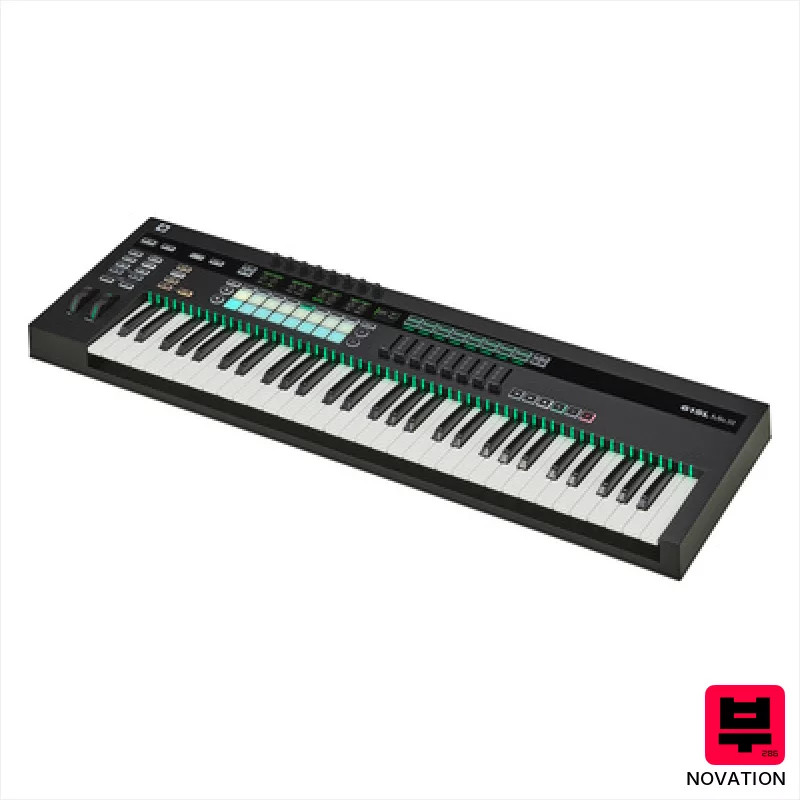
Novation 61SL MKIII
- • Excellent sequencer for sketching out song ideas quickly
- • Robust build quality; feels solid and well-assembled
- • Comprehensive DAW integration, especially with Ableton Live
- • Versatile controls offer deep parameter manipulation in software
- • Semi-weighted keys lack the feel of a fully weighted piano action
- • The TFT displays, while functional, could be brighter and higher resolution
- • Limited portability due to its size and weight

Korg Keystage 61
- • Excellent polyphonic aftertouch expands expressive playing capabilities
- • MIDI 2.0 bi-directional communication unlocks future-proofed instrument integration
- • Dedicated OLED displays on knobs offer clear, customizable parameter feedback
- • Compact 61-key design balances portability with ample playing area
- • Semi-weighted action lacks the nuanced feel of fully weighted keys
- • No built-in sounds; relies entirely on external instruments/software
- • Accessory tray mounting angles are limited, potentially awkward for some setups
How to Choose the Best Master Keyboards (up to 61 Keys)
Keybed Feel
A weighted keybed is ideal for piano feel, but semi-weighted offers a good compromise for synth and pad playing. Cheap plastic action can kill your vibe, so we prioritized responsiveness and even a little bit of escapement if possible.
Connectivity
MIDI ports are a given, but USB-MIDI, dedicated sustain pedal input, and assignable knobs/faders are where the real utility lies. Consider your DAW setup and live rig needs.
Sound Engine/Voices
Many of these are controllers, so they don't have sounds. But some have built-in sounds or decent sound modeling, which can be a bonus for quick sketching and inspiration. Don't expect VST-level quality, though.
Build Quality
Plastic is common at this price point, but cheap plastic feels...cheap. We looked for solid construction, stable pitch and modulation wheels, and decent knob encoders that don't feel like they'll strip their threads.
Software Integration
A good master keyboard should play nicely with your DAW. We prioritized models with intuitive mapping, MIDI learn functionality, and included software bundles (even if they're basic).
Buying Guide
At this price, you're making trade-offs. The biggest one is usually keybed quality - don't expect the buttery-smooth action of an 88-key stage piano. Focus on finding a feel you can live with and prioritize connectivity and controls. Don't get seduced by a ton of knobs you won't use; a few well-built, assignable controls are far more valuable. Consider a used model - you can often score a higher-tier keyboard for a steal.
How This List Is Built
We don't play these instruments — we're a catalog, not a review desk, and we'd rather say so than pretend otherwise. This page ranks 15 master keyboards (up to 61 keys) from the Thomann catalogue, which is the largest single source of specification data in this category.
Position is computed, not curated. Four signals, in order of weight: how completely the manufacturer documents the instrument (number of published specifications), where it sits in the price range, how specific the model designation is — which filters out generic accessories — and whether a product image exists. The same inputs always produce the same order, so nothing here is shuffled to look fresh.
What this list is good for: narrowing a category down to a shortlist by spec and budget. What it isn't: a substitute for hearing an instrument. Before you buy, read hands-on reviews and, where you can, play it. Full methodology.

