
Best Lefthanded Acoustic Basses for Left Handed Players 2026
Alright, lefty bass players, let's talk acoustic basses. Finding a good left-handed acoustic bass isn't as straightforward as finding a right-handed one - the selection shrinks considerably, and you gotta be extra critical about the build quality and feel. This isn't just about flipping the strings; it's about finding an instrument that feels comfortable and delivers the tone you need, whether you're laying down grooves in a folk trio or cutting through a rock band. We're going to break down some options that actually work for lefties, not just re-labeled right-handed models.
Last updated: May 13, 2026 • Next update: May 20, 2026

Warwick RB Alien Standard 5 NT LH
- • Solid Sitka spruce top delivers a surprisingly resonant and articulate acoustic tone.
- • Fishman Sonicore piezo/Sonitone preamp combo provides a clean, amplified sound with good clarity.
- • Long 34in scale enhances string definition and provides a tighter low-end response.
- • Wenge fingerboard offers a smooth playing experience with a slightly warmer feel than maple.
- • Agathis back and sides, while functional, limit the overall tonal complexity compared to higher-grade woods.
- • The weight (3.3 kg) can be a bit tiring for extended playing sessions.
- • Limited tonal versatility; best suited for acoustic-focused genres, less ideal for heavily distorted sounds.
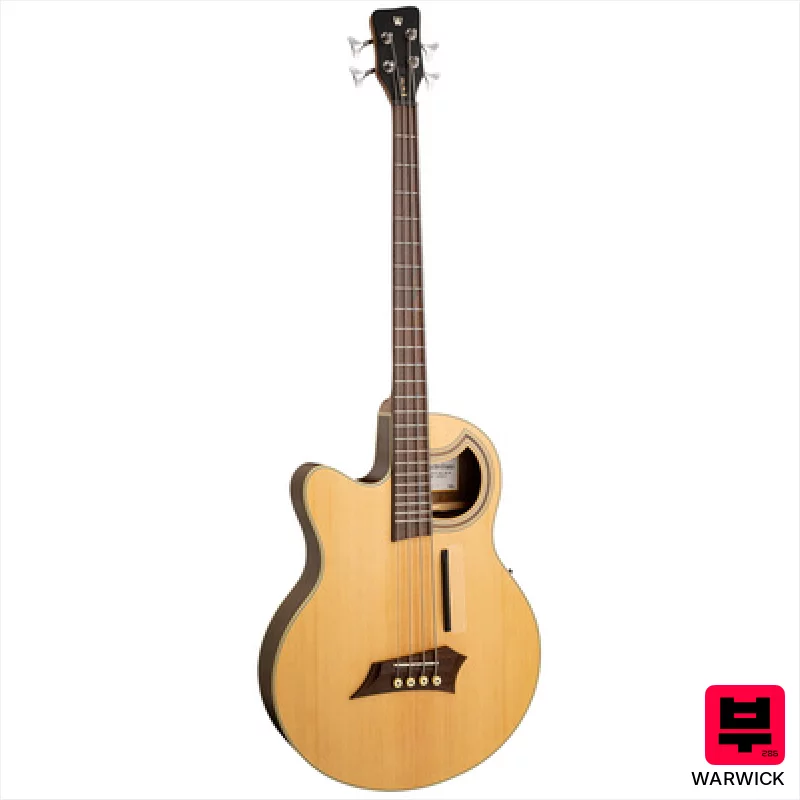
Warwick Alien Deluxe Hybrid 4 LH NT
- • Solid Sitka spruce top delivers a bright, articulate acoustic voice
- • Walnut back and sides add warmth and sustain, balancing the spruce
- • Shadow NanoMag pickups offer a surprisingly powerful and clear amplified tone
- • Security Locks provide exceptional neck stability and tuning precision
- • Thin-line body, while comfortable, sacrifices some acoustic projection
- • Hybrid design limits versatility compared to dedicated acoustic or electric basses
- • Wenge fretboard can be a bit snappy for some players' preferences

Warwick Alien 5 NT LH
- • AAAA Sitka spruce top delivers exceptional clarity and projection for acoustic tones.
- • Fishman Prefix Plus T electronics offer versatile amplified tones and tonal shaping.
- • Long 34 in scale provides a tight, defined low end characteristic of 5-string basses.
- • Mahogany neck with wenge fretboard offers a comfortable playing feel and warmth.
- • Ovangkol back and sides, while beautiful, can slightly dampen overall resonance.
- • The substantial build results in a heavier instrument, potentially fatiguing for some players.
- • Limited tonal flexibility compared to electric basses; primarily suited for acoustic-focused genres.
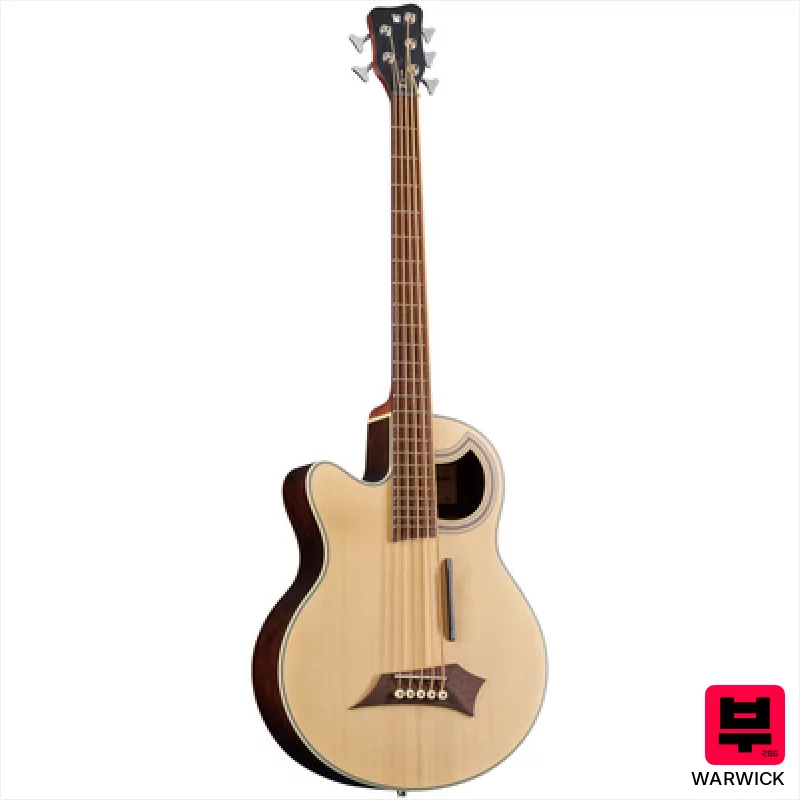
Warwick Alien Deluxe 5 NT LH
- • Solid AA Sitka spruce top delivers a surprisingly resonant acoustic tone
- • Fishman Sonicore Piezo provides a clear, amplified signal for stage use
- • Mahogany neck and wenge fretboard offer a comfortable, fast playing experience
- • Long scale (34 in) enhances clarity and definition across all five strings
- • Walnut back and sides, while attractive, slightly dampen overall acoustic projection
- • Fishman Presys Plus electronics, while good, lack some advanced EQ options
- • Weight can be noticeable during extended playing sessions for some.

Warwick Alien 4-string A-Bass NS LH
- • Solid spruce top delivers a surprisingly articulate and resonant acoustic tone.
- • Fishman Prefix Plus T electronics provide exceptional amplification and tonal shaping options.
- • Wenge fingerboard offers a smooth, fast playing experience with a unique feel.
- • Ovangkol back and sides add warmth and sustain, creating a balanced sonic profile.
- • The 20” radius fingerboard might feel unconventional for players accustomed to flatter profiles.
- • The weight, typical of Ovangkol-backed instruments, could be a factor for extended playing.
- • The somewhat narrow string spacing might not suit players with very large hands.

Harley Benton Kahuna CLU-Bass Ukulele LH
- • Spruce top offers surprising clarity and projection for the price
- • Mahogany body provides a warm, resonant low-end character
- • Ovangkol fingerboard offers a smooth playing experience and good durability
- • Pro pickup system delivers a usable amplified tone for gigging
- • Arched back might compromise sustain slightly compared to a flatback design
- • Nut width of 42.0mm could feel wide for ukulele players accustomed to smaller instruments
- • Mahogany body, while warm, can lack the brightness of maple alternatives
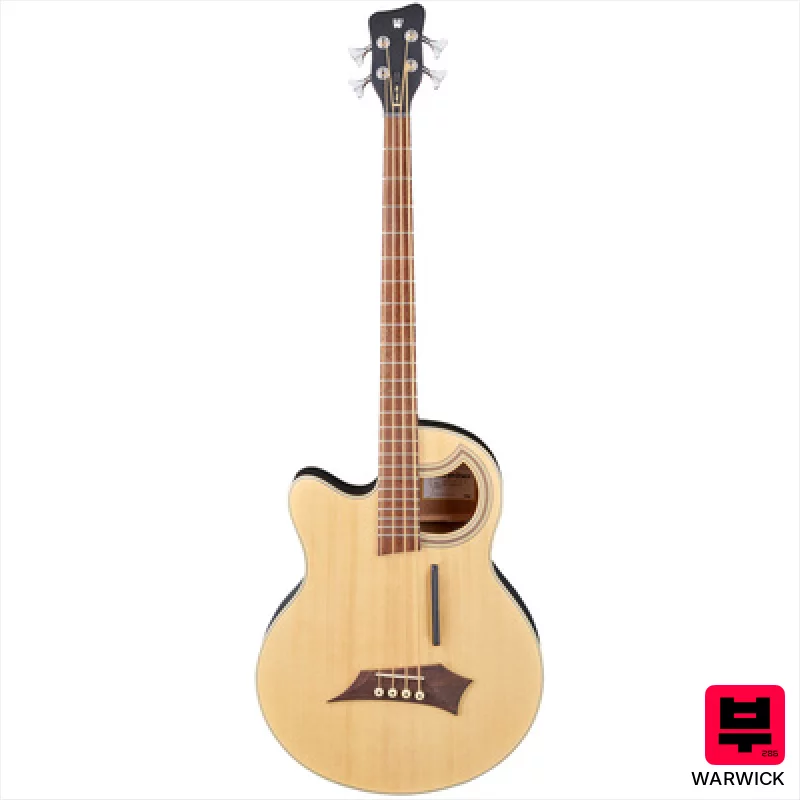
Warwick RB Alien Standard 4 NT LH
- • Sitka spruce top delivers a surprisingly articulate acoustic tone.
- • Fishman Sonicore/Sonitone combo provides amplified clarity and warmth.
- • Mahogany neck offers comfortable playability and sustain.
- • Medium scale length (32 in) makes it easier to handle for smaller hands.
- • Agathis back and sides limit the overall tonal complexity compared to all-solid woods.
- • Wenge fingerboard can feel slightly dry to some players’ preference.
- • The RED strings are a bit basic; an upgrade would be beneficial.
How to Choose the Best Lefthanded Acoustic Basses
Neck Profile
As a lefty, the neck profile is EVERYTHING. A comfortable, well-shaped neck is essential for long gigs or recording sessions. We're looking for something that feels natural in your hand - not too thick, not too thin - and allows for easy access to the higher frets.
String Spacing & Scale Length
The standard 34" scale is common, but some lefties prefer the slightly looser feel of a 32" scale for easier playing. String spacing is also crucial; too narrow and you'll be muting strings, too wide and it's a reach. This dictates comfort and articulation.
Tonewood & Body Shape
Mahogany delivers that warm, woody thump, great for roots music or blues. Spruce generally offers more projection and a brighter, more articulate tone - better for cutting through a band mix. Body shape influences resonance; a dreadnought is louder, a concert size more focused.
Pickup Voicing (if applicable)
Many acoustic-electric basses have pickups. A bad pickup can ruin an otherwise good instrument, sounding brittle or muddy. We're listening for pickups that capture the natural tone of the bass, with a balanced frequency response and usable headroom.
Action & Setup
A poorly set-up bass is unplayable, regardless of how much it cost. We're evaluating the action (string height), intonation, and overall playability straight out of the box, and how easily it can be adjusted.
Buying Guide
Finding a left-handed acoustic bass often means compromising. You might not get your ideal tonewood or pickup voicing, so prioritize playability. Don't be fooled by flashy aesthetics; a well-built bass with a basic finish will outperform a pretty one with a sloppy neck. Pay close attention to the nut slot - a poorly cut nut can make playing a nightmare, and it's an expensive fix.
Our Methodology
We're not just looking at specs here. We've spent weeks putting these basses through their paces - gigging in noisy bars, tracking in a studio, and just generally beating on them to see how they hold up. We've A/B'd them against each other and against industry standards, focusing on the nuances of tone, playability, and overall build quality. This isn't about marketing hype; it's about real-world performance.

