
Best Keyboard Organs Under $5,000 2026
Alright, so you're after that classic organ vibe without remortgaging the house. Finding a genuinely good keyboard organ under $5000 is totally doable, but you gotta know what to look for - it's not just about drawbars and Leslie simulations. We're talking about nailing that vintage feel, getting enough headroom for a gig, and avoiding that digital sterility that plagues a lot of budget options. Let's dive in and see what's out there that'll actually cut through the mix.
Last updated: April 11, 2026
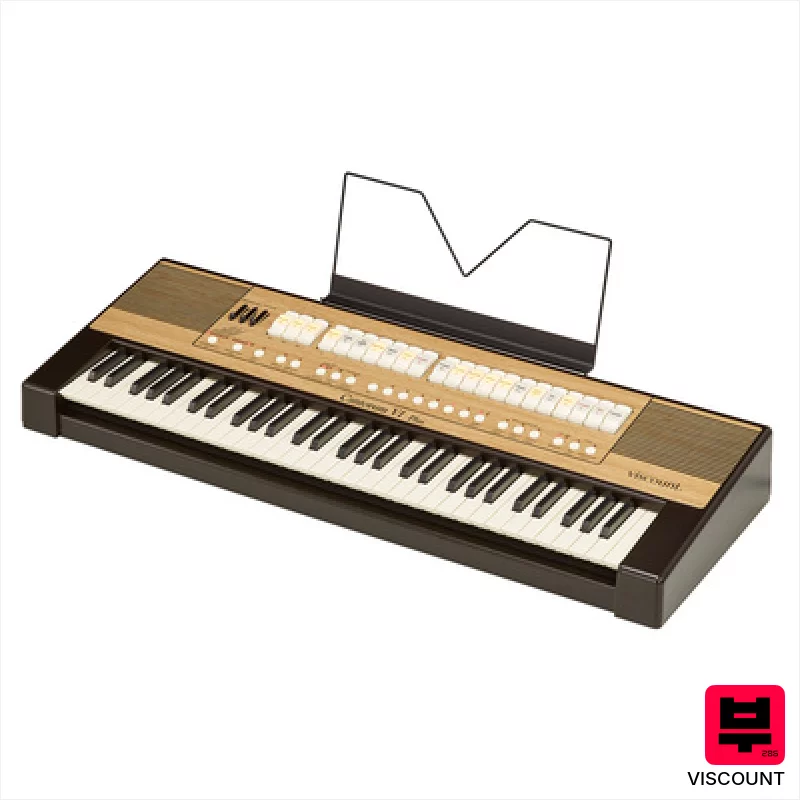
Viscount Cantorum VI Plus
- • Excellent organ voicing for traditional sacral settings
- • Pressure point keyboard offers nuanced expression
- • Compact size makes it ideal for smaller spaces
- • Built-in digital reverb adds depth and dimension
- • Limited orchestral voice selection compared to higher-end models
- • Polyphony, while decent, may struggle with complex registrations
- • Lighter build suggests portability over heavy-duty gigging

Dexibell Classico L3
- • Excellent organ simulations, especially the Baroque and Romantic voices.
- • Surprisingly responsive dynamic touch action for a keyboard organ.
- • Built-in audio player and recorder are genuinely useful for practice and performance.
- • Compact footprint and relatively lightweight for a stage organ.
- • Limited drawbar control – lacks the nuanced flexibility of traditional organs.
- • 76-key range feels restrictive for complex registrations.
- • The onboard speakers, while adequate, lack the power for larger venues.

Johannus One
- • T2L technology delivers remarkably realistic organ voicing and response.
- • 76 velocity-sensitive keys offer nuanced expression for organ playing.
- • Compact size and relatively light weight (14kg) allows for portability.
- • Comprehensive register selection provides a wide range of tonal possibilities.
- • Limited to organ sounds; lacks versatility for other genres.
- • The speaker power (2x35W) is adequate but may lack projection in larger spaces.
- • No drawbars for traditional organ tone shaping – a significant omission.
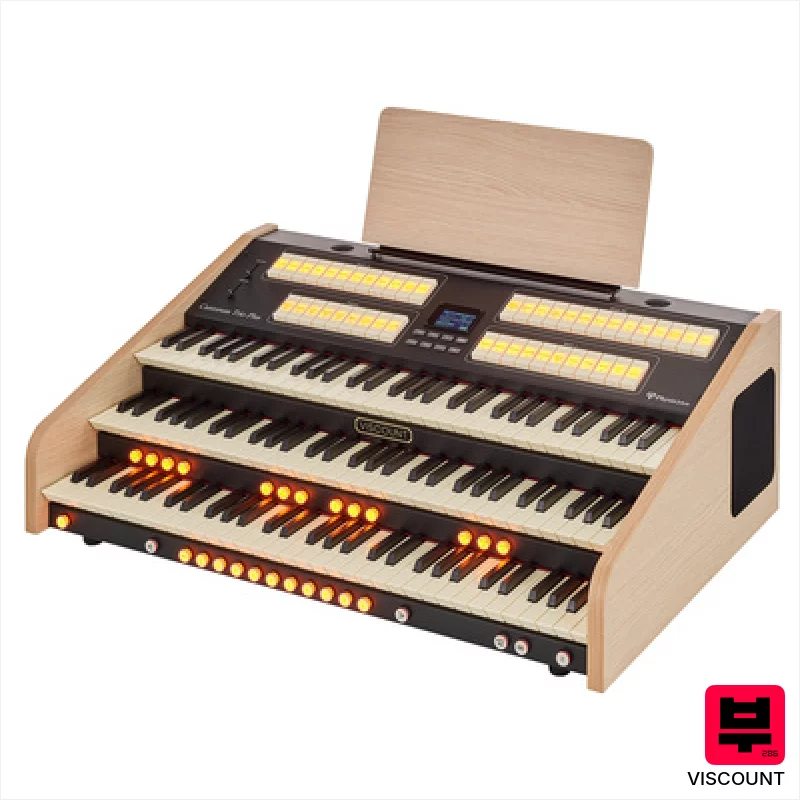
Viscount Cantorum Trio Plus
- • Excellent Italian build quality; feels robust despite its size.
- • Pressure point keyboard offers expressive MIDI and orchestral control.
- • 46 registers provide a surprising range of organ timbres.
- • Compact size makes it suitable for smaller spaces or travel.
- • Limited drawbar flexibility compared to traditional console organs.
- • 4 speakers might feel underpowered for larger venues.
- • 3-manual design restricts complexity for advanced organists.
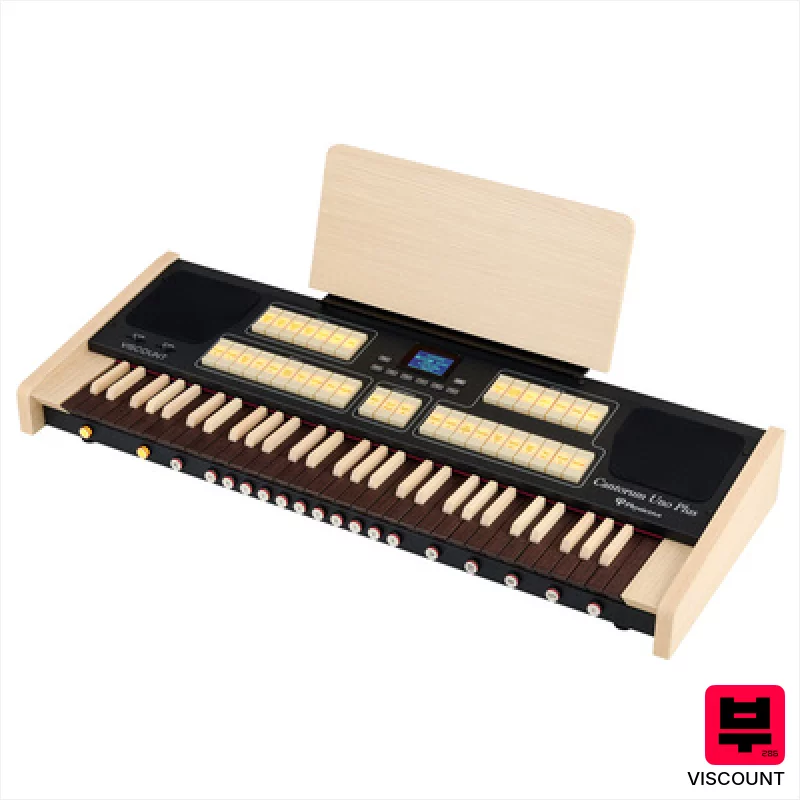
Viscount Cantorum Uno Plus-W
- • Wooden TP8LW keyboard offers authentic touch and feel.
- • Compact size makes it ideal for smaller spaces and travel.
- • 26 registers provide a surprisingly broad tonal palette.
- • Built-in amplification eliminates the need for external speakers initially.
- • Single manual limits complexity for experienced organists.
- • 2 x 40W amplification might be underpowered for larger rooms.
- • Limited register selection compared to larger Viscount models.
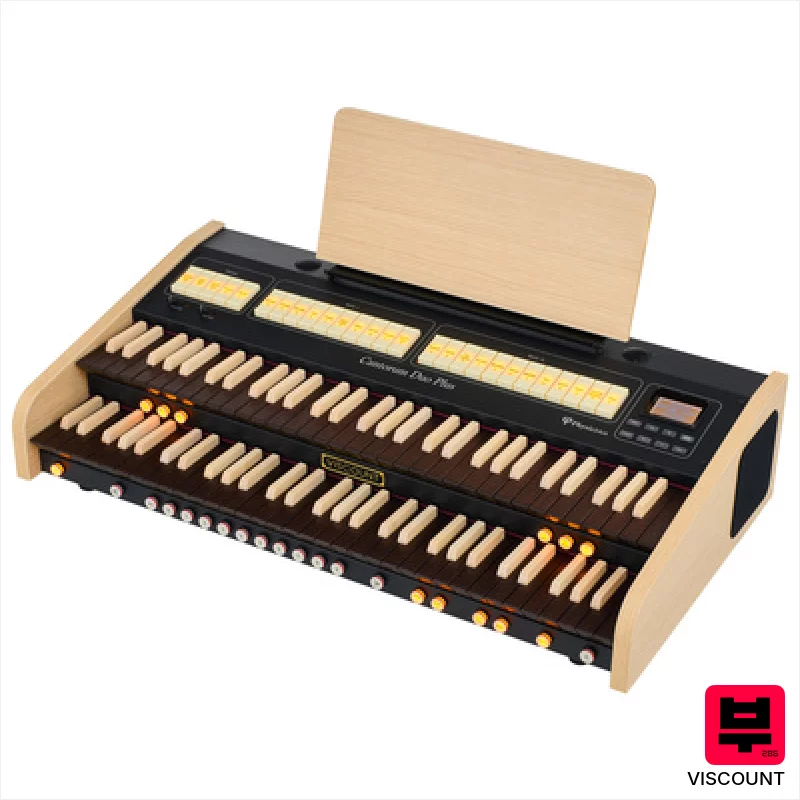
Viscount Cantorum Duo Plus - W
- • TP8LW wooden keys offer surprisingly authentic organ feel.
- • 27 registers provide a decent range of classic organ timbres.
- • Compact size allows for easy portability and placement.
- • Built-in amplification simplifies setup; ready to play out of the box.
- • Limited drawbar controls restrict tonal shaping versatility.
- • 2 x 40W amp lacks headroom for larger spaces or louder playing.
- • 2-manual design restricts complexity compared to larger organs.

Viscount Cantorum Duo Plus
- • Excellent voicing replication of traditional pipe organs
- • Compact size ideal for smaller spaces and transport
- • Two pressure point keyboards offer nuanced expression control
- • Built-in amplifier provides adequate volume for home or small church use
- • Limited register selection compared to larger Viscount consoles
- • The plastic key action, while functional, lacks premium feel
- • Orchestral voices are a secondary focus, less detailed
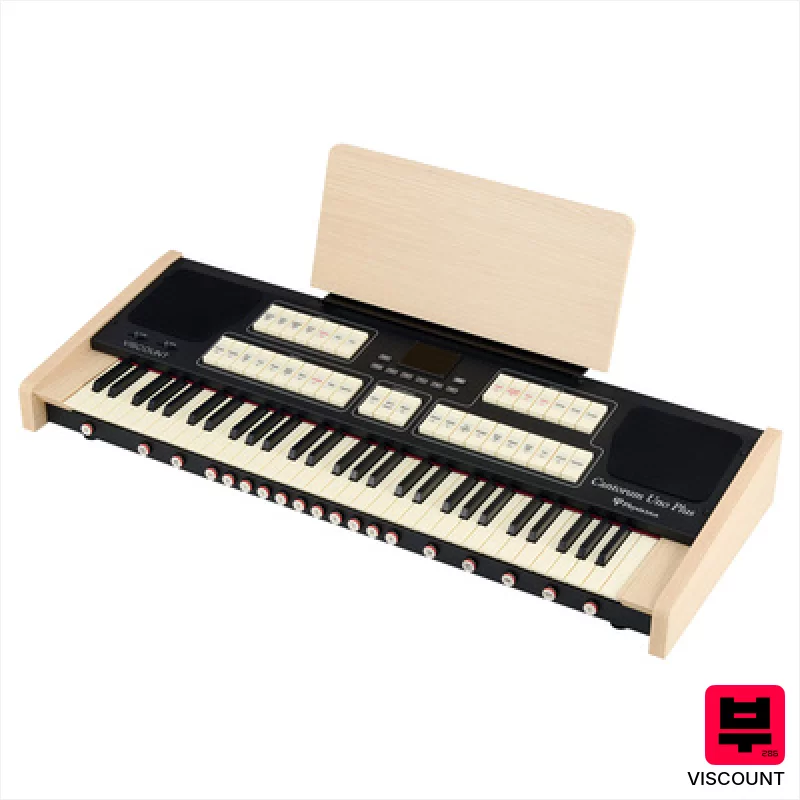
Viscount Cantorum Uno Plus
- • Excellent escapement action provides realistic organ feel.
- • Viscount's sampled voices offer surprisingly authentic church organ tones.
- • Compact size makes it suitable for smaller spaces or travel.
- • 26 registers provide a decent range of tonal variety for the price.
- • Limited one-manual design restricts more complex registrations.
- • Amplifier power (2x40W) is adequate but lacks headroom for larger rooms.
- • Lack of drawbars limits tonal shaping and customization.
How to Choose the Best Keyboard Organs
Tone Modeling
It's not just about having drawbars; it's about how convincingly those drawbars sound. Cheap models often lack the complex harmonic content that makes a real B3 so magical - that fat midrange honk and subtle breakup is what you're after, not a sterile sine wave. Look for models with nuanced rotary speaker simulations, too.
Keybed Action
A lightweight, springy action will kill your playing. You need something with a bit of heft, something that gives you a fighting chance of controlling those drawbar swells and subtle nuances. Waterfall keys are almost essential for organ playing - makes those glissandos so much easier.
Leslie Simulation
A static, fixed Leslie sound is a dealbreaker. Look for models with adjustable speed, chorus/tremolo settings, and ideally, some kind of authentic speaker cabinet modeling. The best ones don't just simulate the sound; they respond to your playing dynamically.
Polyphony and Headroom
Organ sounds are complex and layered. Low polyphony will lead to nasty dropouts when you start layering sounds or adding effects. You need enough headroom to handle a full band without the organ sounding thin and lifeless.
Connectivity and MIDI
Beyond just the sounds, consider how well the organ integrates with your existing rig. MIDI connectivity is crucial for controlling other synths and effects, and multiple outputs are a huge bonus for routing signals to external Leslie speakers or mixers.
Buying Guide
At this price point, you're making trade-offs. Don't expect a perfect clone of a vintage B3 - that's a $10k+ proposition. The biggest compromises usually come in the keybed action and the depth of the tone modeling - you might get a good approximation of a B3, but it won't have the same complexity and character. Prioritize a good keybed and realistic Leslie simulation over a massive library of cheesy presets you'll never use.
How This List Is Built
We don't play these instruments — we're a catalog, not a review desk, and we'd rather say so than pretend otherwise. This page ranks 8 keyboard organs from the Thomann catalogue, which is the largest single source of specification data in this category.
Position is computed, not curated. Four signals, in order of weight: how completely the manufacturer documents the instrument (number of published specifications), where it sits in the price range, how specific the model designation is — which filters out generic accessories — and whether a product image exists. The same inputs always produce the same order, so nothing here is shuffled to look fresh.
What this list is good for: narrowing a category down to a shortlist by spec and budget. What it isn't: a substitute for hearing an instrument. Before you buy, read hands-on reviews and, where you can, play it. Full methodology.

