
Best DAngelico Jazz Guitars 2026
Alright, so you're looking at a D'Angelico jazz guitar? Smart move. These aren't your grandpa's hollowbodies, though they certainly respect the tradition. D'Angelico has a serious history, and while they've had some... interesting... periods, their modern instruments offer a unique blend of vintage vibe and modern playability - assuming you know what to look for.
Last updated: September 30, 2026
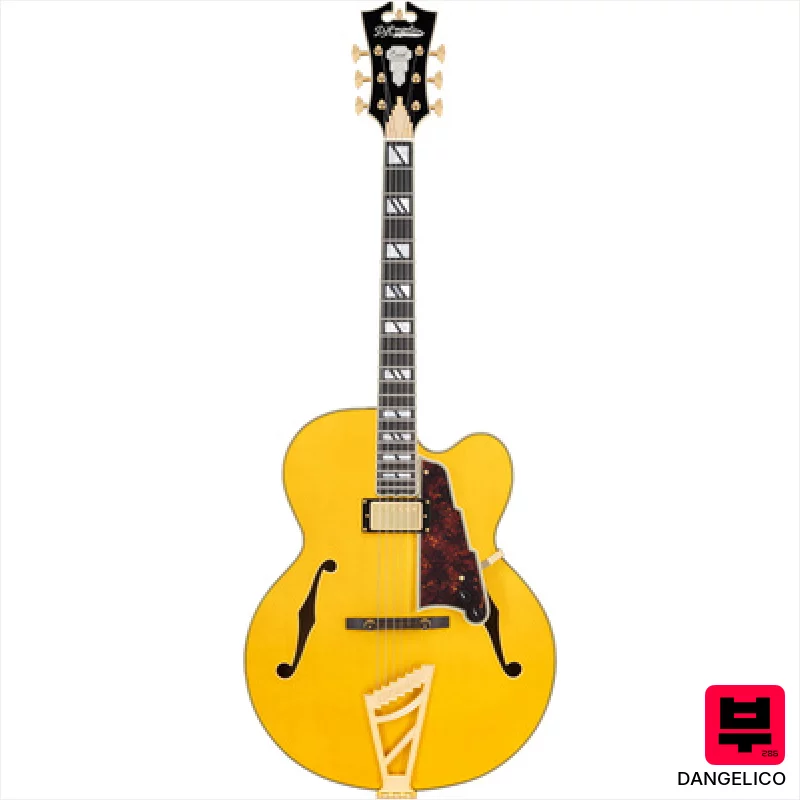
DAngelico Excel EXL1 Amber
- • Seymour Duncan 59 humbucker delivers thick, warm, and articulate tones.
- • Walnut core in the neck adds stability and a pleasing feel under the hand.
- • Ebony fingerboard provides a smooth, fast playing experience and excellent note definition.
- • Grover Imperial tuners ensure rock-solid tuning stability, even with aggressive playing.
- • Hollowbody construction makes it somewhat prone to feedback at higher volumes.
- • Limited tonal versatility; excels in jazz and blues, less suited for modern genres.
- • The shorter 648mm scale might feel cramped for players accustomed to longer scales.
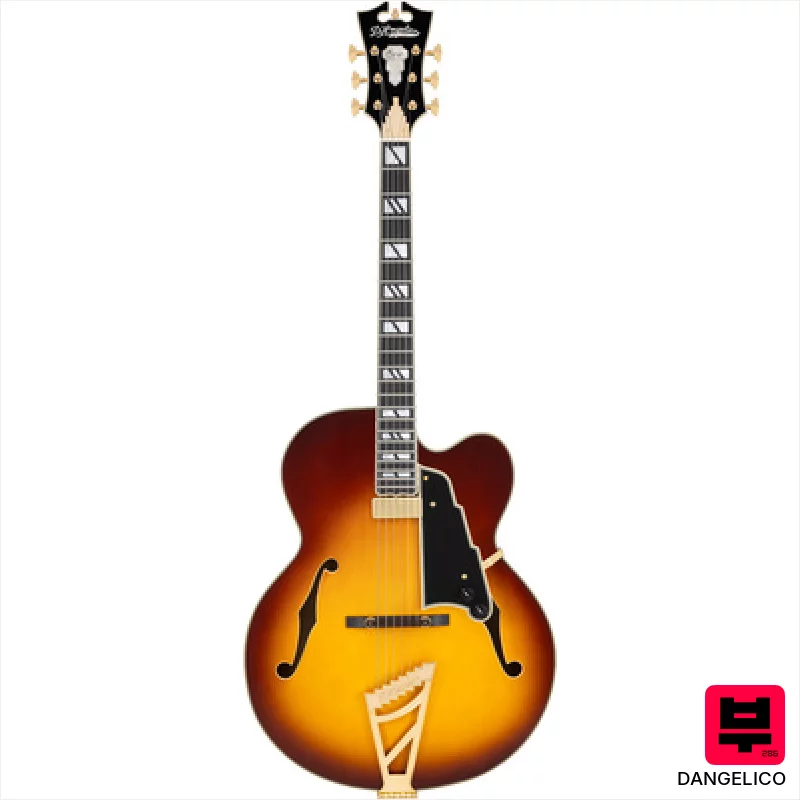
DAngelico Excel EXL1 Dark Iced Tea Burst
- • Stunning flamed maple back provides exceptional warmth and sustain.
- • Seymour Duncan Johnny Smith delivers articulate jazz tones with surprising bite.
- • Ebony fingerboard offers a smooth, fast playing experience and excellent clarity.
- • 7-ply binding adds a touch of elegance and reinforces the body’s structural integrity.
- • The shorter 648mm scale might feel cramped for players used to longer scales.
- • Hollow body construction means feedback can be an issue at higher volumes without careful amp selection.
- • Limited pickup options restrict versatility outside of jazz and blues contexts.
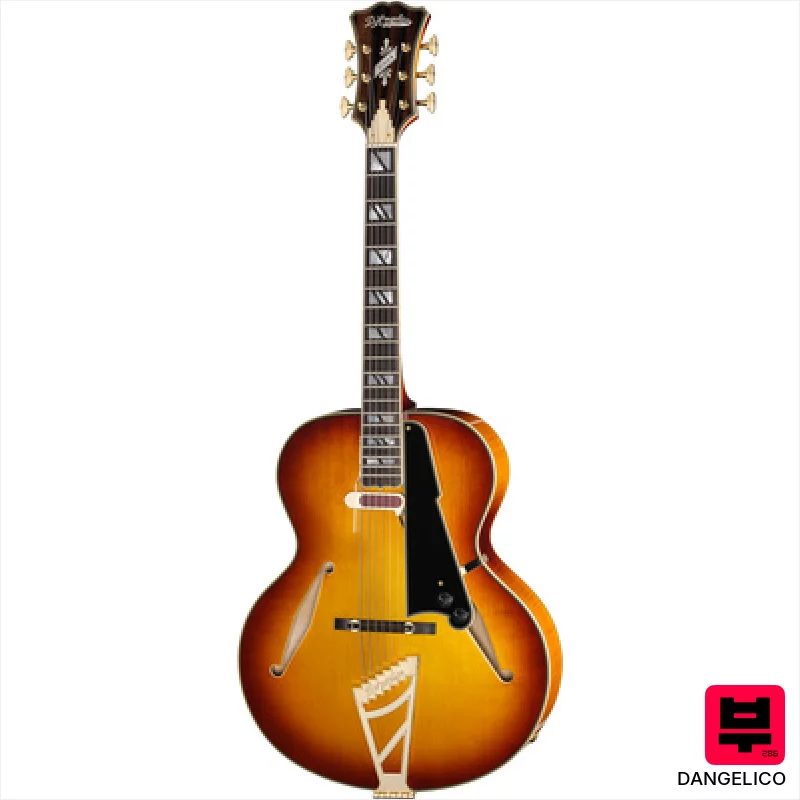
DAngelico Excel Style B Dark Iced Tea
- • The DeArmond 1000 pickup delivers a warm, vintage, and uniquely mellow tone.
- • Walnut in the neck adds stiffness and a pleasing resonance; feels very stable.
- • Ebony fingerboard provides a smooth playing experience and excellent note definition.
- • The Stairstep tailpiece is a classic D'Angelico design, adding visual flair and secure string anchoring.
- • The non-cutaway design can slightly hinder access to higher frets.
- • Laminated construction, while structurally sound, lacks the ultimate resonance of solid wood.
- • The Dark Iced Tea finish, while attractive, might show fingerprints easily.
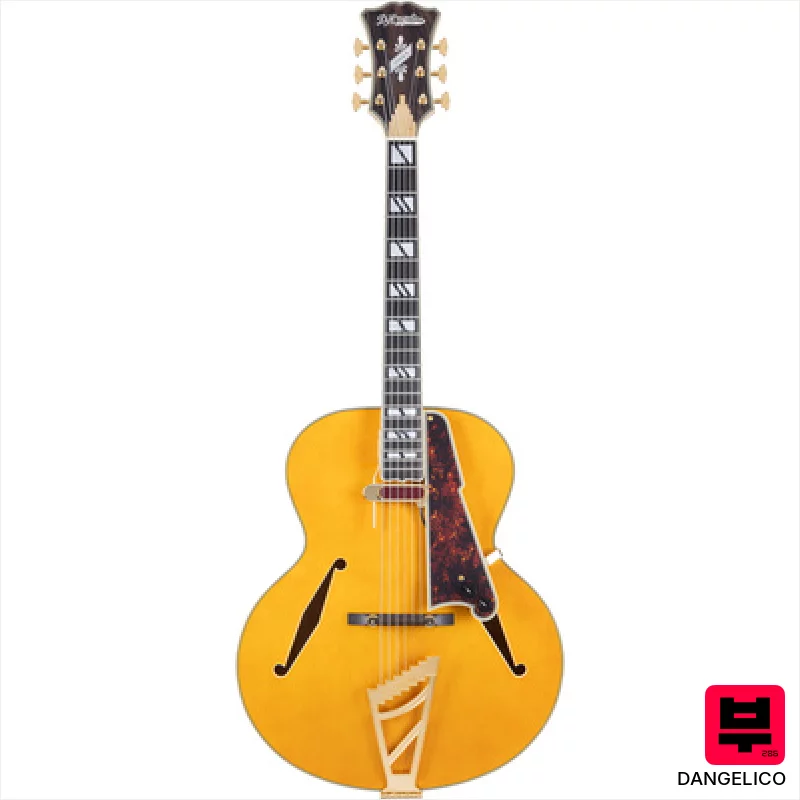
DAngelico Excel Style B Amber
- • Laminated Spruce top delivers a warm, resonant tone with excellent projection.
- • DeArmond Rhythm Chief 1000 pickup provides a classic, vintage-voiced, airy character.
- • Ebony fingerboard offers a slick, fast playing experience and excellent note definition.
- • Walnut core in the neck adds stability and a pleasing feel under the hand.
- • Non-cutaway design limits upper fret access, a consideration for lead players.
- • Laminated construction, while structurally sound, lacks the tonal complexity of solid wood.
- • The amber finish, while attractive, may show fingerprints and handling marks easily.

DAngelico Excel EXL1 Amber
- • Seymour Duncan Johnny Smith pickup delivers warm, articulate jazz tones.
- • Maple/walnut/maple neck construction provides excellent sustain and stability.
- • Ebony fingerboard offers a smooth, fast playing experience and crisp articulation.
- • 7-ply binding adds a touch of elegance and enhances the guitar's aesthetic appeal.
- • Hollowbody construction makes it prone to feedback at higher volumes.
- • Shorter 648mm scale limits low-end extension compared to longer scale guitars.
- • Amber finish, while attractive, might be a bit too visually bold for some players.

DAngelico Excel EXL1 Dark Iced Tea
- • Laminated spruce top delivers warm, articulate projection.
- • Seymour Duncan 59 provides versatile, classic humbucker tones.
- • Walnut-reinforced neck adds stability and a pleasing feel.
- • Elegant Dark Iced Tea burst finish is visually striking and refined.
- • Hollowbody construction makes it somewhat heavier than a solid-body guitar.
- • Scale length limits versatility for modern, extended-range playing.
- • Tone controls are basic; lacks more nuanced shaping options.

DAngelico Excel 16 Amaretto Burst
- • Stunning flamed maple back delivers rich, resonant tone
- • Seymour Duncan DA59 humbucker provides powerful, articulate output
- • Ebony fingerboard offers exceptional clarity and playability
- • Grover Rotomatic tuners ensure rock-solid tuning stability
- • Hollowbody construction makes it somewhat heavier than solid-body guitars
- • Limited pickup options restrict versatility beyond jazz and blues
- • Amaretto Burst finish, while beautiful, may show fingerprints easily

DAngelico Excel 16 Amber
- • Seymour Duncan Johnny Smith delivers warm, articulate jazz tones.
- • Ebony fingerboard offers exceptional clarity and smooth playing feel.
- • Maple/walnut/maple neck construction provides stability and resonance.
- • Grover Rotomatic tuners ensure precise and reliable tuning stability.
- • Hollow body design makes it somewhat prone to feedback at higher volumes.
- • Limited pickup options restrict versatility beyond jazz and blues styles.
- • Relatively heavy build may be tiring for extended playing sessions.
Jazz Guitars by the numbers
Measured across all 52 models in this category, so «wide», «short» or «expensive» mean something you can check.
How to Choose the Best Jazz Guitars
Heritage & Design
D'Angelico's early instruments were legendary, known for their ornate inlays and robust construction. The modern interpretations carry that visual flair - sometimes a little too much - but the core design philosophy of comfortable ergonomics and a focus on projection remains. It's a statement piece, no doubt.
Tone Characteristics
Expect a warm, woody tone with a pronounced low-end thump. These aren't shred machines; they're built for comping and soloing with that classic jazz articulation. The pickup voicing tends towards a mellow, almost vocal quality, which can be a plus or minus depending on your desired sound. They can lack some aggressive bite when pushed hard.
Build Quality
Generally solid. The hardware is usually decent, though some earlier models had issues with tuners. The finish quality can vary - some are flawless, others show minor blemishes. It's worth checking carefully before you commit. The necks are typically well-done, though the neck profiles can be a bit thick for some players.
Construction & Wood Choices
Most D'Angelico jazz guitars utilize maple bodies, often with a figured top (flame or quilt maple). The back and sides are typically mahogany or occasionally other tonewoods. This combination delivers that balanced tone - warm but still able to cut through a mix, though they aren't as naturally resonant as all-mahogany builds.
Aesthetics & Inlays
Let's be honest, the inlays are a big draw. They're ornate, sometimes bordering on excessive, but they're undeniably eye-catching. However, be mindful - the elaborate designs can sometimes drive up the price, and the visual flash might not be your thing.
Buying Guide
Look, a D'Angelico jazz guitar isn't a budget buy. You're paying for the name and the aesthetics as much as the instrument itself. Be wary of models with overly elaborate inlays - they're often where corners get cut to keep the price down. Focus on the feel and the core tone; if it doesn't resonate with you, the fancy inlays won't make up for it. Play before you buy, always.
How This List Is Built
We don't play these instruments — we're a catalog, not a review desk, and we'd rather say so than pretend otherwise. This page covers 8 of 52 jazz guitars from the Thomann catalogue, which is the largest single source of specification data in this category: 8 in detail, the rest listed with their specifications.
Position is computed, not curated. We parse the manufacturer's own description into actual values — nut width, scale, fret count, fingerboard radius, size, alloy — and rank on them: how many specifications a model has published, how many of them are measurable numbers, and how precisely it meets this page's criterion. A product image adds a little. Price is not a ranking signal: it tells you nothing about whether a neck fits your hand. The same inputs always produce the same order, so nothing here is shuffled to look fresh.
What this list is good for: narrowing a category down to a shortlist by spec and budget. What it isn't: a substitute for hearing an instrument. Before you buy, read hands-on reviews and, where you can, play it. Full methodology.

