
Best Legator Fanfret Guitars 2026
Alright, let's talk Legator Fanfret guitars. They've flown under the radar for a while, but if you're chasing a unique feel and a voice that cuts through the noise, you owe it to yourself to check them out. The fan fret design isn't just a gimmick - when done right, it seriously impacts ergonomics and intonation, especially when playing higher up the neck. We're not talking about a subtle difference; it's a tangible shift in how the instrument feels and responds.
Last updated: September 21, 2026
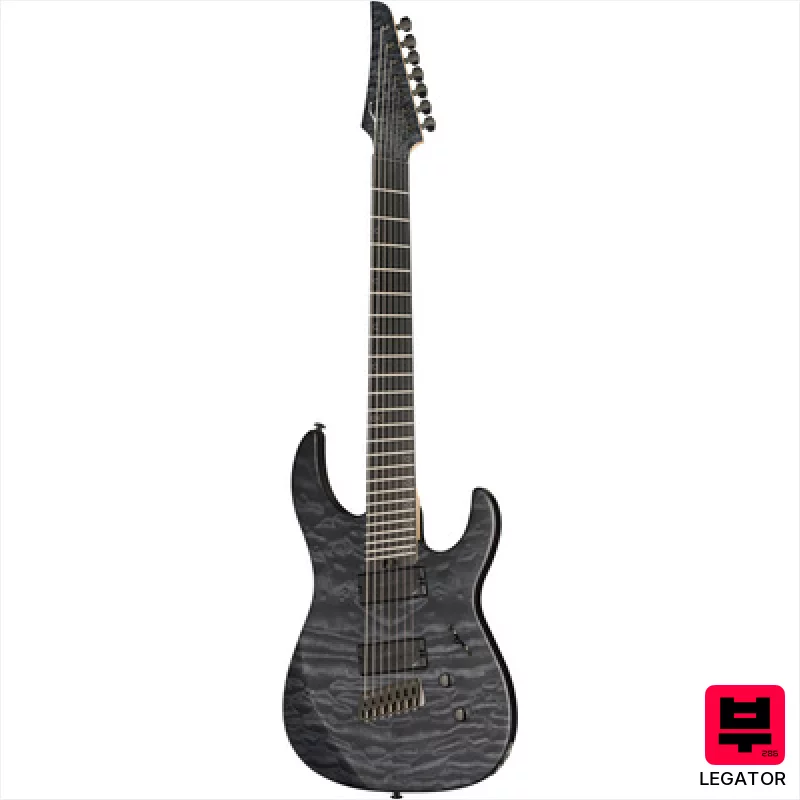
Legator Ninja N7FSS BK
- • Richlite fretboard offers a smooth, consistent playing experience with minimal maintenance.
- • Active Legator Aftershock pickups deliver high-output, modern tones with clarity.
- • Mahogany body provides warmth and sustain, complemented by quilted maple’s visual appeal.
- • Multiscale design enhances string tension, improving intonation and feel across the extended range.
- • Active pickups require a power supply, potentially limiting versatility and adding complexity.
- • Bolt-on neck construction may not offer the same resonance as a set-neck design.
- • The fixed brass bridge, while stable, limits tremolo functionality and adjustment options.
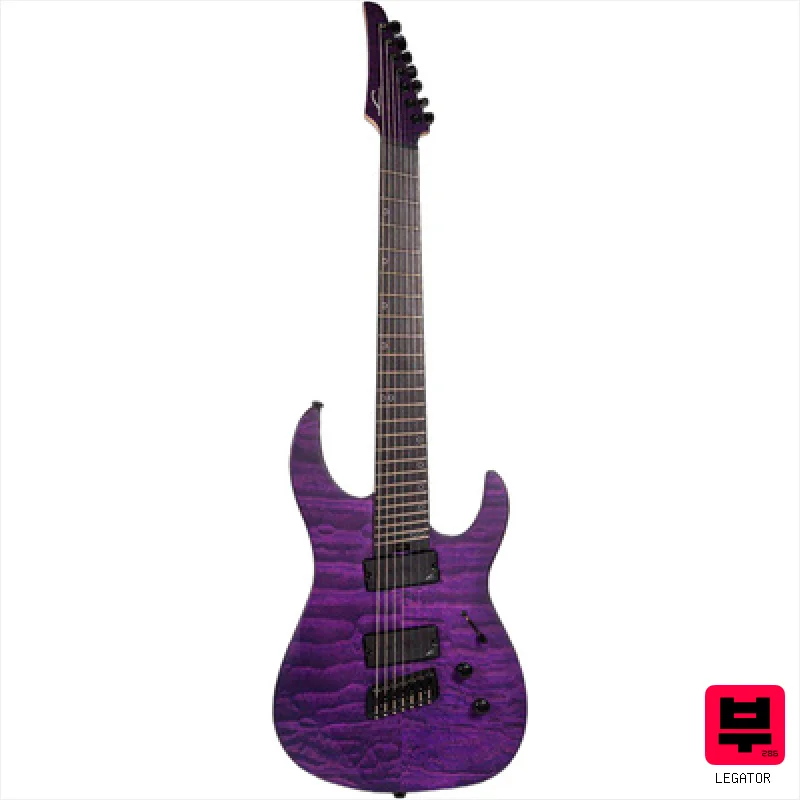
Legator Ninja N7FSS PUR
- • Mahogany body with quilted maple top for solid resonance
- • Active humbuckers deliver powerful output and tight low-end
- • Richlite fingerboard offers durable playability and smooth feel
- • Brass bridge adds stiffness and precise intonation control
- • Single volume and tone control limits tone shaping options
- • Multi-scale design may confuse players used to standard necks
- • Purple finish hides potential surface scratches and wear
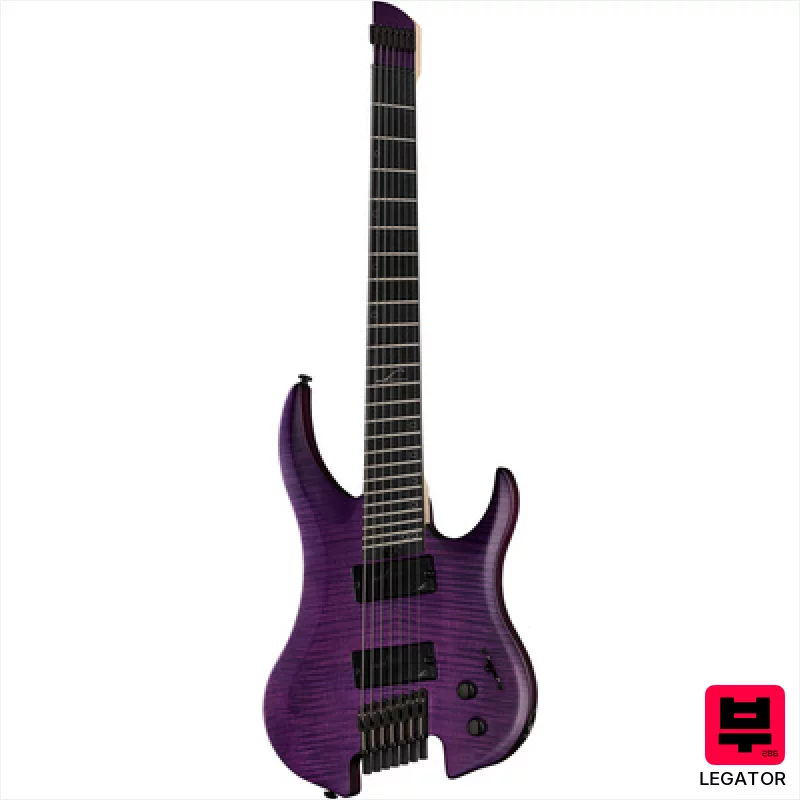
Legator Ghost G7FSS PUR
- • Richlite fretboard offers a consistently smooth playing experience.
- • Active Aftershock pickups deliver high-output, modern metal tones.
- • Multiscale design improves intonation and string tension across 7 strings.
- • Headless design enhances ergonomics and visual appeal; stable tuning.
- • Mahogany body can make it somewhat heavy for extended playing sessions.
- • Richlite, while stable, lacks the traditional feel of rosewood or ebony.
- • Active pickups may not suit players seeking a vintage, warmer sound.
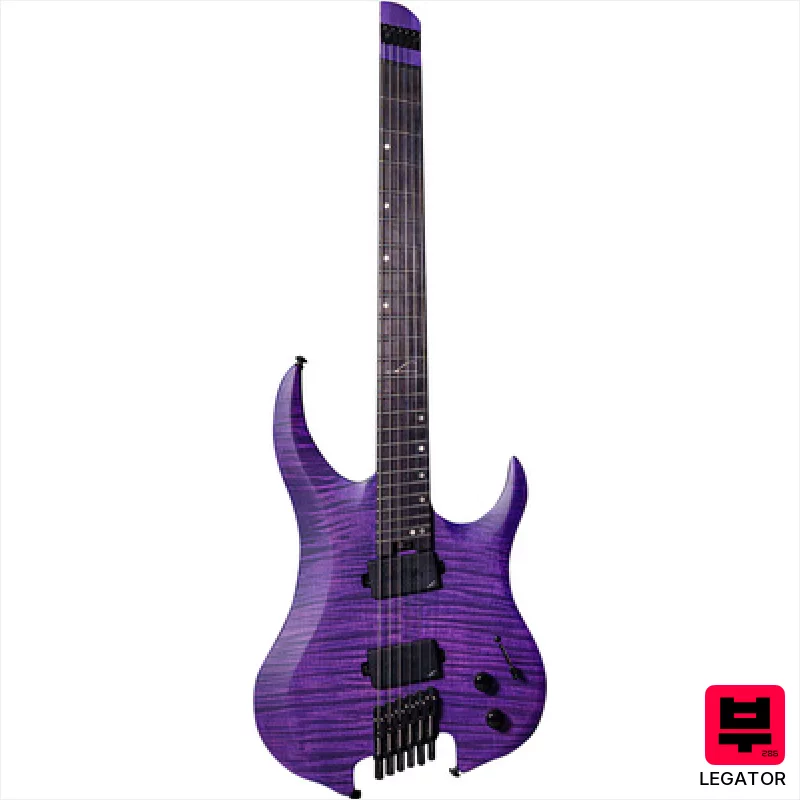
Legator Ghost G6FSS PUR
- • Mahogany body delivers warm, resonant sustain and a pleasing low-end response.
- • Richlite fingerboard offers a smooth, consistent playing surface with excellent note definition.
- • Active Aftershock pickups provide a high-output, modern tone suitable for aggressive playing.
- • Multiscale design enhances playability and intonation across the extended range.
- • Purple finish may not appeal to all players, a subjective aesthetic concern.
- • Bolt-on neck construction, while reliable, lacks the inherent warmth of a set-neck.
- • Active pickups require a power source and can be noisy in certain recording environments.
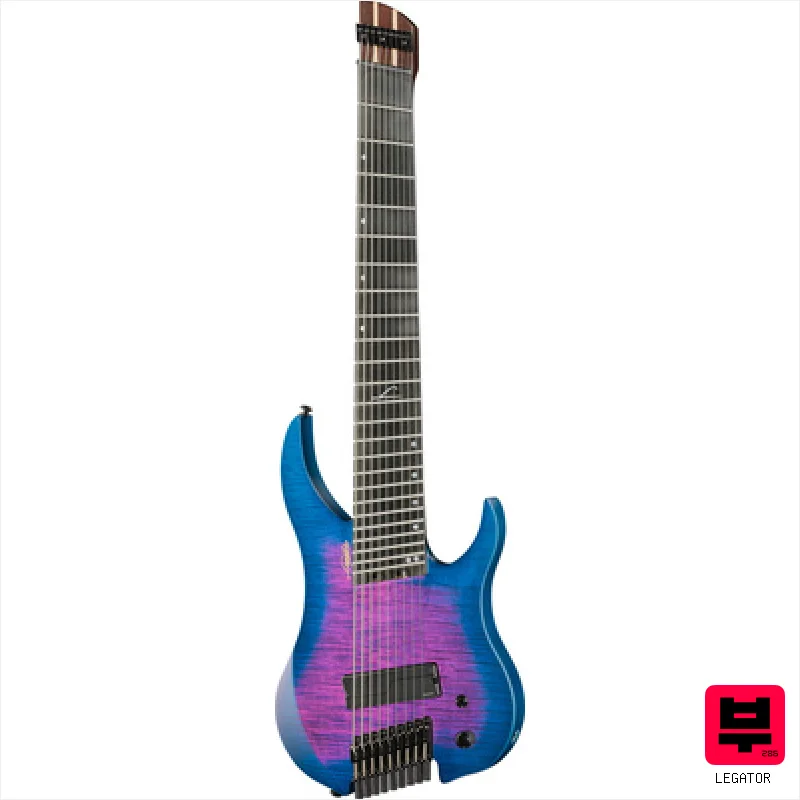
Legator Ghost G9F Satin FM Hypernova
- • 9-string design offers extra range without bulk.
- • Headless design makes tuning easier and faster.
- • Richlite fingerboard stays smooth and durable.
- • Push-pull pickup switch adds distinct tonal choices.
- • Multiscale layout may feel odd for some players.
- • Heavy body material likely adds carrying weight.
- • No electronics brand listed beyond the bridge pickup.
Fanfret Guitars by the numbers
Measured across all 27 models in this category, so «wide», «short» or «expensive» mean something you can check.
How to Choose the Best Fanfret Guitars
Fanfret Design
Legator's implementation is surprisingly subtle but effective. The gradual shift in fret spacing eases the stretch on your fingers, especially in those higher positions where intonation can become a real pain. It genuinely improves access and makes those outside chords feel more natural - a real boon for players who like to explore.
Neck Profile
Legator offers a few neck profiles, but their 'Comfort Thin' is a real winner for a lot of players. It's got a nice feel without being too flimsy, allowing for fast runs and comfortable chording. It's not for everyone - if you're a thick C profile devotee, it might feel a little too slender - but it's undeniably playable.
Pickup Voicing
Legator's stock pickups are generally well-balanced, leaning towards a slightly scooped midrange. They're not gonna give you that searing high-gain shred tone straight out of the box, but they're incredibly versatile for rock, blues, and even some funk. They respond well to aftermarket upgrades if you're chasing a specific tonal character.
Build Quality
The build quality is generally solid, though you'll find some inconsistencies depending on the specific model and year. The hardware is decent - not top-tier, but it functions well. The real area to scrutinize is the fretwork; some guitars require a little bit of a leveling and polish to really sing.
Aesthetic & Ergonomics
Legator's designs are distinctive, often incorporating unique body shapes and headstock profiles. The fan fret design naturally changes the body contours, and Legator's designs take advantage of that, leading to guitars that are visually striking and surprisingly comfortable to hold, especially when sitting.
Buying Guide
Legator Fanfret guitars represent a sweet spot in terms of price and performance, but you're paying for that unique fan fret design, which inevitably means some compromises. Don't expect boutique-level fretwork straight out of the box - a setup is almost always a good investment. The wood choices are generally good, but don't expect exotic tonewoods at the lower price points; it's mostly mahogany, basswood, and maple. If you're serious about the fan fret experience, the extra money for a higher-end model is usually worth it for the improved hardware and better fretwork.
How This List Is Built
We don't play these instruments — we're a catalog, not a review desk, and we'd rather say so than pretend otherwise. This page covers 5 of 27 fanfret guitars from the Thomann catalogue, which is the largest single source of specification data in this category: 5 in detail, the rest listed with their specifications.
Position is computed, not curated. We parse the manufacturer's own description into actual values — nut width, scale, fret count, fingerboard radius, size, alloy — and rank on them: how many specifications a model has published, how many of them are measurable numbers, and how precisely it meets this page's criterion. A product image adds a little. Price is not a ranking signal: it tells you nothing about whether a neck fits your hand. The same inputs always produce the same order, so nothing here is shuffled to look fresh.
What this list is good for: narrowing a category down to a shortlist by spec and budget. What it isn't: a substitute for hearing an instrument. Before you buy, read hands-on reviews and, where you can, play it. Full methodology.

