
Best Seymour Duncan Electric Guitar Power Amps 2026
Okay, so you're looking at Seymour Duncan power amps? Smart move. They've built a reputation for serious crunch and a raw, unapologetic character that's been missing from a lot of modern amp designs. Forget pristine cleans and sterile high-gain - these amps are about delivering that sweet spot of responsive, touch-sensitive overdrive, perfect for everything from bluesy grit to full-throttle rock.
Last updated: April 11, 2026

Seymour Duncan Power Stage 100 Black
- • Compact size makes it ideal for pedalboard-centric rigs and studio setups.
- • The integrated EQ offers surprising tonal shaping capabilities, compensating for cabinet limitations.
- • Stereo operation provides flexibility for wider, more immersive sounds or bi-amping.
- • Seymour Duncan's build quality ensures reliable performance and long-term durability.
- • Lacks a true power soak option, making it potentially loud for home practice.
- • The EQ, while useful, might be too basic for users needing complex tonal sculpting.
- • Limited connectivity compared to larger, more feature-rich power amp solutions.

Seymour Duncan Power Stage 200
- • Compact design maximizes pedalboard real estate, unlike bulky power amps
- • Seymour Duncan's EQ provides surprisingly musical shaping capabilities
- • Built-in cab simulator offers decent headphone practice and recording options
- • 200 watts delivers plenty of headroom for most gigging situations
- • EQ, while usable, isn't as flexible as a dedicated preamp
- • Limited connectivity compared to full-blown power amp/preamp combos
- • Clipping indicators are helpful, but aggressive playing can quickly trigger them

Seymour Duncan PowerStage 100 Stereo
- • Stereo operation expands sonic possibilities for experimental tones.
- • Seymour Duncan’s EQ provides genuinely useful shaping capabilities.
- • Compact design integrates seamlessly into pedalboard-centric rigs.
- • Robust build quality suggests longevity and reliable performance.
- • Limited headroom compared to larger power amp solutions.
- • Stereo operation requires more complex cabling and speaker setup.
- • EQ frequencies, while useful, aren't as flexible as a full parametric EQ.

Seymour Duncan Power Stage 700
- • Robust US-made construction inspires confidence and longevity.
- • Versatile EQ section provides tonal shaping beyond basic adjustments.
- • Speaker simulation offers convenient direct recording options without a cab.
- • 700W power handles high-volume gigs with ample headroom.
- • The hefty weight (over 2.8 kg) makes transport a challenge.
- • Limited channel options restrict flexibility for complex rigs.
- • Lacks built-in reverb or modulation—requires external effects.
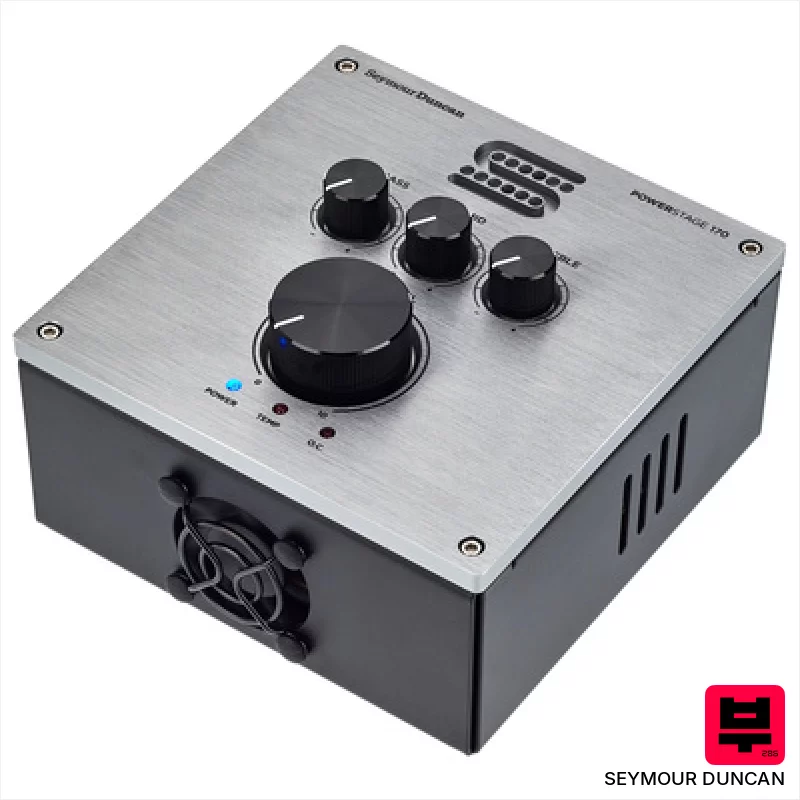
Seymour Duncan Power Stage 170
- • Compact design ideal for pedalboard integration and smaller rigs.
- • Seymour Duncan’s renowned build quality ensures lasting reliability.
- • 3-band EQ provides substantial tonal shaping capabilities.
- • 170W output delivers serious headroom for high-volume applications.
- • Limited to a single channel, restricting tonal flexibility for some users.
- • The small size can make adjustments on the fly a bit fiddly.
- • Lacks a footswitch for power on/off, requiring manual operation.
Electric Guitar Power Amps by the numbers
Measured across all 14 models in this category, so «wide», «short» or «expensive» mean something you can check.
How to Choose the Best Electric Guitar Power Amps
Tone Character
Seymour Duncan amps aren't about shimmering cleans. They're built for attitude - think a mid-forward, slightly aggressive voicing that cuts through a mix without getting ice-picky. The breakup is thick and harmonically rich, not fizzy or compressed. It's the kind of distortion that makes you want to dig in.
Dynamic Response
These amps react beautifully to your playing. Subtle pick attack changes translate to noticeable shifts in volume and distortion, which is crucial for expressive playing - whether you're laying down a bluesy rhythm or tearing into a searing solo. It's a responsiveness you don't always get with more homogenized amp designs.
Build Quality
Seymour Duncan isn't messing around. These are tank-like, built with robust components and a no-nonsense aesthetic. They're not about flashy aesthetics; they're about reliability and longevity - something you absolutely need when you're hauling gear to gigs.
Headroom & Cleanliness
While not primarily known for their clean headroom, the initial part of the gain range on some models (like the Reference 300) can deliver a surprisingly usable clean tone, especially with the right preamp. Beyond that, it's glorious, controlled distortion all the way - exactly what most players will want.
Transformer Quality
Duncan uses premium transformers, which are a huge deal. They contribute to the amp's overall power and sonic character - delivering a tight, punchy low-end and a balanced frequency response. Cheaper amps often skimp here, resulting in a muddy or anemic sound.
Buying Guide
Look, these aren't impulse buys. They're a commitment to a specific kind of tone. Be honest about your needs: if you primarily need pristine clean tones, this isn't it. The higher wattage models (300/500) are overkill for bedroom practice, but shine in a band setting or for recording. Don't chase the wattage - chase the feel and the sound.
How This List Is Built
We don't play these instruments — we're a catalog, not a review desk, and we'd rather say so than pretend otherwise. This page covers 5 of 14 electric guitar power amps from the Thomann catalogue, which is the largest single source of specification data in this category: 5 in detail, the rest listed with their specifications.
Position is computed, not curated. We parse the manufacturer's own description into actual values — nut width, scale, fret count, fingerboard radius, size, alloy — and rank on them: how many specifications a model has published, how many of them are measurable numbers, and how precisely it meets this page's criterion. A product image adds a little. Price is not a ranking signal: it tells you nothing about whether a neck fits your hand. The same inputs always produce the same order, so nothing here is shuffled to look fresh.
What this list is good for: narrowing a category down to a shortlist by spec and budget. What it isn't: a substitute for hearing an instrument. Before you buy, read hands-on reviews and, where you can, play it. Full methodology.

