
Best Drum Monitor Speakers for Advanced 2026
So, you're past the basic bedroom kit and you're actually dialing in your sound, huh? Drum monitor speakers aren't just about hearing the click; they're about sculpting your sound, locking in with the rest of the band, and making sure your groove translates live. Cheap monitors can bury your subtleties and make your kit sound like a muddy mess - and as a pro, you know that's a recipe for frustration. Let's talk about monitors that actually respect your chops.
Last updated: September 28, 2026
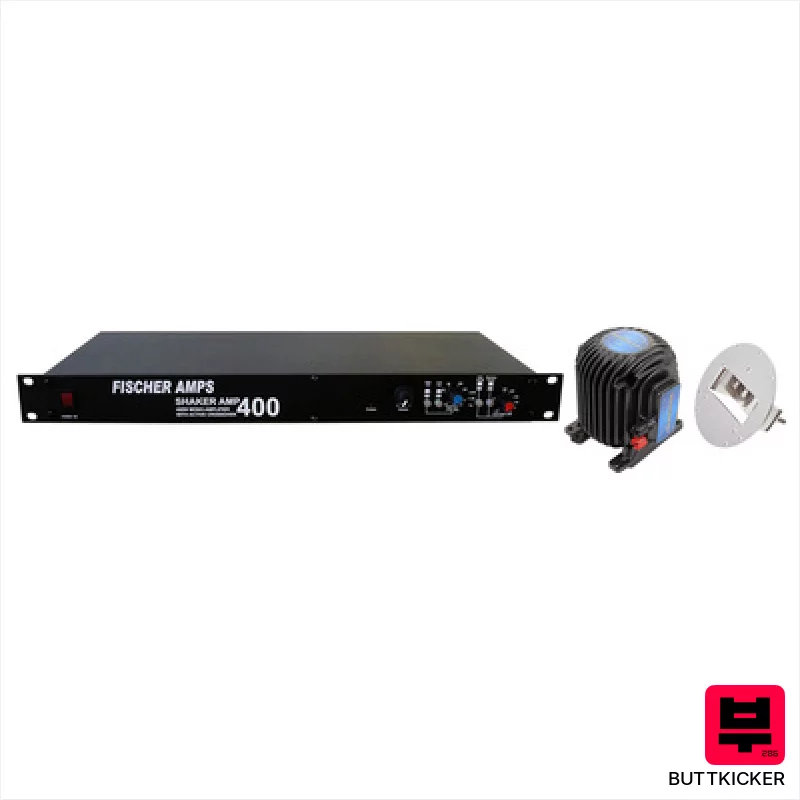
ButtKicker Shaker Amp 400 Kit 1
- • Robust construction; feels like it’ll withstand serious gigging abuse.
- • The 400W minimum power handles even demanding electronic drum setups.
- • Adjustable crossover provides precise low-frequency control for optimal feel.
- • Universal bracket allows flexible mounting options on various surfaces.
- • Relatively heavy, making transport a bit cumbersome for solo performers.
- • Limited frequency response above 200 Hz restricts its use as a full-range monitor.
- • Premium-priced, representing a significant investment for most drummers.
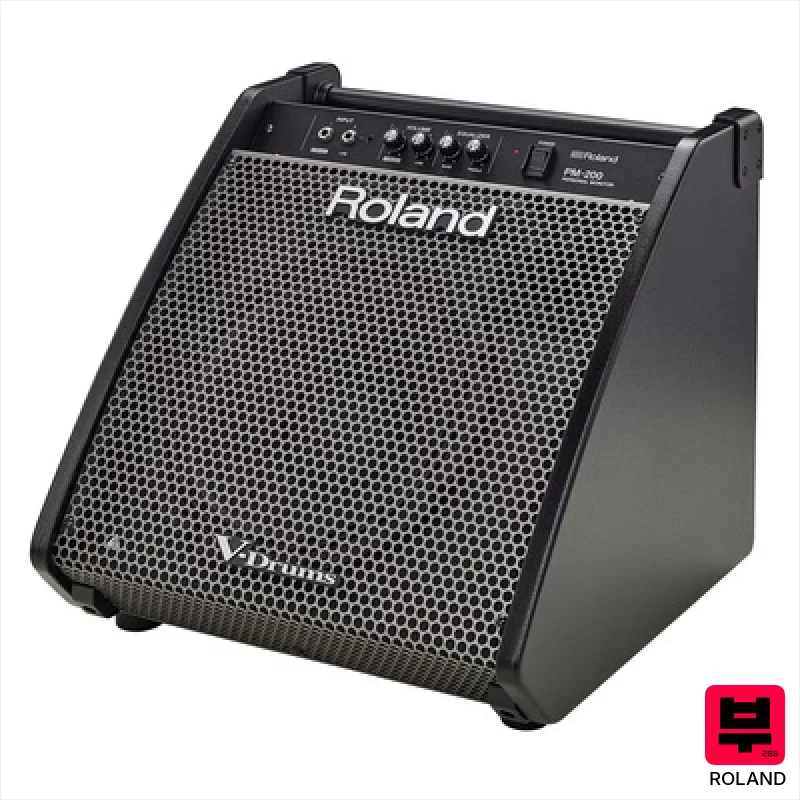
Roland PM-200 Personal Drum Monitor
- • Robust 12 in woofer delivers surprising low-end thump for its size.
- • Angled design genuinely improves monitoring ergonomics for seated drummers.
- • Direct XLR outs offer flexible routing options for stage or recording.
- • Roland's build quality ensures durability for frequent transport and gigging.
- • The weight makes it a two-person job for transport, especially on stairs.
- • EQ is basic; lacks the finesse for critical mixing adjustments.
- • Limited connectivity beyond drum and line inputs; no USB or Bluetooth.
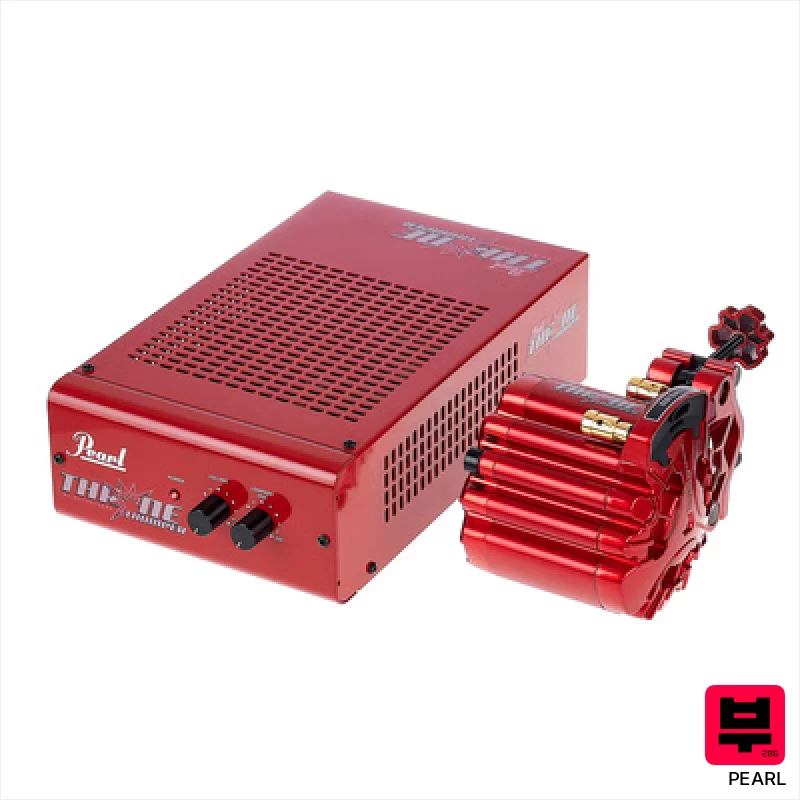
Pearl THMP-1 Throne Thumper
- • Solid construction with Pearl's renowned build quality.
- • ButtKicker integration delivers genuinely impactful low-end rumble.
- • Integrated amplifier simplifies setup, minimizing external equipment needs.
- • Mounting versatility adapts to virtually any existing drum throne.
- • The weight adds significant bulk to an already substantial drum throne.
- • Limited frequency response beyond the bass frequencies; lacks high-end detail.
- • Price point positions it as a premium investment for serious electronic drummers.
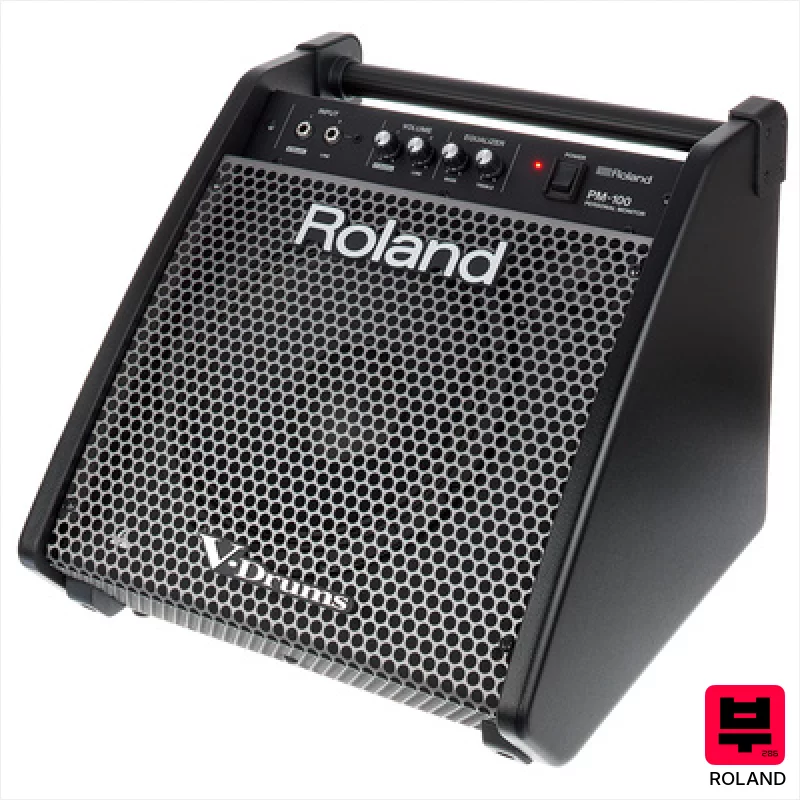
Roland PM-100 Personal Drum Monitor
- • Robust 10 in woofer delivers surprisingly deep, controlled low-end.
- • Roland's custom drivers offer a balanced, natural drum monitor sound.
- • Optimized angle eases neck strain during long practice or performance sessions.
- • Solid build quality with a substantial carrying handle for easy portability.
- • Limited EQ controls restrict fine-tuning of your drum mix.
- • 80W RMS power may feel insufficient for larger stage environments.
- • Relatively heavy for a personal monitor, especially for travel.
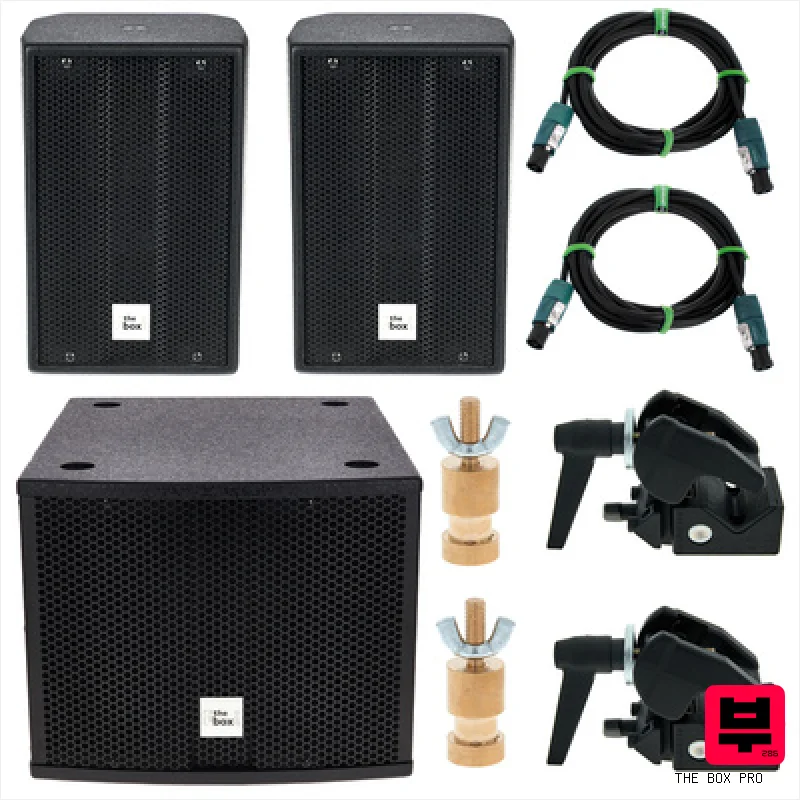
the box pro Achat E-Drum Monitor Bundle
- • German engineering ensures solid build quality and reliability.
- • High peak SPL of 116 dB cuts through loud drum kits.
- • Two top speakers plus a subwoofer create a full stereo image.
- • Flexible XLR and RCA inputs connect easily to various gear.
- • No protective cover is included with this monitor bundle.
- • Top speakers lack a tilt angle adjustment for optimal listening.
- • Frequency range for top speakers stops at 20 kHz, not full.
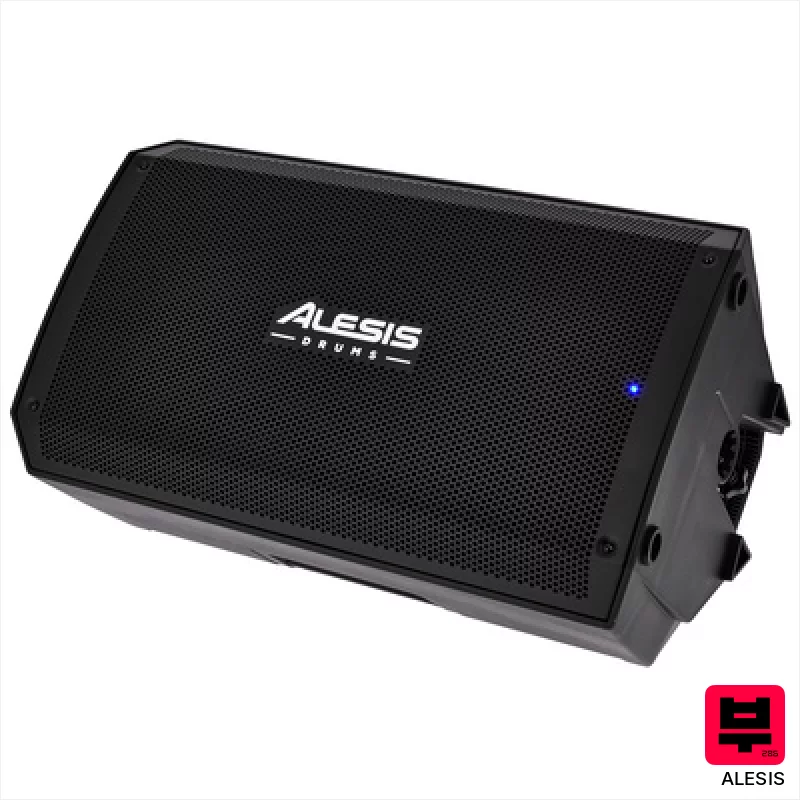
Alesis Strike Amp 12 MK2
- • Robust 12” woofer delivers surprisingly tight, defined low-end response.
- • 1100W RMS power handles even loud kits with headroom to spare.
- • XLR Link Out allows for easy integration into larger PA systems.
- • Bluetooth connectivity offers convenient playback and monitoring options.
- • The plastic enclosure, while durable, lacks the premium feel of all-wood alternatives.
- • Limited EQ controls restrict fine-tuning for different drum sounds and rooms.
- • Weight (15.7kg) makes portability a challenge, especially for solo drummers.
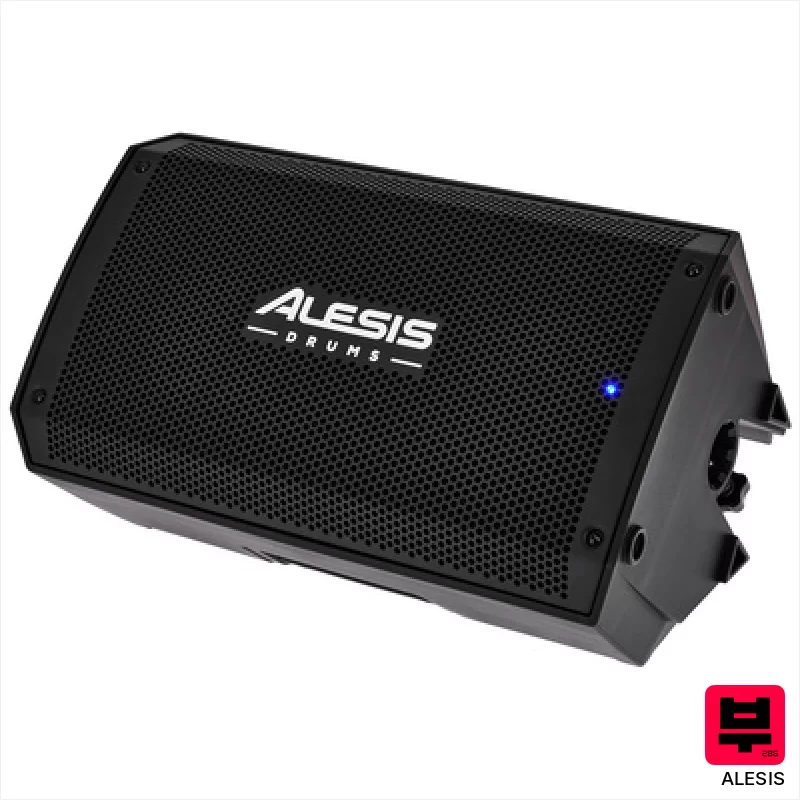
Alesis Strike Amp 8 MK2
- • Impressive SPL with 126dB max; cuts through even loud rehearsal environments.
- • The 8” woofer delivers surprisingly tight and defined low-end response.
- • Bluetooth connectivity adds convenient flexibility for backing tracks and practice apps.
- • Robust build quality for a monitor in this price bracket; feels solid and durable.
- • Limited EQ controls; tweaking the sound beyond presets is challenging.
- • The weight (9.5kg) makes it less portable than lighter alternatives.
- • XLR Link Out lacks dedicated level control, potentially needing external adjustments.
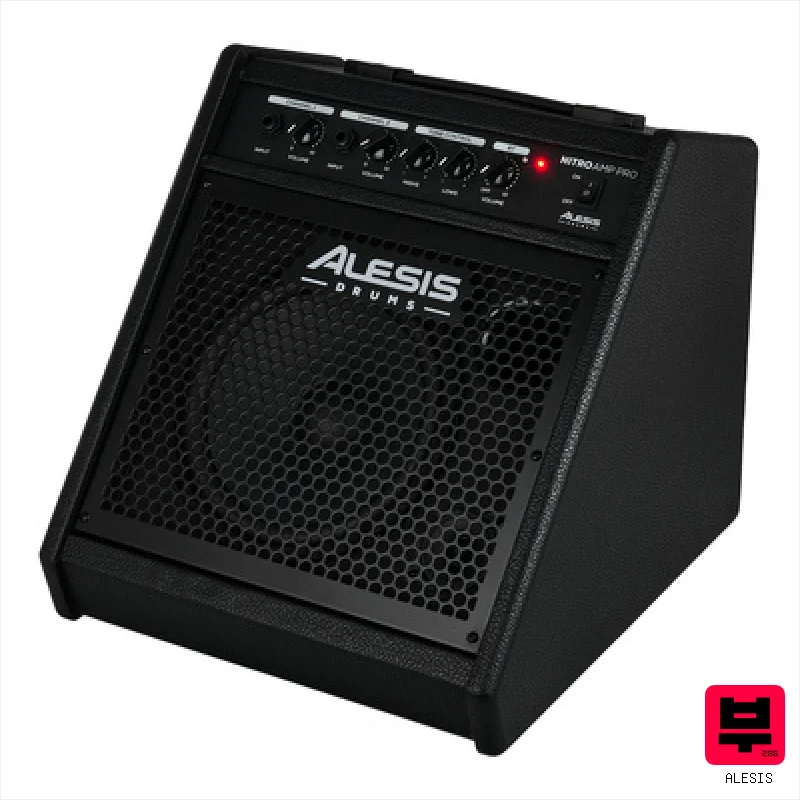
Alesis Nitro Amp Pro
- • 80 watts of power for loud practice sessions
- • Dedicated Bluetooth volume control for backing tracks
- • Two-band EQ lets you shape the sound quickly
- • Works with almost any electronic drum kit
- • No built-in stereo speaker for true multi-track monitoring
- • No built-in speakers for stereo monitoring
- • Bluetooth range is limited to 10 meters
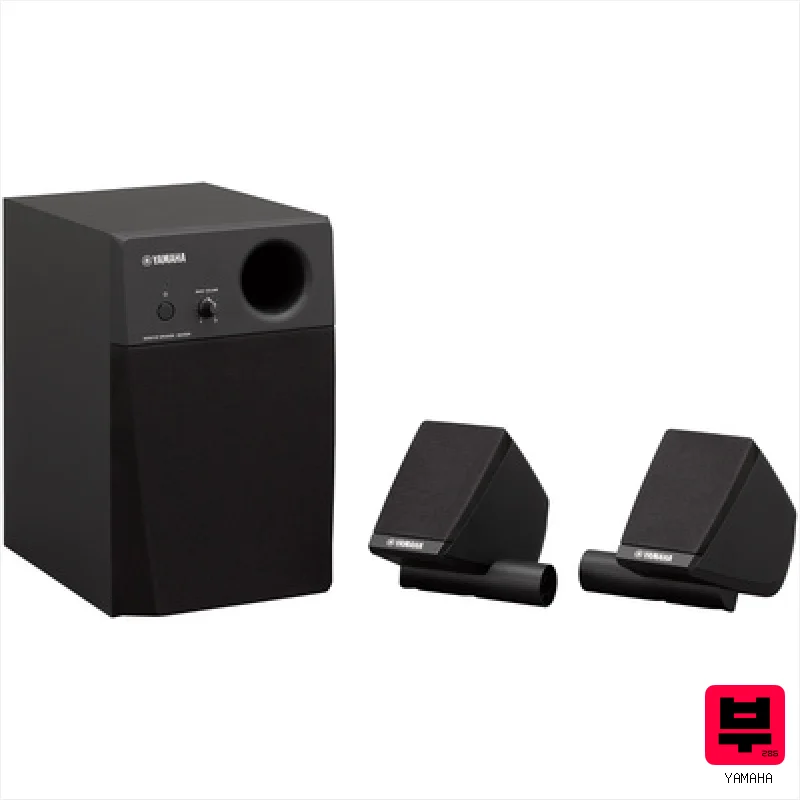
Yamaha MS45DR E-Drum Monitor System
- • Compact satellite speakers fit easily in small drum kits.
- • Includes two rack clamps for simple installation.
- • Broad frequency range from 40 Hz to 20,000 Hz.
- • Lightweight 1 kg satellites move easily.
- • Subwoofer is heavy at 6.5 kg.
- • No tilt angle specified for sound direction.
- • No specific connection types listed in text.

Roland PM-03 Monitor System
- • Compact design ideal for smaller practice spaces and kits
- • Bass reflex port delivers surprisingly punchy low-end response
- • Roland’s proven speaker technology provides clear, balanced audio
- • Simple, robust build quality feels durable for regular use
- • Limited power output; struggles with larger rooms or loud kits
- • Mini-jack connections feel a bit cheap for a dedicated monitor
- • Lack of EQ controls restricts fine-tuning of the sound
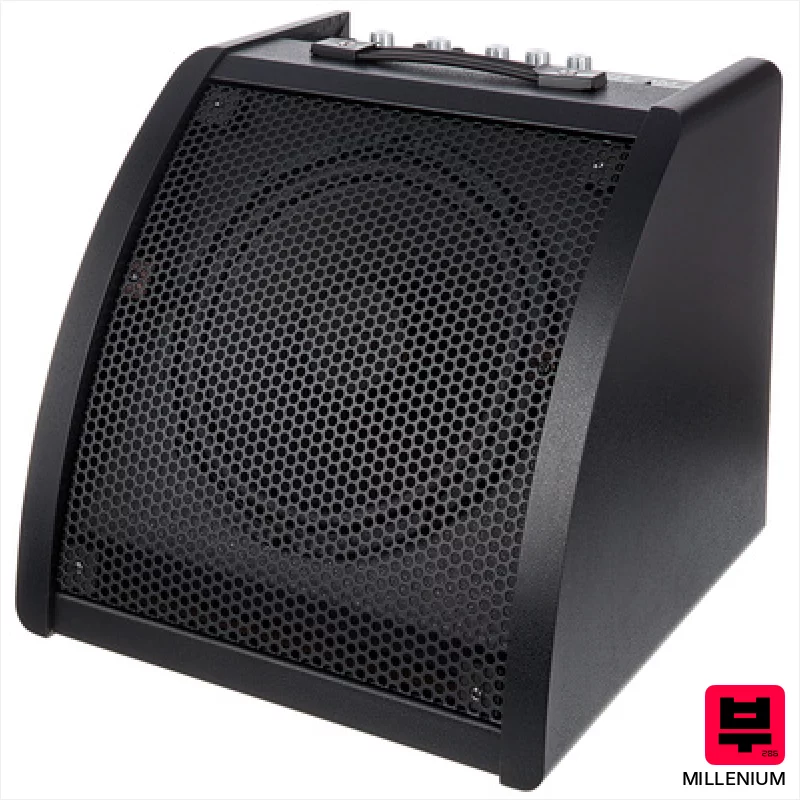
Millenium DM-30 Drum Monitor
- • Coaxial design provides surprisingly focused and clear drum monitoring.
- • 30W power is adequate for practice and smaller gigs; surprisingly punchy.
- • Separate volume controls for drum kit and line input offer flexible mixing.
- • Robust cabinet construction feels solid and capable of handling transport.
- • EQ is basic; limited tonal shaping beyond fundamental adjustments.
- • 10’ speaker size may lack serious low-end extension for larger rooms.
- • 15 kg weight makes it less portable than lighter alternatives.
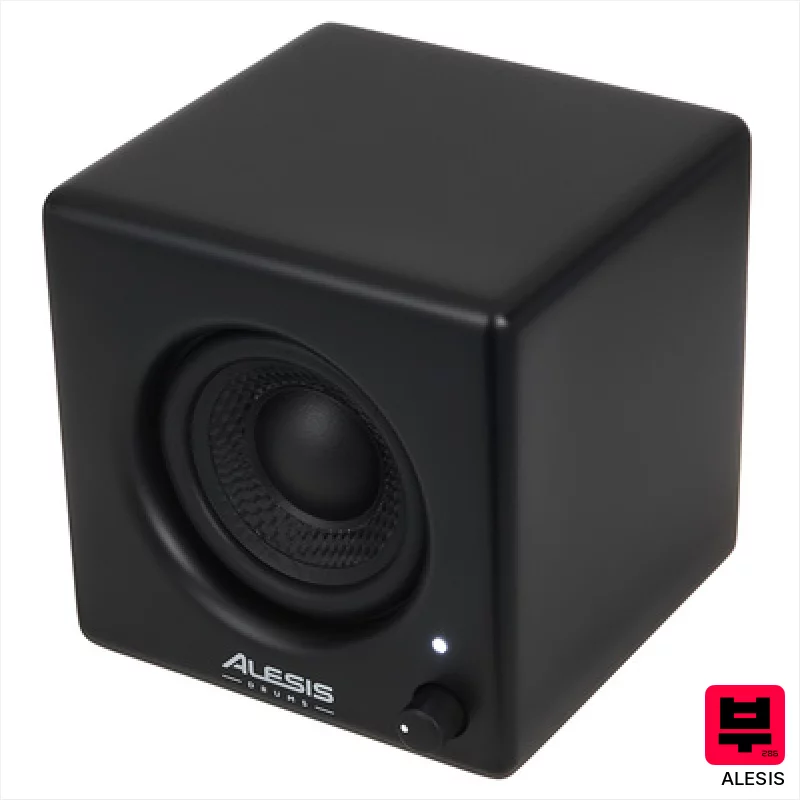
Alesis Nitro Amp
- • Class-D amp delivers surprising power for the size.
- • 3” woofer provides a decent low-end response for drums.
- • Rack mount is genuinely useful for drum kit placement.
- • Compact size and lightweight design makes transport easy.
- • Limited frequency response might lack detail for critical listening.
- • Single input restricts flexibility for multiple signal sources.
- • Build quality feels budget-focused, potentially less durable.
Drum Monitor Speakers by the numbers
Measured across all 12 models in this category, so «wide», «short» or «expensive» mean something you can check.
How to Choose the Best Drum Monitor Speakers
Frequency Response & Transient Response
It's not just about 'fullness'; it's about accurate representation. You need to hear the attack of the snare, the thump of the kick without it getting boomy, and the subtle nuances of your cymbal work. A sloppy transient response will make everything sound smeared and indistinct.
Headroom & Cleanliness
Advanced players push their gear. You want monitors that maintain headroom at higher volumes without introducing distortion or compression that robs your kit of dynamics. That 'ice-pick' high-end harshness is a sign of poor design and will kill your ears after an hour.
Stereo Imaging & Sweet Spot
A wide, well-defined stereo image lets you hear the placement of individual drums and cymbals, crucial for locking in with a band. The 'sweet spot' - the area where the imaging is best - shouldn't be tiny; you need to move around without losing that clarity.
EQ & Routing Options
Beyond just volume, having EQ controls (even basic ones) allows you to tailor the monitors to your specific kit and room acoustics. Balanced inputs are non-negotiable for noise reduction, especially in a studio or rehearsal space.
Build Quality & Portability
Gigs happen. You need monitors that can take a beating and are reasonably easy to transport. Cheap plastic enclosures and flimsy stands are a false economy - you'll be replacing them constantly.
Buying Guide
Don't fall for the 'loudest is best' trap. Advanced players need accuracy and control, not just volume. Corners get cut on transient response and clean headroom to hit a lower price point, and those are the areas that will hurt your playing the most. Paying more generally gets you better drivers, more robust construction, and more flexible EQ options - all things that will save you headaches (and money) in the long run.
How This List Is Built
We don't play these instruments — we're a catalog, not a review desk, and we'd rather say so than pretend otherwise. This page covers 12 drum monitor speakers from the Thomann catalogue, which is the largest single source of specification data in this category: 12 in detail, the rest listed with their specifications.
Position is computed, not curated. We parse the manufacturer's own description into actual values — nut width, scale, fret count, fingerboard radius, size, alloy — and rank on them: how many specifications a model has published, how many of them are measurable numbers, and how precisely it meets this page's criterion. A product image adds a little. Price is not a ranking signal: it tells you nothing about whether a neck fits your hand. The same inputs always produce the same order, so nothing here is shuffled to look fresh.
What this list is good for: narrowing a category down to a shortlist by spec and budget. What it isn't: a substitute for hearing an instrument. Before you buy, read hands-on reviews and, where you can, play it. Full methodology.

